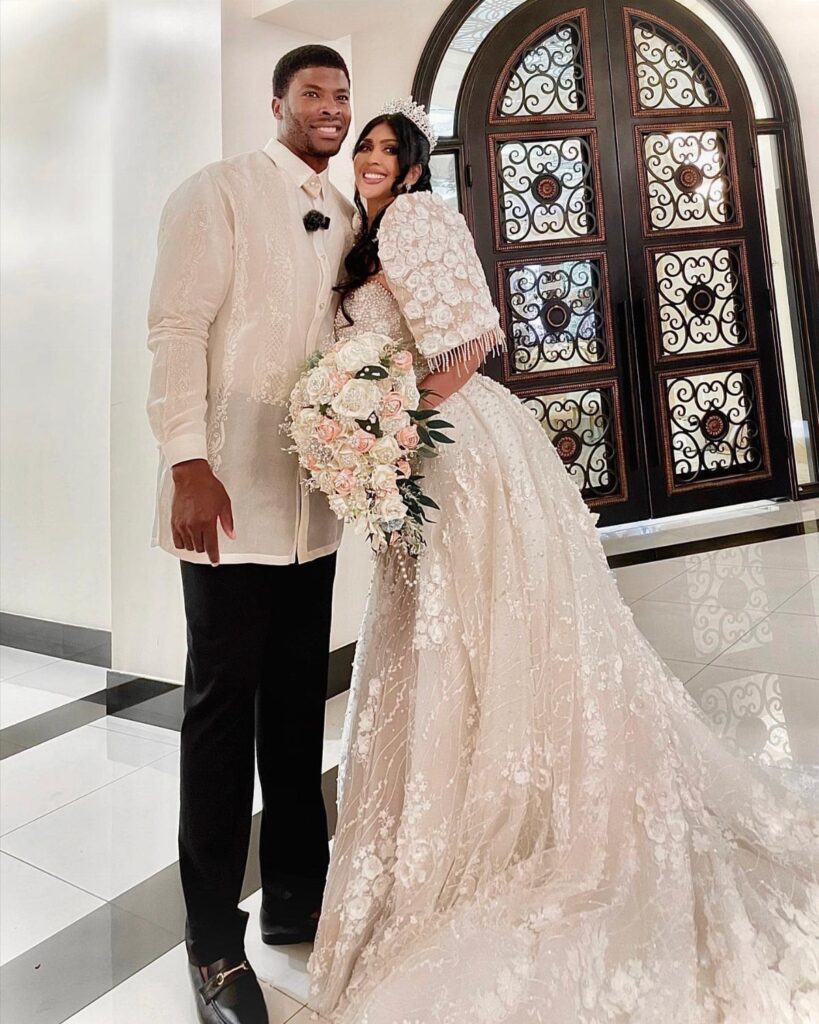
Filipino wedding attire ranges from the classic Barong Tagalog and full Filipiniana gown to modern separates that let you mix embroidered pieces with what you already own.
Piña and jusi, both woven from plant fibers, stay breathable through outdoor ceremonies and receptions held in warm months, and the embroidery shows up clearly against either fabric.
Filipino designers know how these pieces should be constructed, from the right sleeve shape to how the embroidery sits on the fabric.
1. Barong Tagalog for Men
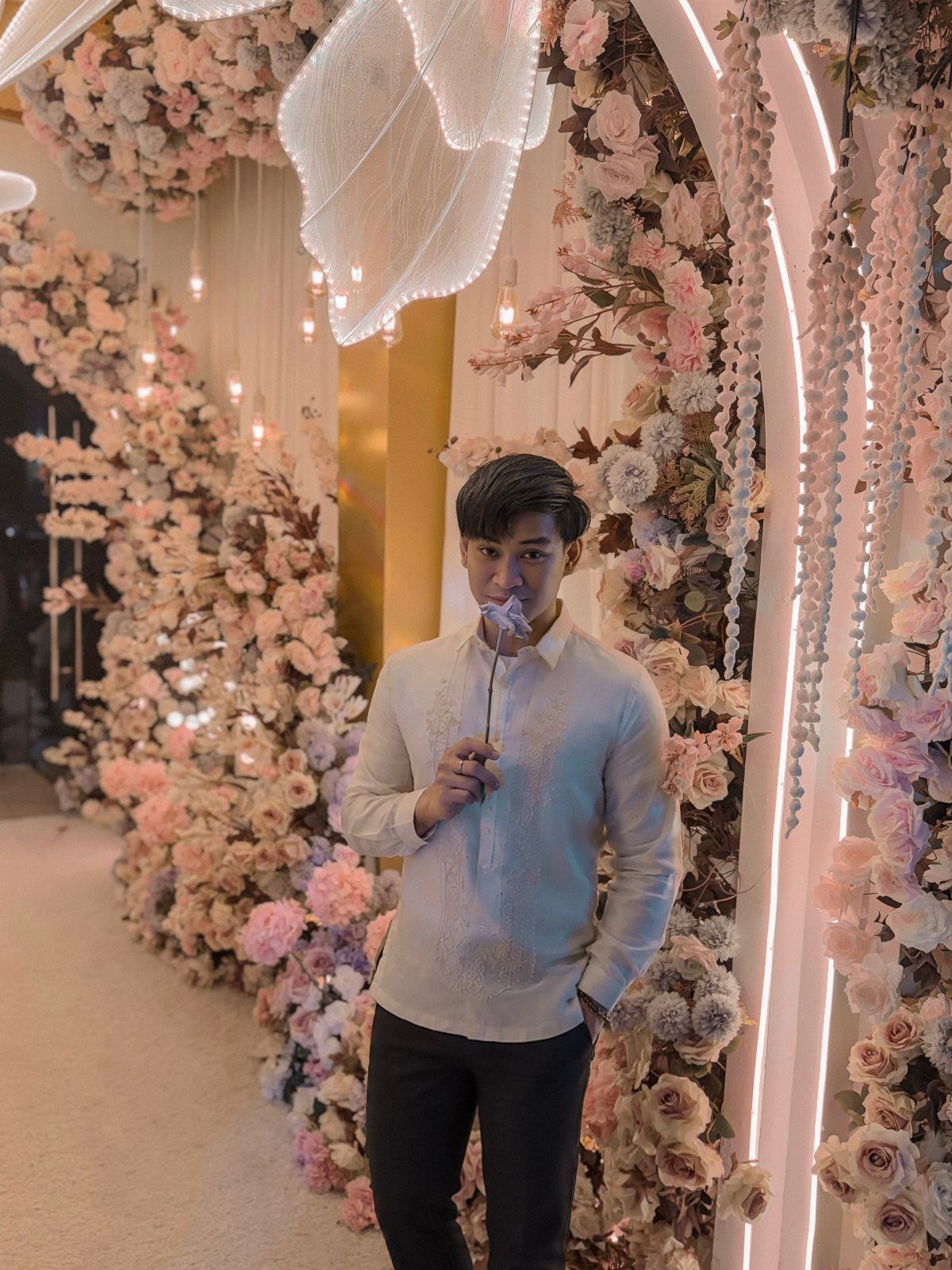
The Barong Tagalog is the classic formal shirt worn by Filipino men at weddings, made from lightweight embroidered fabric that keeps you cool through a full celebration. It’s worn untucked over dark dress pants, usually black or charcoal.
Look for one with embroidery along the front panels and collar. White and cream are the traditional choices, and both work equally well for guests and members of the wedding party.
2. Filipiniana Dress for Women
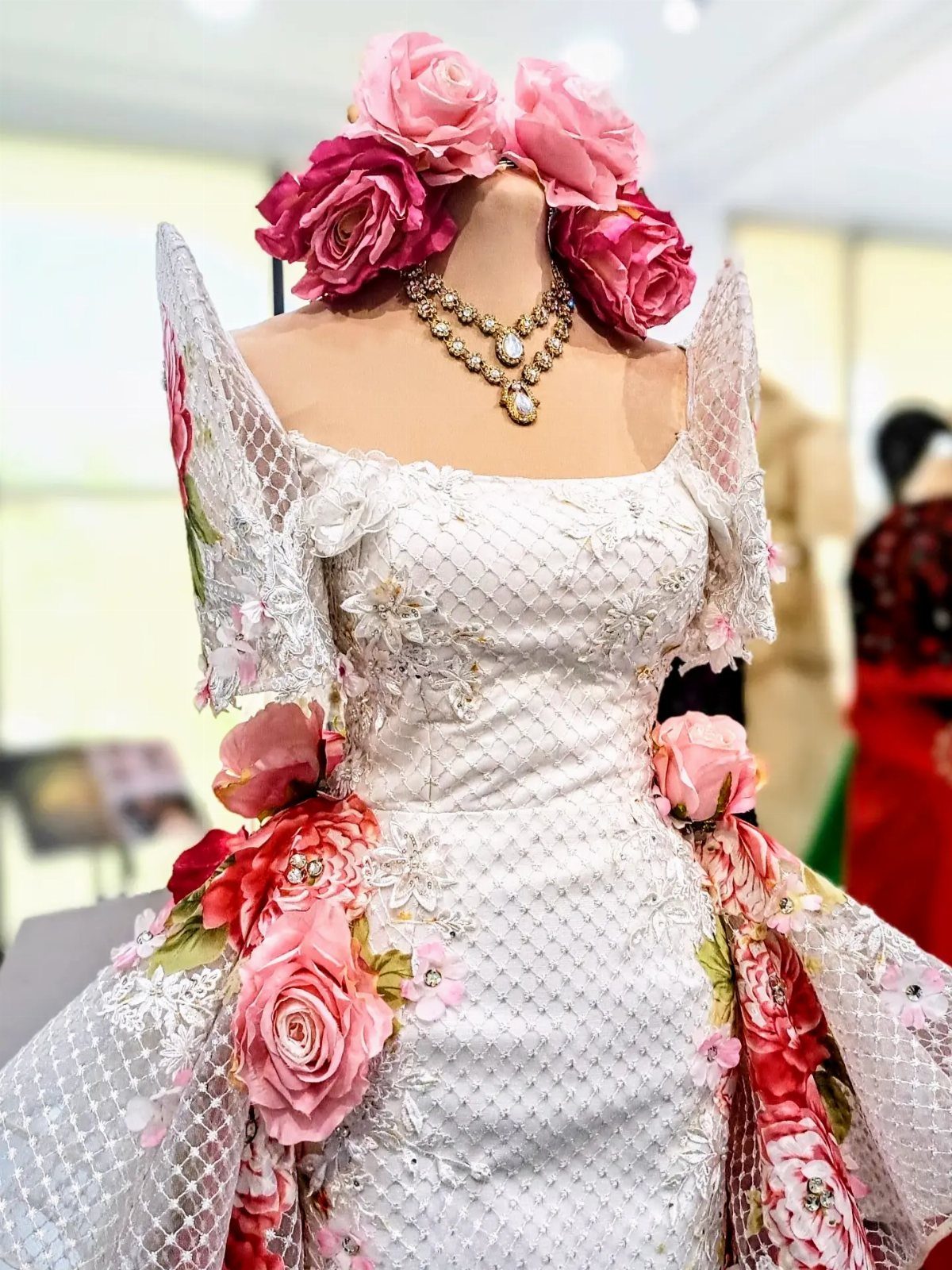
A Filipiniana dress features butterfly sleeves and embroidered details that make it instantly recognizable as traditional Filipino formal wear. This version pairs white fabric with pink floral embellishments and a fitted bodice.
The wide, structured sleeves are the defining feature. Most Filipiniana dresses fall to floor length, and the silhouette stays formal enough for any role at a Filipino wedding, whether you’re a guest or part of the entourage.
3. Modern Barong Styles
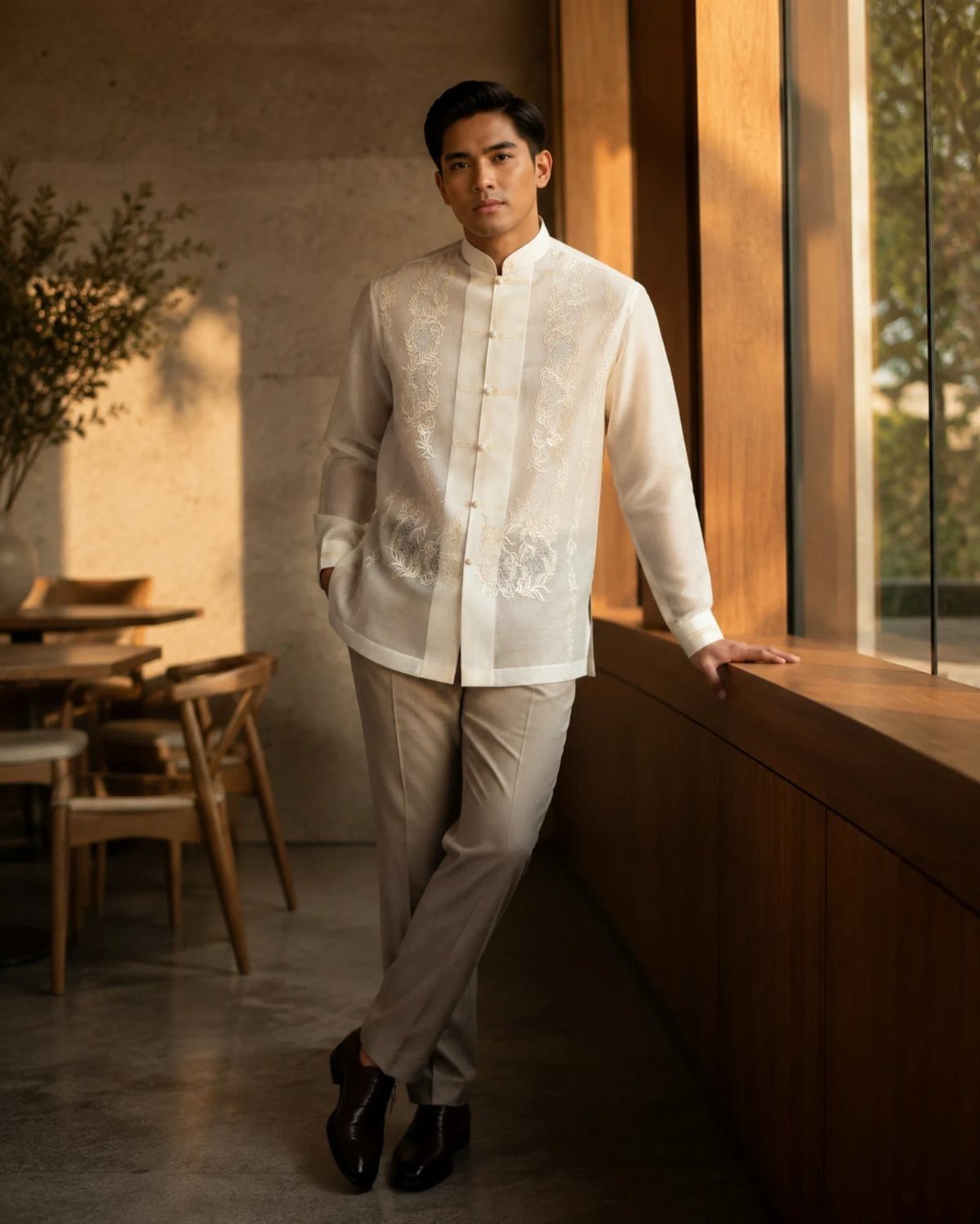
Modern Barongs keep the embroidered front and lightweight fabric but adjust the fit and styling for a more contemporary look. Slimmer cuts and shorter sleeves show up often, along with subtle changes to the collar shape.
Pair one with light grey or tan trousers instead of traditional black for a less formal take that still respects the garment’s roots. The embroidery stays visible but may be finer or more minimal than on classic versions.
4. Modern Filipiniana Styles
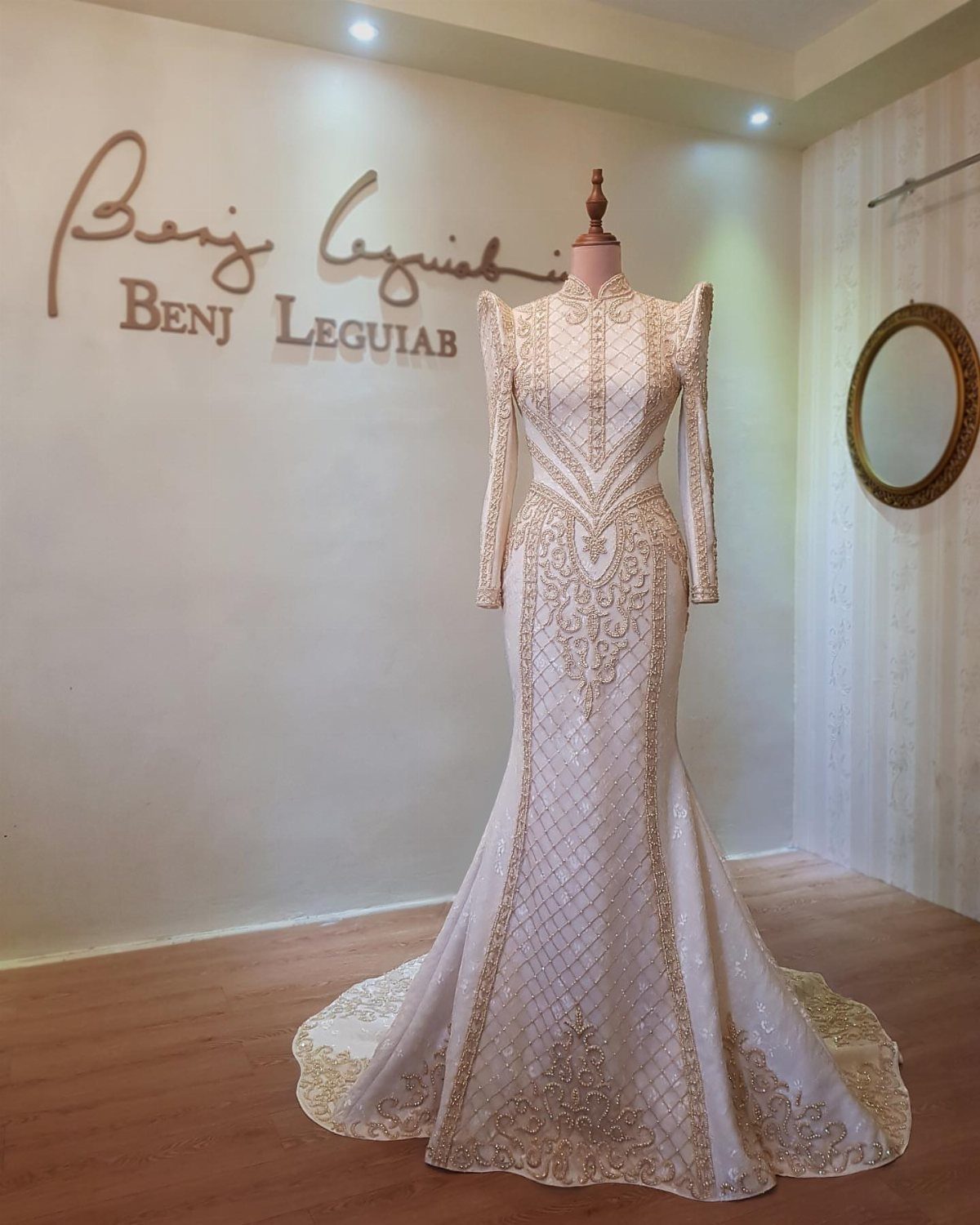
Modern Filipiniana gowns take the butterfly sleeve and adapt everything else. This mermaid silhouette with gold beading keeps the recognizable sleeve shape but trades the traditional A-line skirt for a fitted, floor-length form.
Intricate beadwork replaces simpler embroidery, and the overall look skews more glamorous than a classic Filipiniana. If you’re attending as a guest, this style works well for evening receptions where formal attire is expected.
5. Matching Couple Filipino Outfits
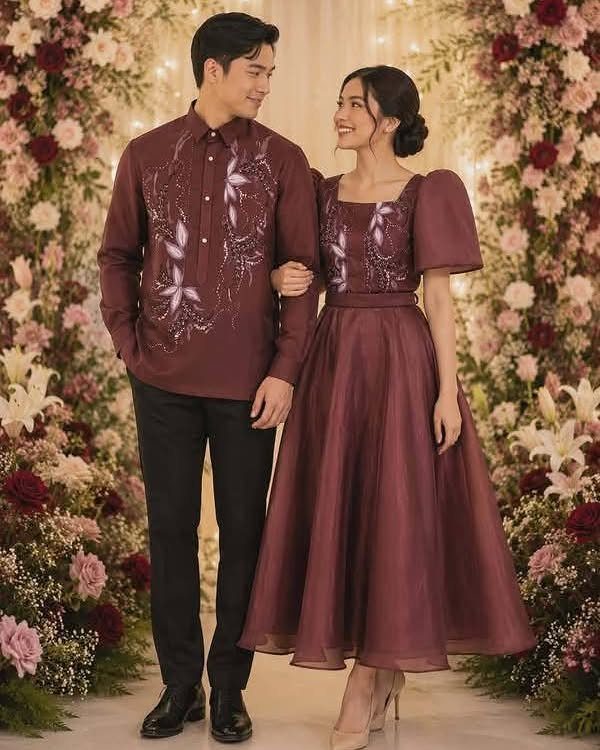
Matching couple outfits coordinate the embroidery pattern and fabric color across both pieces. Here, maroon fabric ties the Barong and gown together, with the same embroidered detailing running through both garments.
This choice works best for the couple themselves or for principal sponsors who want a unified look. Order both pieces from the same designer or shop to get embroidery that actually matches in weight and placement, not just color.
6. Filipiniana Bolero Jacket
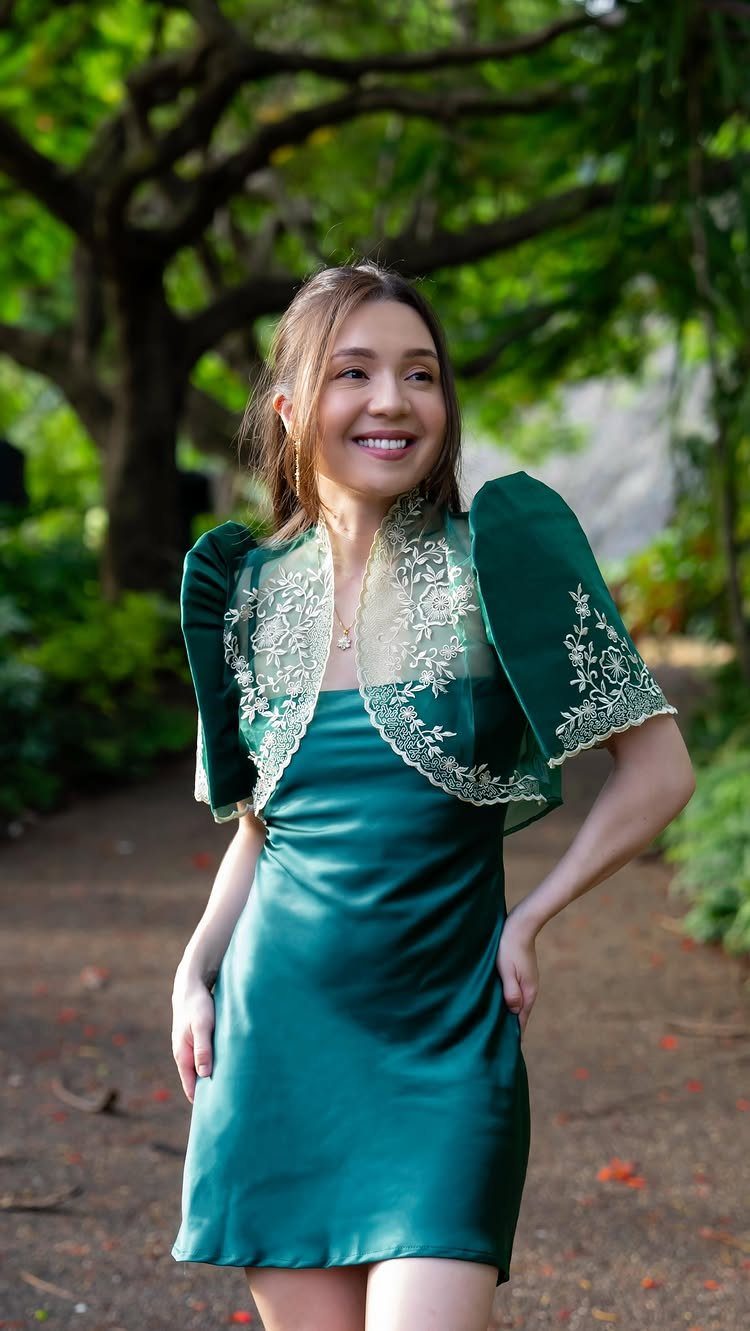
A bolero jacket with butterfly sleeves adds Filipino formal elements to a simple dress. This version layers an embroidered sheer jacket over a dark green satin gown, giving you the traditional sleeve shape without committing to a full Filipiniana dress.
The jacket stops at the waist, so it pairs well with fitted or A-line dresses.
If you already own a formal dress in a solid color, a bolero is a practical way to make it work for a Filipino wedding without buying an entirely new outfit.
7. Filipiniana Top with Pants
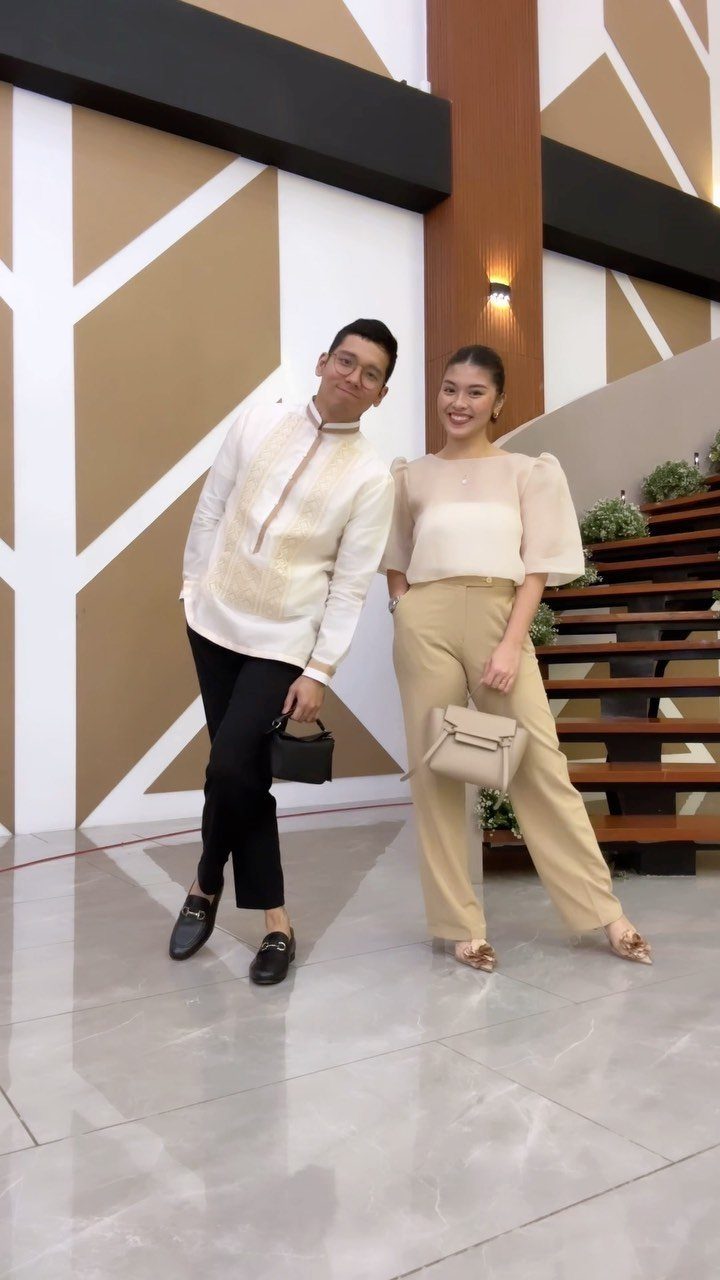
A Filipiniana top paired with trousers gives you the traditional butterfly sleeve without the floor-length skirt. This cream version with tan wide-leg pants keeps the formal elements up top while making the outfit easier to move in.
The silhouette works well for daytime weddings or outdoor celebrations where a full gown might feel impractical. Choose high-waisted trousers in a neutral tone so the embroidered top stays the focal point.
8. Embroidered Top with Maxi Skirt
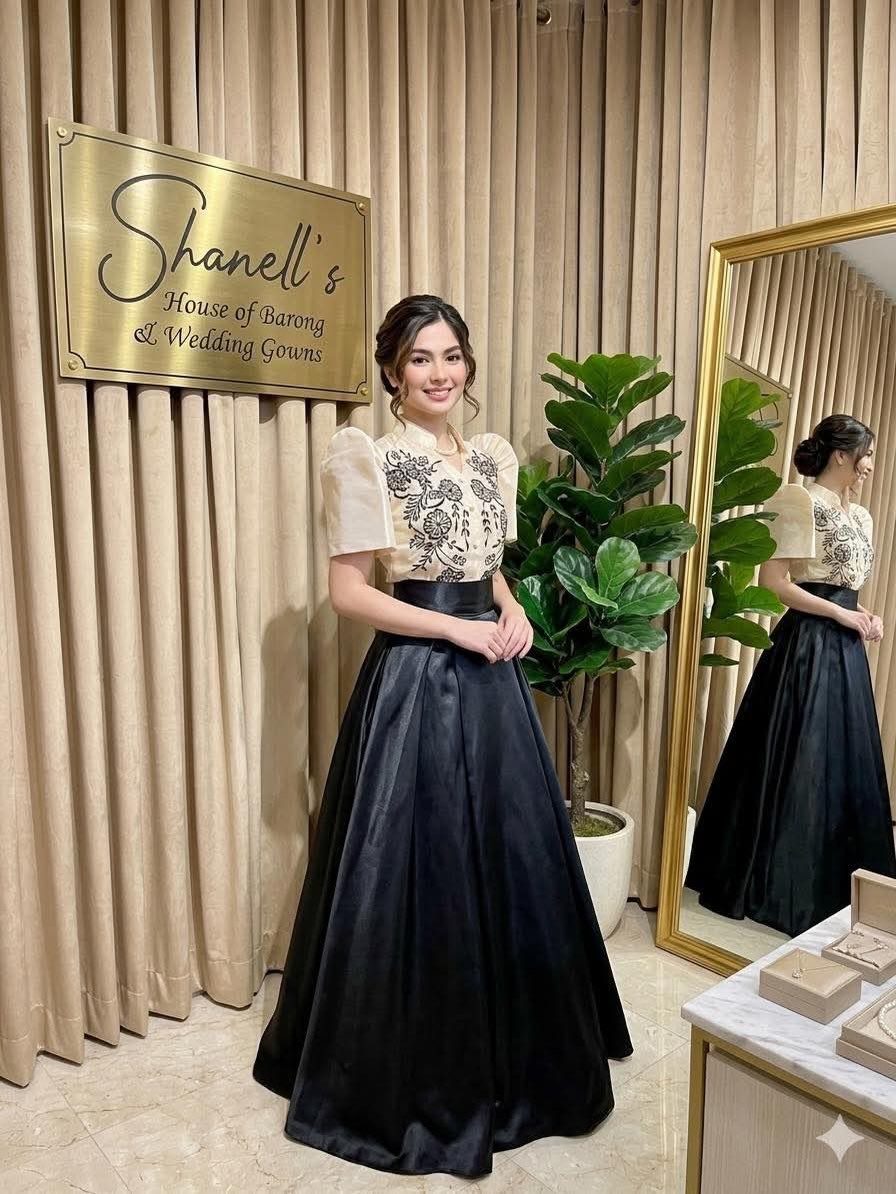
Separating the top and skirt lets you mix Filipino formal pieces with what you already own. This cream embroidered butterfly-sleeve blouse pairs with a black satin maxi skirt, giving you a Filipiniana look without buying a complete gown.
If you already have a formal skirt in black, navy, or another solid color, buy just the embroidered top. The combination stays formal enough for evening receptions while keeping the cost lower than a full dress.
Choosing the Right Fabric
Piña and jusi are the 2 lightweight fabrics you’ll see most often in formal Filipino attire, and both handle warm weather far better than heavier materials.
Piña comes from pineapple leaf fibers and has a slightly stiffer hand with a natural sheen. Jusi is woven from silk, giving it a softer drape and a bit more flexibility in fit.
Both fabrics stay breathable even during outdoor ceremonies or receptions held in May or other warm months.
The embroidery on a Barong or Filipiniana dress shows up clearly against either fabric, and the lighter weight keeps you comfortable through hours of photos, dancing, and celebrating without overheating.
If the wedding is indoors with air conditioning, heavier fabrics like organza or satin become options, but piña and jusi remain the most practical choice for any setting.
Planning Ahead for Attire
Custom Barongs and Filipiniana dresses take time, so order well in advance if you’re having something made to your measurements.
Fittings and alterations add another week or two after the garment arrives, particularly if the bodice needs adjusting or the hem has to be shortened.
If your timeline is tighter, look for ready-to-ship options first. Many designers keep finished pieces in stock that can be adjusted for basic fit, like taking in the waist or hemming the skirt to your height.
Garments with corsetry or lace-up backs give you more flexibility in sizing, which cuts down on how much alteration work you’ll need before the wedding.
Local tailors can handle final adjustments after the piece arrives, but give them at least a week to work.
Cultural Appropriateness
Filipino formal wear carries cultural weight, and wearing it respectfully means understanding which elements are decorative and which hold deeper meaning.
Certain indigenous textiles and patterns, particularly those from specific ethnic groups, are best left to members of those communities unless you’ve been invited to wear them.
Buying from Filipino designers and artisans keeps your money with the people who know these garments best. Local makers understand the construction, fabric choices, and traditional details that make a Barong or Filipiniana dress authentic rather than costume-like.
If you’re unsure whether a particular design is appropriate for you to wear, ask the couple or someone close to them before ordering.
Frequently Asked Questions
What do you wear to a Filipino wedding?
Men wear a Barong Tagalog, and women wear a Filipiniana dress. Both are made from lightweight embroidered fabric like piña or jusi, which keeps you comfortable through long outdoor celebrations and humid weather.
What is the female version of barong?
The Filipiniana dress is the female equivalent of the Barong Tagalog.
It shares the same formal status and is made from similar lightweight embroidered fabrics, but features butterfly sleeves and a fitted bodice instead of the shirt-style construction of the Barong.
What is classic Filipino attire?
Classic Filipino formal attire is the Barong Tagalog for men and the Filipiniana dress for women.
The Barong pairs embroidered fabric with a loose, untucked fit, and the Filipiniana brings butterfly sleeves, a shaped bodice, and a skirt that reaches the floor.