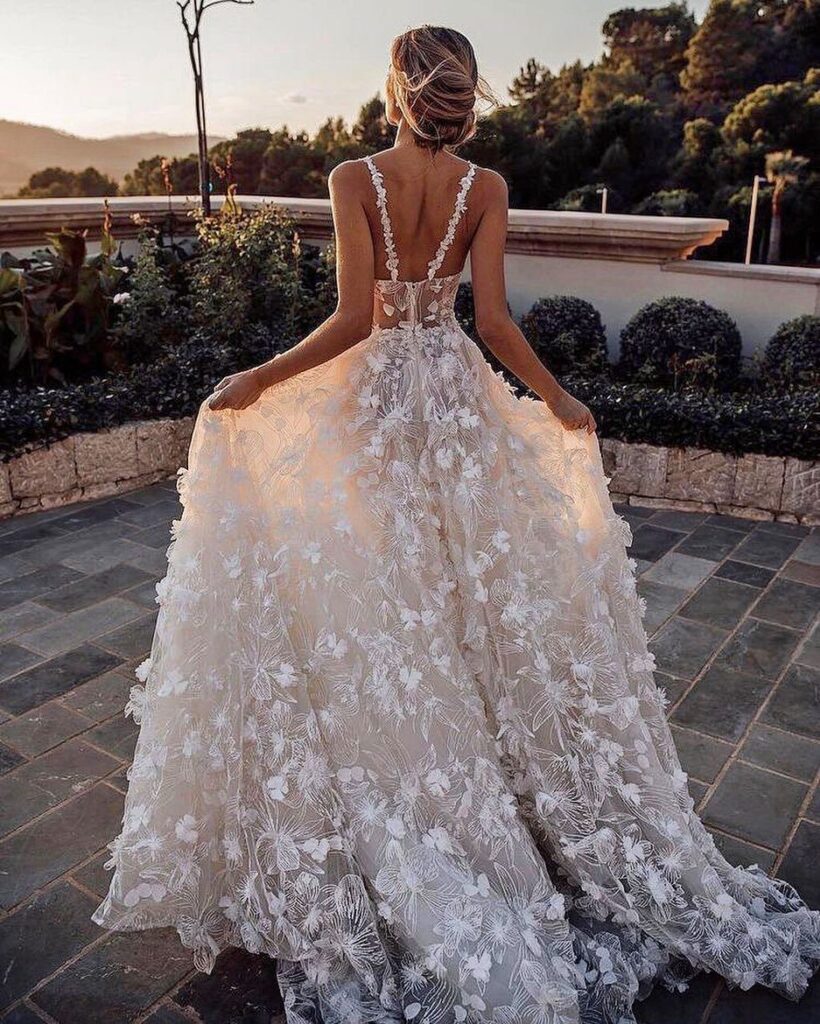
A garden wedding dress needs to handle grass, uneven ground and full sun without losing the formality the day calls for. Long sleeves or off-the-shoulder necklines give coverage that keeps you comfortable when your ceremony runs during midday sun.
1. Wedding Dresses with Sleeves
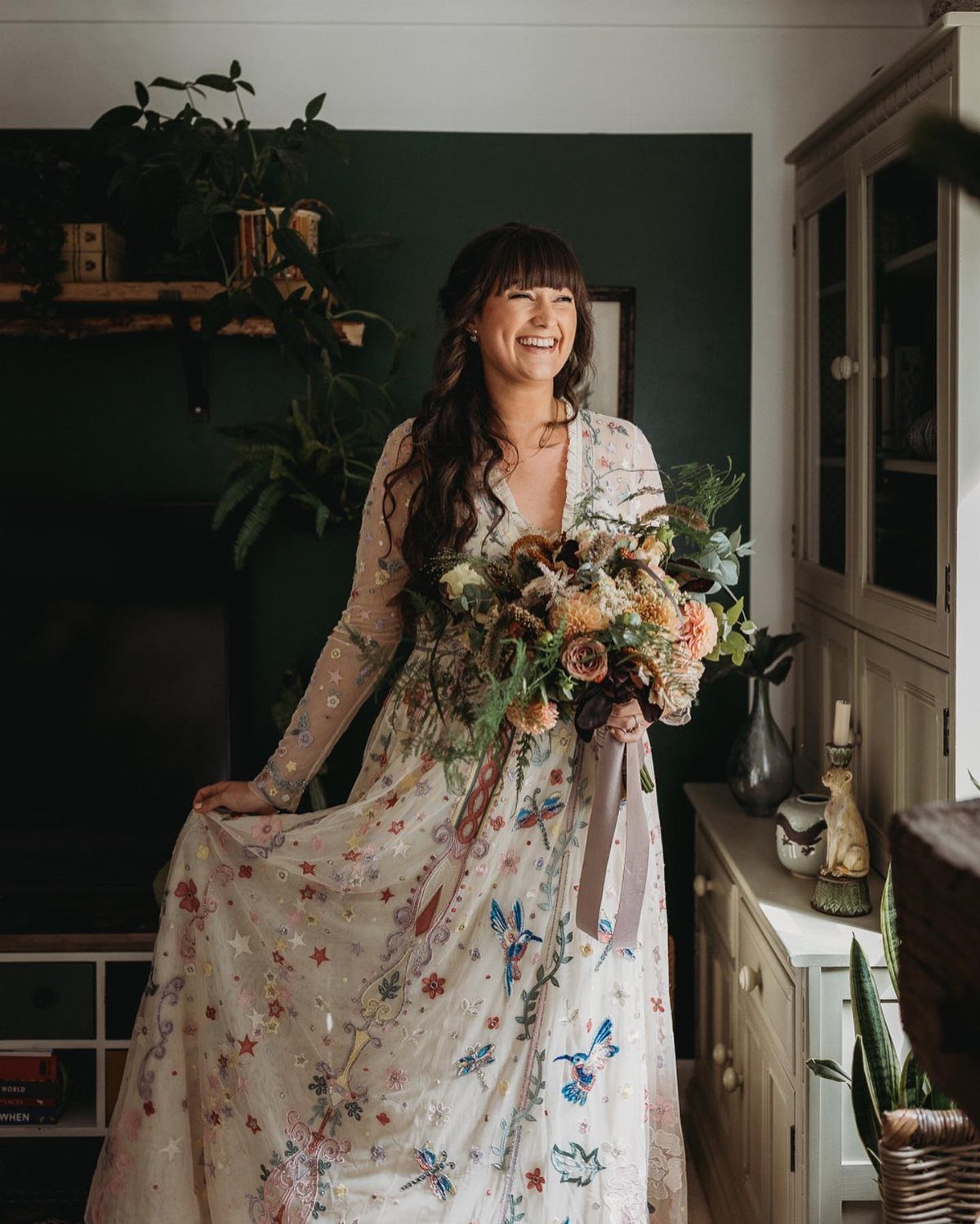
Long sleeves add coverage without weight, and in a garden setting that coverage can keep you comfortable as the day moves from ceremony to reception.
The floral pattern here ties the dress directly to the setting, but sleeves work just as well in solid lace or crepe if you want something quieter.
If your venue sits under full sun or near plants that brush against bare arms, sleeves handle both without changing the formality of the dress.
2. Comfortable Shoes to Avoid Sinking Into Grass
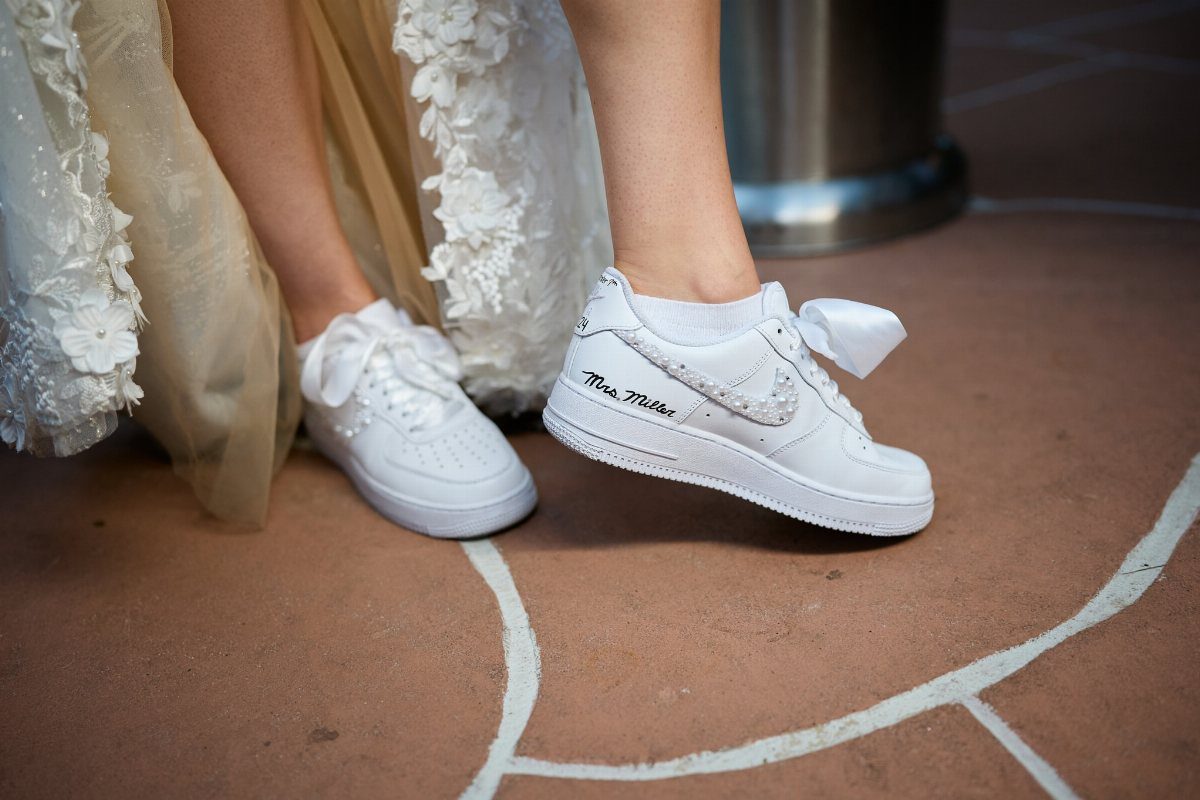
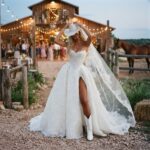
Sneakers keep you upright on soft ground. Heels sink into grass, dirt and uneven terrain, and switching shoes halfway through the day means you’re either carrying a second pair or hoping someone else will.
Customizing a pair with your new name or wedding date makes them feel less like a compromise and more like part of the outfit.
White leather styles blend with most dress silhouettes, and a bow or lace detail can pull them closer to the formality of the day without losing the traction you need.
3. Lightweight Lace Wedding Dresses
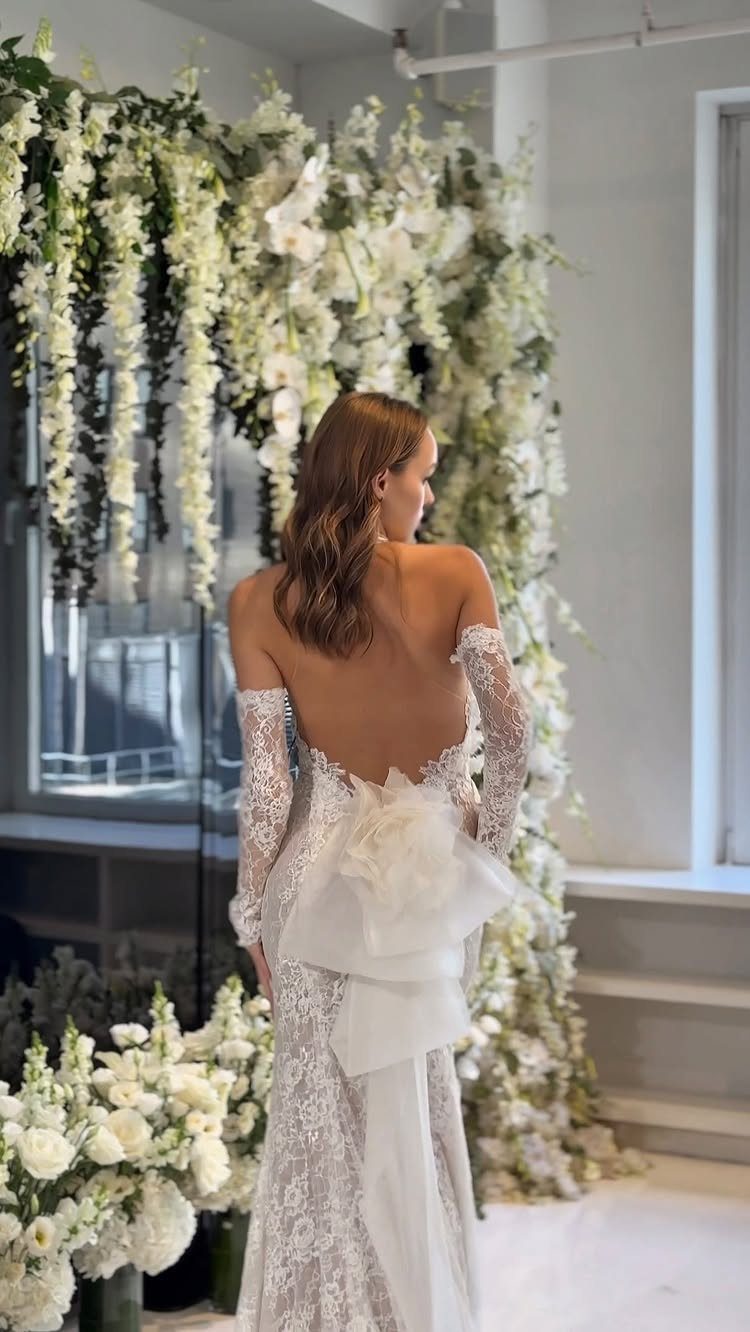
Lace gives texture and detail without adding bulk, which matters when you’re standing outside for hours.
A sheath or column silhouette in lightweight lace moves easily and skips the heavy structure of satin or mikado, so you’re not overheating before the ceremony ends.
If your garden venue leans formal, lace reads as polished without feeling overdone.
4. Garden Wedding Dress Code
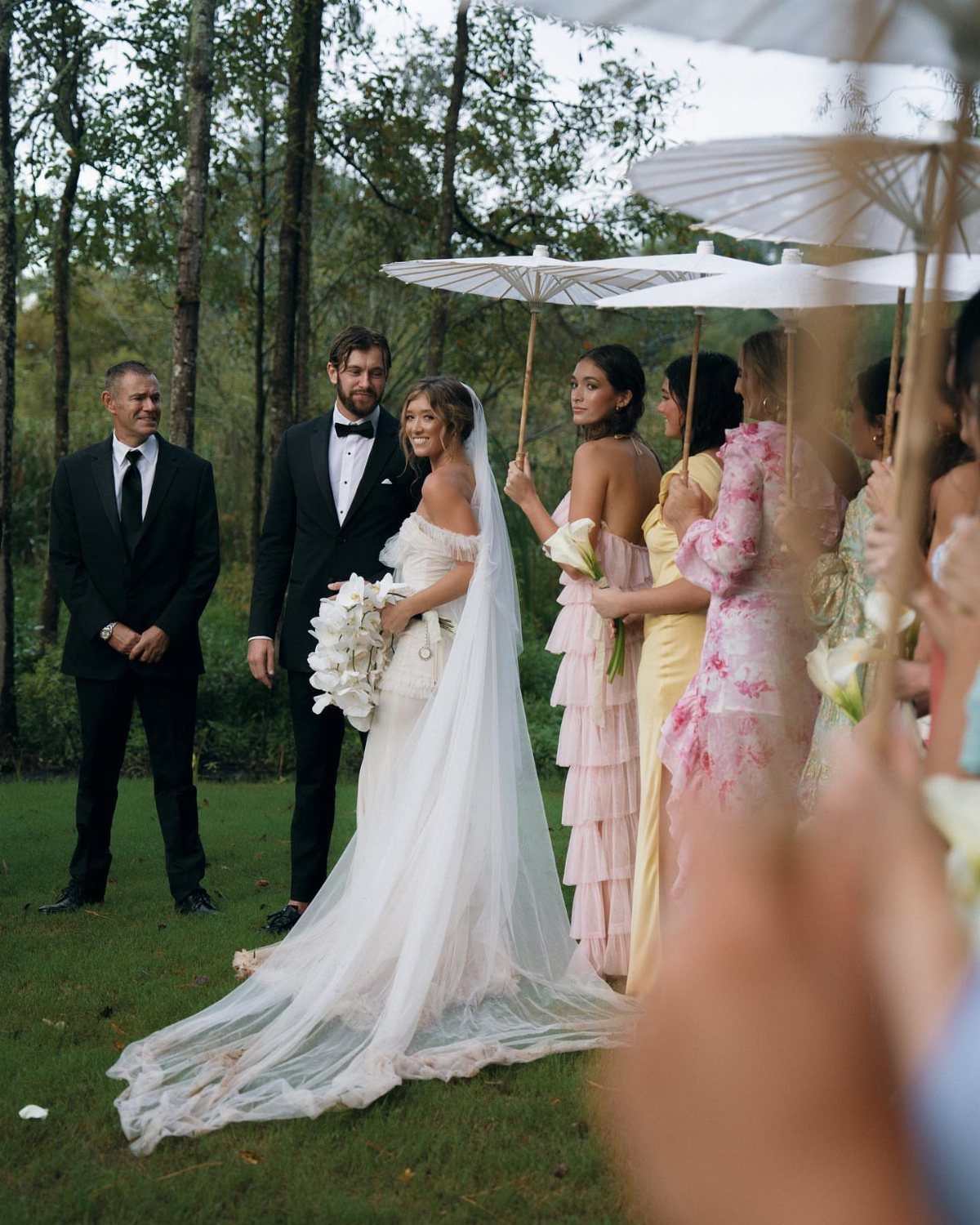
The venue and dress code together set the formality, and a garden setting doesn’t lock you into one.
A formal garden wedding still calls for a full-length gown, while a casual backyard ceremony gives you room for tea-length or even a midi dress.
Parasols for guests are a practical choice when the ceremony runs during midday sun, and they add a coordinated element to photos without requiring a full theme.
If your invitation lists a dress code, that tells guests more than the word "garden" alone.
5. Garden Dresses in Vibrant Hues
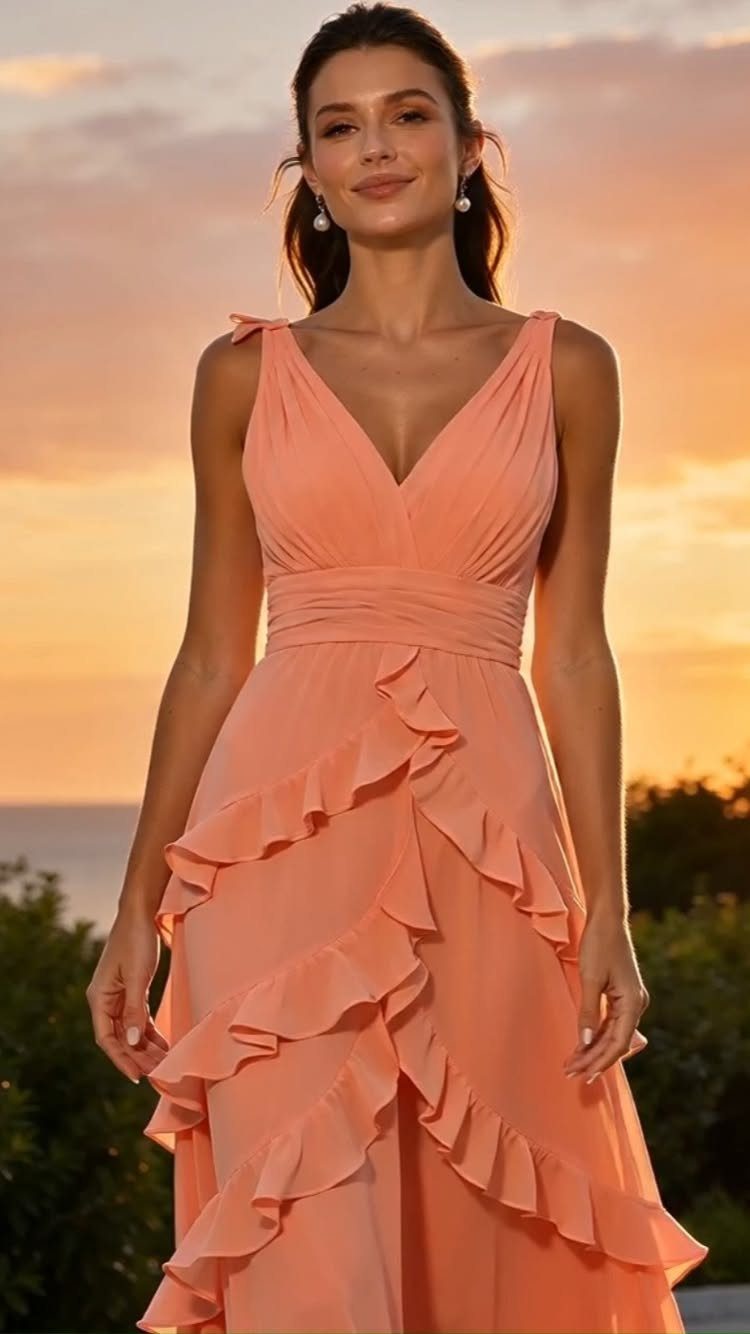
A dress in coral, peach or another saturated color stands out against greenery in a way white doesn’t, and if you’re comfortable skipping tradition, a vibrant hue can feel more personal than neutral tones.
The ruffled neckline and flowing skirt here suit a coastal or open-air garden, where wind and movement are part of the setting.
Color photographs differently depending on time of day. Warm tones like this one photograph especially well at sunset, picking up the light in a way that cooler shades don’t.
6. Floral Embroidered Bridal Gown
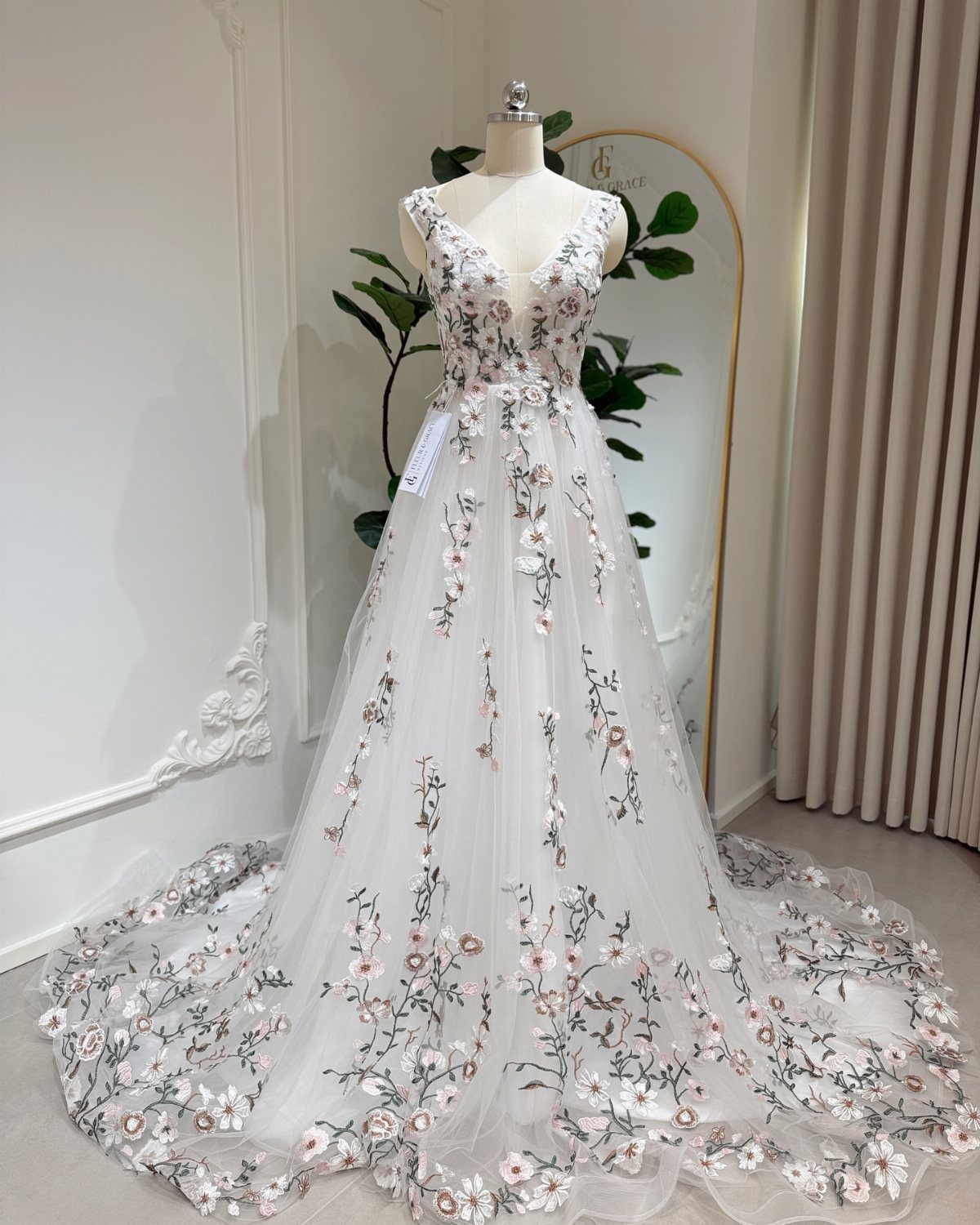
Pink floral embroidery brings color into the dress without committing to a fully colored gown, and the placement along the bodice and train adds detail exactly where photos will catch it.
The embroidery here sits on a white base, so the overall silhouette still reads as bridal while the florals tie directly to a garden setting.
If you want embroidery but your venue leans more minimalist, you can ask for it on the train alone and keep the bodice plain. The reverse works too: embroidery concentrated at the neckline and waist, with a clean skirt.
7. Strapless Tulle Garden Gown
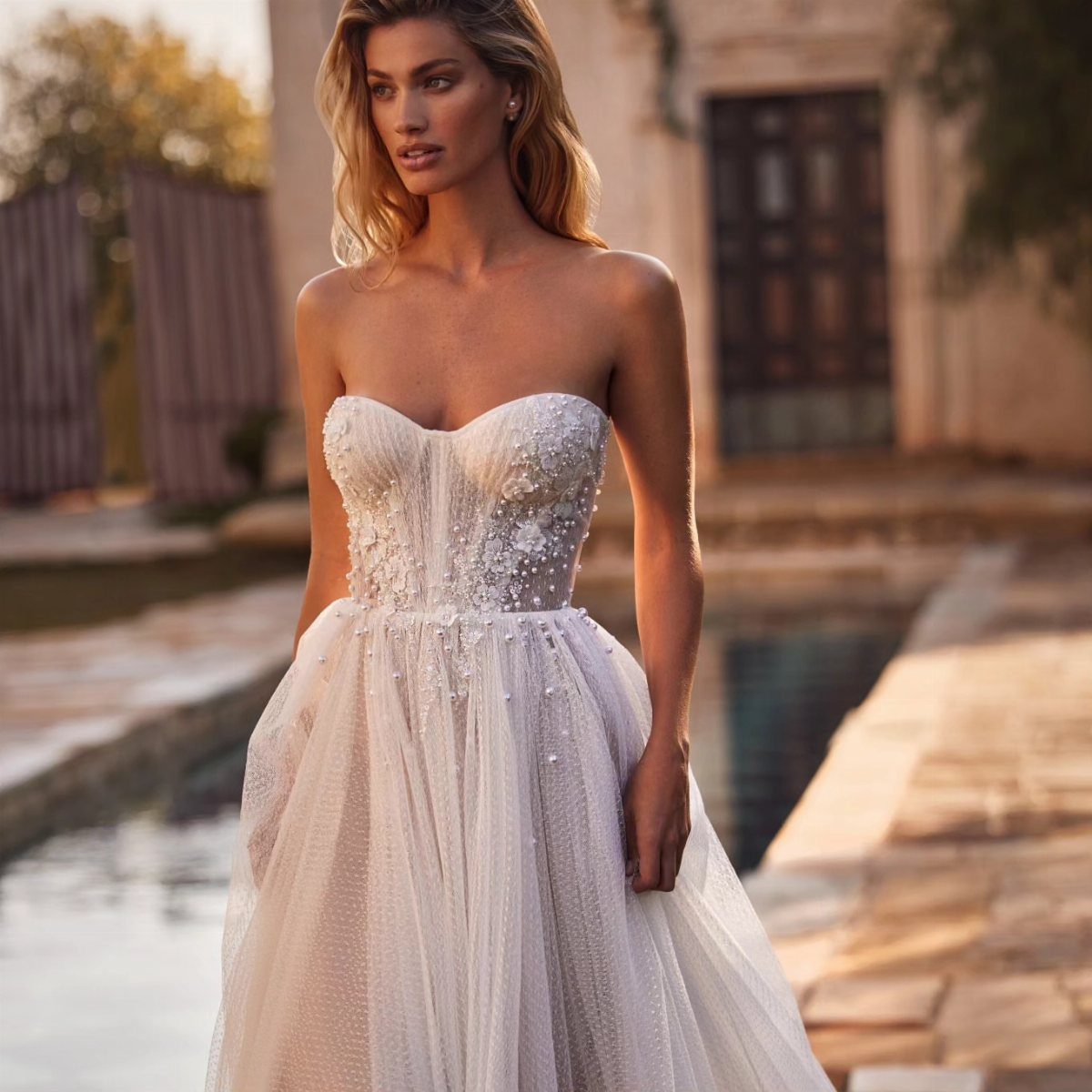
A strapless bodice covered in beaded florals gives structure without sleeves, and when the skirt is tulle the contrast between fitted and airy keeps the dress from feeling too formal or too casual.
Beading adds weight exactly where you need it to hold the dress in place, while the skirt stays light enough to move in.
If your ceremony runs long or your venue has uneven ground, tulle layers photograph well without dragging or collecting dirt the way satin hems do.
8. Bridal Gown with Floral Veil
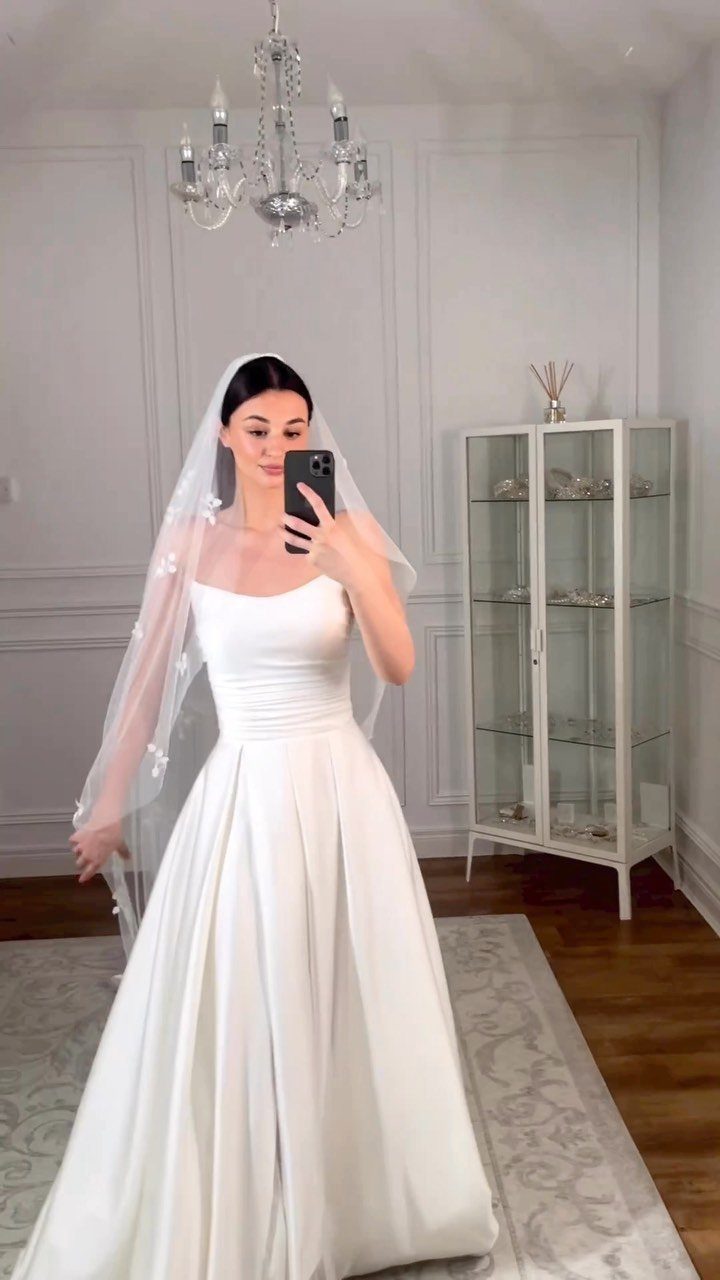
The veil brings florals in when the dress itself stays plain.
Embroidery on tulle adds dimension to photos without changing the silhouette of the gown, and if you want a garden detail that you can remove after the ceremony, the veil does that without altering the dress.
A strapless A-line works in most garden settings because the shape holds its structure outdoors. Floral embroidery on the veil can match your bouquet or pull in a color from the ceremony site.
9. Botanical Leaf Embroidery
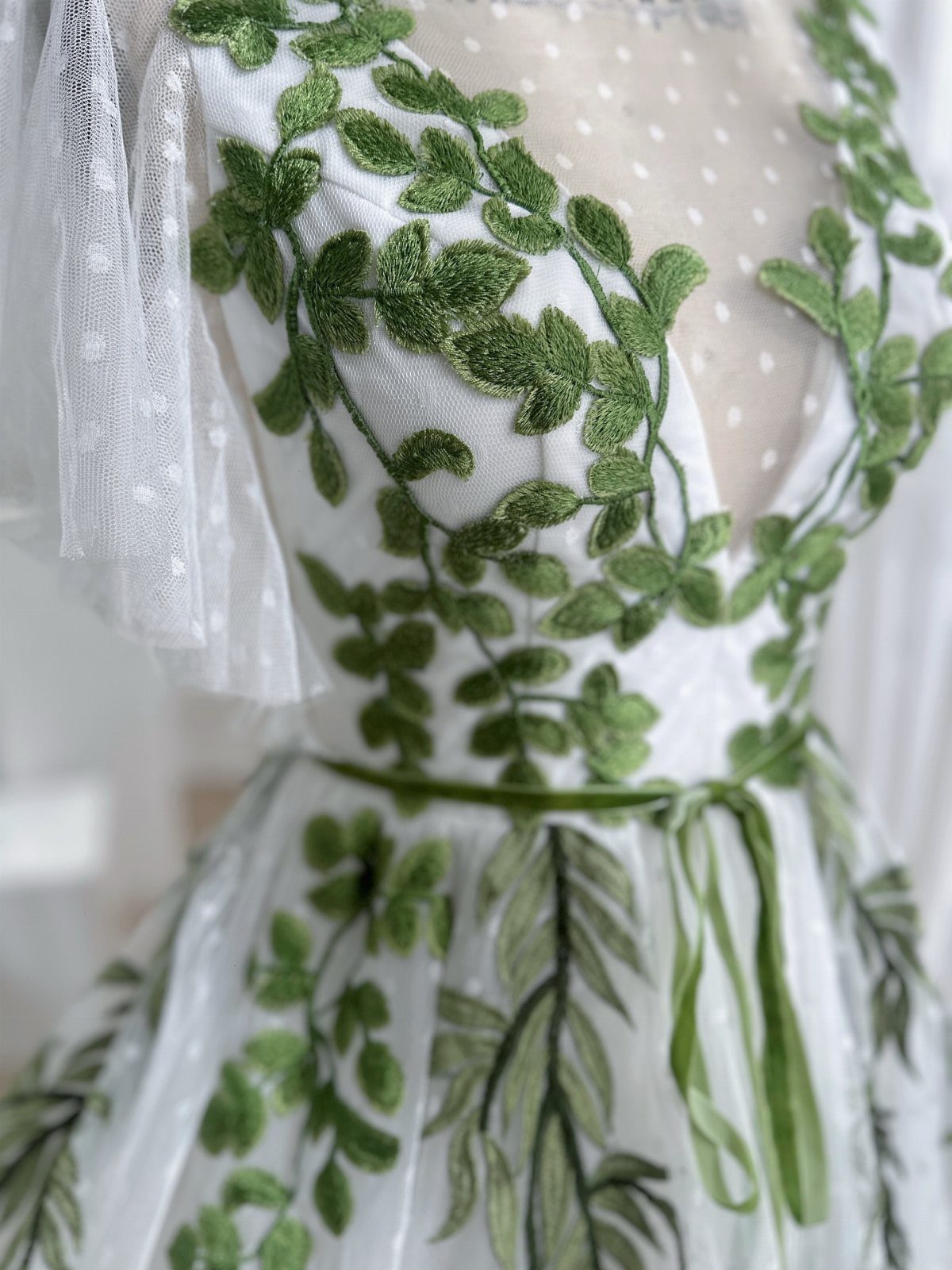
Green embroidery on white fabric mirrors the garden setting without adding florals, and a thin ribbon belt in the same green pulls the detail together.
Botanical leaf shapes feel more modern than floral appliqué, and the single color keeps the dress from looking overly decorated.
If you want a garden reference that doesn’t read as romantic or vintage, leaf embroidery does that. The ribbon can be removed or swapped if you want a different look for the reception.
10. Off-the-Shoulder Necklines
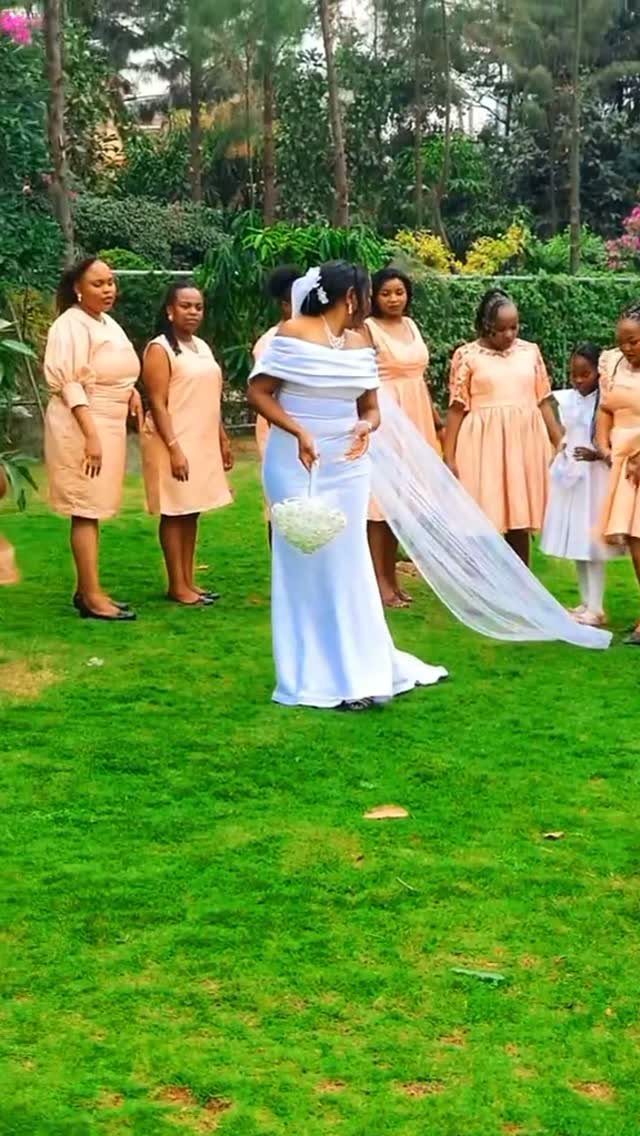
Off-the-shoulder sleeves sit lower than a standard sleeve, giving coverage across the upper arm while keeping the neckline open.
The style suits garden weddings because it adds formality without the structure of a strapless bodice, and the sleeves stay in place better if you’re moving between outdoor ceremony and reception spaces.
The neckline photographs well from the front and side, which matters for processional shots.
11. Bridal Gowns with Capes
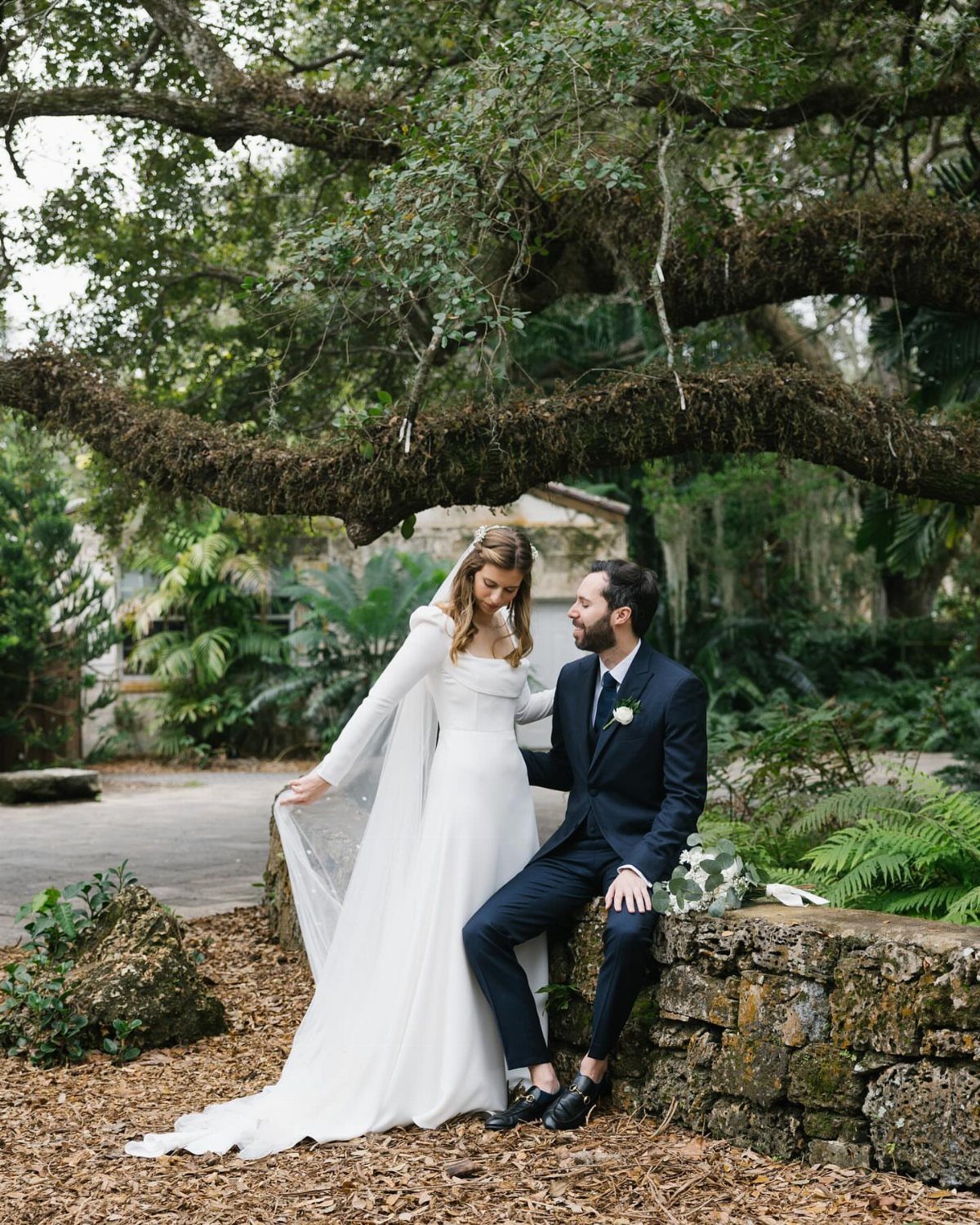
A cape adds drama to a simple gown without altering the dress itself, and you can remove it after the ceremony if the reception calls for something lighter.
Sheer fabric keeps the cape from adding warmth, so it works even in full sun, and the length creates movement in outdoor photos when there’s wind.
Capes photograph especially well from behind during the processional. If your dress doesn’t have a train, a long cape gives you that moment without changing the hem length or structure of the gown.
12. Tea-Length Bridal Gowns
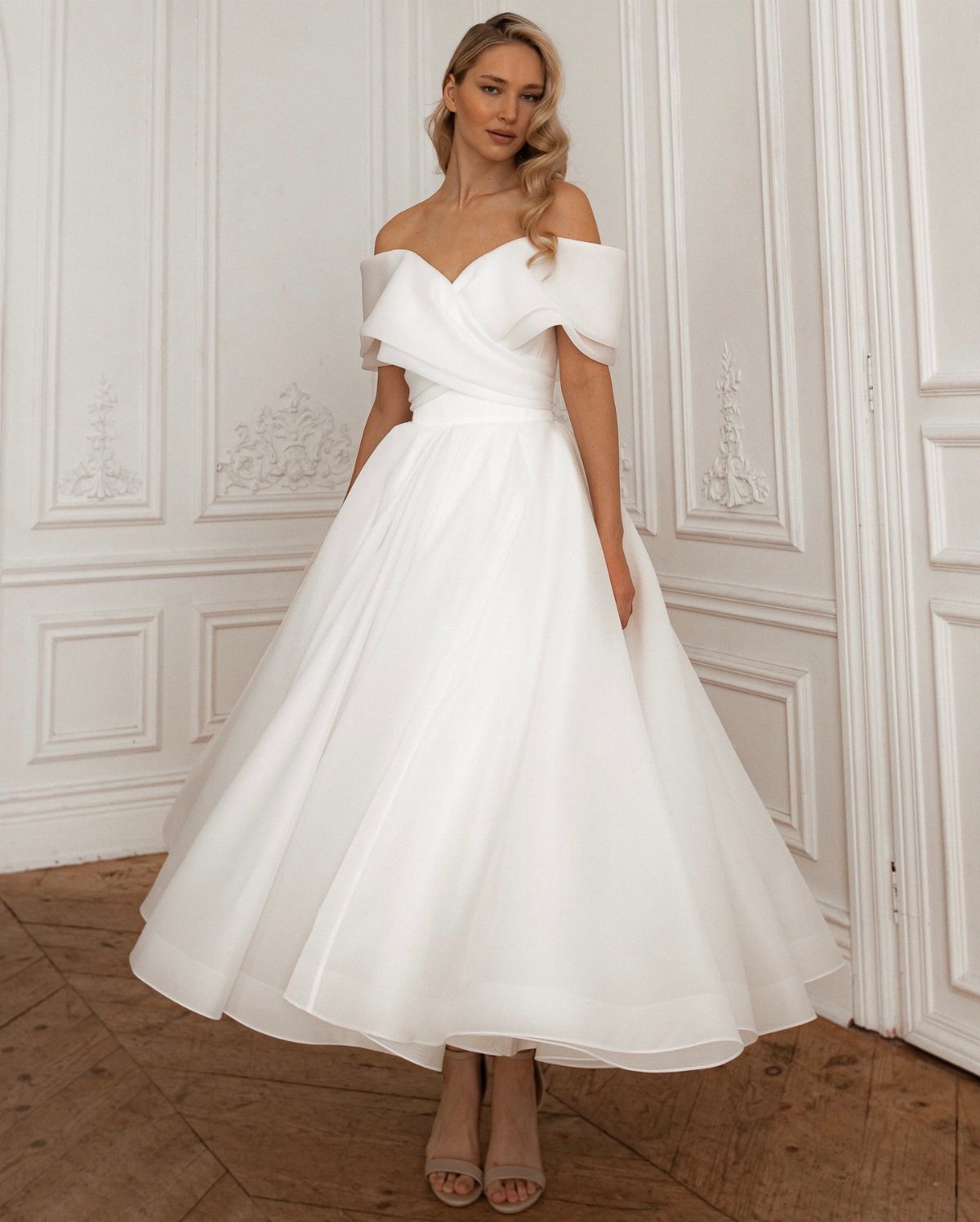
Tea-length stops mid-calf, which keeps the hem off grass, dirt and uneven ground without looking cropped.
A full skirt in this length still reads as formal, and the shorter hem makes it easier to walk through a garden venue without lifting the dress or worrying about stains.
If your ceremony site has gravel paths or if you’re skipping a veil, tea-length balances out the look without needing extra layers.
The style suits daytime garden weddings particularly well, where full-length gowns can feel heavier than the setting calls for.
13. High-Low Hemline Dresses
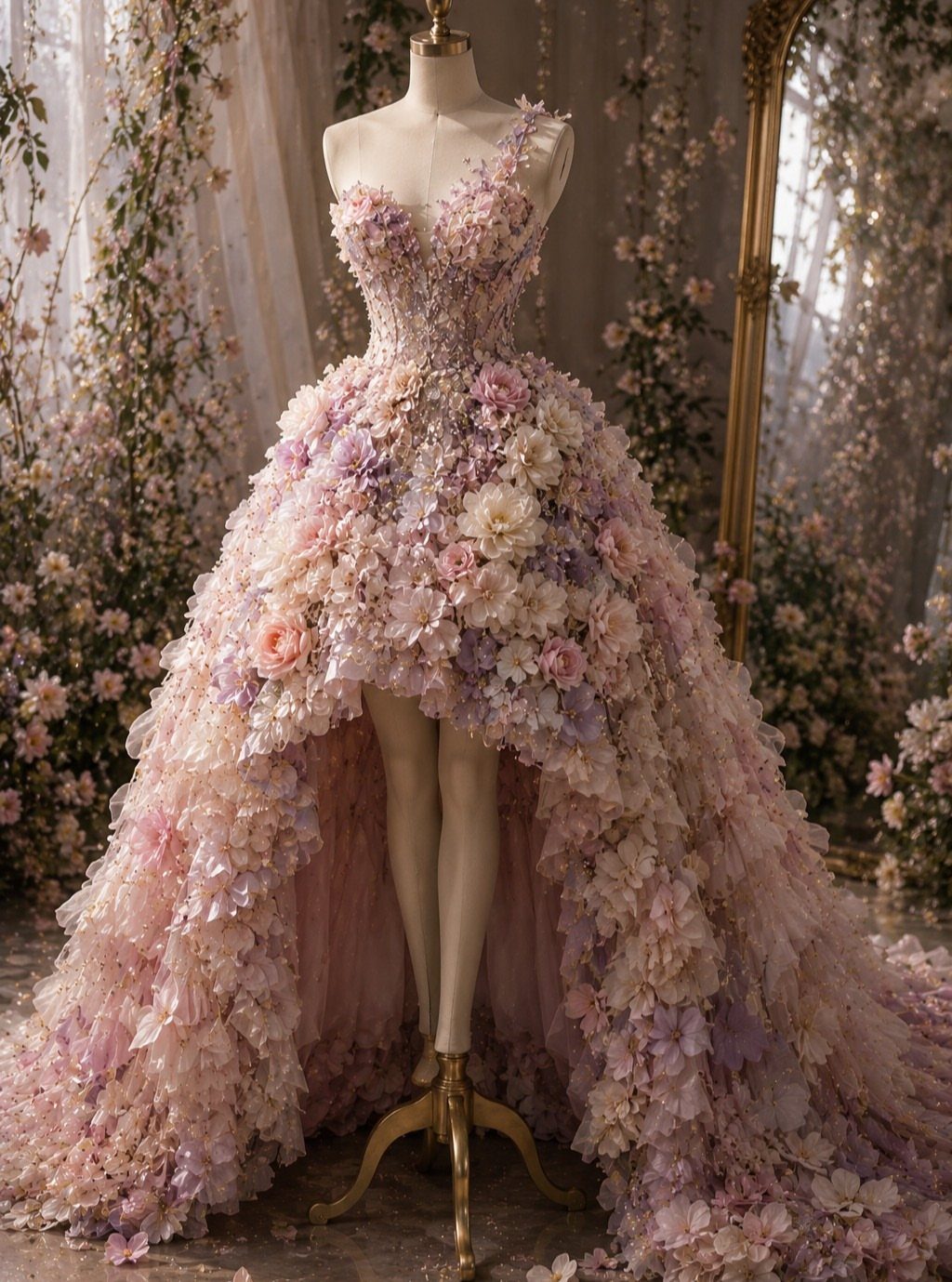
High-low hems keep the front short and the back long, so you get the movement of a train without the fabric pooling around your feet while you walk.
The shorter front clears grass and gravel without lifting the skirt, and the back still photographs well from behind.
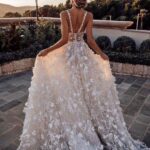
3D floral appliqués in pink and purple give texture that catches light differently than flat embroidery, and if your garden venue already has color, the dress can match it directly instead of staying neutral.
14. Colorful Floral Print Bridal Gowns
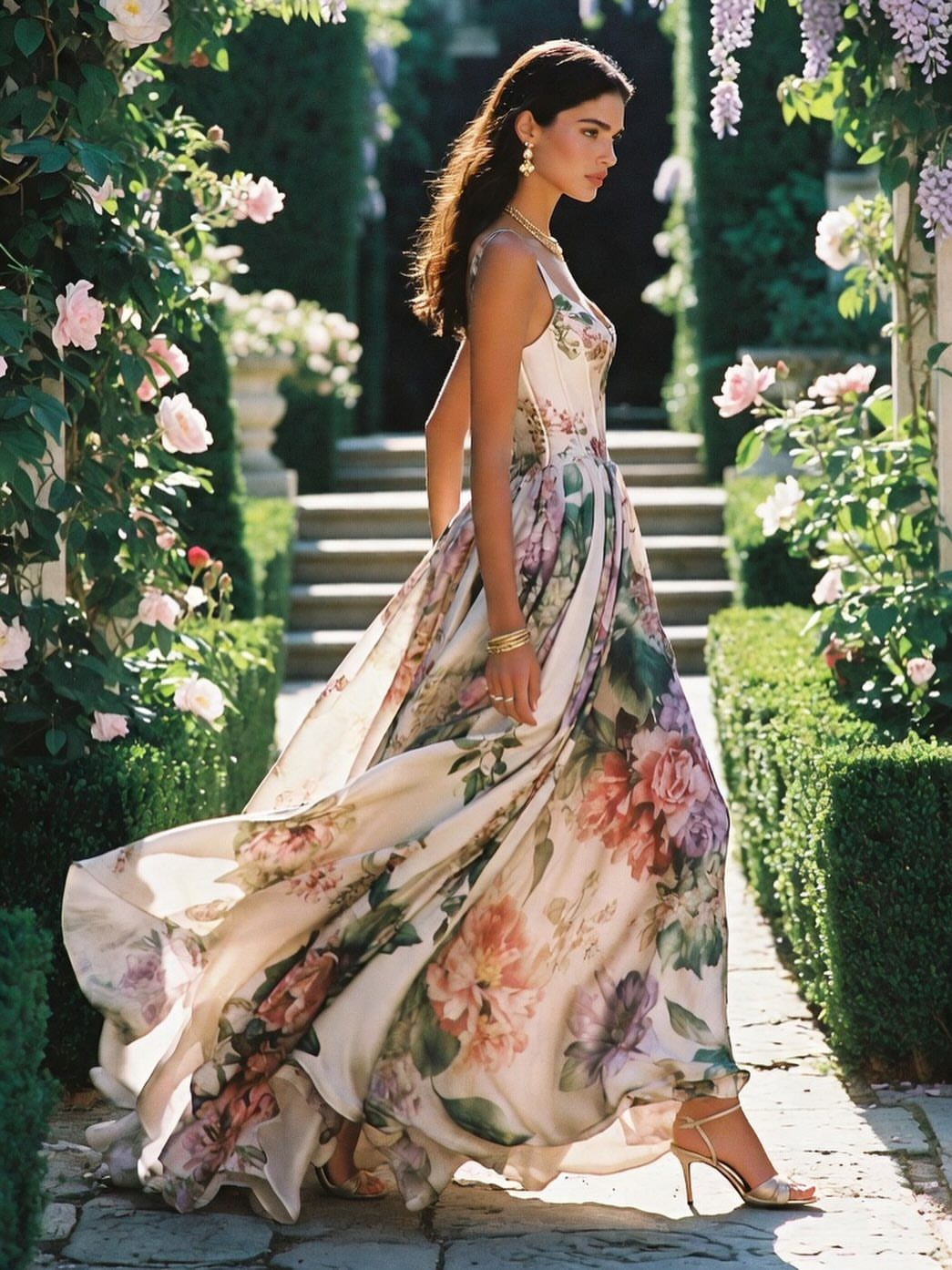
Printed florals cover the fabric instead of sitting on top of it, so the dress stays lighter than one with appliqués or beading.
A flowing skirt in printed chiffon or organza moves easily in wind, and the pattern ties the dress to a garden setting without needing a florist to match it.
If you’re wearing the dress outside all day, printed fabric doesn’t snag on plants the way dimensional details can.
Advice for Choosing a Dress
Chiffon, tulle, lace and crepe all breathe better than heavy satin or stiff mikado, and they move naturally in wind instead of holding one shape all day.
A single lining keeps the skirt opaque without trapping heat the way multiple petticoats do. If your wedding falls in early spring or late fall, bring a jacket or wrap that fits over your shoulders without bunching at the sleeves.
Sheer panels look beautiful in photos but need constant adjusting when you’re moving around outside. Cotton and woven fabrics breathe better than synthetics and handle direct sunlight without looking washed out in photos.
Structure works best when it comes from the cut, not the weight of the fabric.
Styling Tips for Garden Weddings
Block heels, wedges and flats stay upright on grass and gravel without sinking.
Match your jewelry to the neckline: if the dress has texture or detail up top, keep earrings simple; a plain bodice can handle a statement piece.
Low buns, braids and loose waves stay put through humidity and wind better than anything that needs spray to hold its shape. Styles that need constant smoothing or pinning won’t survive humidity or wind.
A hem that clears the ground or a bustle you can pin up after the ceremony keeps fabric clean and lets you walk freely.
Seasonal Considerations
Summer weddings call for open necklines and fabrics that let air through. Chiffon, tulle and lightweight satin all work better than heavy materials when the ceremony runs during full sun.
Fall weddings can lean more structured, with sleeves or slightly heavier fabric that adds warmth without bulk. A lined skirt handles cooler temperatures better than sheer layers.
Evening outdoor weddings often start warm and cool down fast. Detachable sleeves or a wrap that fits over the dress give you coverage once the sun sets, and both can be removed for photos earlier in the day.
Frequently Asked Questions
What do you wear to a garden themed wedding?
Start with the dress code on the invitation, which sets formality more than the garden setting alone.
A casual daytime ceremony suits a midi dress or elevated sundress in a refined fabric, while cocktail attire calls for a sleek midi or flowing maxi, and formal garden weddings still need a floor-length gown in a rich color or subtle print.
Choose breathable fabrics like chiffon or cotton blends that move easily outdoors, and consider the season: spring gardens suit fresh color and easy layers, summer calls for open necklines that don’t cling, and fall weddings can handle deeper tones and longer sleeves.
What is the taboo color for wedding guests?
Skip white, ivory, cream, and any very pale shade that could read as bridal in photos. Skip any pattern built on white fabric if someone glancing across the lawn might mistake it for a bridal gown.
Black reads formal enough for an evening garden reception or cocktail invitation, but soften it with blooms in your jewelry, a bold shoe, or a bag that brings in color.
What are some good summer outfits to wear to a wedding?
Choose breathable fabrics like chiffon, tulle, or cotton blends that let air through, especially when the ceremony runs during full sun.
Open necklines and silhouettes that don’t cling handle heat better than heavy or stiff materials. A lined skirt provides coverage without trapping warmth the way multiple layers do, and you can bring a light wrap for once the sun sets.