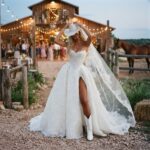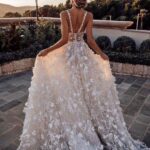
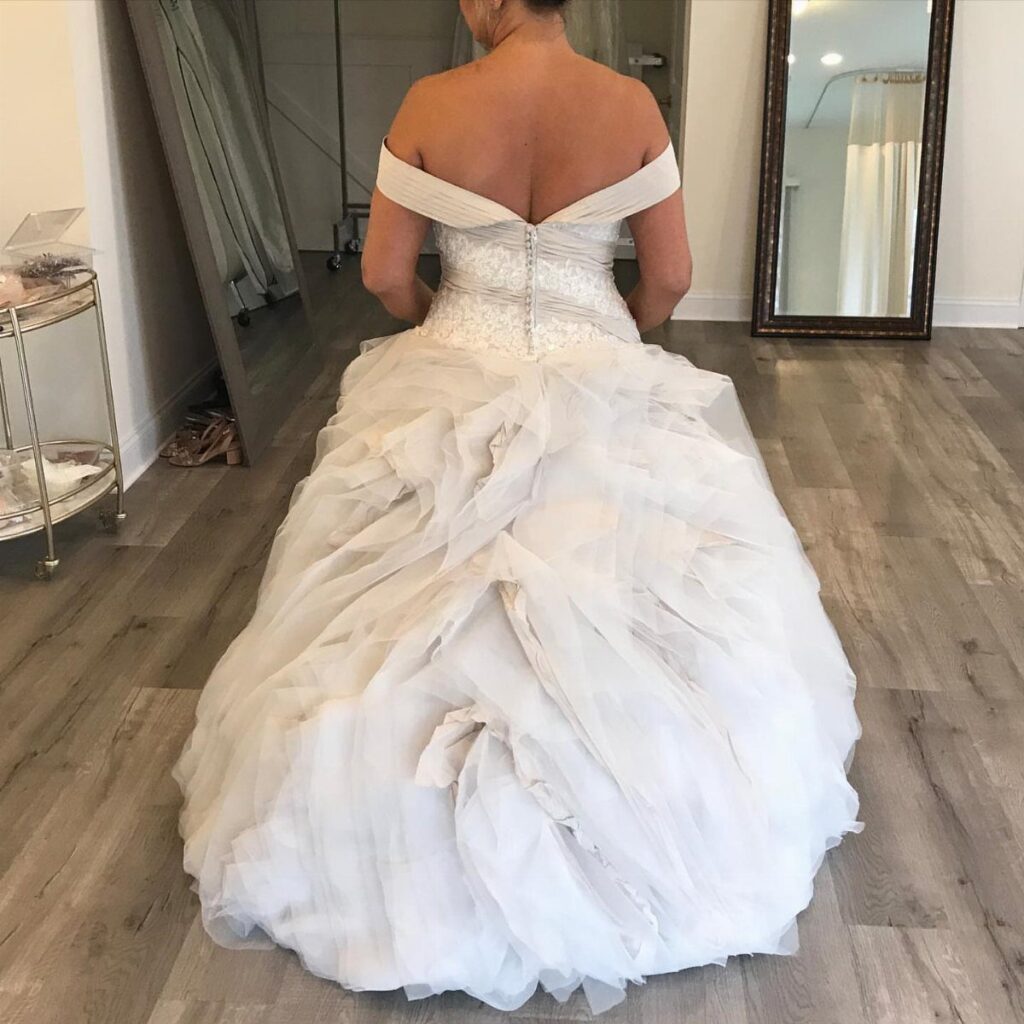
The span runs from a single gathered section at the center back to layered tiers that cascade down the entire train, and your choice depends on the style of your dress and how you want the train to look once it’s lifted.
A ballroom bustle tucks everything underneath for a clean floor line, while a French bustle lifts the fabric in cascading folds that keep lace or embroidered detail on display.
A ballroom style works beautifully for voluminous skirts, while an over-bustle keeps layers visible.
1. Ballroom Bustle
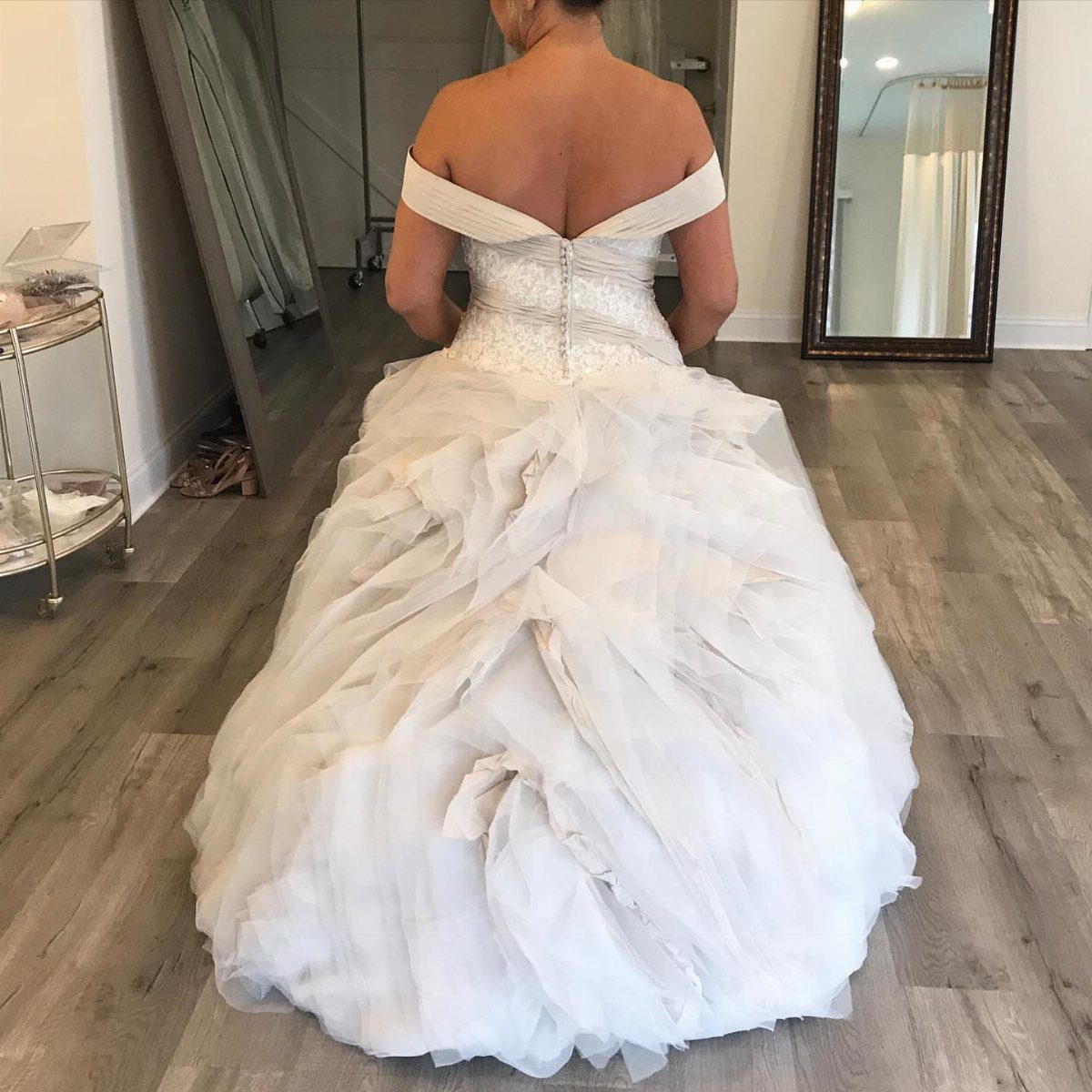
This style gathers the entire train underneath itself, creating volume without any fabric visible on the floor.
If you want to move freely during the reception without worrying about stepping on your dress, this does it by tucking everything out of sight.
The fabric gathers into a rounded shape that keeps volume across the back. Works best on dresses with moderate to long trains where you want a clean floor line and a bit of drama in the shape.
2. Double/Triple French Bustle
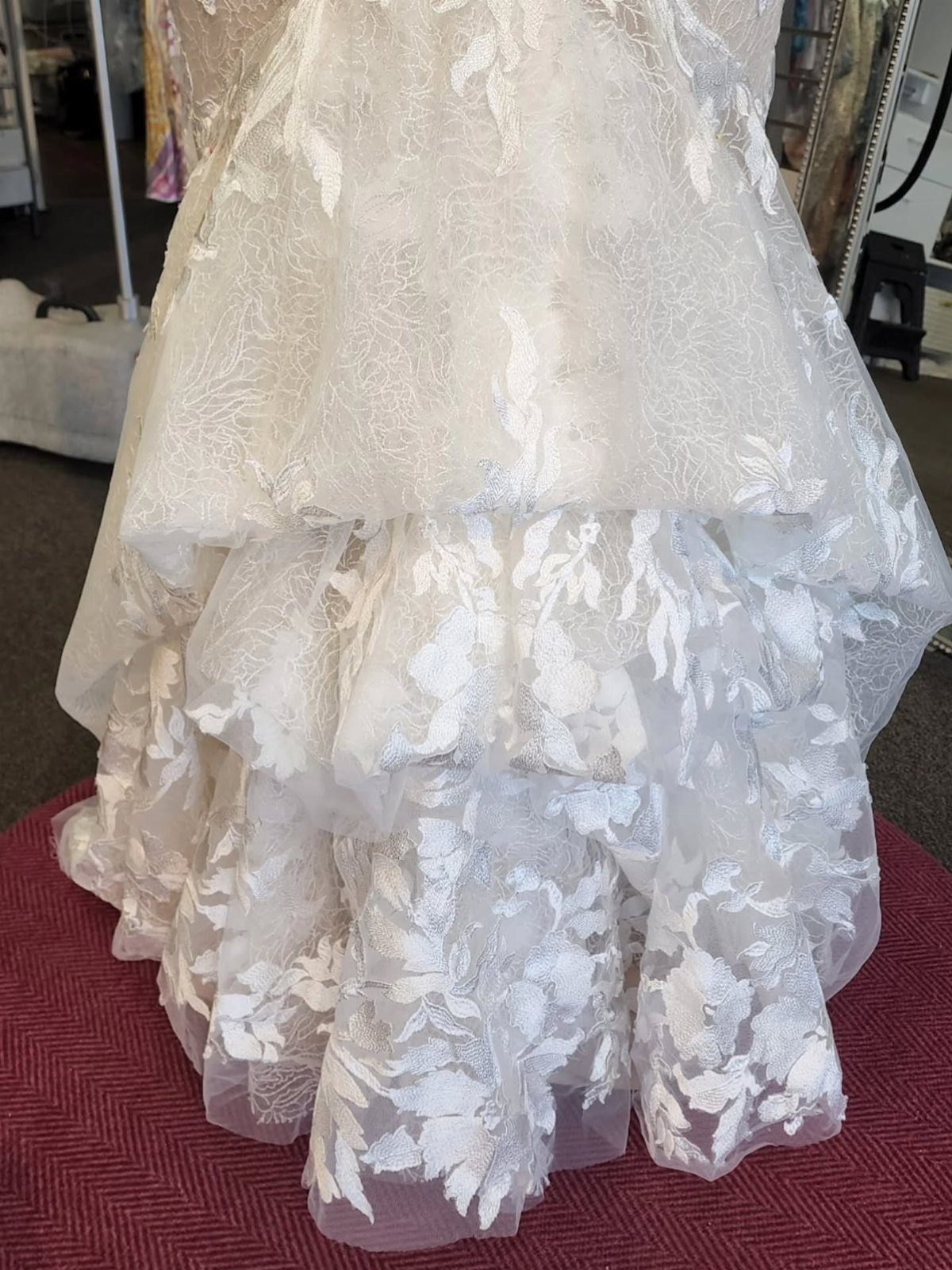
Multiple pick-up points create a series of cascading folds down the back, giving you a layered effect instead of one gathered section. Each tier sits above the last, so the train stays visible but lifted clear of the floor.
I like this option for lace or embroidered gowns where you want to keep showing off the fabric detail through the reception.
The more pick-up points, the more defined each layer becomes, and a triple version gives you 3 distinct tiers.
3. Traditional American Bustle
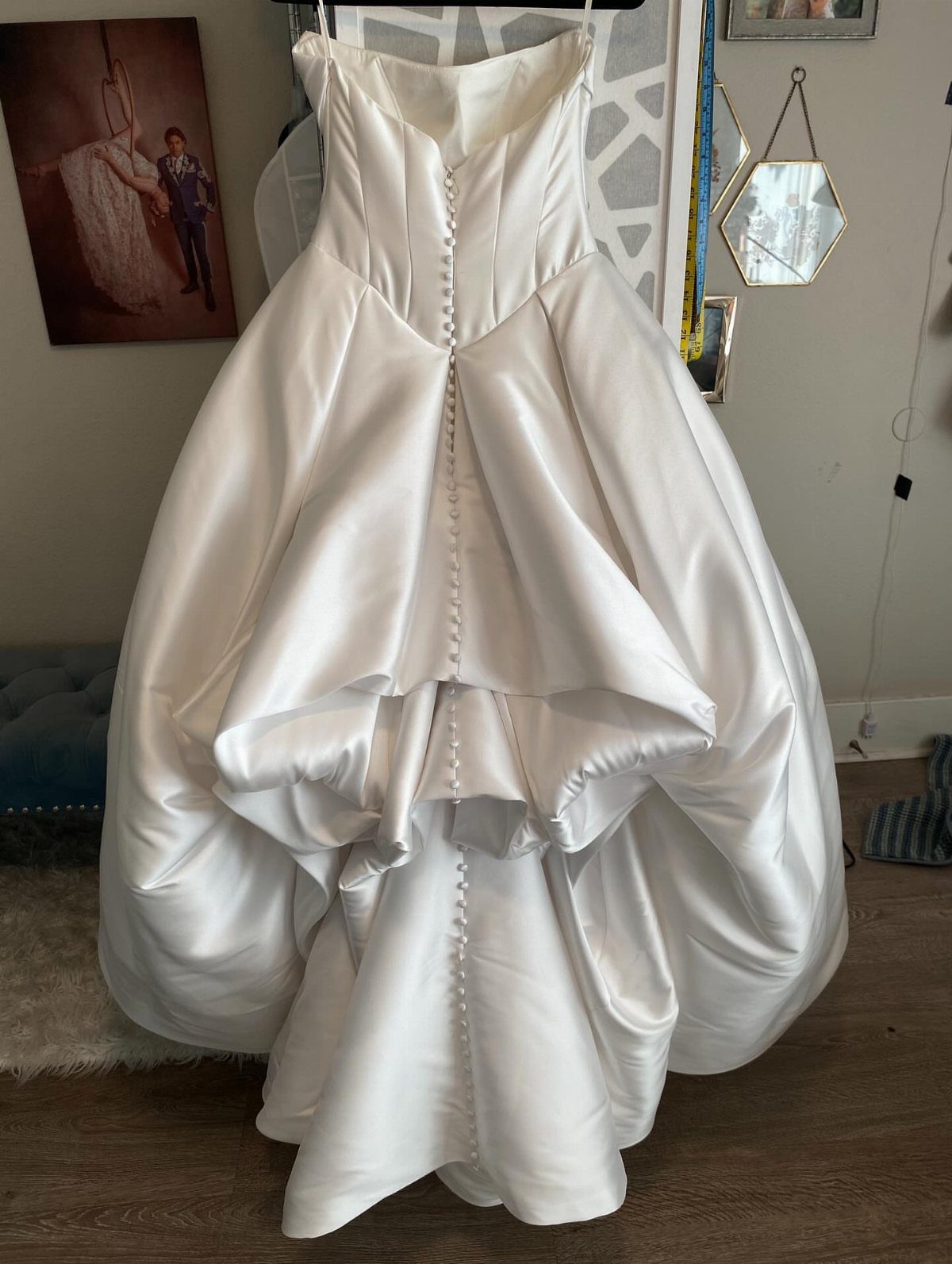
Pick-up points along the hem pull the train up and fasten at a single spot along the center back seam, creating one gathered section that sits vertically.
The fabric collects in soft folds rather than spreading across the width of the dress.
This keeps the silhouette narrow and works well on column or A-line gowns where you don’t want to add width at the hips. If your dress has minimal embellishment, the clean gather won’t compete with the rest of the design.
4. Victorian Bustle
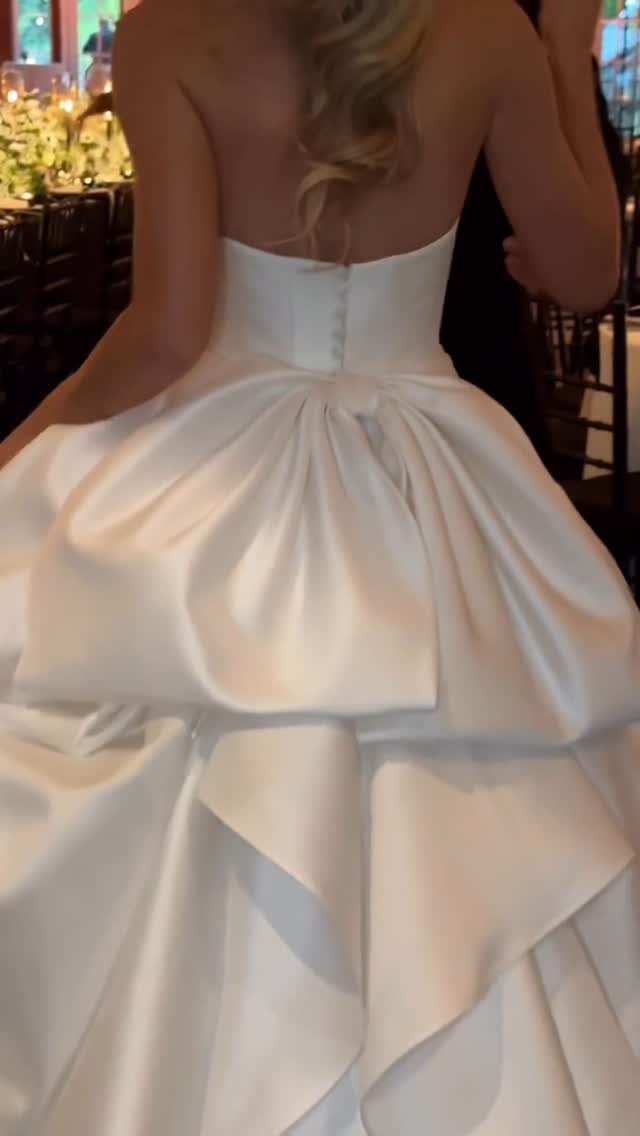
Named for the historical silhouette it mimics, this version gathers the train into a pronounced puff of fabric that sits high on the back of the skirt.
The volume is concentrated rather than draped, so you get a structured shape instead of soft folds.
Best on satin or taffeta where the fabric has enough body to hold the gathered shape. If your dress already has a full skirt, this amplifies that fullness at the back.
5. Bustle with Bow Accent
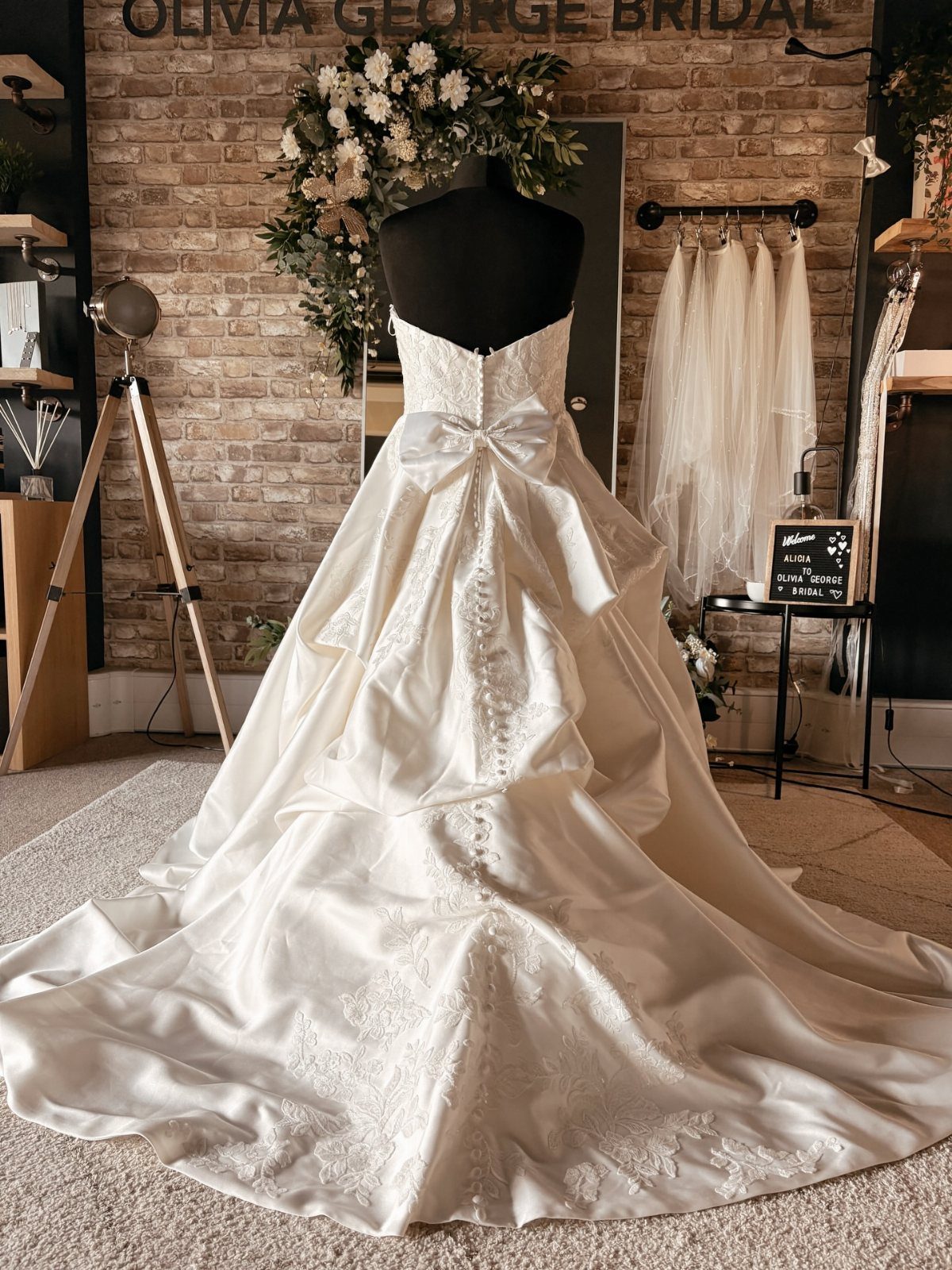
A fabric bow sits at the bustle point, turning the functional gathering into a design detail. The bow can match the dress or introduce a contrasting texture, and it covers the hardware while adding visual interest to the back.
If you like a polished, decorative finish, this gives you one without extra embellishment sewn onto the gown itself. The bow can be sized to suit the dress, from a subtle accent to a statement piece.
Choosing the Right Bustle
Heavier fabrics like satin or taffeta need a sturdier bustle because the train weighs more. A single hook won’t hold a cathedral-length satin train; plan for multiple points and bartack reinforcement at each one.
Lightweight fabrics like chiffon need a more delicate approach, and tulle is forgiving enough that most bustle types work.
Talk to your seamstress about the best bustle for your specific gown, especially if the construction is custom or involves layered fabrics. The dress silhouette and fabric weight determine how many pickup points you need for stability.
Practice Bustling
Have your maid of honor or the person bustling your dress attend your final fitting so they can learn the system before the wedding day.
Most bridal shops will walk through the bustle during alterations, but practice at least once more after that.
If your dress has multiple points or a French bustle with several layers, practice helps whoever’s doing it understand the order and how much tension to use.