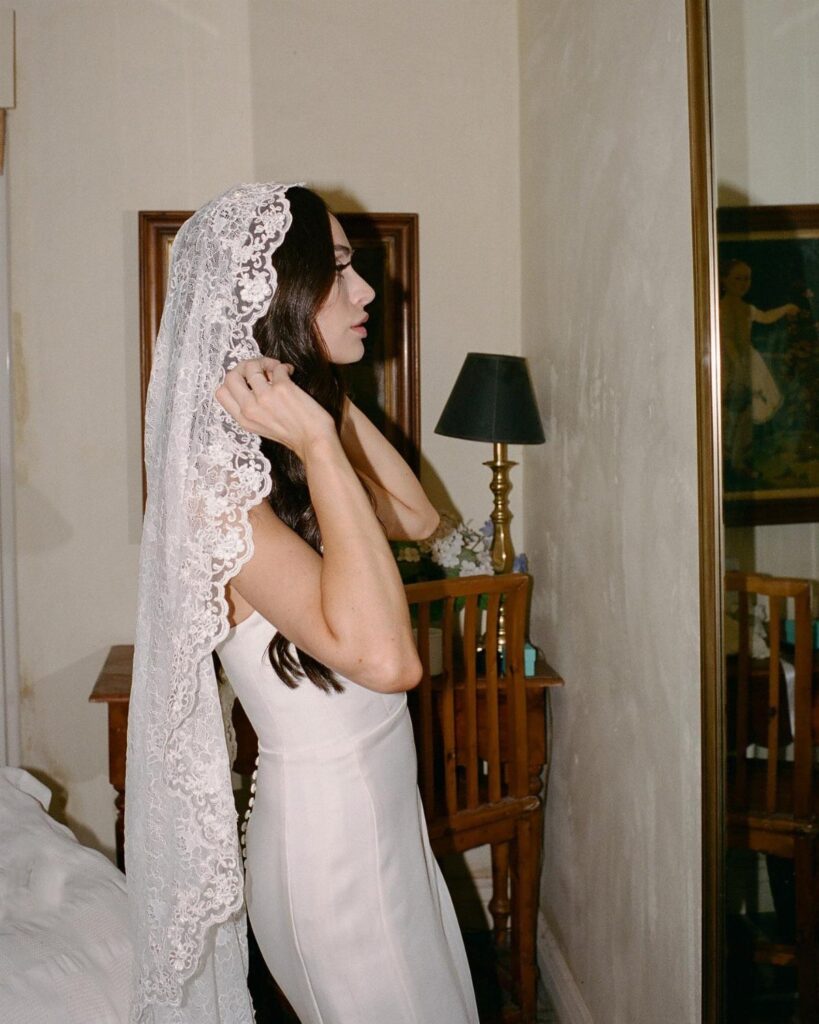
A mantilla veil runs from shoulder-length to cathedral train, with lace edging the entire perimeter instead of just the bottom border.
Traditional mantillas drape over the head without a comb, but most brides add discreet pins at the crown for security.
The lace border frames your face and dress in every shot, creating one continuous silhouette with a lace gown or adding contrast against satin.
1. Traditional Spanish-Style Mantilla Wedding Veil
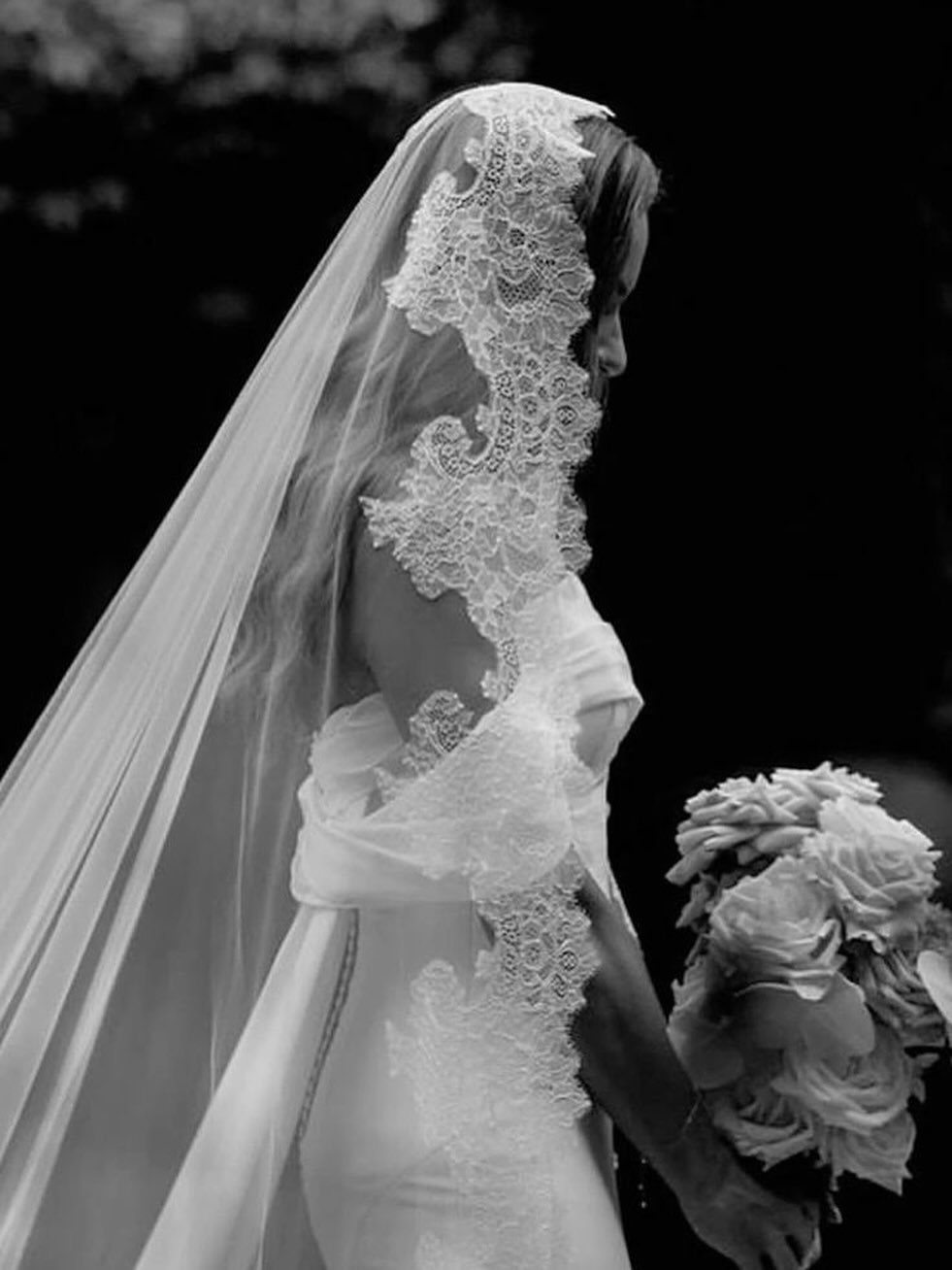
This veil brings the lace right to the edge, no tulle border, the way Spanish brides have worn them for centuries.
The fine lace traces the silhouette without adding bulk, and the contrast between sheer tulle and detailed lace reads beautifully in photos.
Mantilla veils traditionally drape over the head rather than attach to a comb, so the fabric rests naturally and moves with you.
If you want that look with more security, a few well-placed pins at the crown hold it through the ceremony without changing the drape.
2. Why Brides Love Mantilla Veils
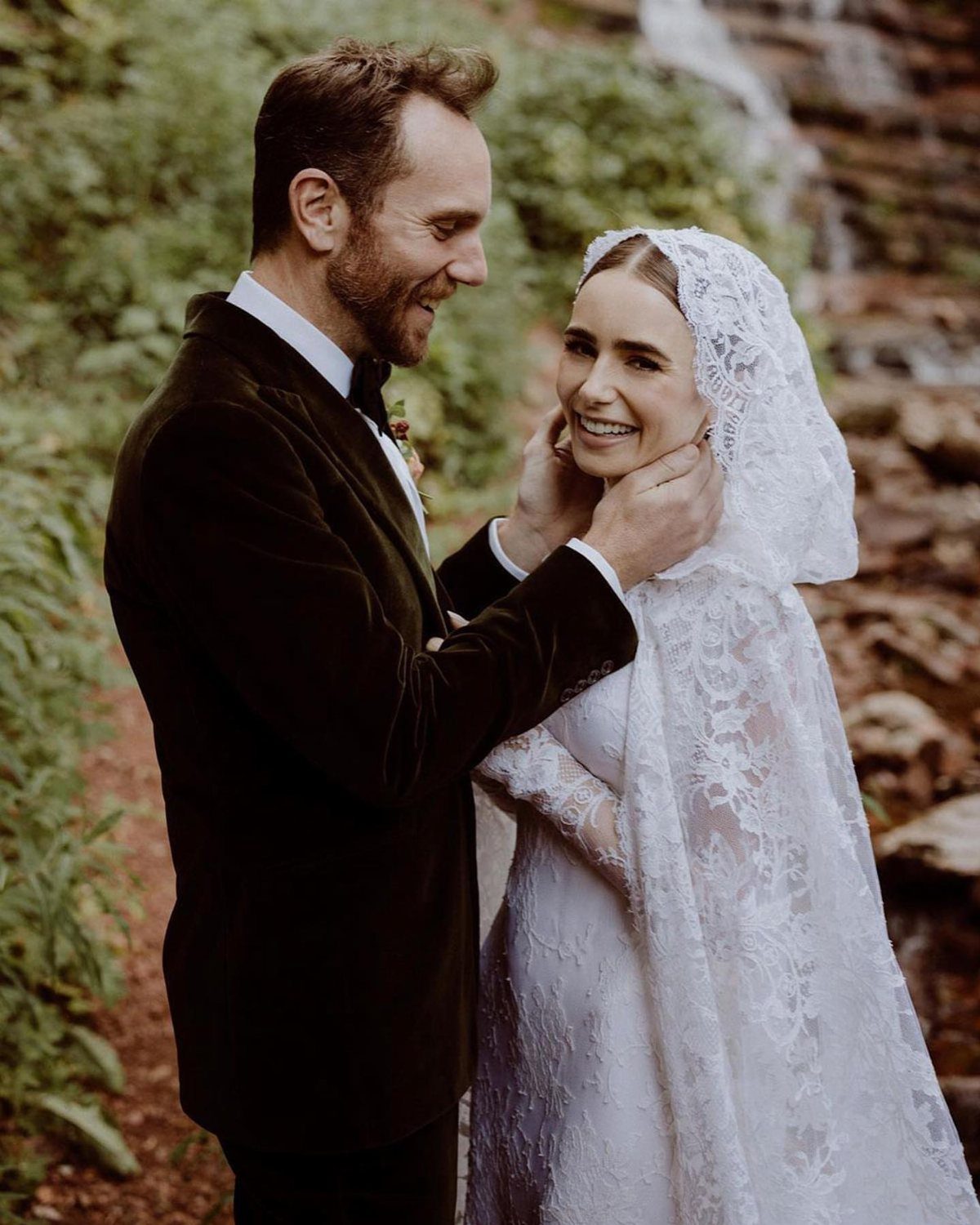
Mantilla veils photograph exceptionally well because the lace edge frames your face and dress without competing with either one. The scalloped border catches light at every angle, giving dimension to both movement shots and portraits.
Brides also appreciate how versatile they are.
A mantilla works with sleek satin gowns, all-lace dresses, and everything in between. The veil adds detail where your dress is simple and complements it where your gown already has lace, as long as the lace patterns coordinate.
3. Traditional Wedding Mantilla Veil
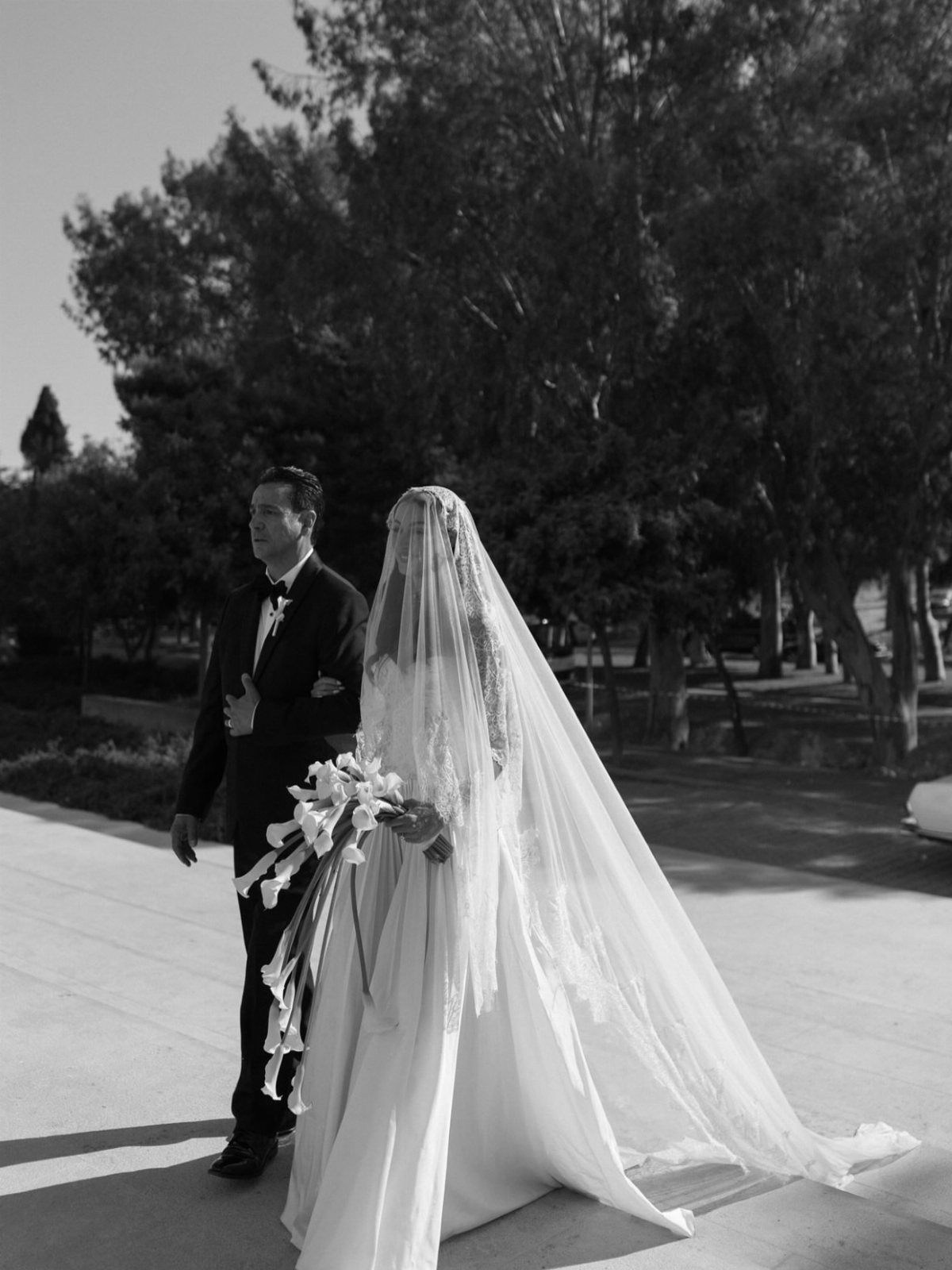
A traditional mantilla sits softly over the head and shoulders, with lace edging the entire perimeter. The look is understated and elegant, letting the lace do the work without layering or volume.
This style suits brides who want a veil that feels like an heirloom, even if it’s brand new.
The simplicity makes it easy to wear with almost any gown silhouette, and the lace border defines your shape in ceremony photos without overwhelming the frame.
A black mantilla is also traditionally worn by a woman who is meeting with the Pope and a white mantilla is appropriate for a church wedding, but can be worn at other ceremony occasions as well.
4. Mantilla Veil Paired with a Tiara
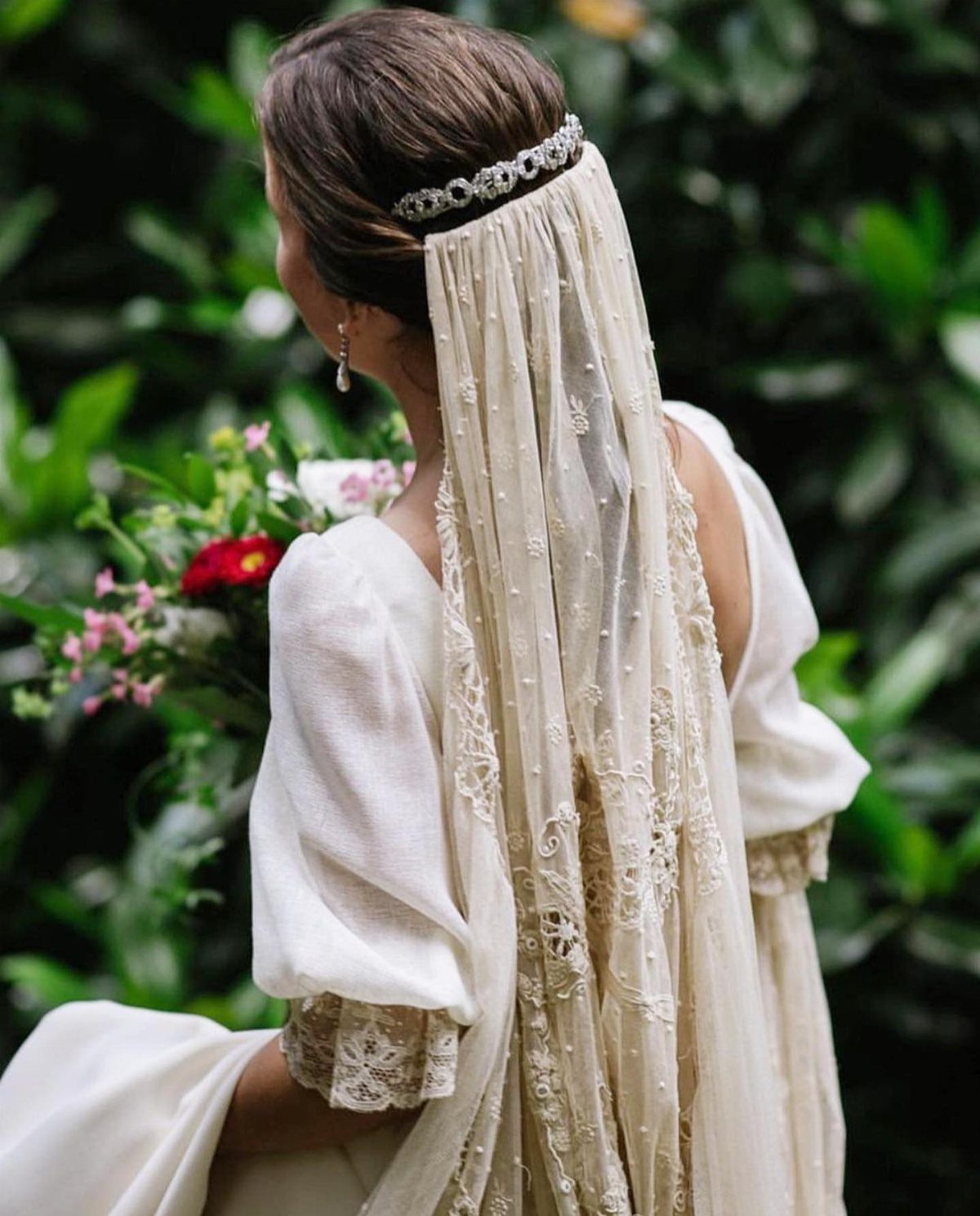
A tiara anchors the veil securely while adding sparkle at the crown, giving you 2 statement accessories that work together instead of competing.
This pairing suits brides who want a royal, romantic look without going full cathedral drama.
The tiara adds structure to the drape, so the veil sits higher on the head and fans out more noticeably. If your dress has puffed or structured sleeves, the volume at the top balances beautifully.
5. Floor-Length Cathedral Mantilla Veil
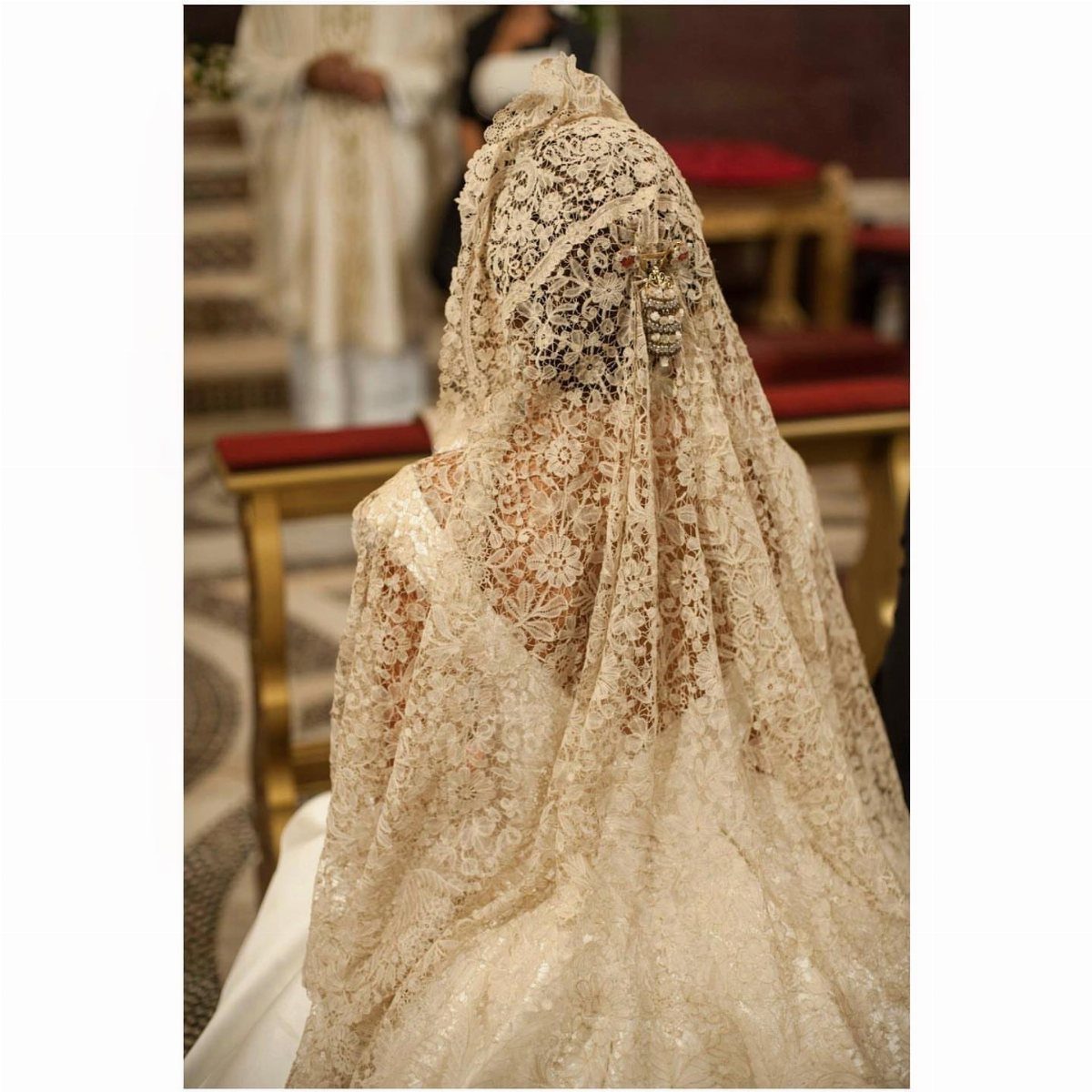
A cathedral-length mantilla gives you the drama of a long train without adding fabric to your dress. The lace trails several feet behind you, creating a stunning aisle moment and filling the frame in every processional photo.
This length works best in large ceremony spaces where the veil has room to spread.
Shorter aisles or tight corners can bunch the fabric, so measure your venue before committing. A longer veil also needs a bridesmaid or coordinator to arrange it during portraits and help remove it before the reception.
6. Lace Mantilla with an All-Lace Dress
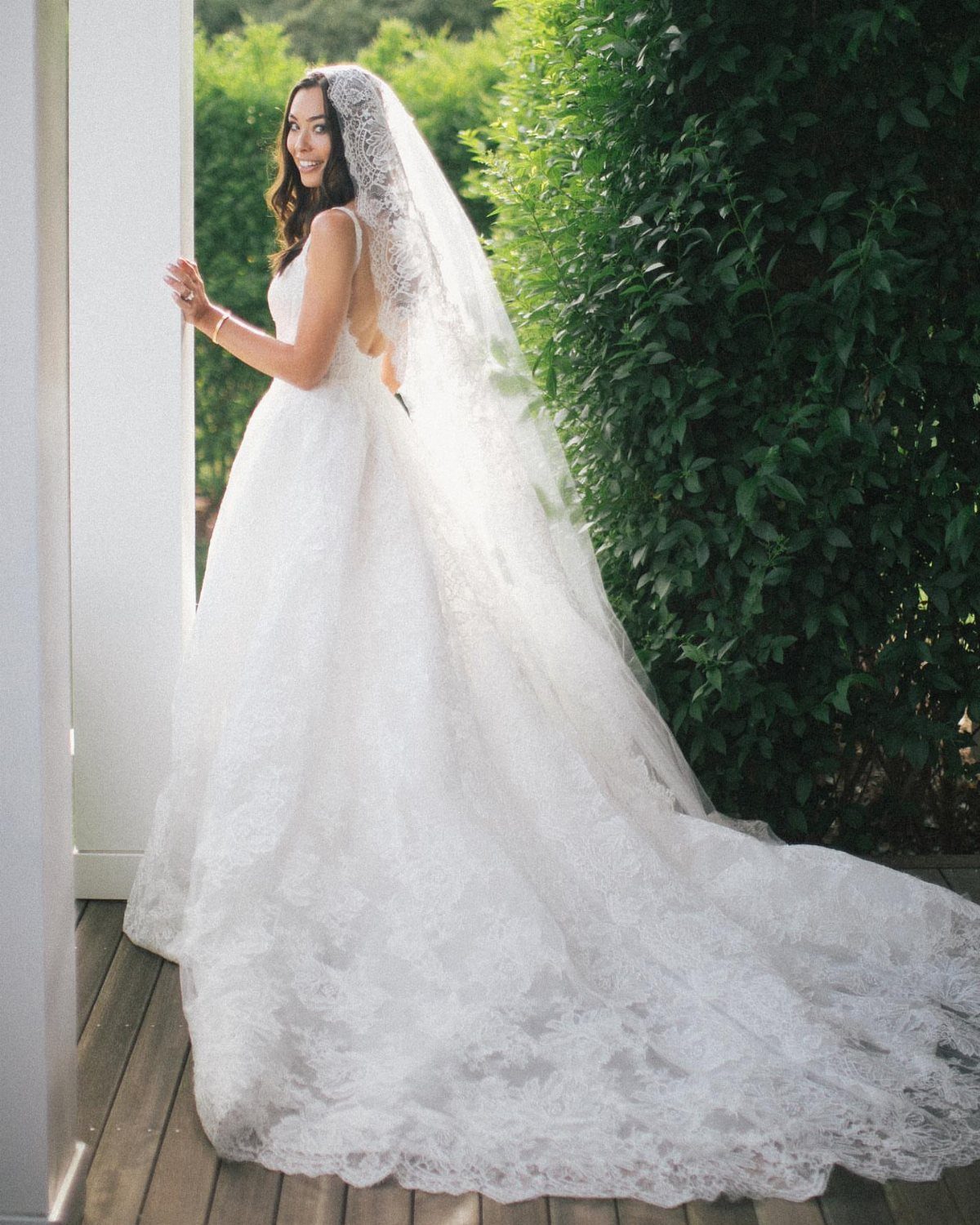
Matching lace patterns between your veil and dress creates a cohesive, intentional look that feels custom even if the pieces were bought separately.
Choose a mantilla with lace that either matches your gown’s pattern exactly or complements it without clashing in scale or style.
This approach suits brides who want maximum lace without looking overdone.
Keep the rest of your accessories simple so the lace stays the focus. Skip heavy jewelry and let the veil and dress do the talking.
7. Mantilla Veil with Satin Gown
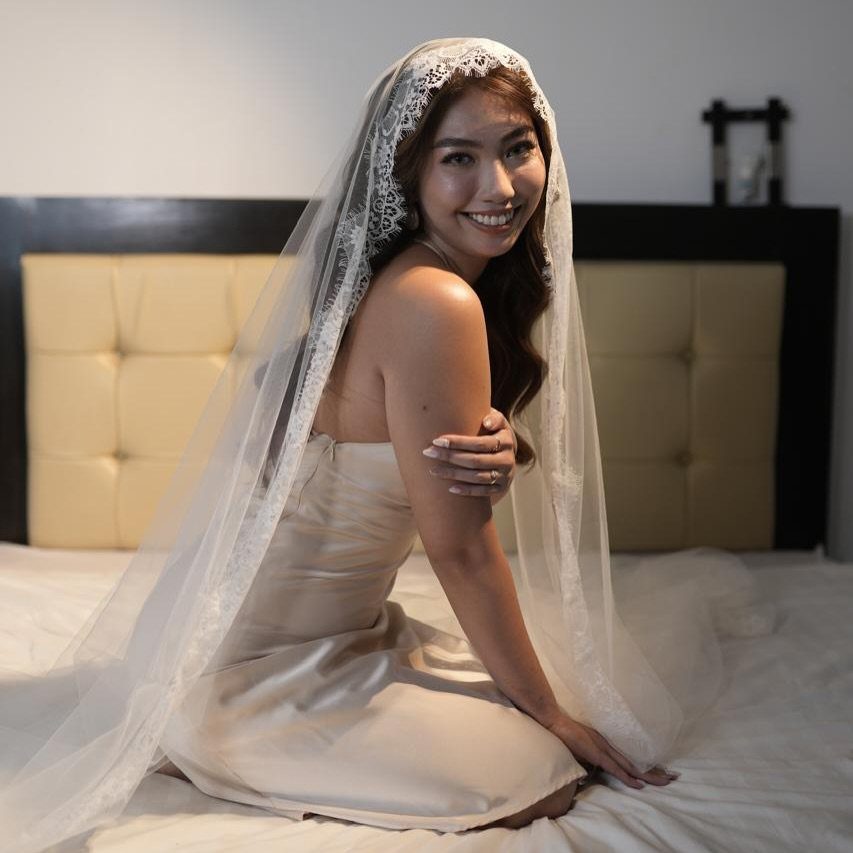
A satin gown gives the mantilla’s lace edge something smooth to contrast against. The difference in texture makes both elements stand out more than they would on their own, and the combination reads as classic without leaning too formal.
This pairing works especially well if your dress has minimal detailing.
The lace border adds visual interest around your shoulders and face while the satin stays sleek through the bodice and skirt. Keep your hair simple so the veil drapes cleanly over it.
8. High-Neck Lace Gown with Mantilla
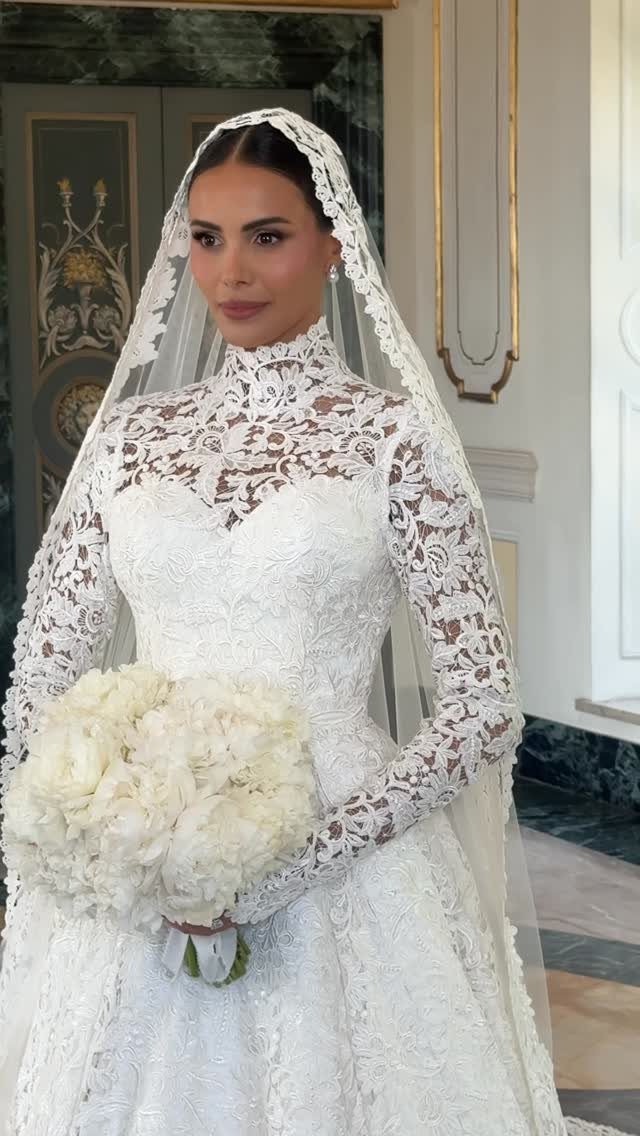
Pairing a mantilla with a high-neck lace gown keeps the lace consistent from neckline to veil edge, creating one unbroken silhouette.
The softness of the draped veil balances the structure of a fitted high neckline, especially when the lace patterns coordinate.
This combination suits vintage-inspired weddings and works beautifully in portraits because the veil frames your face without covering the detailed neckline. Pin the veil slightly back from the hairline so both the dress and veil lace stay visible.
Mantilla Veil Placement
Place it at the crown or just behind for the lace to fall cleanly. This placement lets the lace frame your face without sliding forward during the ceremony.
Shift it forward toward your hairline if you want a more vintage feel.
Secure the veil with a hair comb first, then add discreet pins at the sides and back to keep it stable.
Bunched lace at the shoulders shows up in every photo, so smooth it down before you walk.
Hairstyle Compatibility
Low buns, loose waves, and half-up styles give the veil room to drape properly without interference. High buns push the veil too far back and block the lace from framing your face the way it should.
A low bun at the nape keeps the veil centered and gives you a place to anchor the comb.
Loose waves let the tulle blend into your hair naturally, and a half-up style works when you want volume at the crown without losing the drape.
If you tuck the comb under too much hair, the veil tilts forward or sags by the reception.
Photogenic Appeal
Movement shots also benefit because the lace traces your silhouette as the veil moves, adding dimension to wide shots where a plain veil would disappear.
If your dress has an open back or illusion panel, the veil draws attention to that detail without covering it. The lace sits just above the bodice and echoes the dress’s own edging in close-up portraits.
Frequently Asked Questions
What hairstyles look good with a mantilla veil?
Styles that sit low or let your hair fall freely keep the lace where it belongs: framing your face instead of sliding back.
Anything stacked high at the crown shifts the comb too far back, and the lace loses its frame. A bun anchored at the nape holds the comb steady, and waves give the tulle something soft to fall against.
Do you have to be Catholic to wear a mantilla?
No, brides of all backgrounds wear mantilla veils.
While the style originated in Spain as a Christian headcovering for worship, it has been embraced as a wedding accessory for centuries regardless of religious affiliation. The lace-edged design works beautifully for any bride who wants that elegant, romantic look.
Should veil be lighter or darker than dress?
Match your veil to your dress fabric in both color and tone so they read as one cohesive look in photos.
The lace edge on a mantilla adds enough contrast on its own without needing a color difference. Mismatched shades pull focus away from your silhouette and make the veil look like an afterthought rather than part of the design.