The setting usually calls for something more polished than everyday casual but stops well short of a full bridal gown.
Tailored suits, wrap dresses, tea-length gowns, and blazer sets all work, along with a few more relaxed two-piece looks when the setting allows it.
1. Little White Dresses
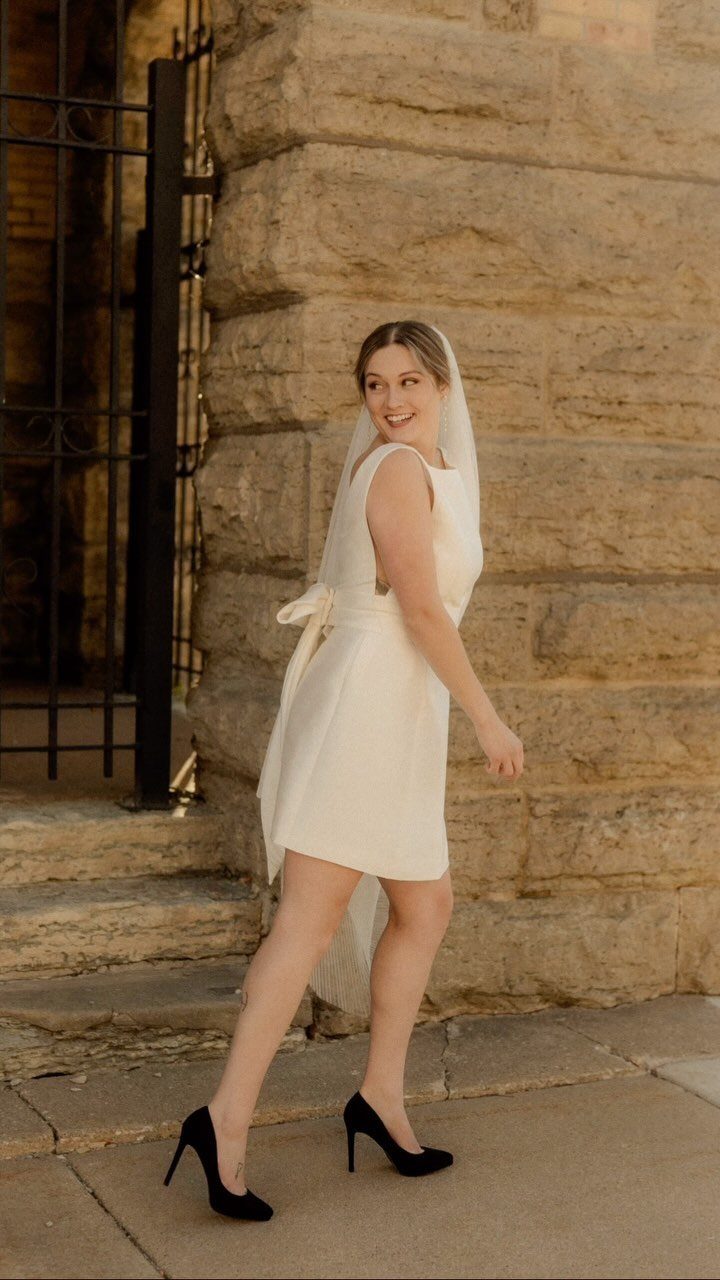
A short white dress feels bridal without the ceremony of a full gown.
The hemline hits above the knee, keeping the silhouette light and easy to move in, which matters when you’re signing papers and taking photos in a small space.
A fitted bodice and a flared skirt give it shape without looking too casual.
A little white dress gives you the bridal feeling without renting or buying something floor-length. Add a veil if that detail matters to you.
2. Tailored Jumpsuit
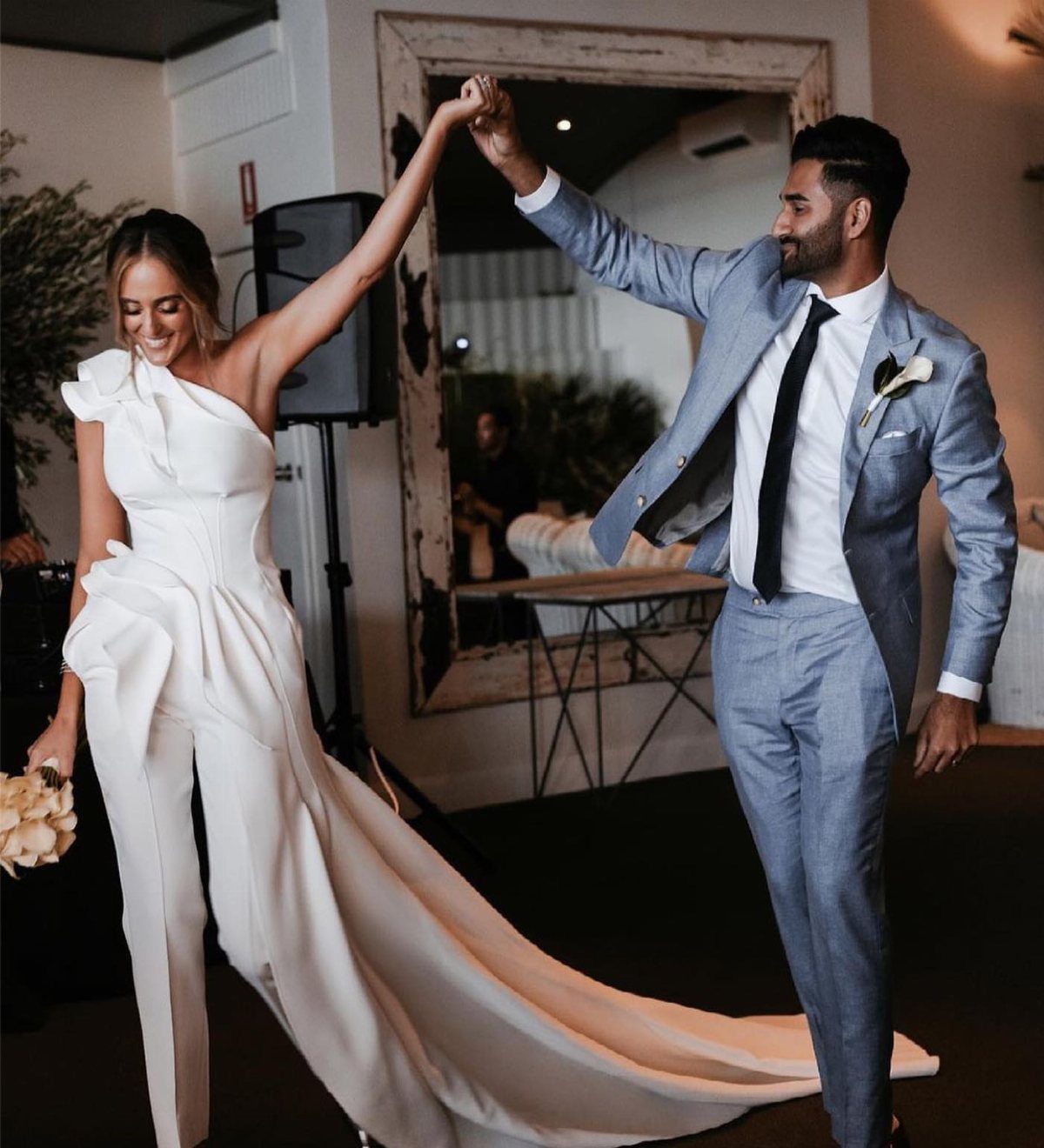
A tailored jumpsuit gives you clean lines and full coverage in one piece.
The wide legs balance the fitted bodice, and when it includes a train, you get the sweep of a gown with the structure of separates. No hemming, no bustle, and far less fabric to manage when you walk.
Stick with a solid color.
White or ivory reads bridal; black or navy fits a more formal courthouse setting. The fit through the waist and shoulders decides whether it looks polished or borrowed, so tailoring is worth the cost.
3. Sophisticated Wrap Dresses
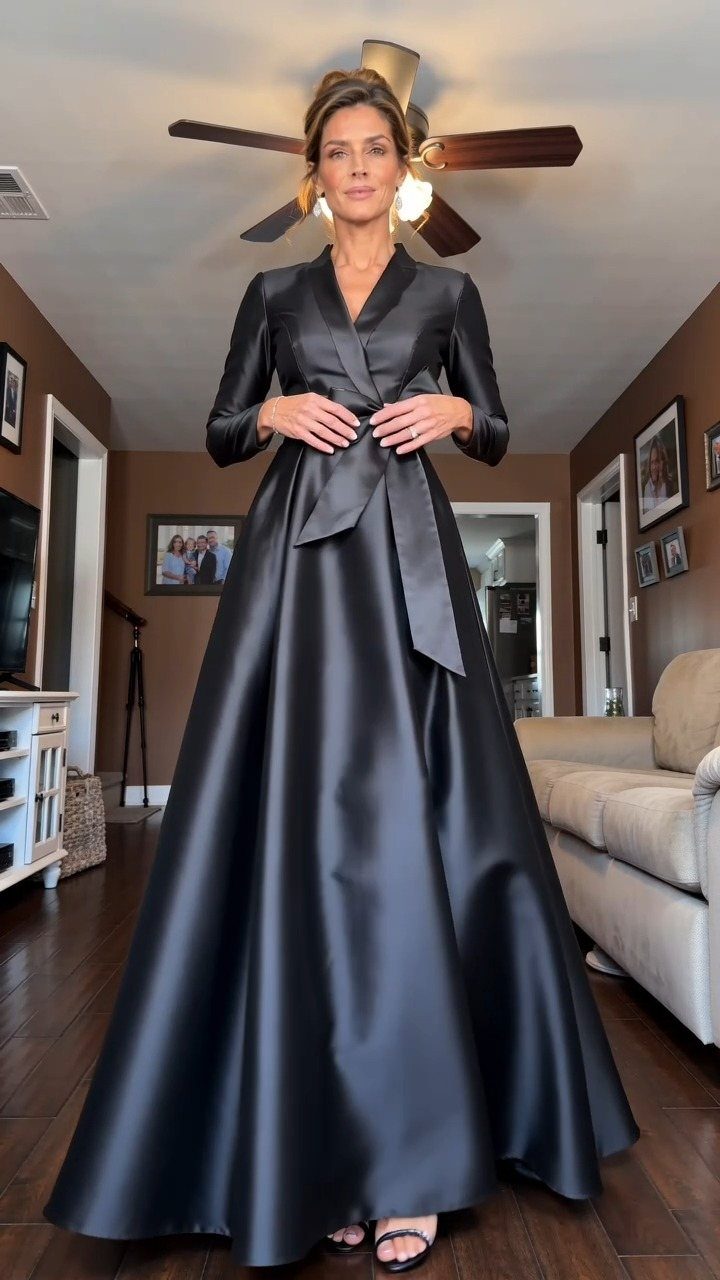
A wrap dress adjusts to your waist and moves with you, which makes it comfortable for sitting through paperwork and standing for photos.
The long sleeves and floor-length hem keep it formal, while the satin finish catches light without adding texture.
Black works when the courthouse leans traditional or you want something you can wear again.
Choose a fabric with some weight so the wrap stays in place and the skirt drapes cleanly. A hidden snap or tie inside the waist keeps the closure secure.
4. Beaded Dresses
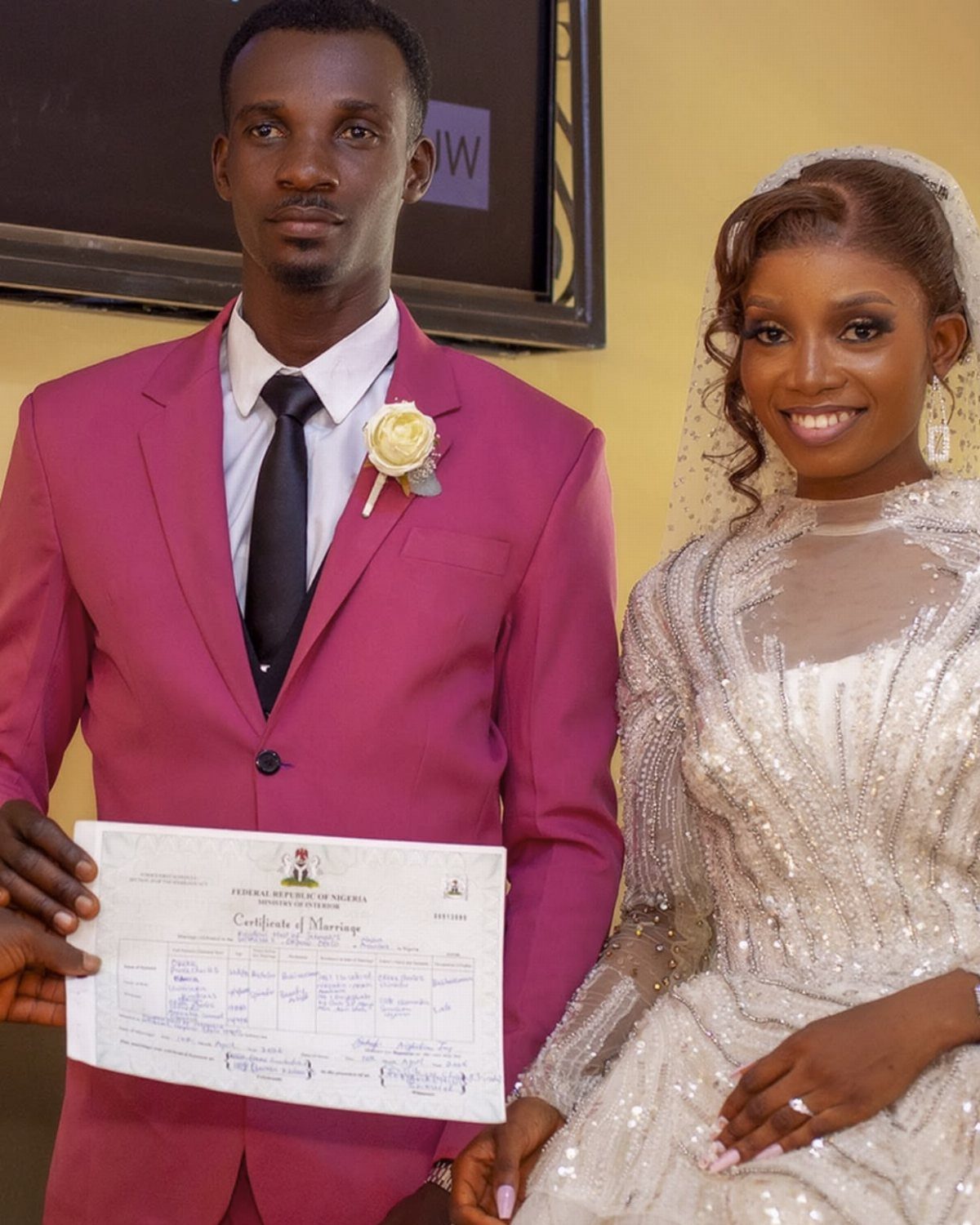
Beading adds texture and catches light in a way solid fabric doesn’t.
The detail gives a simple silhouette something to hold your eye, and it photographs well under courthouse lighting. A short or knee-length beaded dress stays easy to move in while feeling more dressed up than a plain shift.
Look for beading that’s sewn in, not glued.
It should sit flat against the fabric and not snag when you sit. If the dress is white or cream, the beading can stay tonal or pick up silver or gold for contrast.
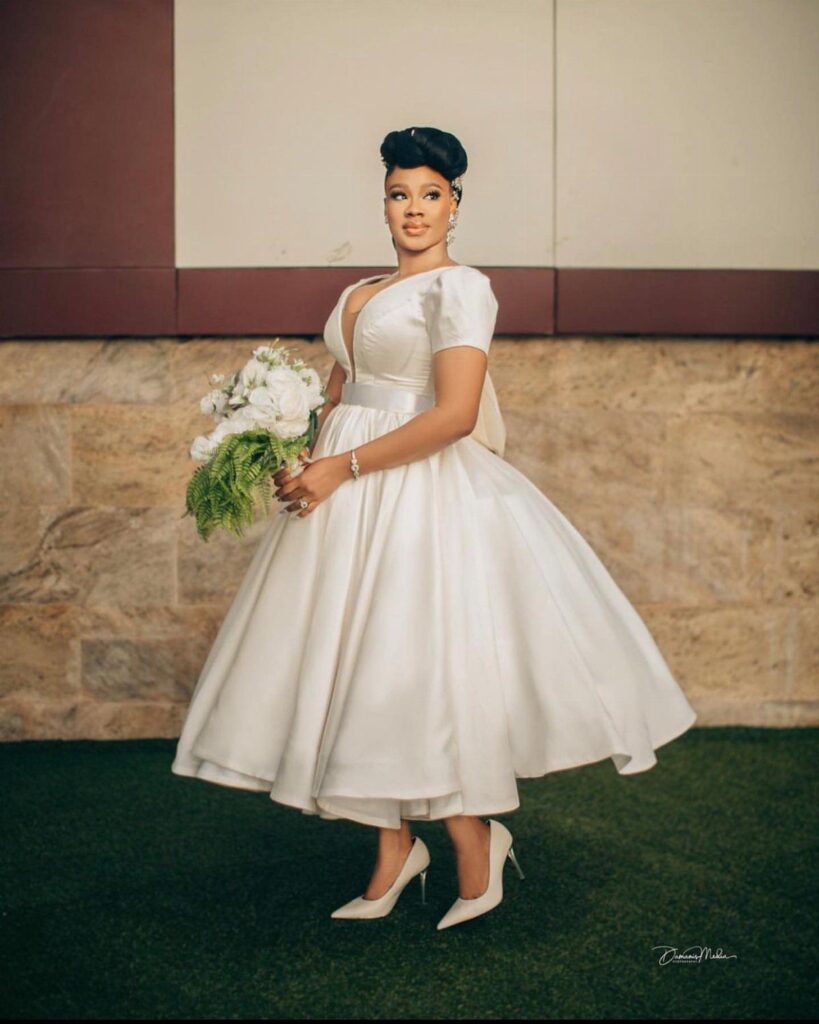
5. Tea-Length Gown
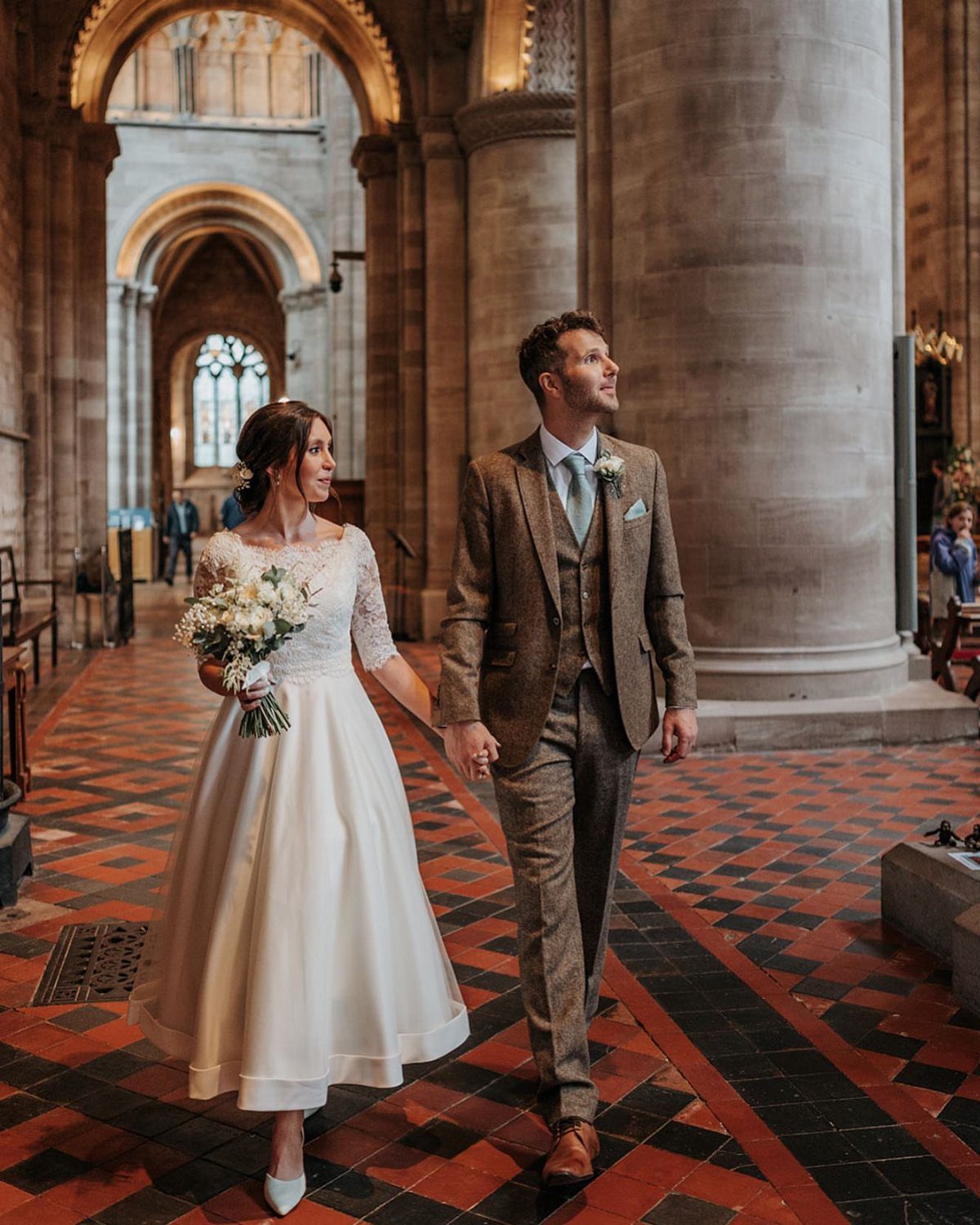
A tea-length gown falls between the knee and ankle, giving you the volume of a traditional wedding dress without the train or the length that needs bustling.
The hemline stays off the floor, so you can walk through a courthouse without worrying about dirt or tripping.
The silhouette reads formal, especially with a full skirt and a fitted bodice.
If the courthouse has stairs or narrow hallways, this length moves through them more easily than a floor-length gown. Pair it with low heels or flats if you’re standing for a while.
6. Casual White Pantsuits
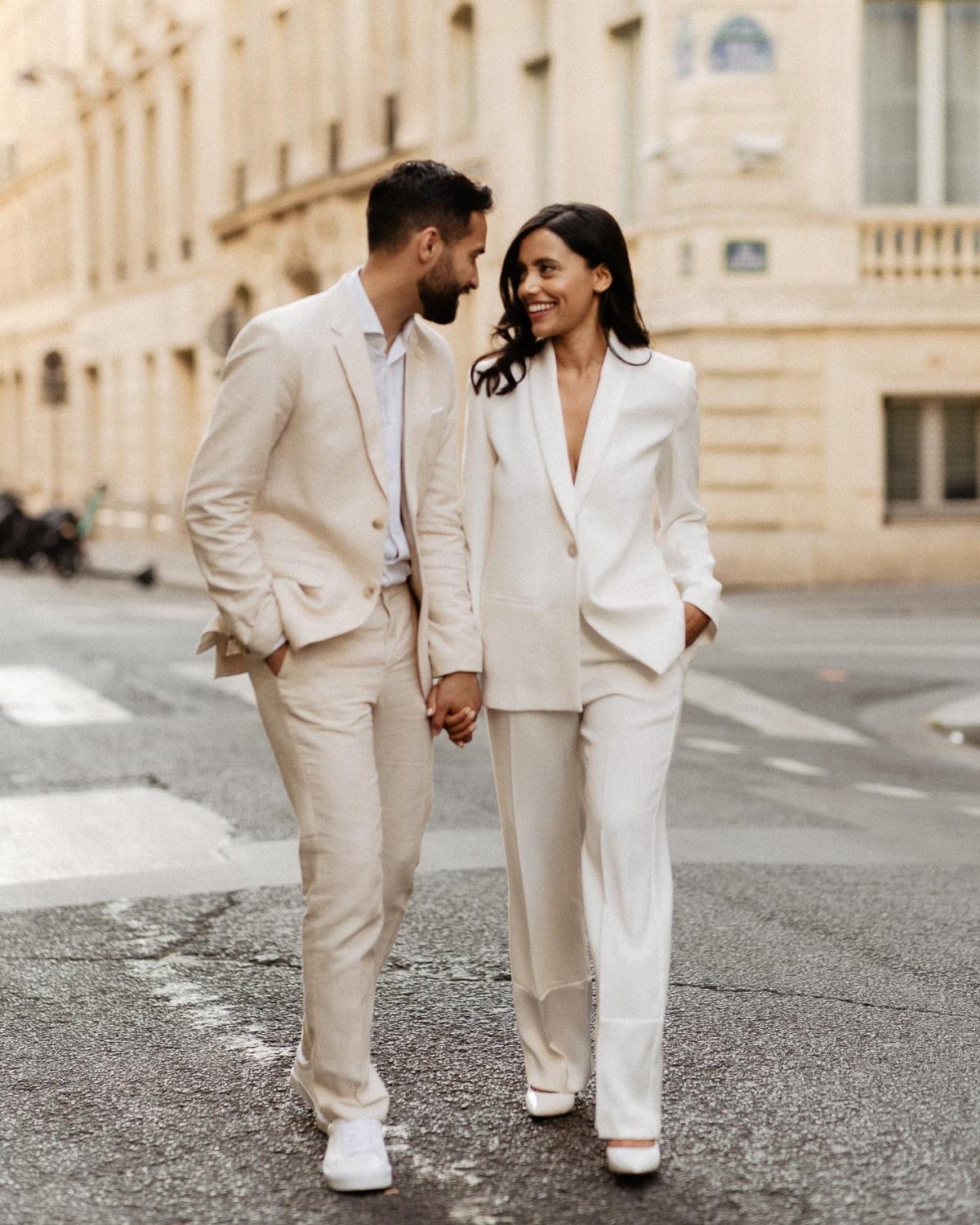
A white pantsuit feels polished without reading too bridal. The matching jacket and trousers give you structure, and the clean lines photograph well.
Choose a fabric with some body so the pants hold their shape and the jacket doesn’t wrinkle while you’re sitting.
Cream or off-white works if bright white feels too stark. A tailored fit through the shoulders and waist makes the difference between looking dressed up and looking like you borrowed someone else’s suit.
7. Consider the Venue
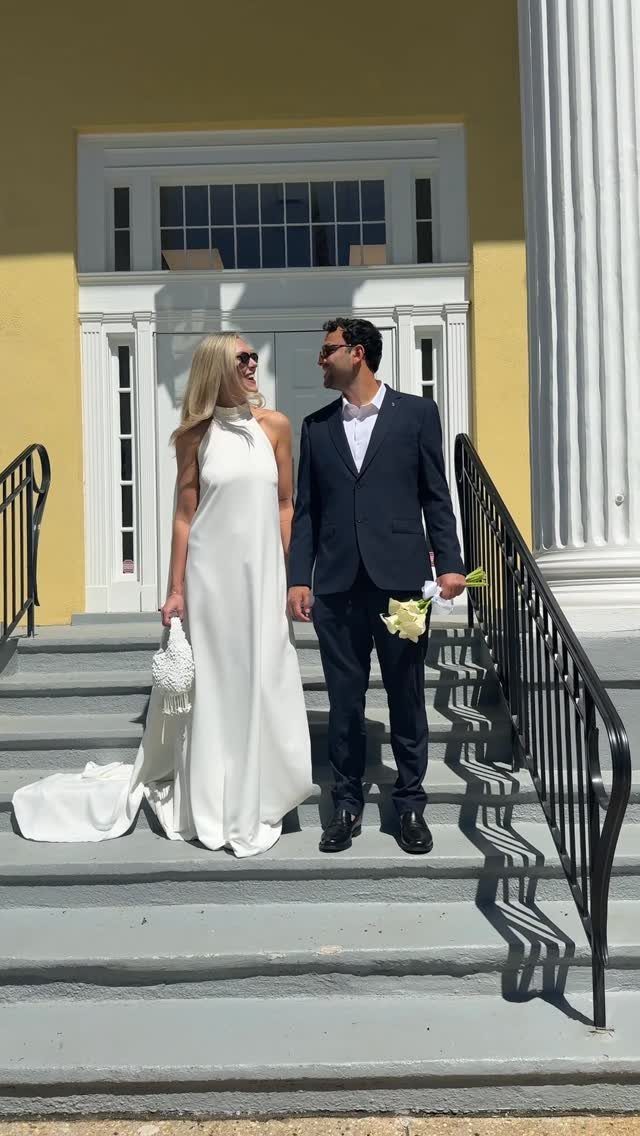
The courthouse itself tells you how formal to dress. A grand building with columns and marble floors calls for a floor-length dress or a tailored suit.
A smaller office with fluorescent lighting and linoleum suits something simpler: a knee-length dress, a blazer and trousers, or a midi skirt with a blouse.
Look at photos of the building if you haven’t been inside. That gives you the scale and the lighting you’re working with.
8. Blazer and Skirt Set
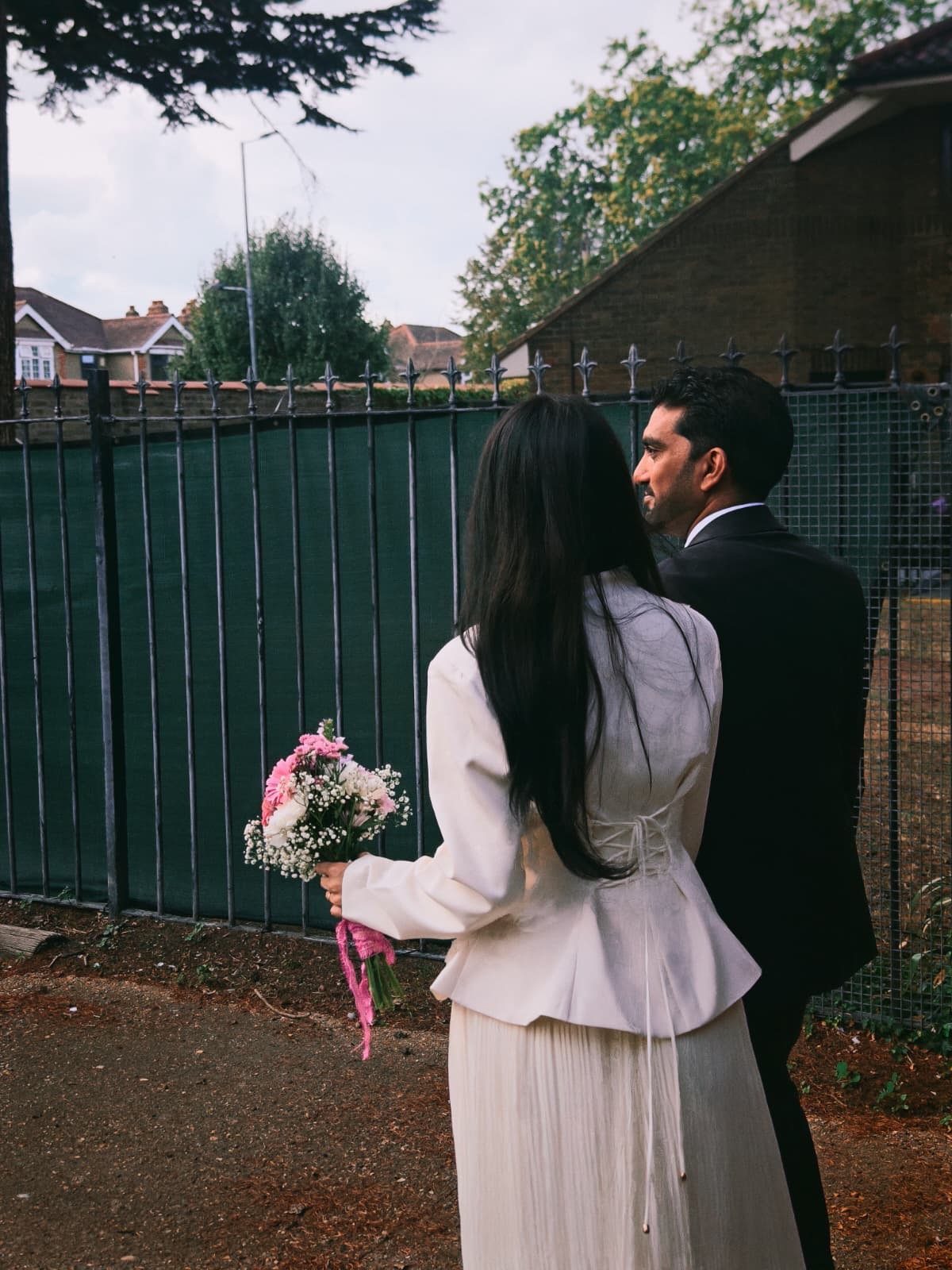
A blazer and skirt set gives you the polish of a suit with a softer line.
The pleated skirt moves when you walk, and the matching blazer ties it together without tipping into overly formal. The hem falls just below the knee, so it stays easy to move in.
White or cream reads bridal.
The set works in one color or you can mix a white skirt with a blazer in navy or blush. Tailoring through the shoulders and waist keeps it from looking borrowed.
9. Wide-Leg Two-Piece Set

Wide-leg trousers and a cropped top split the silhouette in a way that feels modern without losing the formality.
The high waist on the pants balances the shorter top, and the loose legs give you room to move. A long cardigan or duster adds a third layer without covering the shape.
Lace or beading on the cardigan brings in texture.
The cropped top should fit close enough that it stays in place when you sit. Stick with one color across all three pieces or let the cardigan contrast.
10. Crop Top and Maxi Skirt
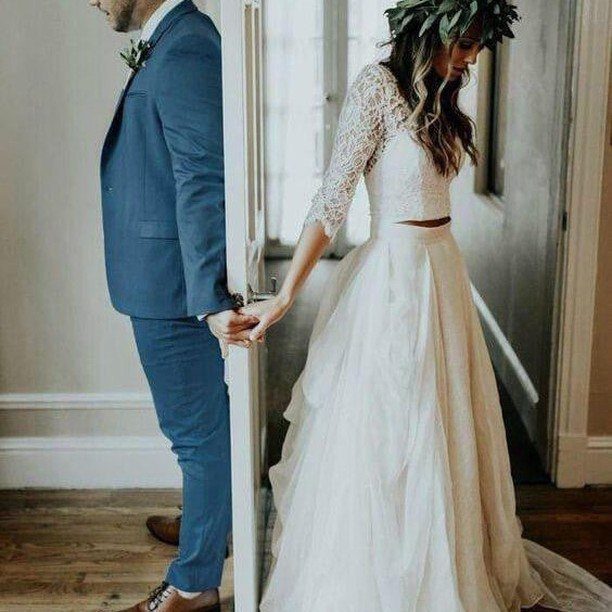
A crop top and maxi skirt give you the coverage of a gown with a break at the waist.
The lace on the top adds detail, and the long skirt holds the formality. The 2 pieces separate, so you can wear the skirt again with a different top.
The skirt should sit high enough on your waist that the gap between the pieces stays narrow.
A fitted top balances the volume of a full skirt. If the courthouse is cold, a tailored jacket over the top keeps the proportions clean.
11. Blouse and Tulle Skirt
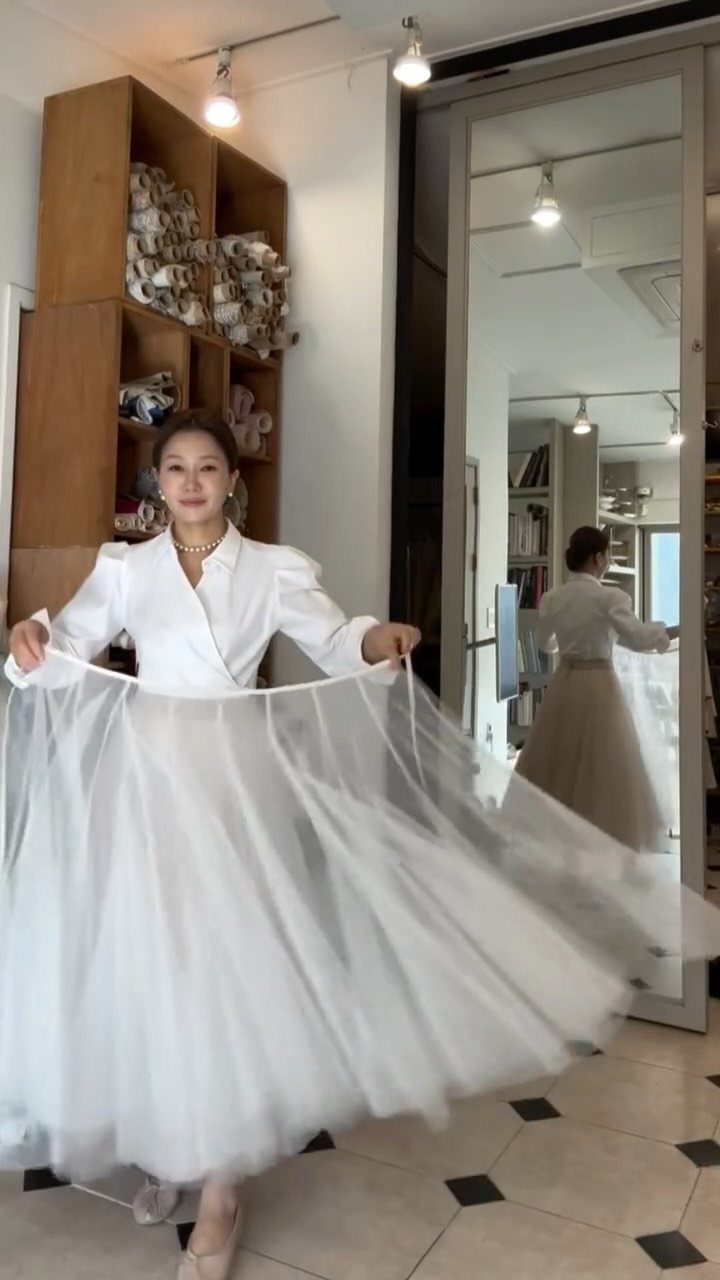
A blouse and tulle skirt pair the structure of a button-up with the volume of a bridal skirt.
The tulle gives you fullness without weight, and the long sleeves on the blouse keep it formal. The skirt falls to mid-calf or just above the ankle, so it stays off the floor.
Choose a blouse that fits through the shoulders and tucks cleanly into the waistband.
The tulle should have enough layers to hold its shape without looking stiff. White on white reads fully bridal; a blouse in cream or blush softens it.
12. Black Blazer with Lace Pants
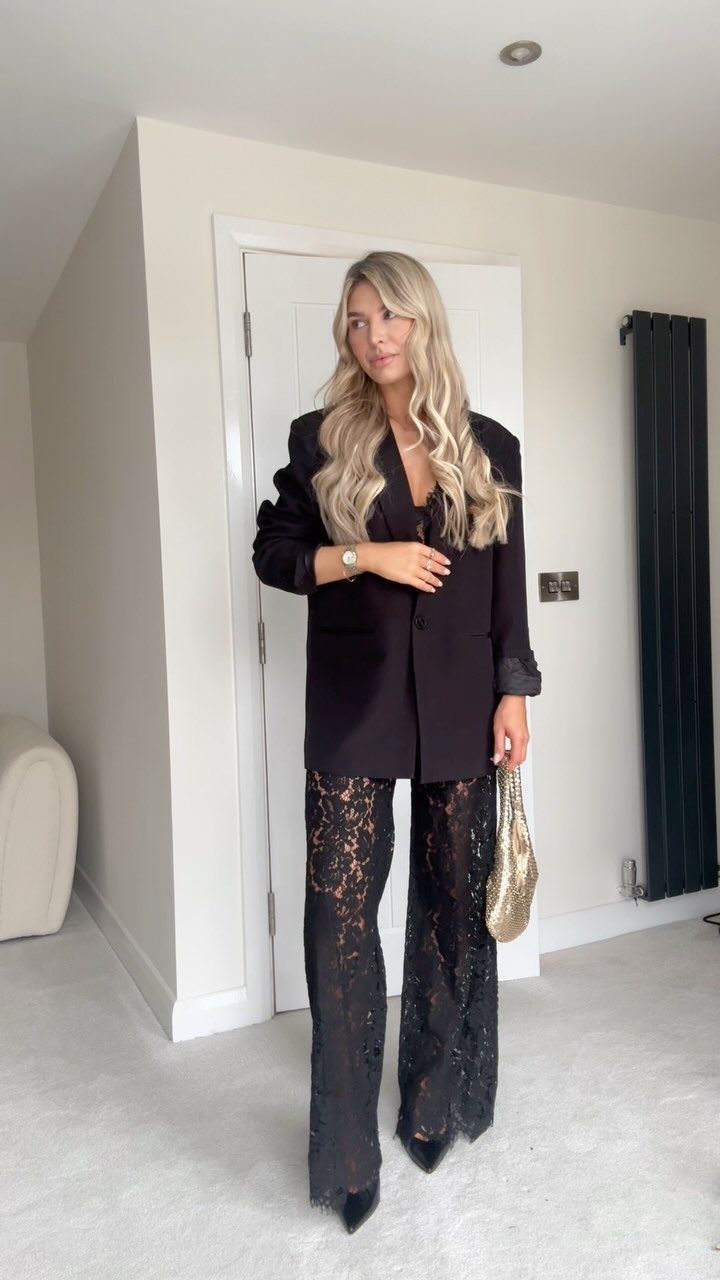
Black instead of white feels intentional, especially when the lace adds texture.
The oversized blazer gives you structure without buttons or a collar, and the wide-leg lace pants keep the look formal. A metallic clutch picks up light against the black.
The lace needs to be opaque enough that a slip stays optional. The blazer can sit loose, but the pants need to fit at the waist so they don’t slip when you walk.
If the courthouse skews traditional, this works better for a second wedding or a couple who wants something less conventional.
Dress Code Guidelines
Most courthouses ask for business casual at minimum, which means no jeans, sneakers, or anything you’d wear to a backyard party.
The setting is formal by default, and showing up in something too relaxed can feel out of step with the space.
At the same time, a ball gown or a dress with a cathedral train doesn’t fit the scale of the room.
Hallways are narrow, waiting areas are tight, and the ceremony itself happens in a small space. A hemline that clears the floor and a silhouette that doesn’t need help moving through doorways will make the day easier.
If you’re getting dressed without help, skip styles with dozens of buttons down the back or a corset that needs lacing. You want something you can step into and zip yourself.
Comfort Considerations
You’ll spend part of the day sitting while paperwork gets signed and part of it standing for the ceremony and photos. The outfit needs to work in both positions without pinching, riding up, or losing its shape.
Hem length matters when the aisle is narrow or there are stairs. Anything that drags on the floor picks up dust and becomes something to manage.
Color Choices
Neutrals like gray, navy, and beige fit a courthouse without feeling too casual.
Jewel tones like emerald, burgundy, and sapphire feel right for fall and winter.
Bright neon or loud patterns can read as too casual for a government building. The color should feel intentional, not like you grabbed whatever was closest.
Frequently Asked Questions
What is a simple outfit I can wear to a court wedding?
A tailored jumpsuit or a little white dress works well for a courthouse wedding.
Both give you a polished look without the bulk of a floor-length gown, and they move easily through narrow hallways and small ceremony spaces. Tailoring matters: the shoulders and waist should sit right, not gap or pull.
Is there a dress code when you get married at the courthouse?
Business casual is the usual floor, so leave the denim and sneakers at home.
A courthouse carries its own formality, and anything too casual reads wrong against marble and wood paneling. On the other end, a full ballgown or long train doesn’t move well through tight corridors and compact rooms.