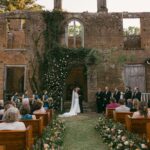
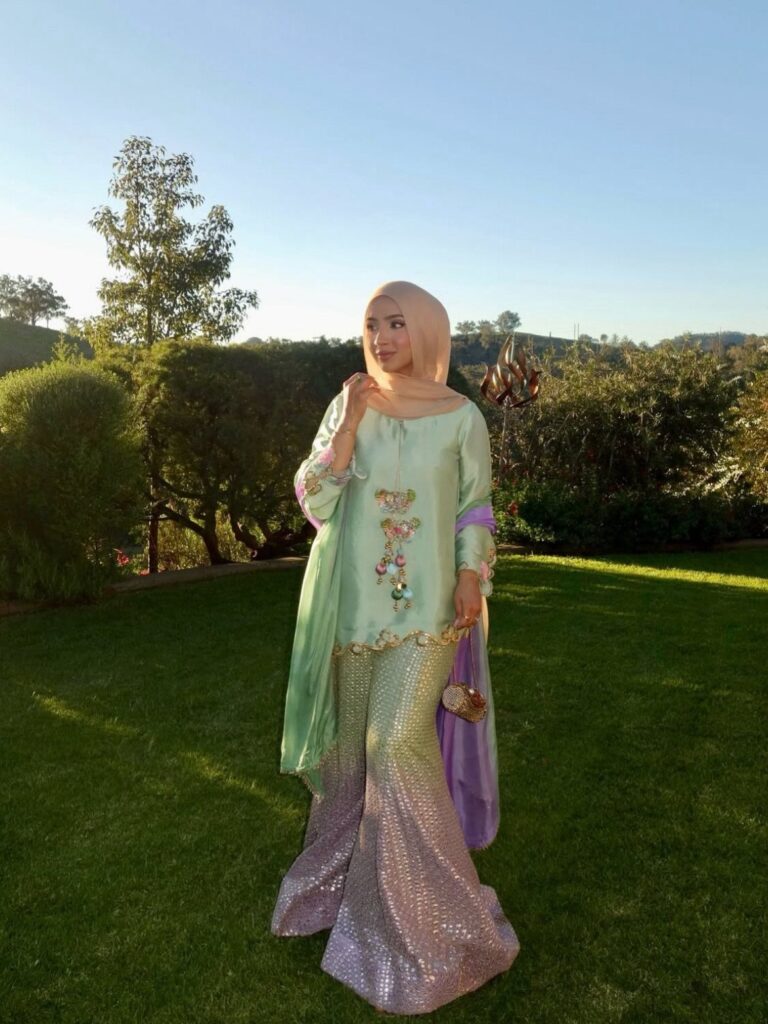
Pastel shades range from barely-there powder blue and blush pink to butter yellow and mint green that hold their own in full sun, and the right one depends on your skin tone and the venue’s backdrop.
1. Romantic Lavender Dress
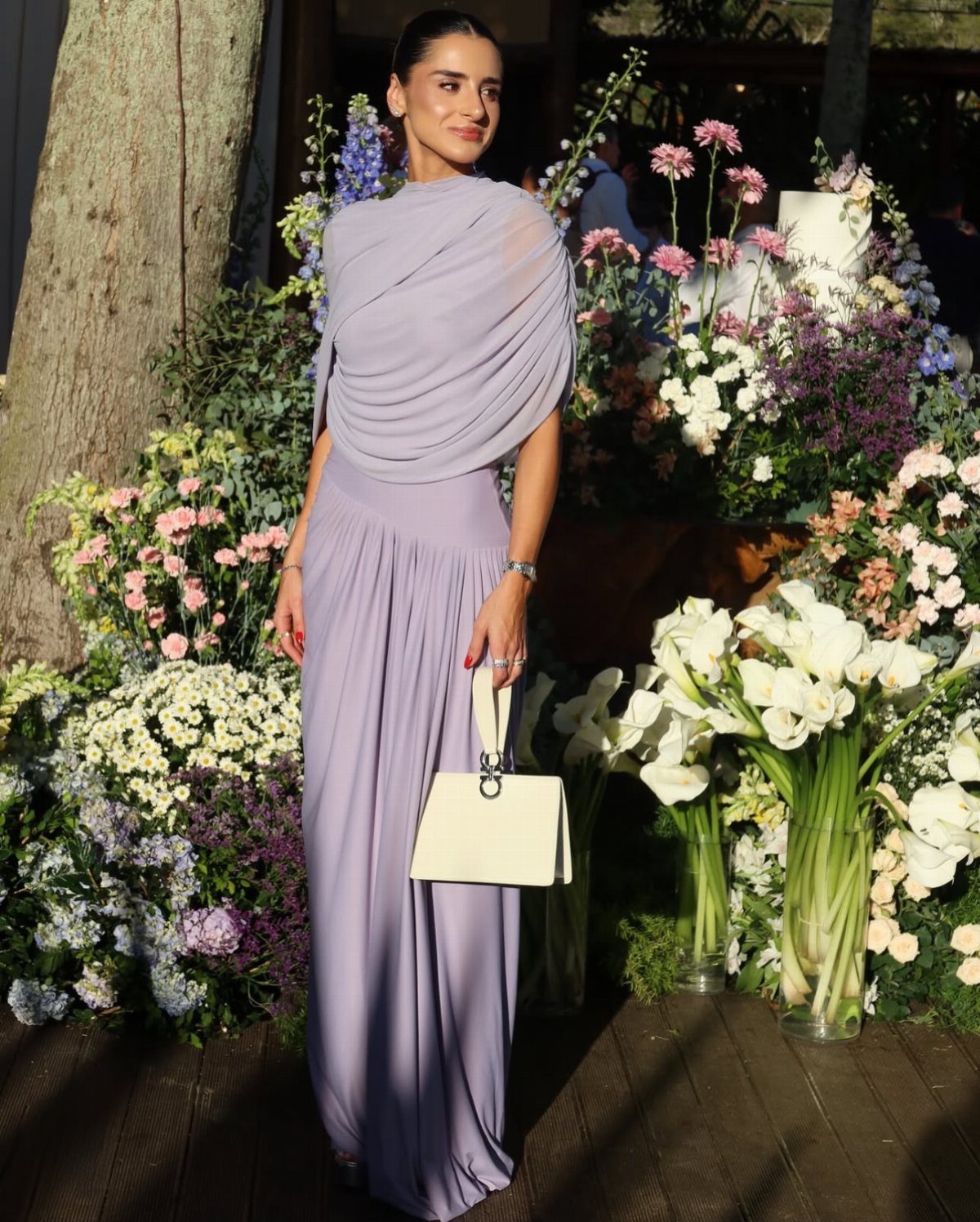
Lavender sits at the softer end of the purple family, and a long draped silhouette in that shade gives you a romantic option that photographs particularly well in natural light.
The fabric here falls in vertical folds that move when you do, which means the dress looks alive in photos and stays comfortable through a full ceremony and reception.
Let the lavender do the work by keeping shoes and jewelry quiet. A white or cream bag keeps the palette light, and metallic sandals work without competing.
2. Butter Yellow Dress
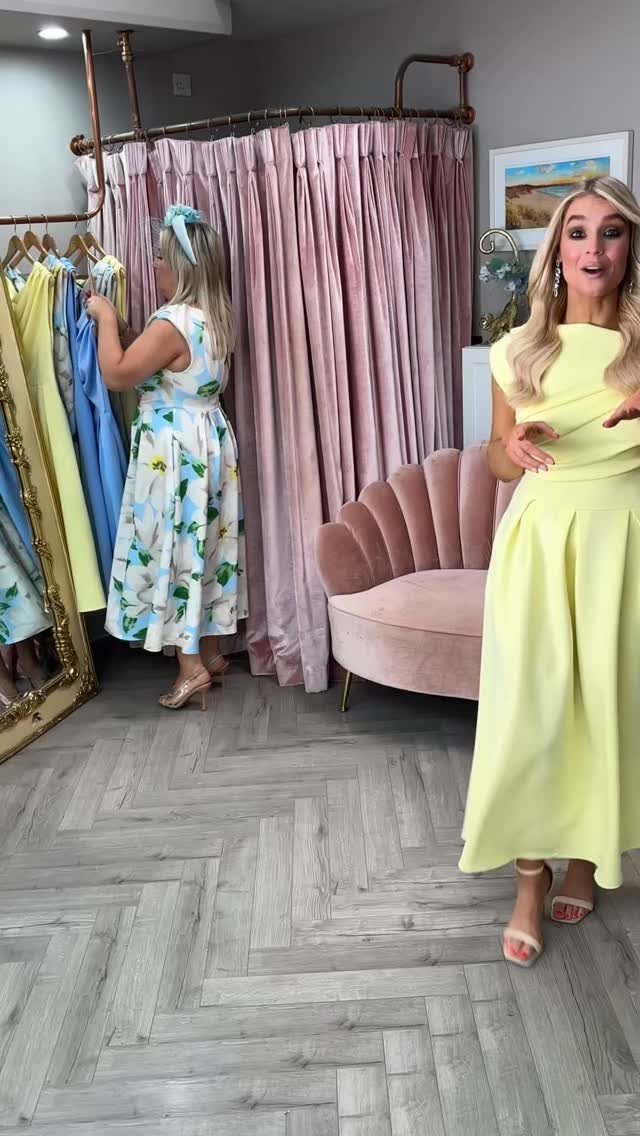
Butter yellow lands between the softness of cream and the sharpness of citrus, especially in a floor-length silhouette.
This shade reads cheerful in spring and summer settings, and the longer hem balances the boldness of the color if you prefer a more grounded look.
The smooth fabric visible here skims rather than clings, which helps if you want a dress that moves easily and photographs without harsh shadows. Keep jewelry minimal: yellow this soft needs very little help.
3. Powder Blue Satin Dress
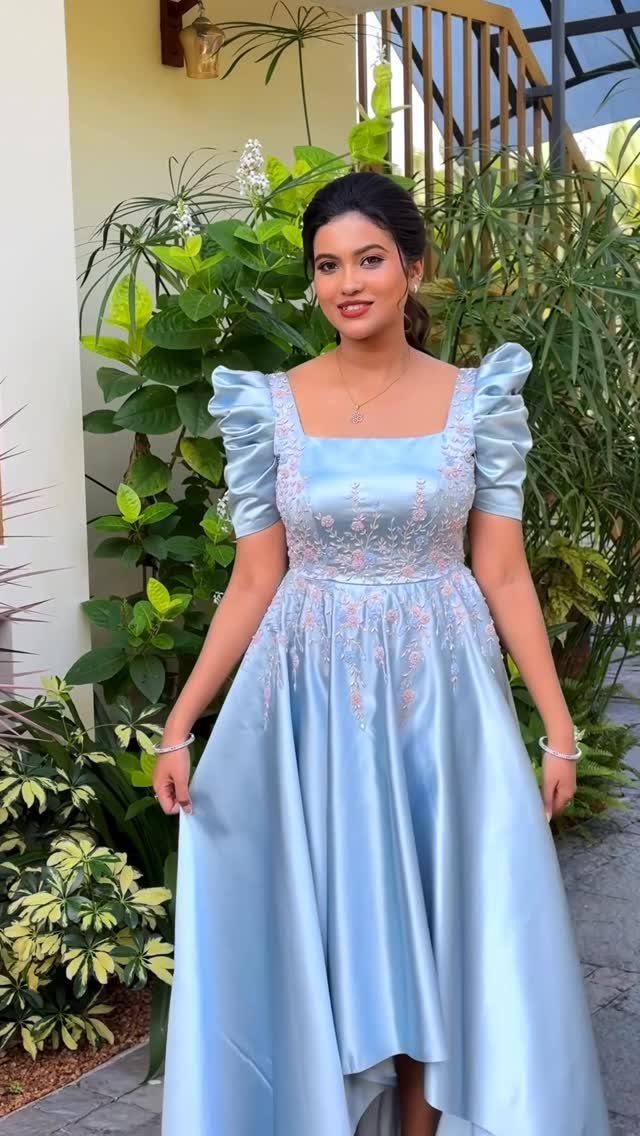
Powder blue satin delivers a cool, polished finish that feels formal without requiring a gown. The puff sleeves and floral embroidery add detail at the shoulders, which draws the eye up and gives the dress structure beyond the fabric alone.
Satin catches light differently than matte weaves, so expect the color to shift slightly depending on where you stand.
That sheen works well in photos but can feel dressy for casual outdoor venues. Silver and pearl pull cool without fighting the blue.
4. Mint Green Dress
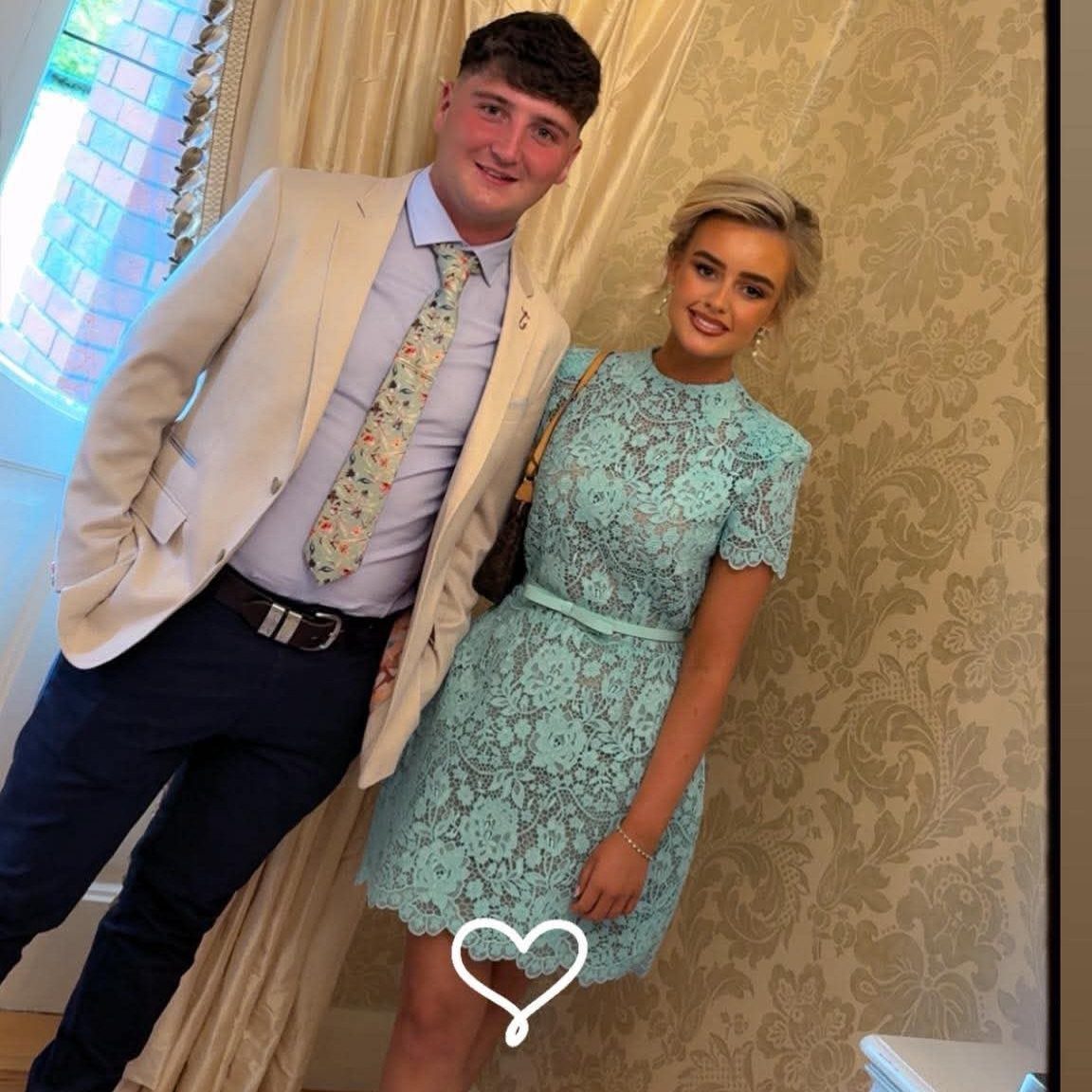
Mint green lace gives you coverage and texture in one move. The lace here runs the full length of the dress, so you get a softer look than solid fabric without needing a separate overlay or jacket.
This shade sits between green and blue, which makes it easier to match with both warm and cool accessories. Nude or blush heels keep the focus on the lace, and simple stud earrings work when the neckline is already detailed.
5. Soft Peach Dress
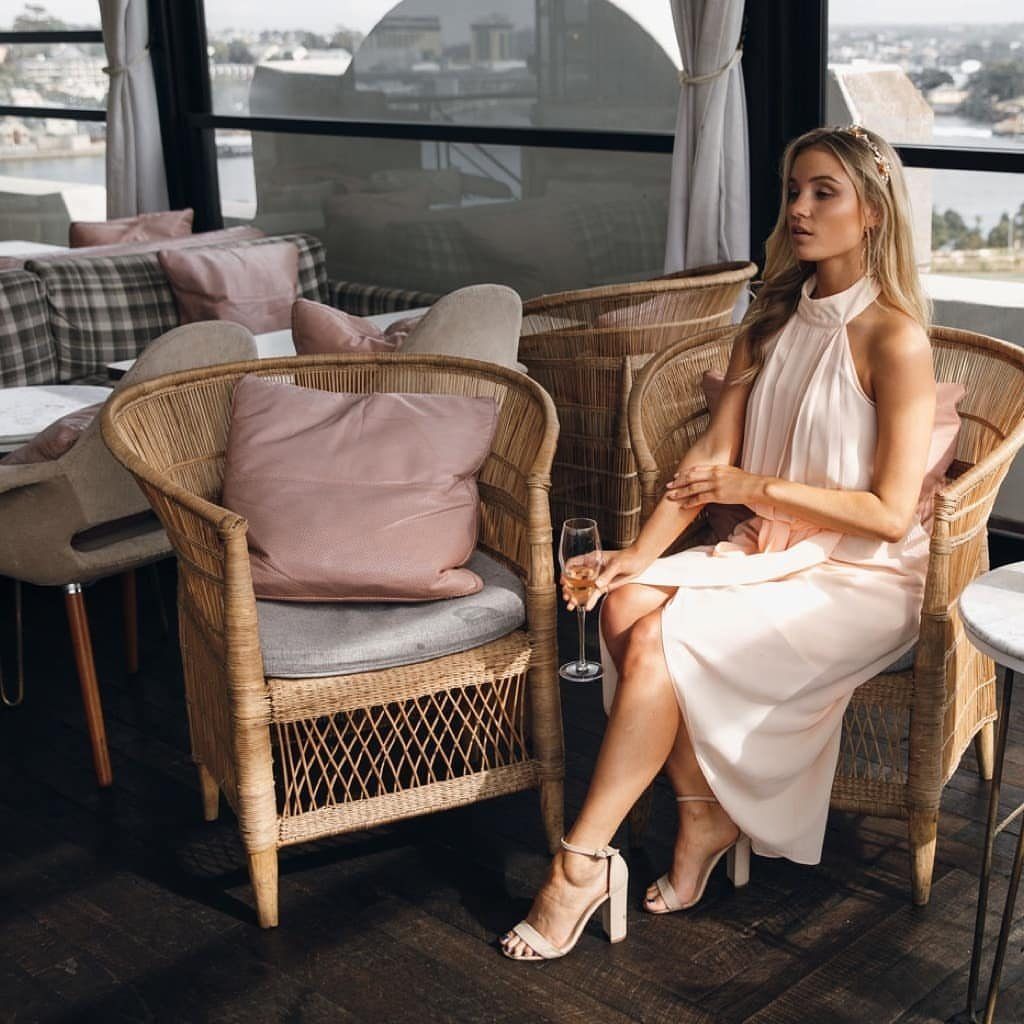
Soft peach in a halter midi gives you a dress that holds up in outdoor heat and still reads formal.
The halter neckline keeps your shoulders free, and the midi length lets you move on grass or uneven surfaces without managing a long hem.
This shade works particularly well in late afternoon light, where it picks up warmth without looking orange. White or tan accessories keep the palette cohesive, and low block heels handle outdoor venues better than stilettos.
6. Sage Green Dress
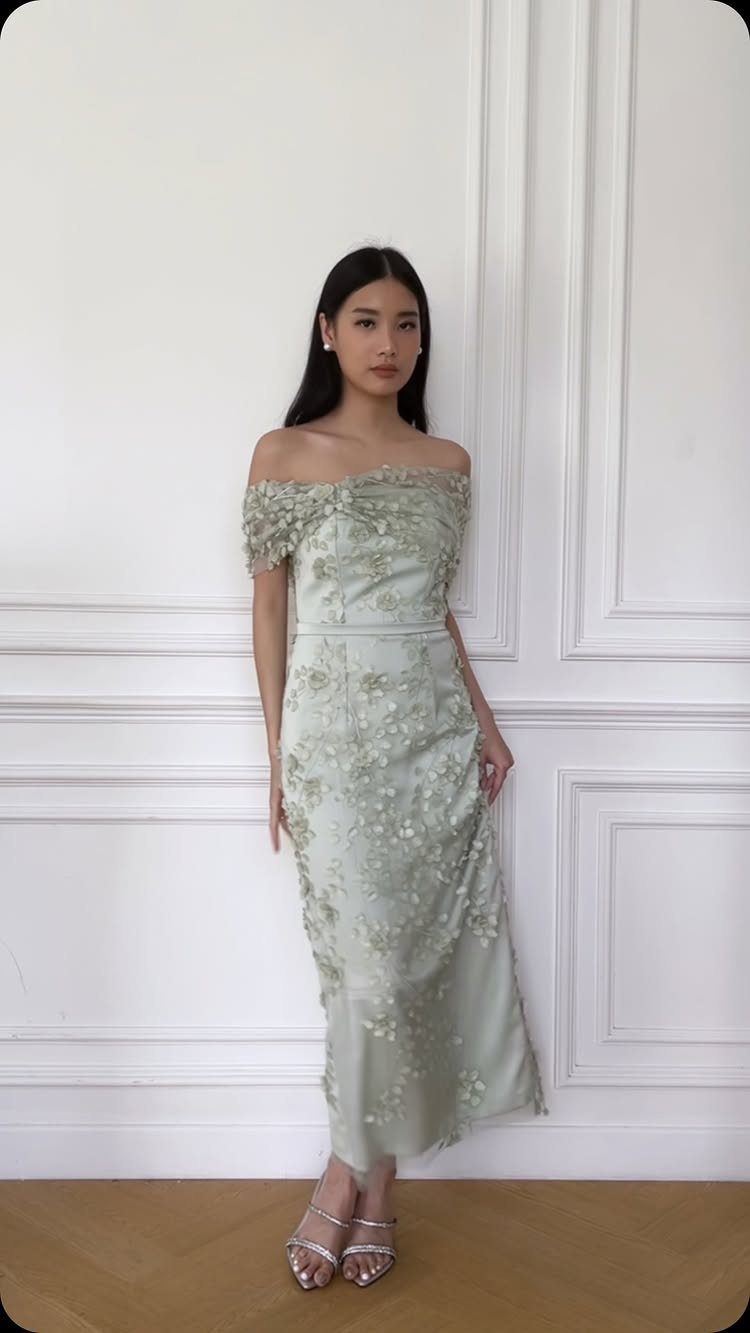
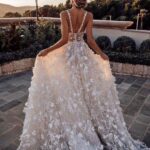
Sage green lands between gray and green, so it reads muted even when the dress carries embroidery or appliqués. The off-the-shoulder cut here gives structure, and the 3D floral details add texture without bright contrast.
This shade suits both garden and indoor venues, and it photographs consistently across different lighting. If your dress has fewer details, sage green still works; the color alone delivers understated elegance without needing heavy embellishment.
7. Pastel Floral Dress
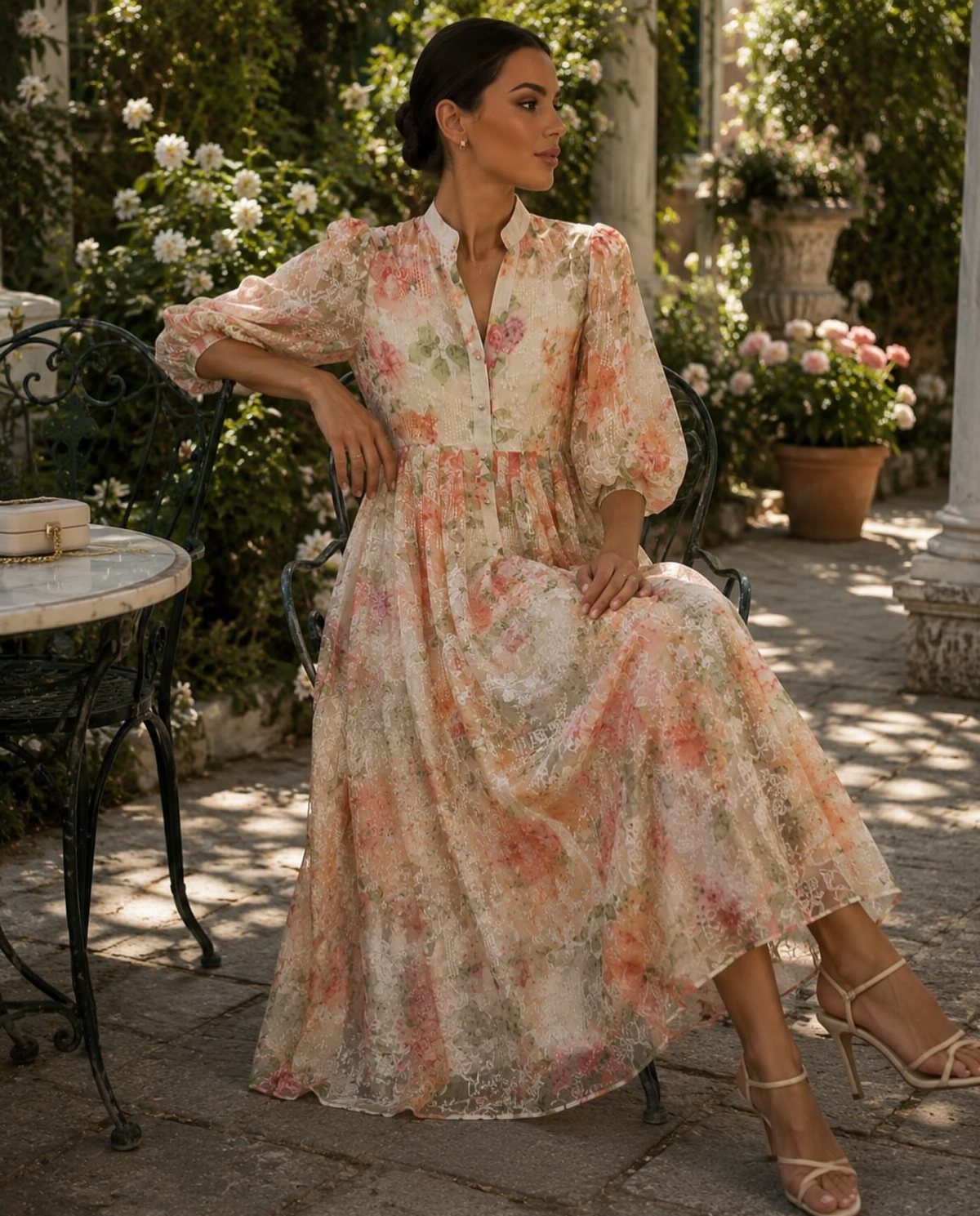
A pastel floral print gives you pattern without the visual weight of dark or saturated colors.
The soft palette here keeps the dress light enough for spring and summer weddings, and the long sleeves add coverage if you prefer a more modest option or expect cooler evening temperatures.
The maxi length works well on grass or outdoor surfaces, and the floral scale matters: smaller blooms read busier, while larger prints give the eye somewhere to rest. Solid accessories let the pattern do its work without adding more detail.
8. Blush Pink Satin Dress
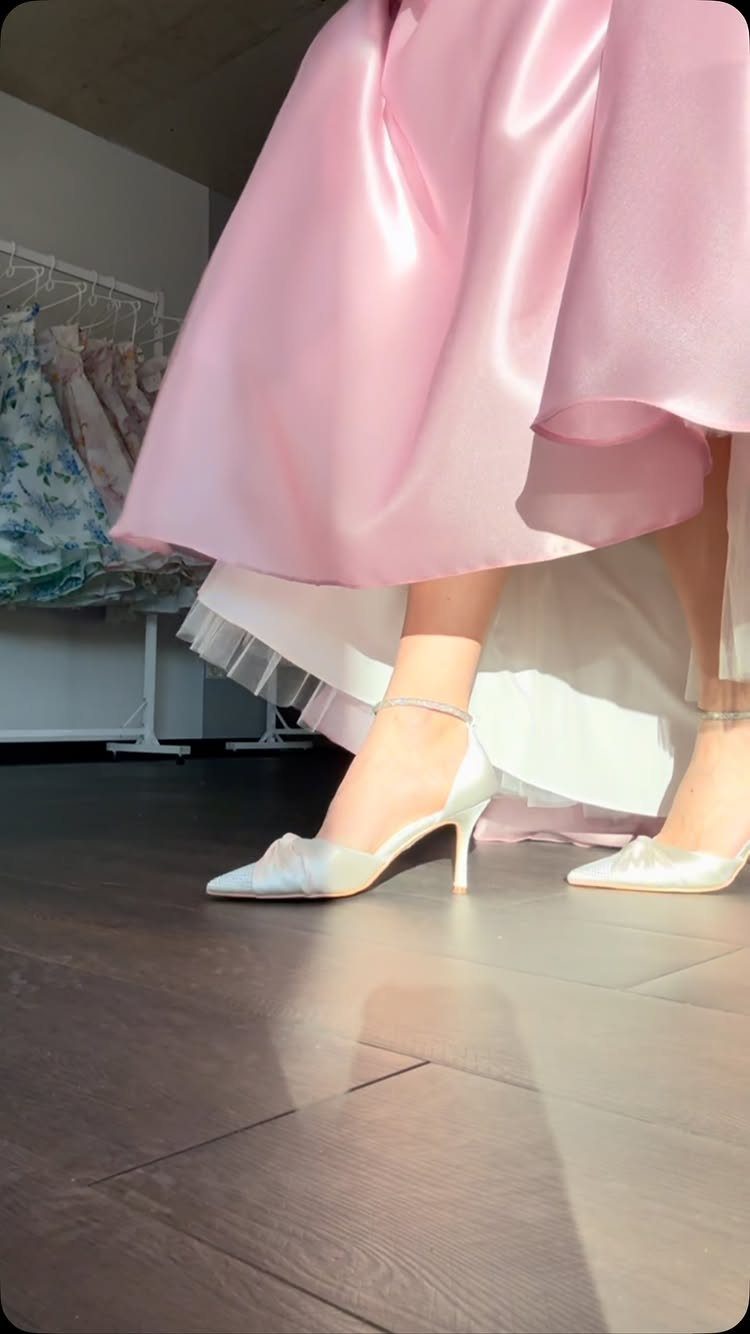
Blush pink satin in a voluminous silhouette delivers high shine and drama in a pastel shade. The gathered fabric here creates fullness that moves when you walk, which photographs well but takes up space at seated events.
White heels keep the palette soft, and the volume means you can skip a statement necklace.
9. One-Shoulder Light Blue Gown
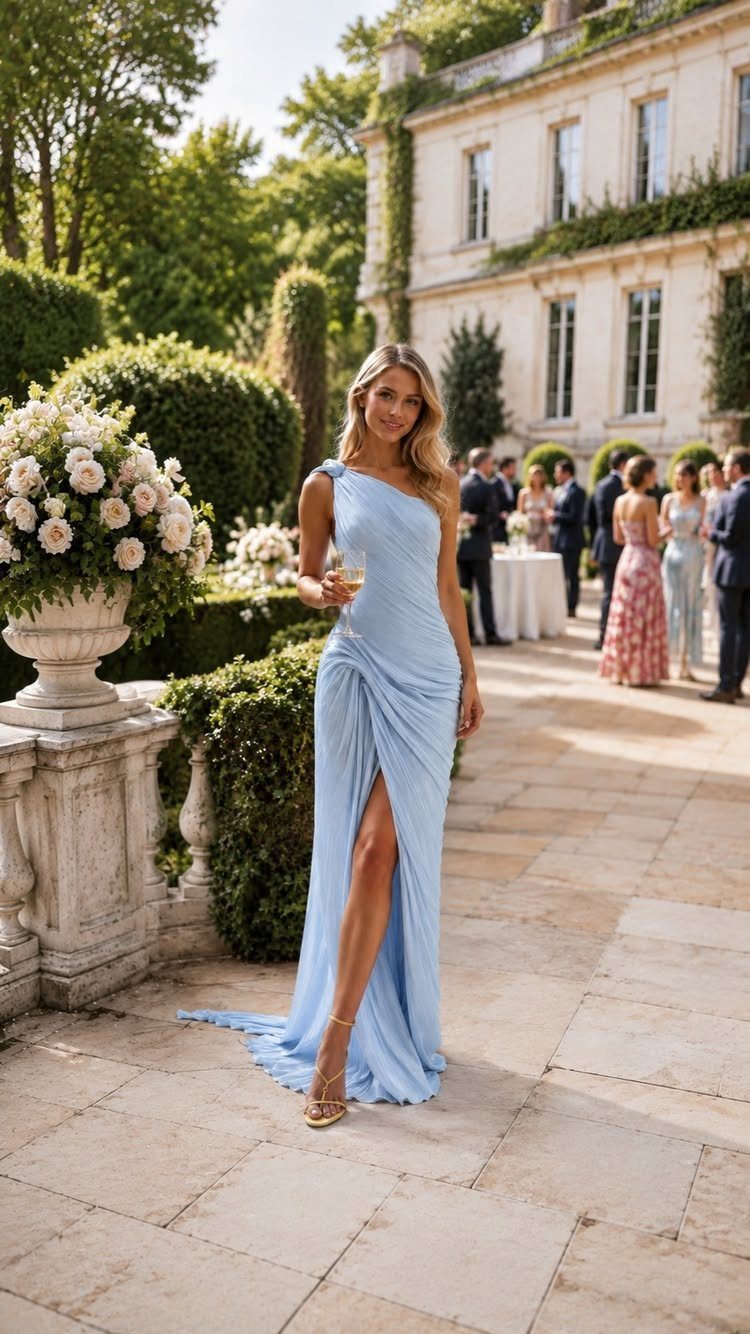
A one-shoulder cut in light blue gives you asymmetry that photographs clearly from any angle.
The side slit here adds movement and keeps a long gown from feeling too formal, especially at outdoor venues where you need to move across uneven ground.
Light blue stays cool in tone, so silver jewelry and neutral shoes pull together without competing. The single shoulder works best when you prefer a streamlined silhouette and want to skip layering.
10. Pastel Green Embroidered Set
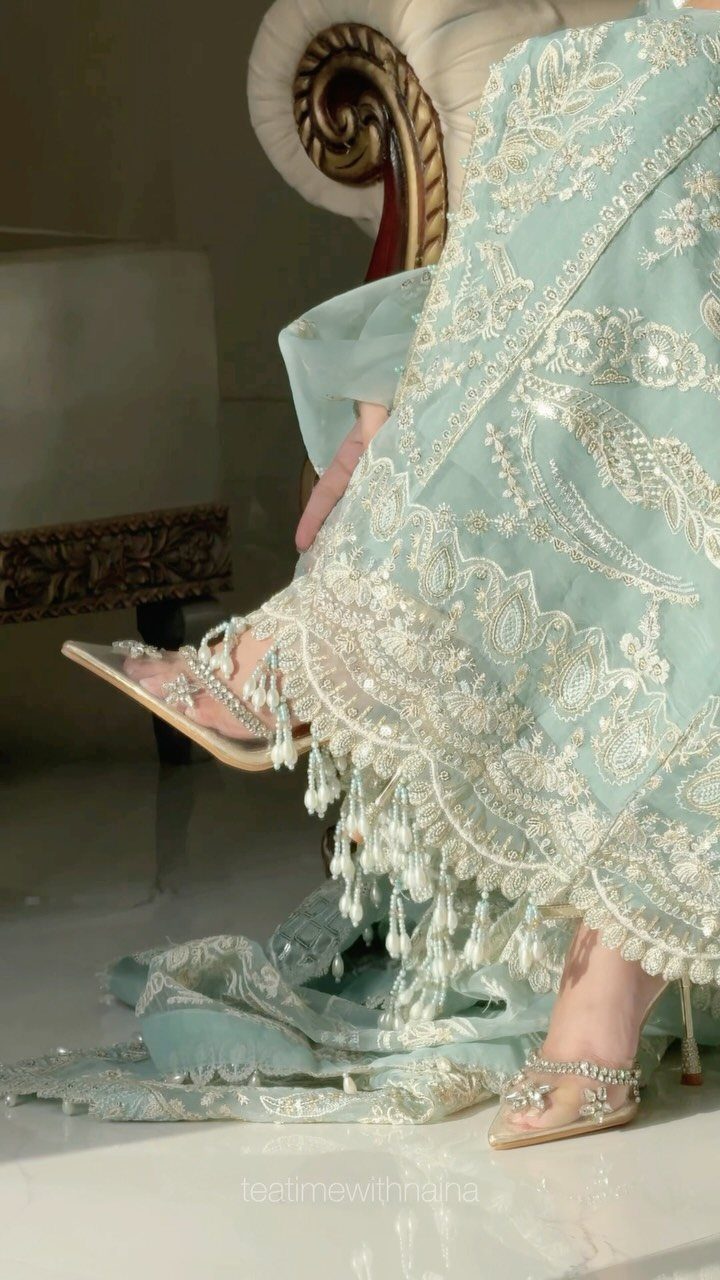
Mint green embroidery over a matching base gives you texture without contrast, so the detail reads subtle even when the stitching is dense.
The set here splits into separate pieces, which means you can adjust the fit independently and rewear each piece after the wedding.
Silver heels pull cool and metallic without adding warmth, and the embroidery itself provides enough detail that you can leave other accessories simple. Sets work particularly well if you prefer a coordinated look that feels less like a traditional dress.
Choosing the Right Fabric
Chiffon breathes easily in summer heat and photographs beautifully in motion. Chiffon moves easily and stays breathable when temperatures rise, while satin adds polish without the weight of heavier weaves.
Velvet or heavier satin gives pastel shades weight when the ceremony’s indoors or the temperature drops. These fabrics hold structure better than sheer options, which helps if you want a more formal silhouette or need coverage in lower temperatures.
The fit matters as much as the fabric itself. A cut that fits your shape comfortably matters more than any single detail of the fabric.
Accessorizing Pastel Dresses
Soft colors don’t need much help, so I keep jewelry simple.
A thin gold bracelet or small silver hoop does more than a pile of competing pieces. Pearl studs frame your face without competing with the dress, and a longer necklace fills a bare neckline cleanly.
Neutral footwear keeps the focus on the dress.
Compact bags in white, cream, or a shade that matches your shoes keep the palette cohesive. The bag stays functional without drawing attention away from the dress itself.
Matching Wedding Themes
Garden ceremonies and beach receptions suit long, floaty shapes in chiffon or organza that move with you and don’t trap heat. Ballroom venues call for structure: satin or silk that holds its shape under overhead lighting.
Matching the formality and mood of the space makes you look like you belong there. A monochrome pastel outfit stays in one color family from dress to shoes to bag.
A dusty pink dress can run with blush heels and a deeper rose clutch, or lavender pairs with lilac accessories and cool silver. I vary the shade and texture slightly so the whole look doesn’t flatten into one note.
Frequently Asked Questions
What is a pastel outfit?
A pastel outfit uses soft, diluted versions of standard colors like lavender, mint, blush, butter yellow, or powder blue.
These muted shades read polished and light, which suits wedding settings without competing for attention. The gentle palette adapts to both formal and outdoor venues while staying cooler in tone than saturated colors.
What to wear to a wedding as a guest?
A pastel dress in chiffon or satin gives you a fresh, elegant option that photographs well and suits most wedding venues.
Long silhouettes in lavender, sage, or soft peach work for formal ceremonies, while midi cuts in halter or off-the-shoulder styles handle outdoor heat. Keep accessories simple so the dress does the work.
Can I wear pastel purple to a wedding?
Pastel purple like lavender works beautifully at weddings because the color reads romantic without being too bold. Stick with clearly colored pastels rather than shades so pale they might photograph close to white.