Velvet gowns with metallic embroidery, embellished South Asian formal wear, and embroidered long-sleeve evening gowns span the range of winter wedding guest looks that handle cold weather without giving up formality.
Gold embroidery against black or burgundy velvet holds contrast in low light, and shawls or coordinating shrugs let you adjust coverage as the evening shifts from formal to casual.
1. Finding Your Perfect Winter Wedding Guest Dress
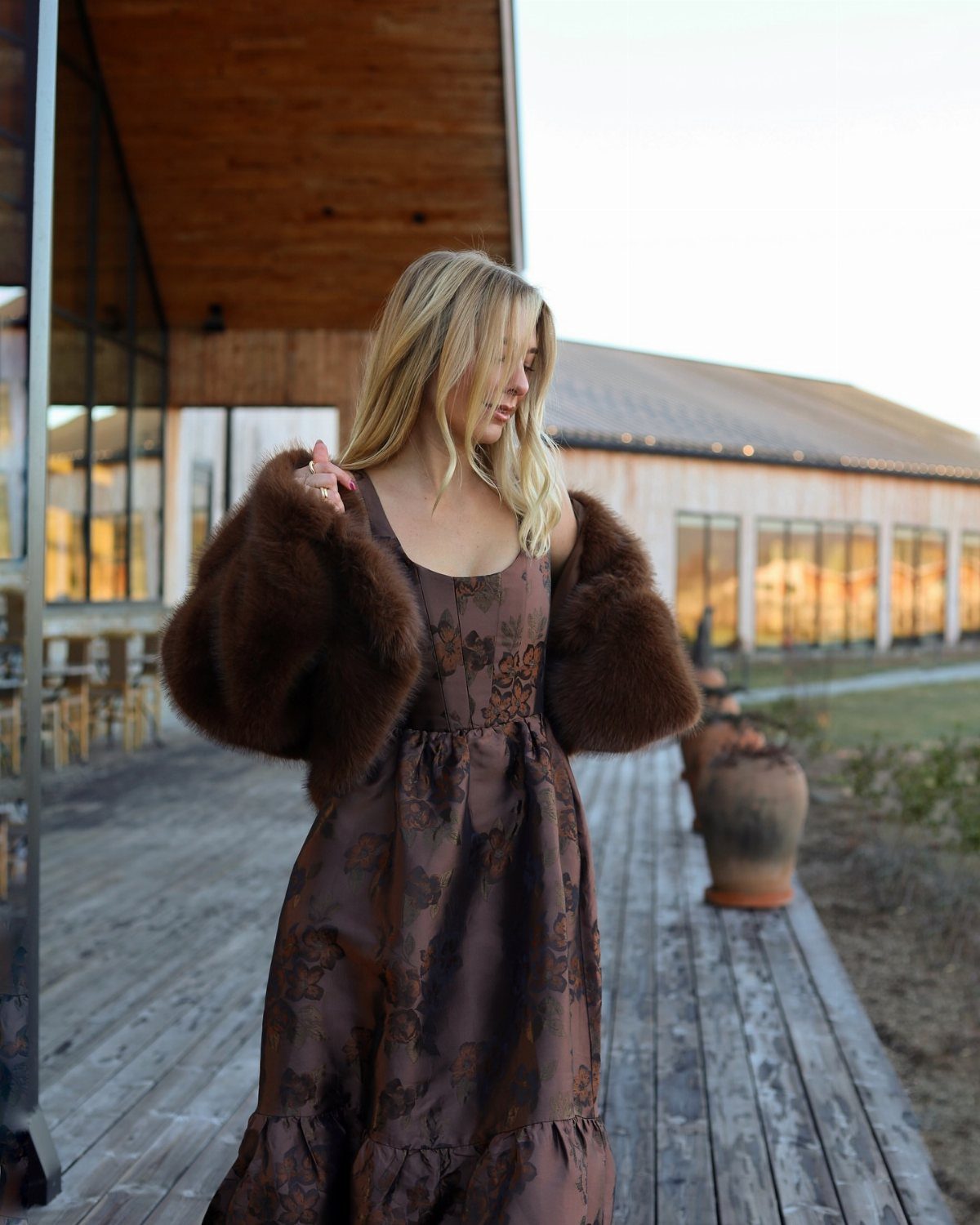
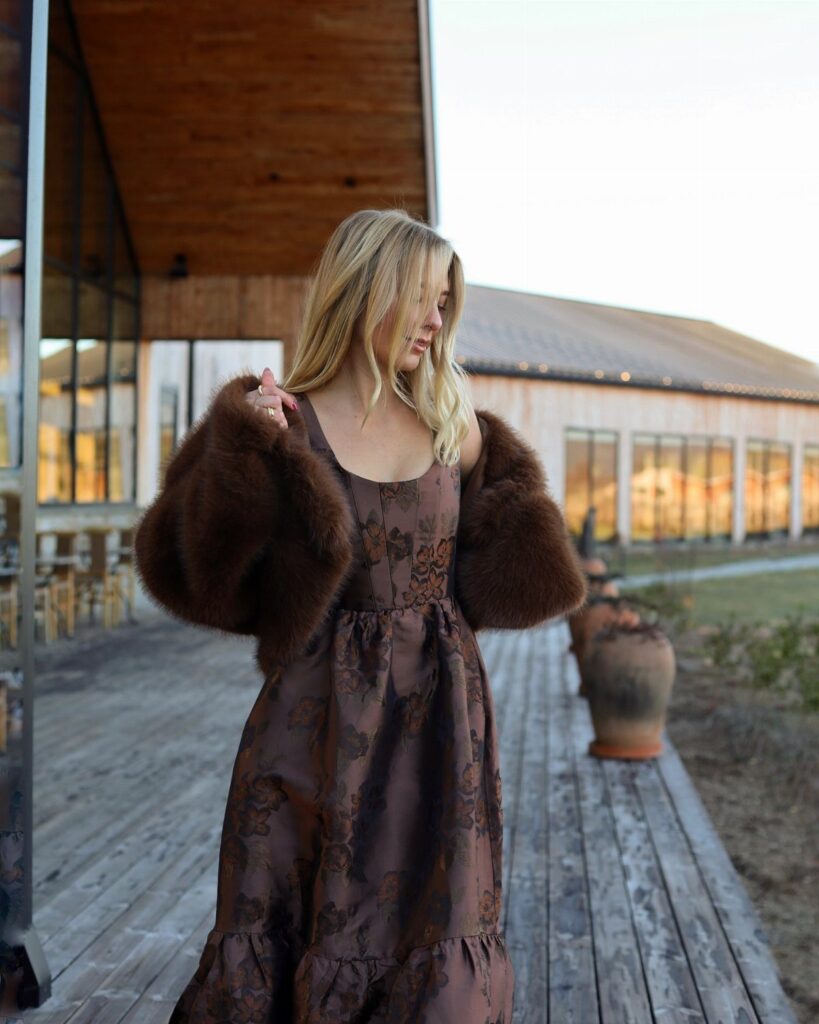
A printed dress in a warm brown tone with a faux fur shrug offers exactly the kind of polished, cold-weather look that works for winter ceremonies and receptions.
The pattern adds visual interest alongside statement jewelry, and the fur layer keeps you comfortable through outdoor photos or a chilly venue.
Pairing a dress with a coordinating shrug or wrap lets you adjust your coverage as the day goes on. You can keep the shrug on during the ceremony and remove it for dancing later.
2. Embellished Faux Fur Wrap
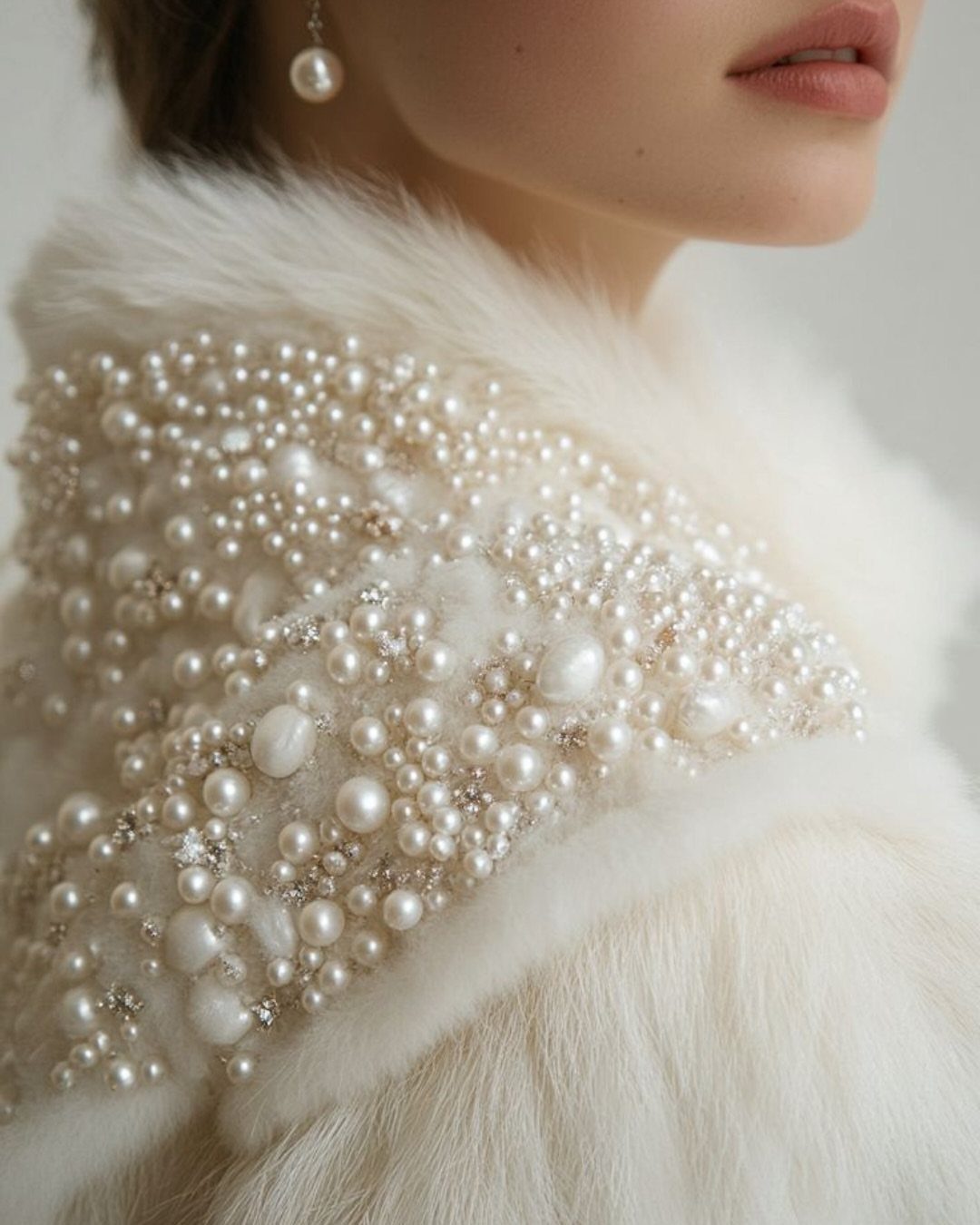
A faux fur wrap embellished with crystals and pearls turns outerwear into something that belongs with your formal look instead of hiding it.
The pearl and crystal details catch light the way jewelry does, so the wrap feels like part of your outfit rather than an afterthought.
This style works particularly well over sleeveless or strapless gowns where a plain coat would cover too much. The texture adds warmth without bulk, and the embellishment keeps your shoulders polished during outdoor arrivals or evening photos.
3. Embroidered Velvet Salwar Kameez
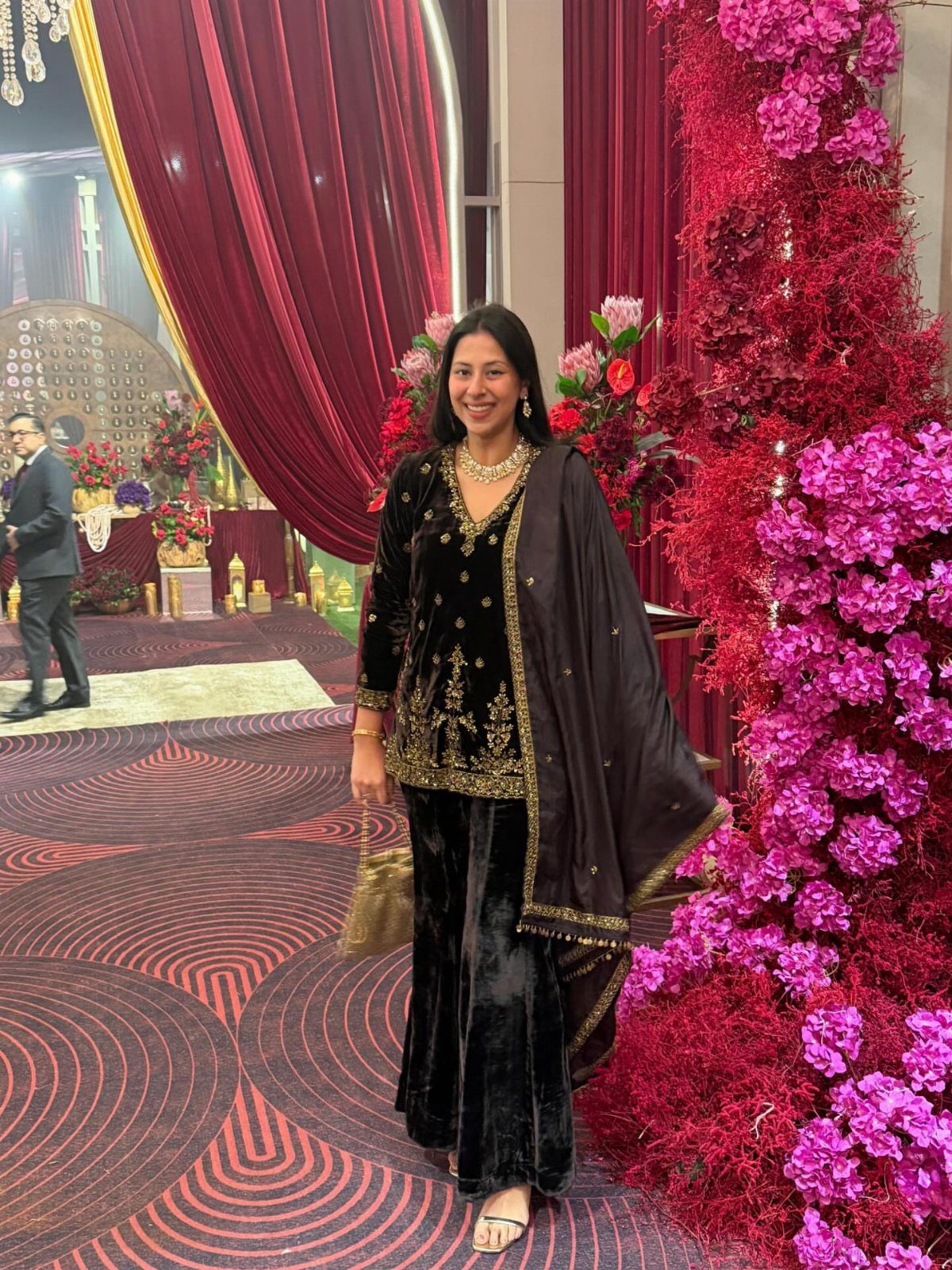
A velvet salwar kameez with gold embroidery and a dupatta brings richness and formality that suits winter celebrations perfectly. The velvet fabric holds warmth naturally, and the embroidered details add dimension under indoor lighting.
Gold jewelry picks up the metallic embroidery and ties the look together.
A dupatta draped over one shoulder balances the coverage and keeps the outfit formal without feeling overly structured. The tunic length and trousers offer ease of movement for long events.
4. Embroidered Black Velvet Dress
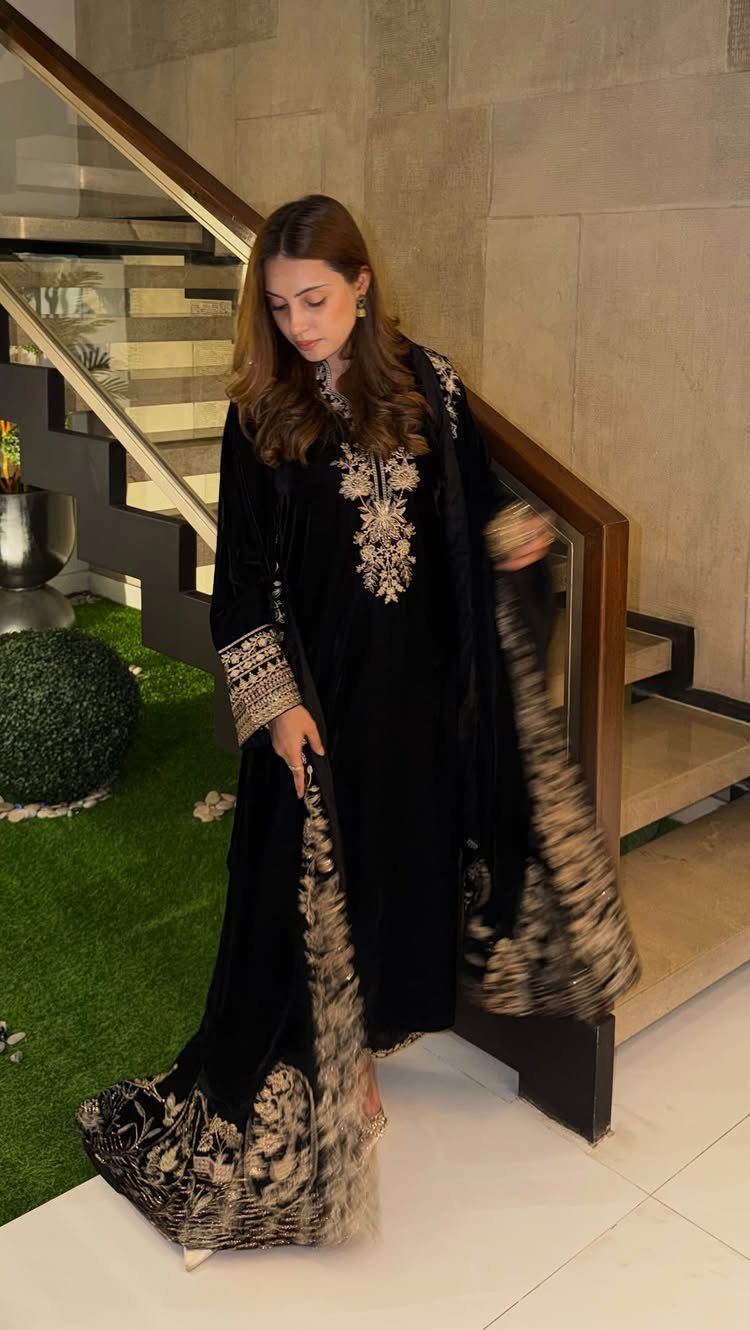
A floor-length black velvet gown with gold embroidery keeps you warm while delivering serious formal presence. The contrast between the deep black fabric and metallic embroidery creates a striking silhouette, and the long sleeves add coverage without sacrificing elegance.
Velvet naturally holds heat, so this style works well for winter weddings in unheated venues or outdoor ceremonies. The gold detailing catches light during evening receptions, and the length grounds the look for formal or black-tie events.
5. Velvet Tunic and Trousers Set
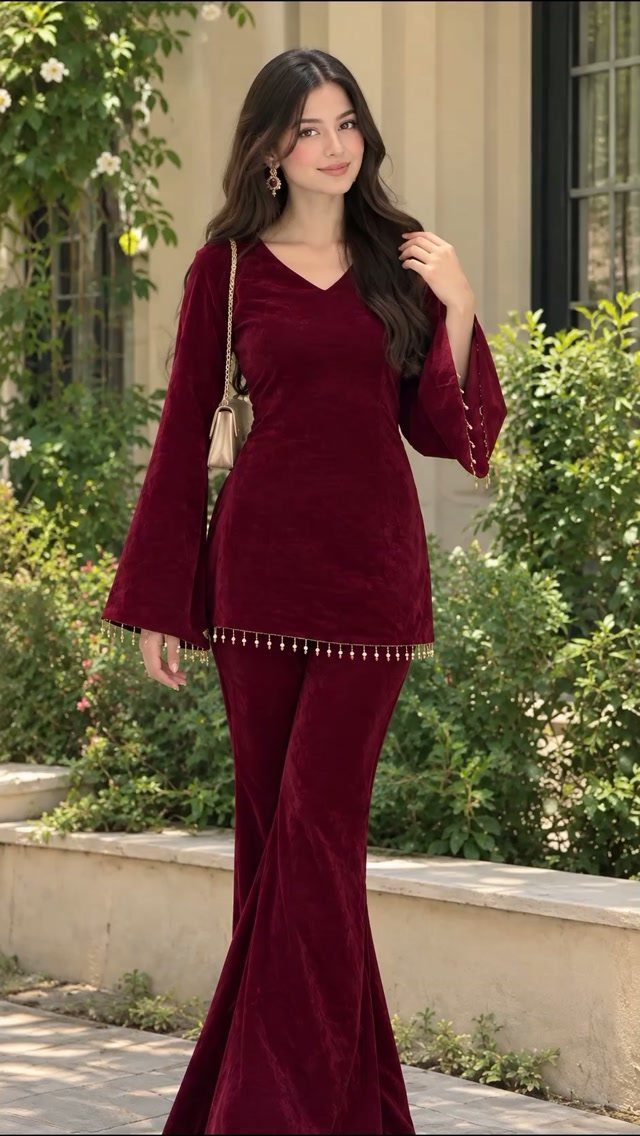
A velvet tunic and trousers set in deep red offers an alternative to dresses that still feels polished and formal. The beaded trim along the neckline and sleeves adds subtle detail, and the matching trousers keep the silhouette streamlined.
This option works well for guests who prefer pants or need more mobility during the event.
The long sleeves and full-length trousers provide warmth, and the single color ties the outfit together. Velvet holds structure, so the tunic stays tailored through hours of wear.
6. Burgundy Velvet Dress with Shawl
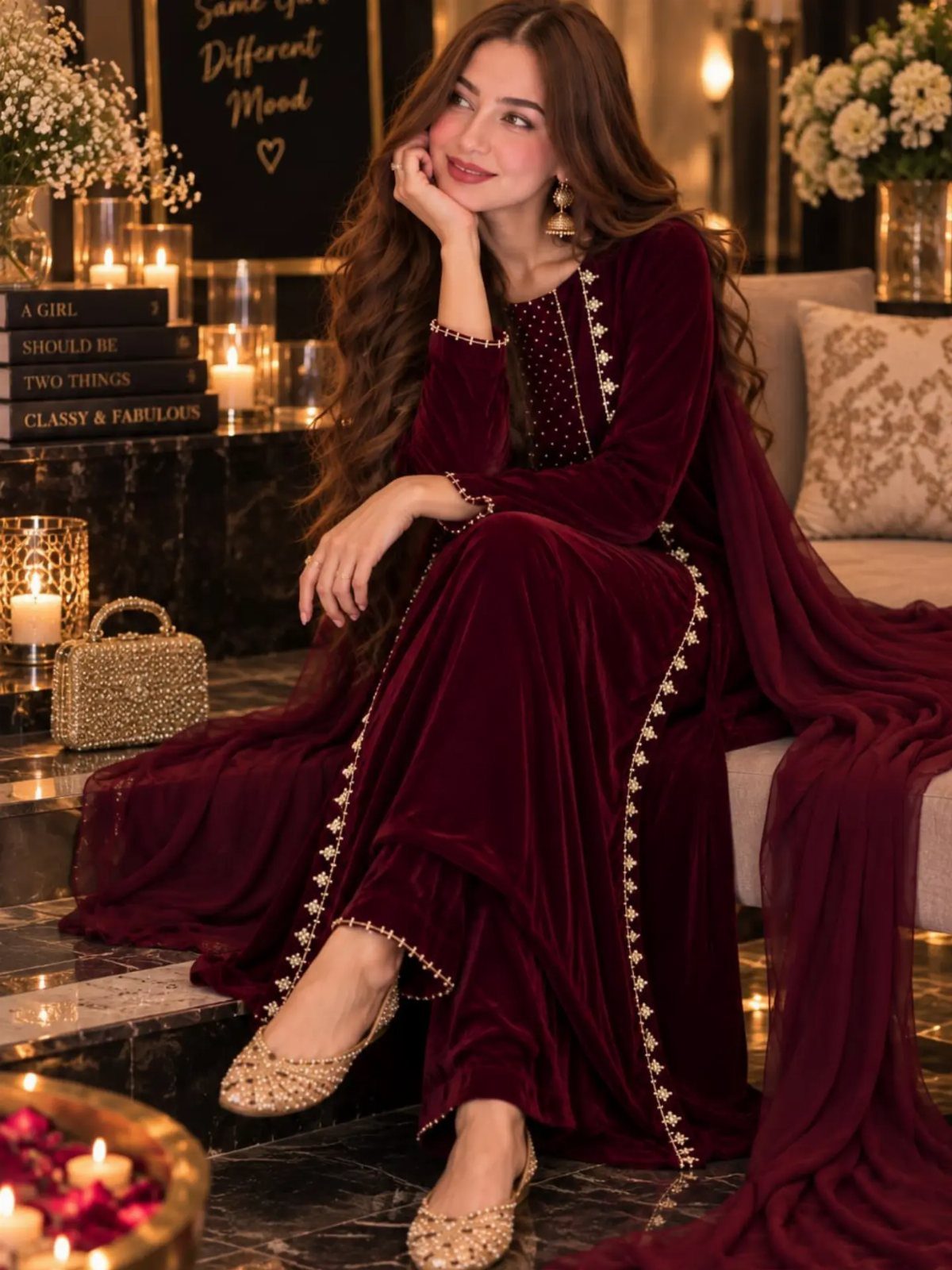
A long-sleeved burgundy velvet dress with gold embroidery and a matching shawl balances coverage with formality. The embroidered details add texture while letting the silhouette stay clean, and the shawl offers an extra layer for outdoor moments or cooler venues.
Burgundy sits between red and plum, making it a strong choice for winter palettes that lean jewel-toned.
The shawl can drape over your shoulders during the ceremony and transition to your arms later. Velvet in this weight holds warmth while still moving naturally.
7. Embroidered South Asian Formal Wear
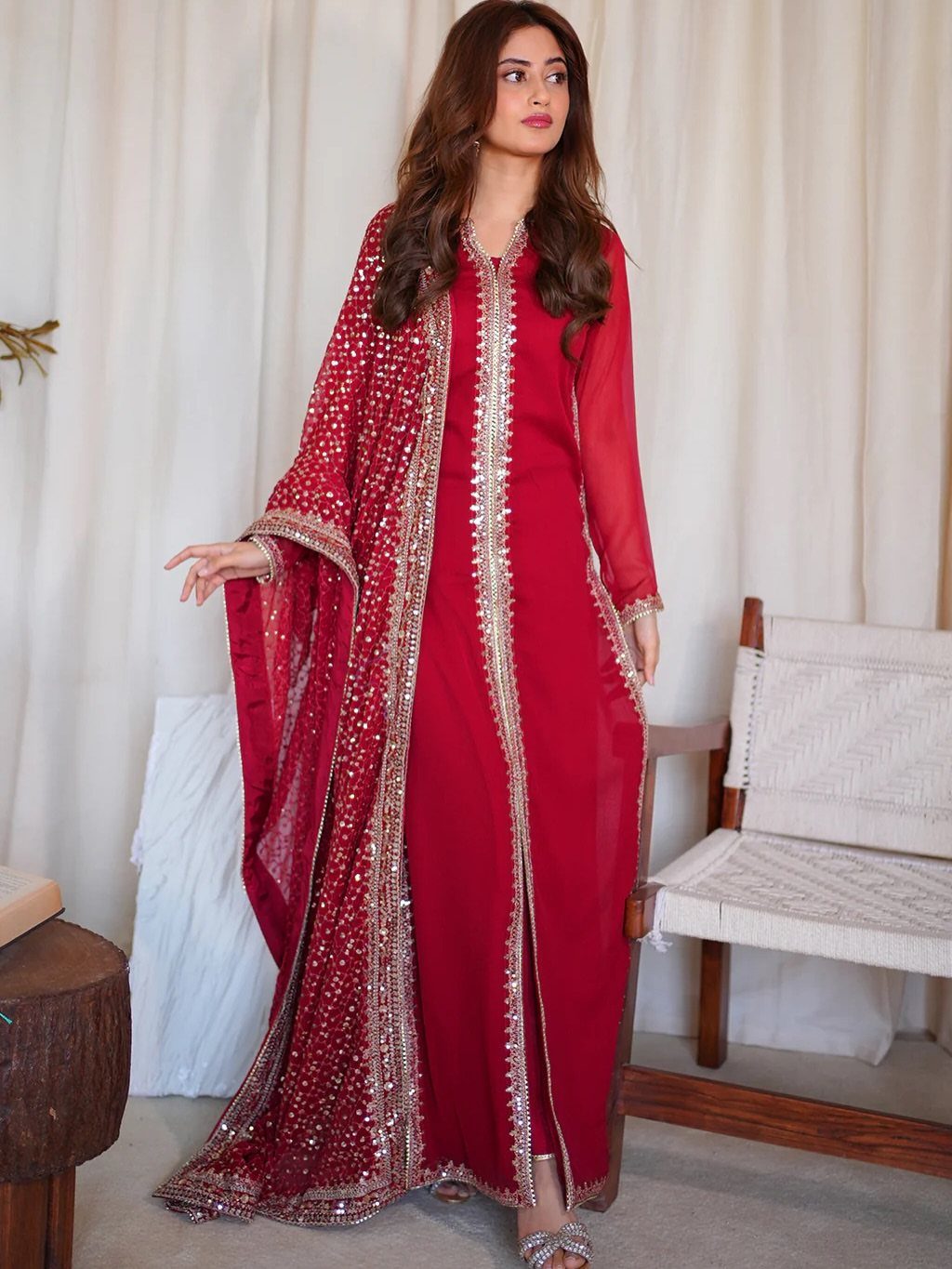
A red South Asian formal outfit with gold embroidery and sequin work layers richness through color, metalwork and shine.
The sequined shawl picks up light during evening events, and the full embroidery across the tunic reads formal without much additional jewelry.
Red sits naturally in winter palettes and photographs well against neutral or jewel-toned decor. The shawl adds a layer you can adjust as temperatures shift from one space to another.
8. Embroidered Long-Sleeve Evening Gown
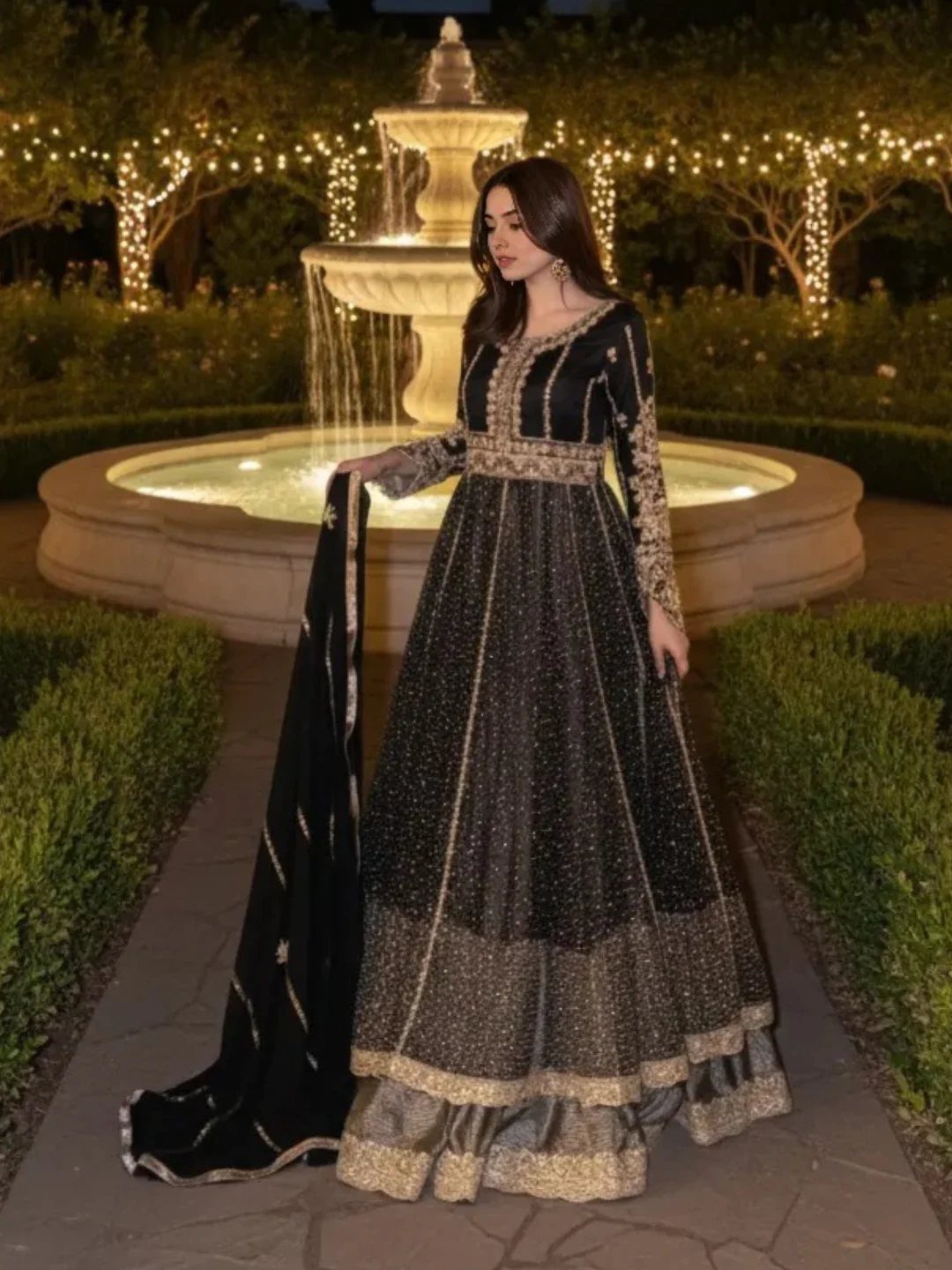
Gold embroidery and sequins against black velvet create high contrast that reads clearly in low light and holds formality through floor length and full sleeves.
The metallic detailing runs across the bodice and sleeves, so the gown carries visual interest without relying on jewelry.
Long sleeves and velvet fabric provide built-in warmth for outdoor arrivals or winter ceremonies in drafty venues. The black base lets the embroidery stand out and grounds the silhouette for formal or black-tie events.
Consider the Wedding Location
Check the invitation for venue details before you finalize your outfit. An outdoor ceremony or reception in February calls for layers you can actually wear outside, not just a wrap that gets you from the car to the door.
Beach weddings in warm climates let you pack lighter, and what you bring often works for the rest of the trip. If you’re flying south for a winter wedding, your summer formal wear will cover it.
Ranch or themed venues in the Southwest often expect guests to lean into the setting. Upscale Western details fit better than trying to ignore the venue entirely.
Weddings in the Southeast during winter still run warm enough that indoor and outdoor temperatures won’t differ much, but venues farther north may have unheated spaces or extended outdoor photo sessions that require real outerwear.
There’s something truly special about attending a winter wedding, and it’s not just because they generally happen around the holidays.
— Nylon
Dressing for Different Wedding Themes
If the couple has chosen a specific theme or strong color palette, your outfit should acknowledge it without trying to match the decor exactly.
A jewel-toned dress or velvet suit works across most formal winter themes, while prints and metallics read neutral enough to fit into different styles.
Knee-high boots pair well with midi dresses and add warmth if you’re moving between indoor and outdoor spaces.
Nude tights under a maxi dress add a layer without changing the silhouette, and matching sets or pantsuits give you coverage that still reads formal.
Oversized coats, scarves, and gloves handle the arrival and can come off once you’re inside. The accessories don’t need to match your outfit’s formality as long as they’re clean and intentional.
Dress Code Considerations
If the invitation doesn’t state a dress code, the start time gives you the clearest guidance.
A ceremony that starts at 7 pm or later usually means formal dress, and that goes double if the reception is at a hotel ballroom or other upscale venue.
Afternoon weddings starting after 3 pm sit somewhere between daytime casual and evening formal.
Black works for guests at weddings in the US, though it’s still avoided in many European countries. If you’re unsure about the couple’s background or preferences, darker jewel tones give you the same formality without the potential misstep.
Evening events almost always expect long hemlines and structured fabrics.
Frequently Asked Questions
What should I wear to a winter wedding as a guest?
Choose outfits in warm fabrics like velvet or heavy embroidered materials, and layer with wraps or shawls you can adjust through the event.
Jewel tones, rich neutrals, and metallics work well for winter palettes and photograph clearly in lower light. Long sleeves, floor-length hemlines, and structured separates keep you warm without losing formality.
What are the trendy winter wedding trends for 2026?
Velvet, embroidery, and sequined details dominate winter guest looks, with jewel tones like burgundy, emerald, and deep red taking the lead over softer pastels.
Metallics in gold and black add contrast that reads well in evening light. Statement wraps with crystal or pearl embellishment turn outerwear into part of the outfit instead of something to hide.