Format determines how much space the guest book needs and how long it takes each person to use it.
A bound book with pre-printed pages handles high guest counts efficiently because people can sign and move on in under a minute, while a photo booth guest book or video station requires more time per guest and works better at smaller weddings or as an optional activity.
Material and color should match your existing décor closely enough that linen or fabric covers suit softer palettes, leather reads formal, and acrylic or wood bases work when your tables already use those finishes.
1. Traditional Guest Book
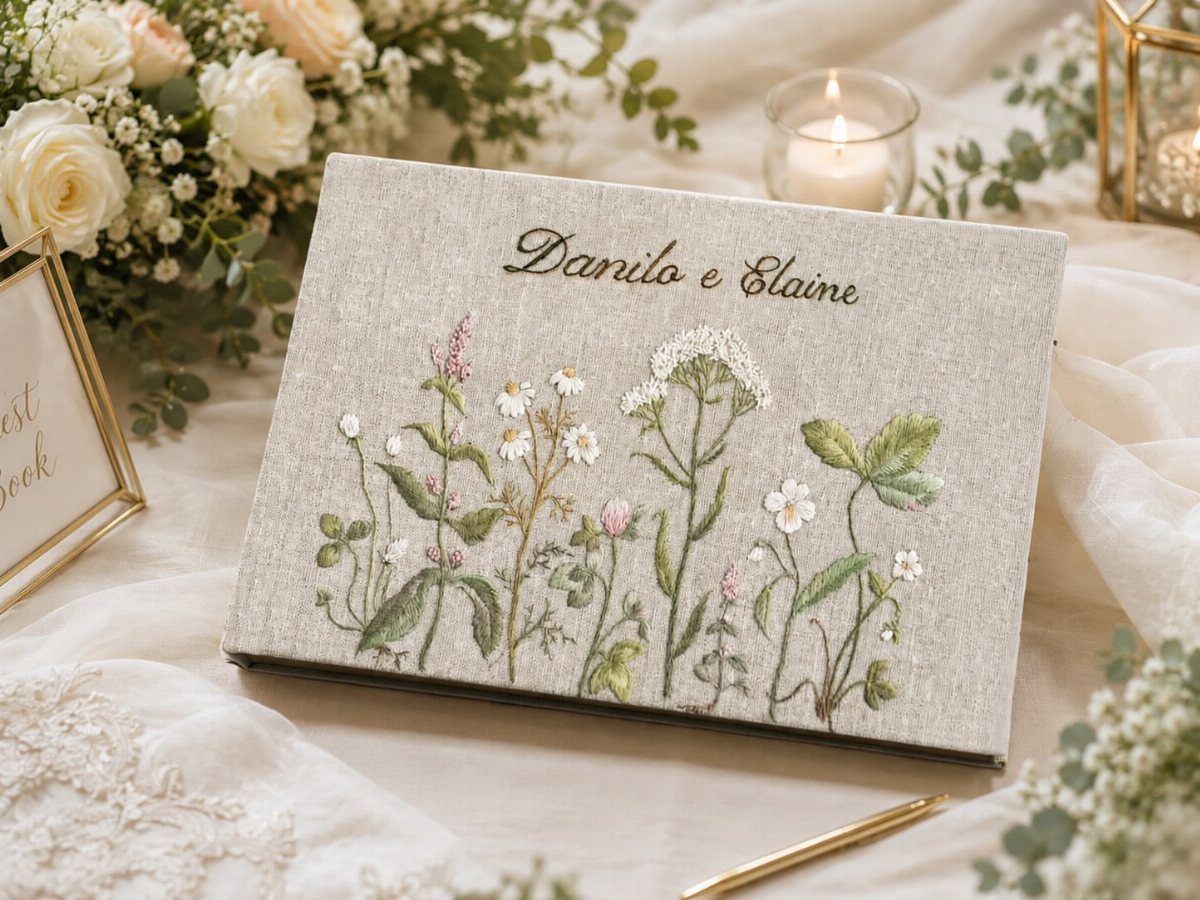
A bound book where guests sign their names and leave written wishes.
The embroidered linen cover adds a personal touch that matches softer, garden-style weddings, though you can find covers in leather, fabric, or plain hardbound options depending on your aesthetic.
Set it on a side table near the entrance with a pen or two, and guests will know what to do.
The format gives you something physical to keep, and flipping through handwritten notes years later feels different than scrolling a screen.
2. Photo Booth Guest Book
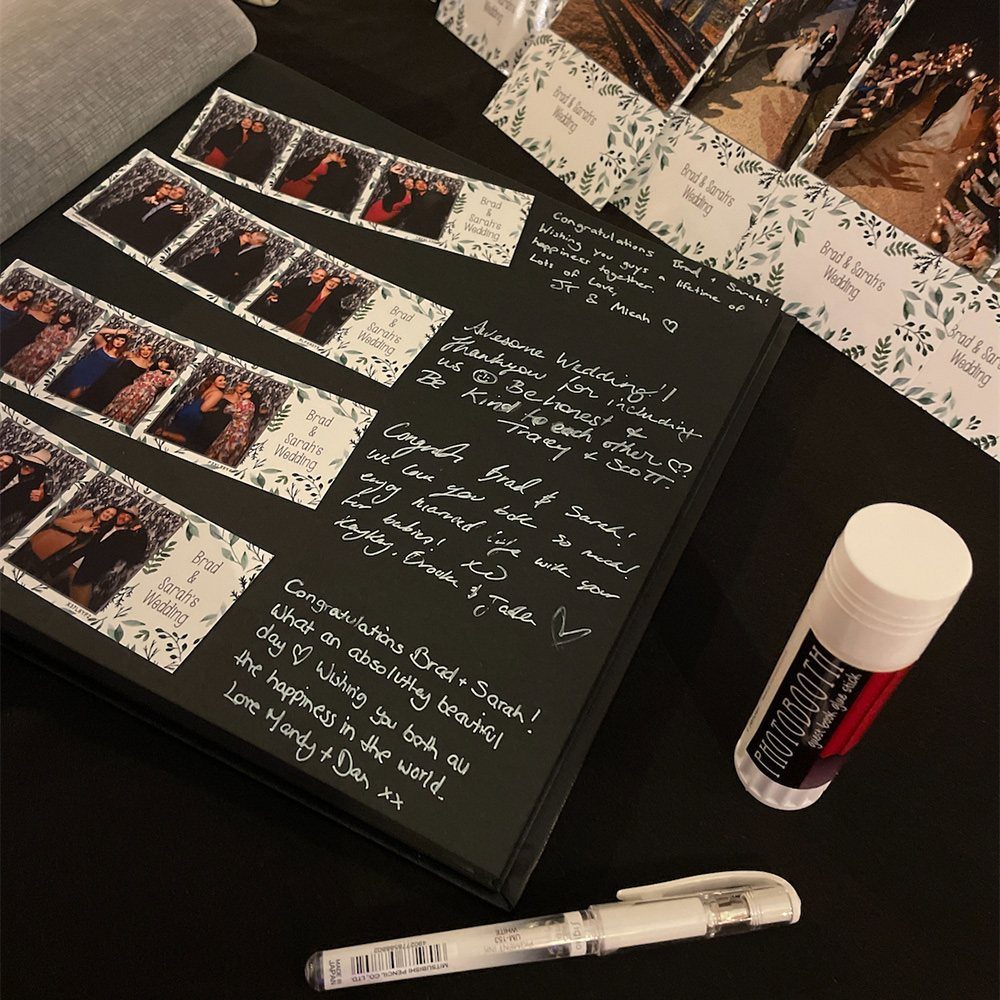
Photo booth prints go straight into the book, and guests write a message next to their strip.
The format works best when the booth is placed near the guest book table so people can stick their photo and sign right after they take it.
You’ll need a glue stick or adhesive corners at the station, plus a pen that shows up against the page color.
Black books with white or metallic pens photograph well, but any color combination works if the ink contrasts enough to read. The result is a guest book that actually looks like your wedding when you page through it later.
3. DIY Wedding Guest Book
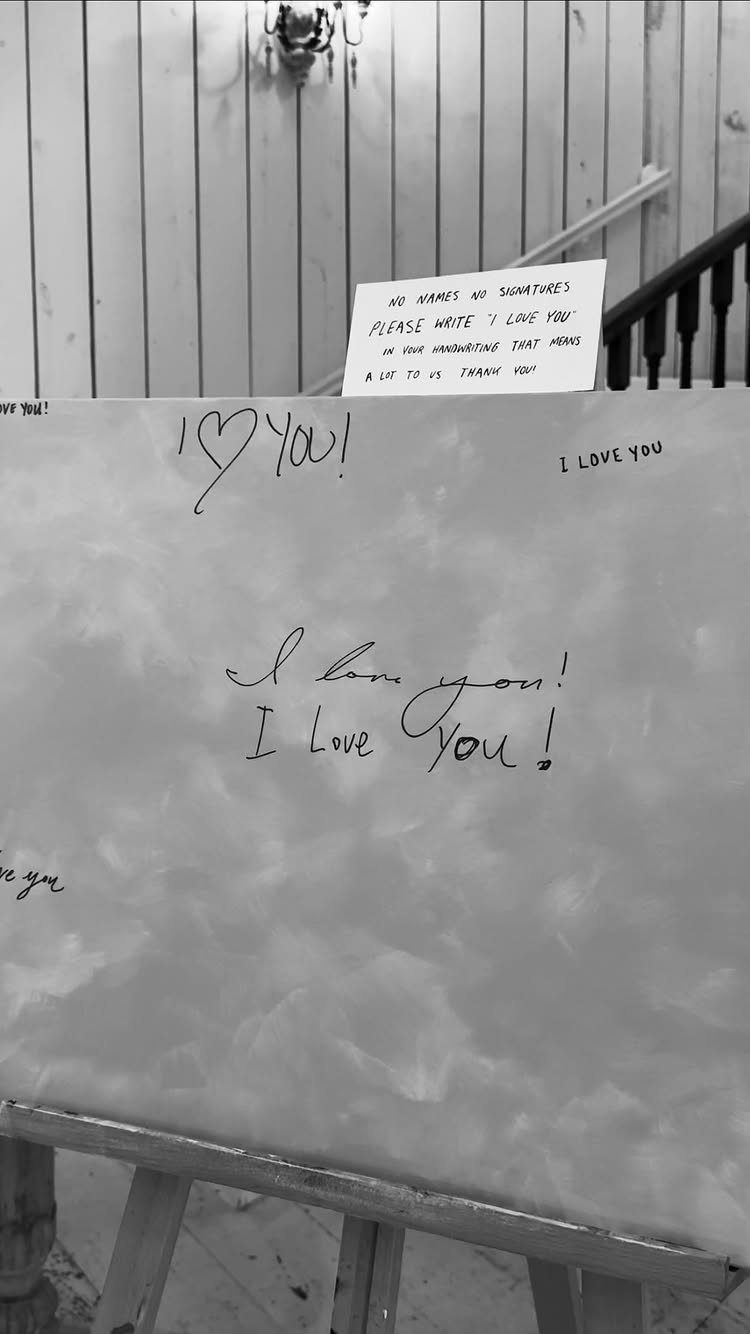
A canvas, a poster, or any surface you set up for guests to write on directly.
The example here asks for "I love you" in different handwriting instead of names, which creates a piece of art rather than a record of attendance.
You could also have guests sign around a map, a silhouette, or an illustration that means something to you.
Mount the canvas on an easel or prop it on a table with a few pens that won’t bleed through. Afterward, you can frame it and hang it at home.
4. Guest Book with Photos
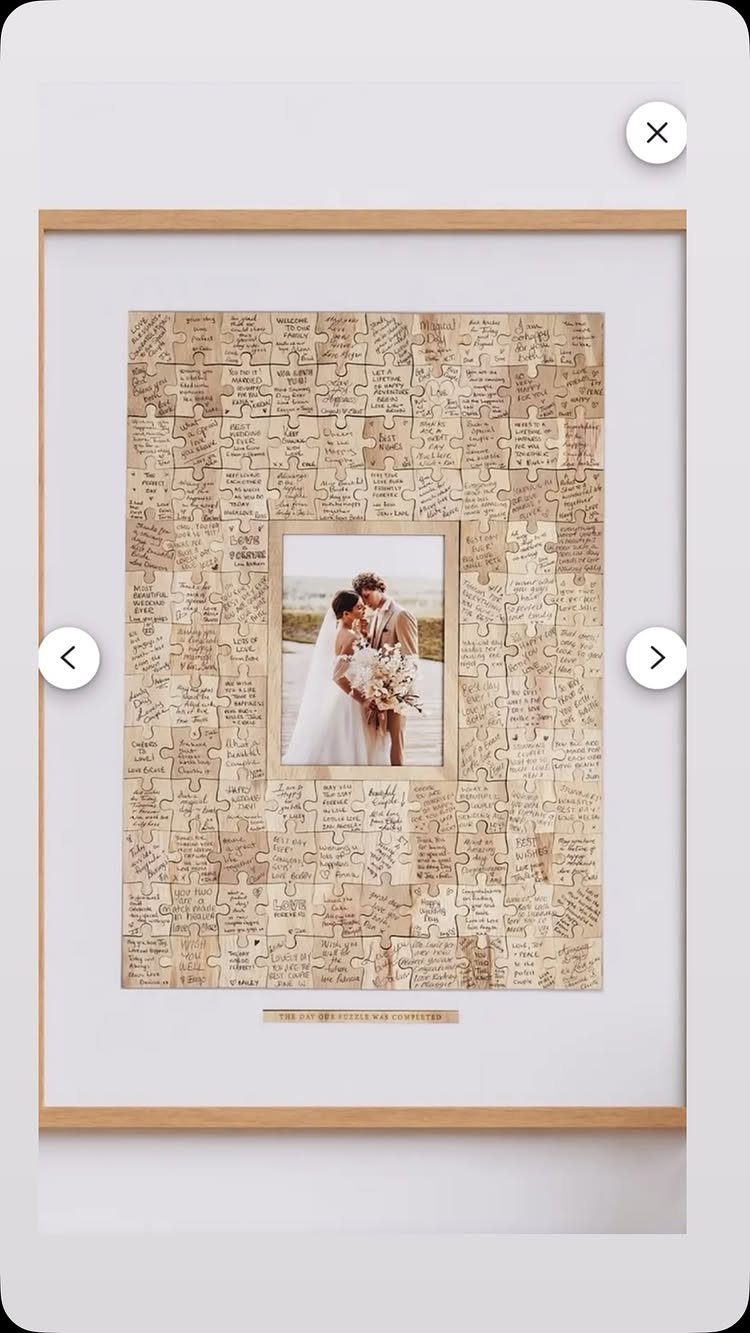
This version uses a puzzle where each piece gets signed by a guest, and the center holds a photo of the couple. Once everyone has written on their piece, you assemble the puzzle and frame it.
The setup requires laying out the puzzle pieces on a table with pens, and guests take one piece to sign before dropping it in a collection box or basket.
Assembly happens after the wedding, which adds a step, but the finished piece becomes wall art with everyone’s message built in.
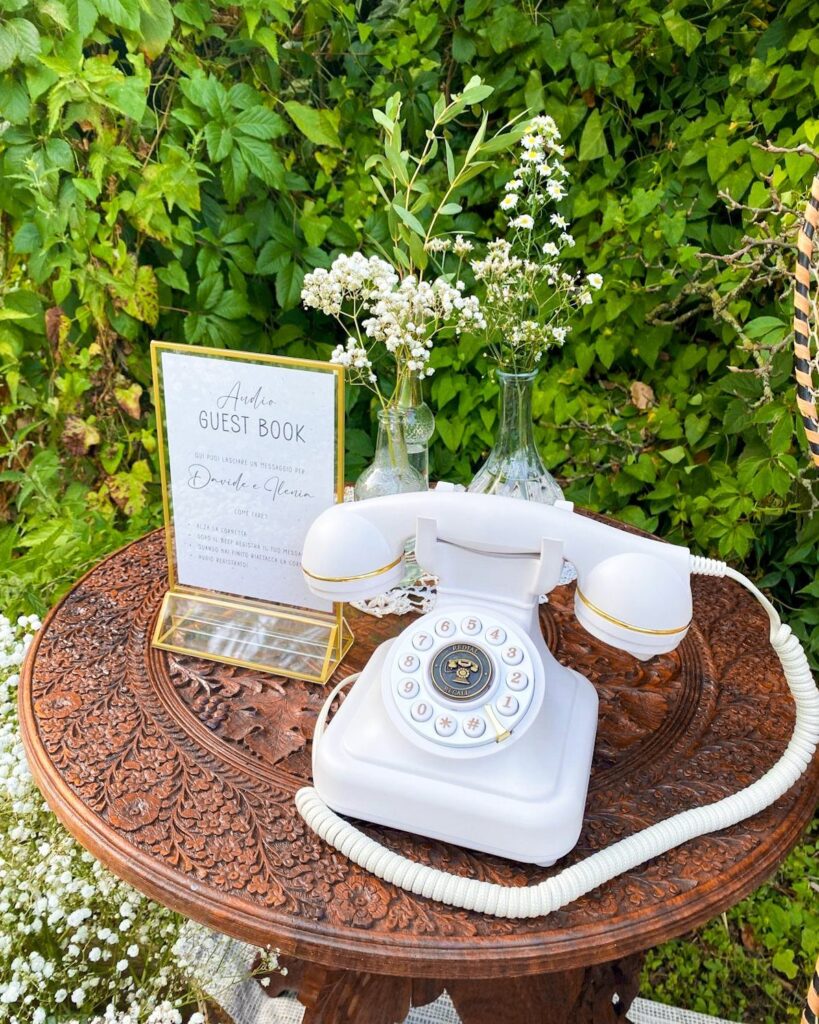
5. Audio Guest Book
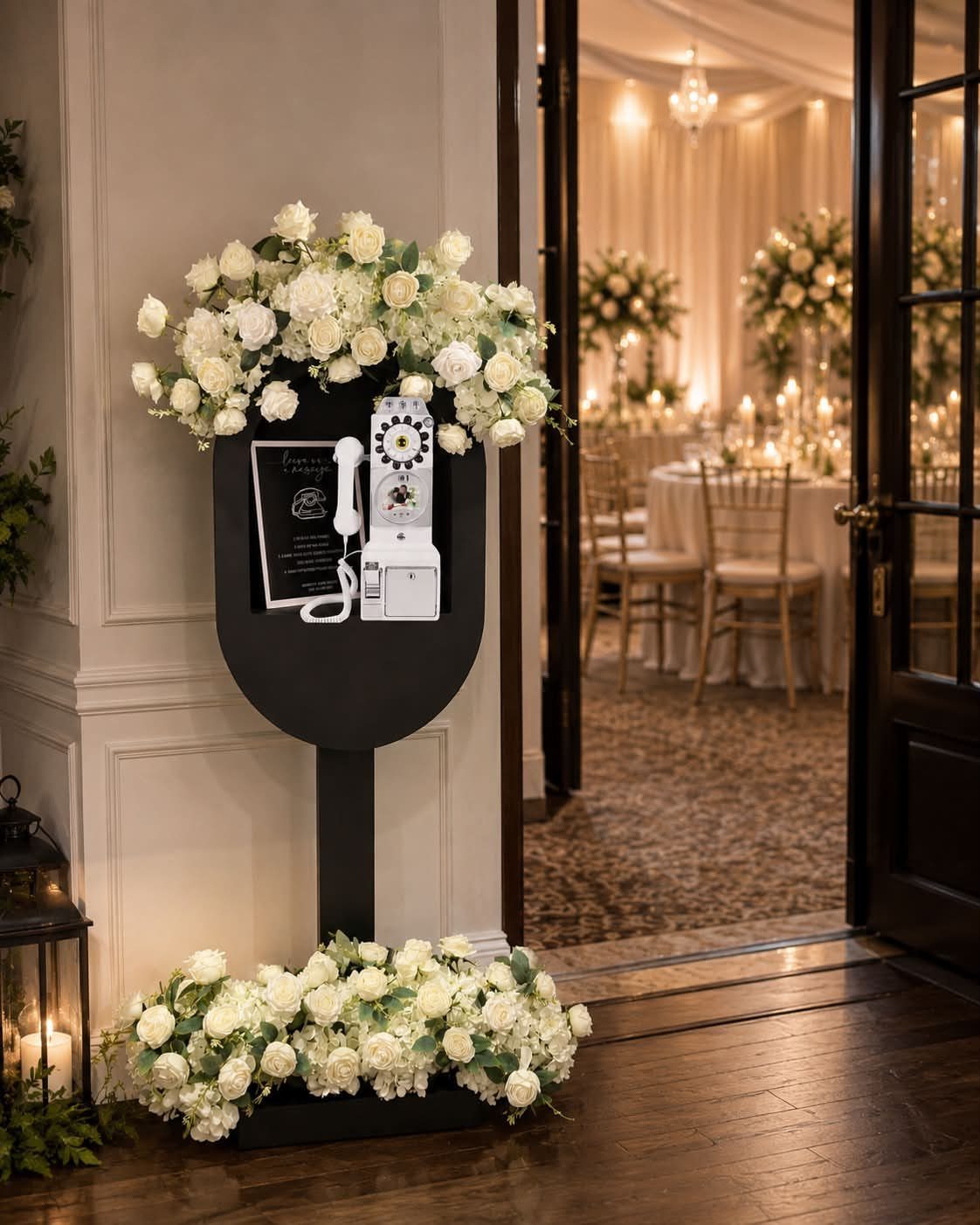
The system captures tone, laughter, and the exact way someone says congratulations, which written notes can’t.
Most services charge a rental fee for the phone and equipment, and you receive the audio files afterward to download or keep in an app.
The setup needs a small table and a sign explaining how to use it. If your crowd skews older or less comfortable with unfamiliar tech, test it with a family member first.
6. Video Guest Book
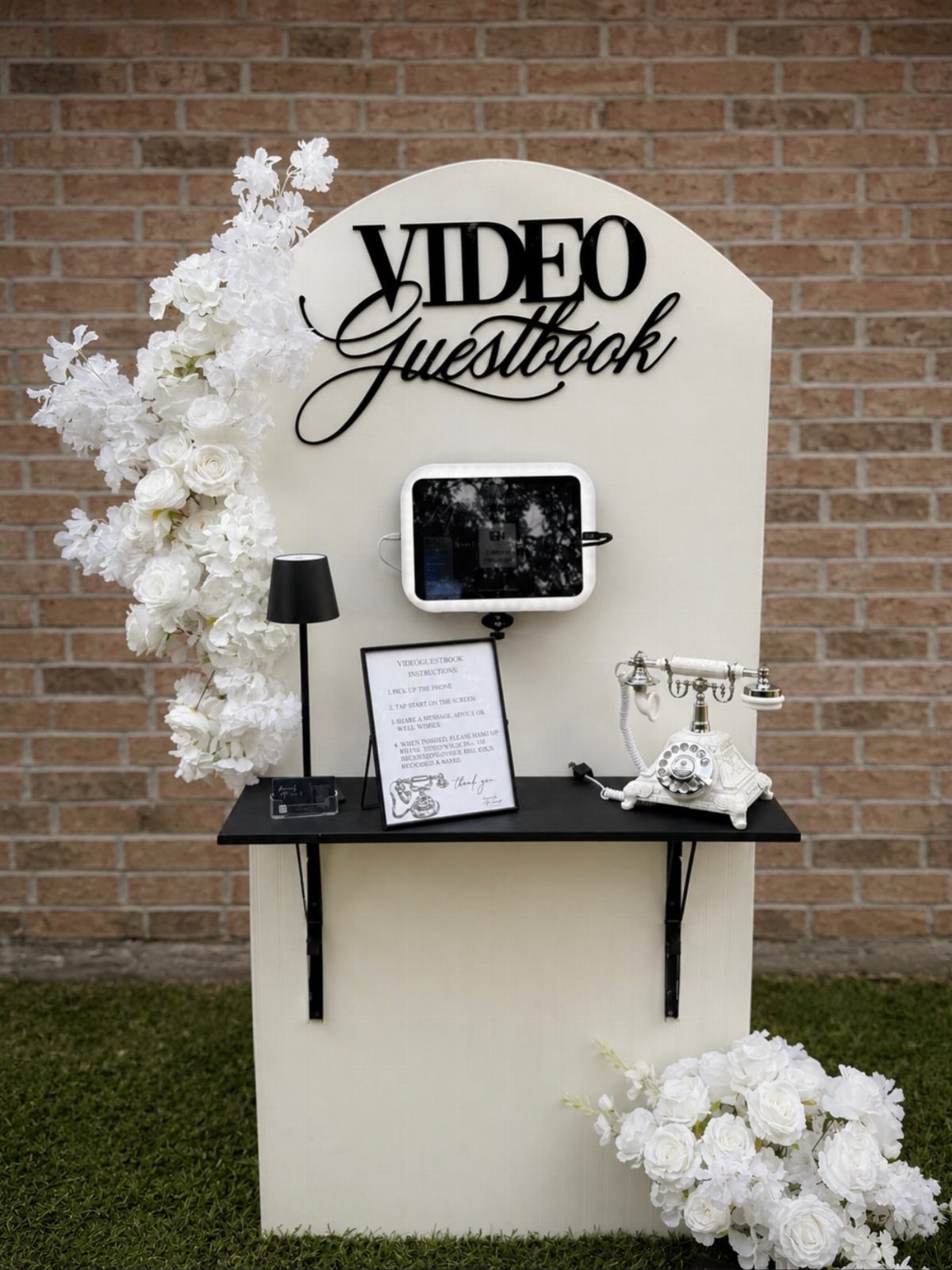
A tablet or camera setup lets guests record short video messages for the couple. The station usually includes a stand, a prompt card with question ideas, and sometimes props or a backdrop to make the setting feel intentional.
Rental packages handle the recording and file delivery, or you can set up your own with a tablet and a tripod.
Videos take longer per guest than signing a book, so this works best at smaller weddings or as an optional activity rather than something every single person is expected to do.
7. Word Search Activity Guest Book
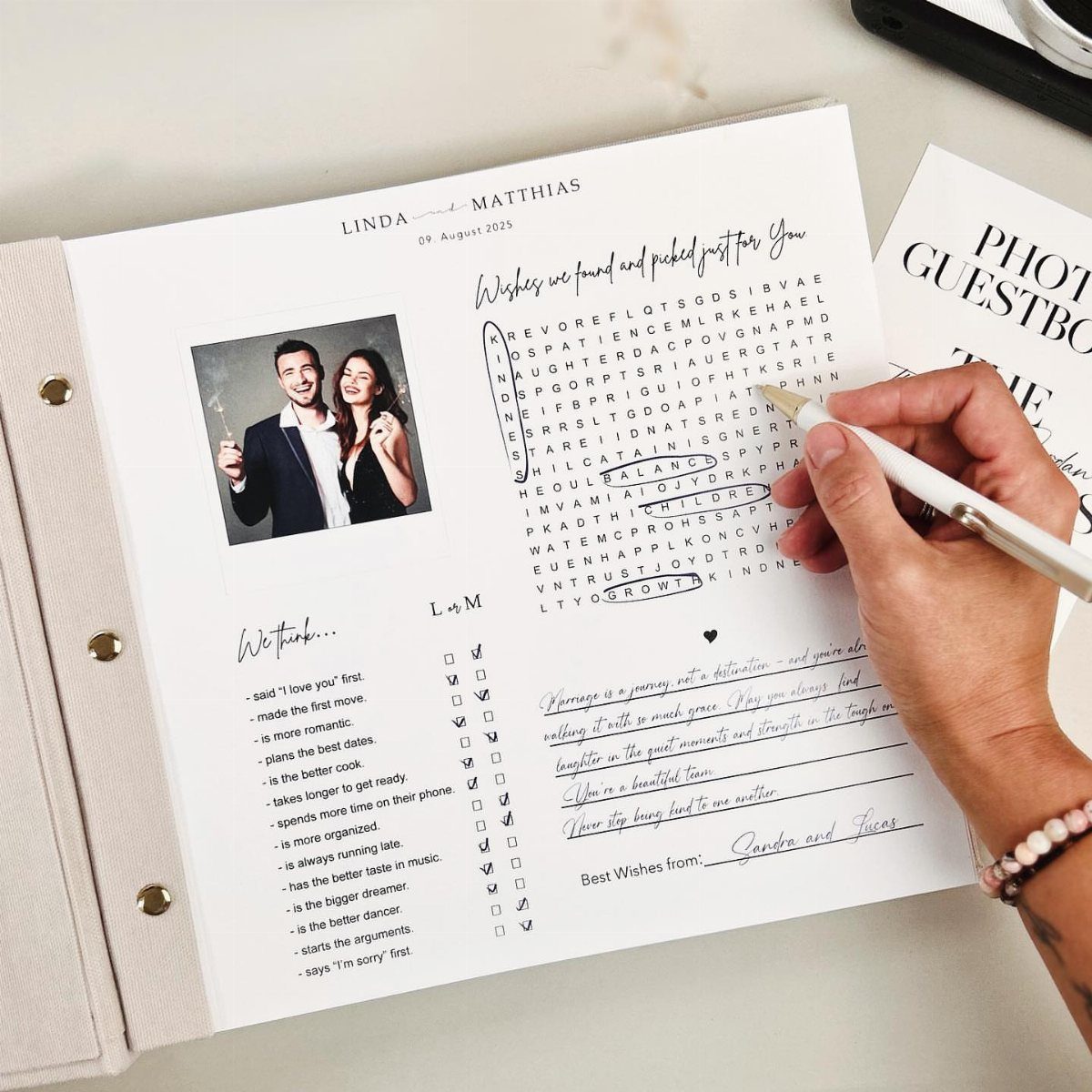
Each page holds a custom word search built from names, places, or inside jokes that matter to the couple, plus a trivia section where guests guess answers about your relationship.
People solve the puzzle, fill out the trivia, and leave a short message in the space below.
You’ll need to design the page ahead of time using a word search generator and layout software, then print enough copies for your guest count.
Guests fill them out at their tables or at a station, and you collect the pages in a binder or box. It keeps people entertained during downtime and gives you something to read through later.
Importance of a Guest Book
A guest book gives you a written record of who showed up, which matters more than it sounds like when you’re writing thank you notes later and trying to remember whether your cousin’s boyfriend actually made it or just RSVP’d yes.
The messages people leave also help personalize each note.
Someone who wrote 2 sentences about how emotional the vows were gets a different reply than someone who just signed their name, and you have their exact words to respond to instead of guessing what they thought.
The spelling detail is practical. You’ll write the name exactly as they signed it, which saves you from texting your mom to ask how to spell a last name you’ve heard but never seen written down.
Choosing a Guest Book
The format you pick should fit the amount of space you have and how many people are signing.
A large bound book works when a lot of guests will be moving through a station over the course of an hour, but a smaller album or alternative surface makes more sense for an intimate backyard wedding.
Material and color should match the rest of your décor closely enough that the guest book doesn’t look like it wandered in from someone else’s event.
Linen and fabric covers suit softer palettes, leather reads more formal, and acrylic or wood bases work when your tables and signage already use those finishes.
Customization, when you want it, usually means adding names, a date, or a monogram to the cover.
Placement of Guest Book
The guest book needs to sit where people will see it without being told to look for it.
Near the entrance to the ceremony or reception works because that’s where traffic naturally slows down and guests have a minute before they find their seats.
Put it on its own table, not sharing space with place cards or favors, so there’s room for multiple people to sign at once without crowding.
A small sign that says what it is helps, especially if the format isn’t obvious at a glance.
Flowers or greenery around the table draw attention, but keep arrangements low enough that the book itself stays visible from across the room.
Your wedding party can also remind people to sign during cocktail hour if the ceremony entrance was too busy.
Frequently Asked Questions
What are wedding guest books for?
It creates a list of everyone who made it to the ceremony and reception, so you know exactly who to send thank you cards to without guessing later.
The messages guests leave also let you personalize each note based on what they wrote, and you get the correct spelling of their names instead of guessing later.
What are some cute and creative ideas for a guest book?
Photo booth prints pasted into a book with messages next to each strip, audio recordings that capture voices and laughter, and signed items you can display at home all work.
You can also have guests sign a canvas, a puzzle that becomes wall art, or fill out custom word searches with trivia about your relationship.
Do bridal showers have guest books?
Yes, bridal showers can have guest books where guests leave messages. The format works the same way it does at a wedding, giving you a keepsake and a record of who attended.