
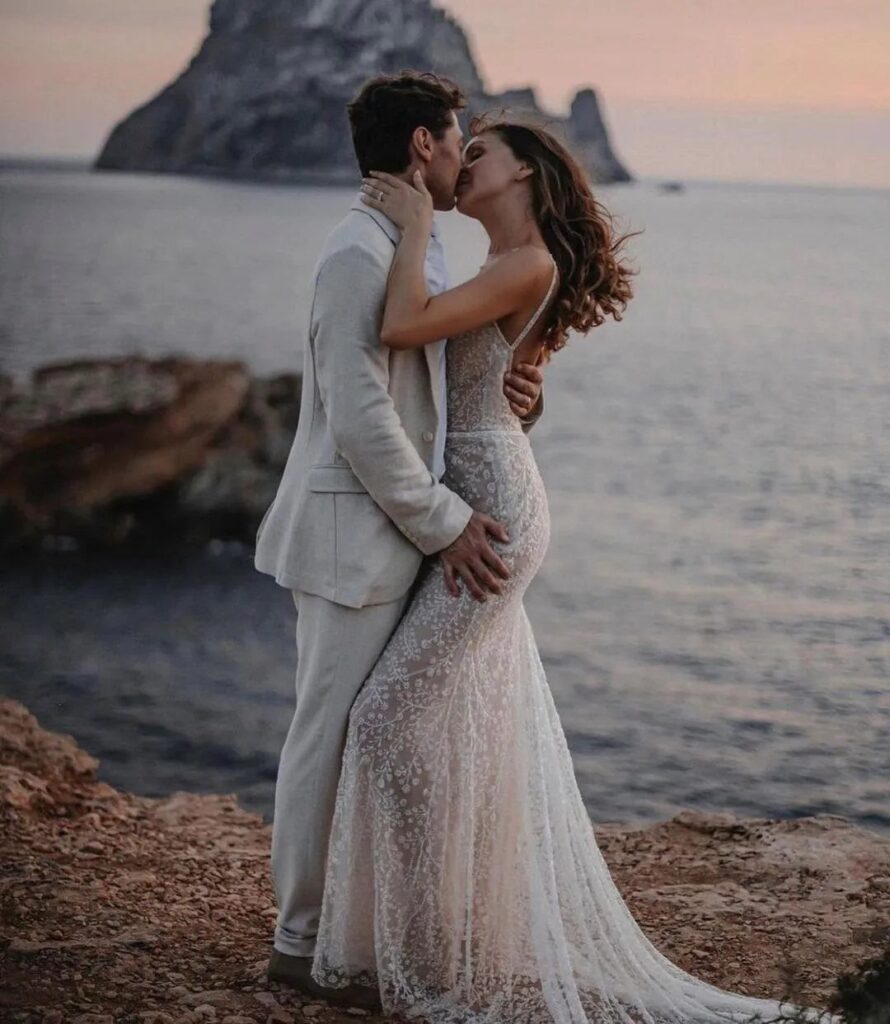
A-line gowns and mini dresses sit at opposite ends of the formality range, but both handle sand and movement better than anything heavier or more restrictive.
The choice comes down to how much coverage you want, what fabric weight feels right in the heat, and whether strapless or straps work better for your setting.
Chiffon weighs almost nothing and photographs beautifully when there’s wind, while strapless necklines keep your shoulders open in heat but need a precise fit or they’ll shift while you move.
1. A-line Beach Wedding Dresses
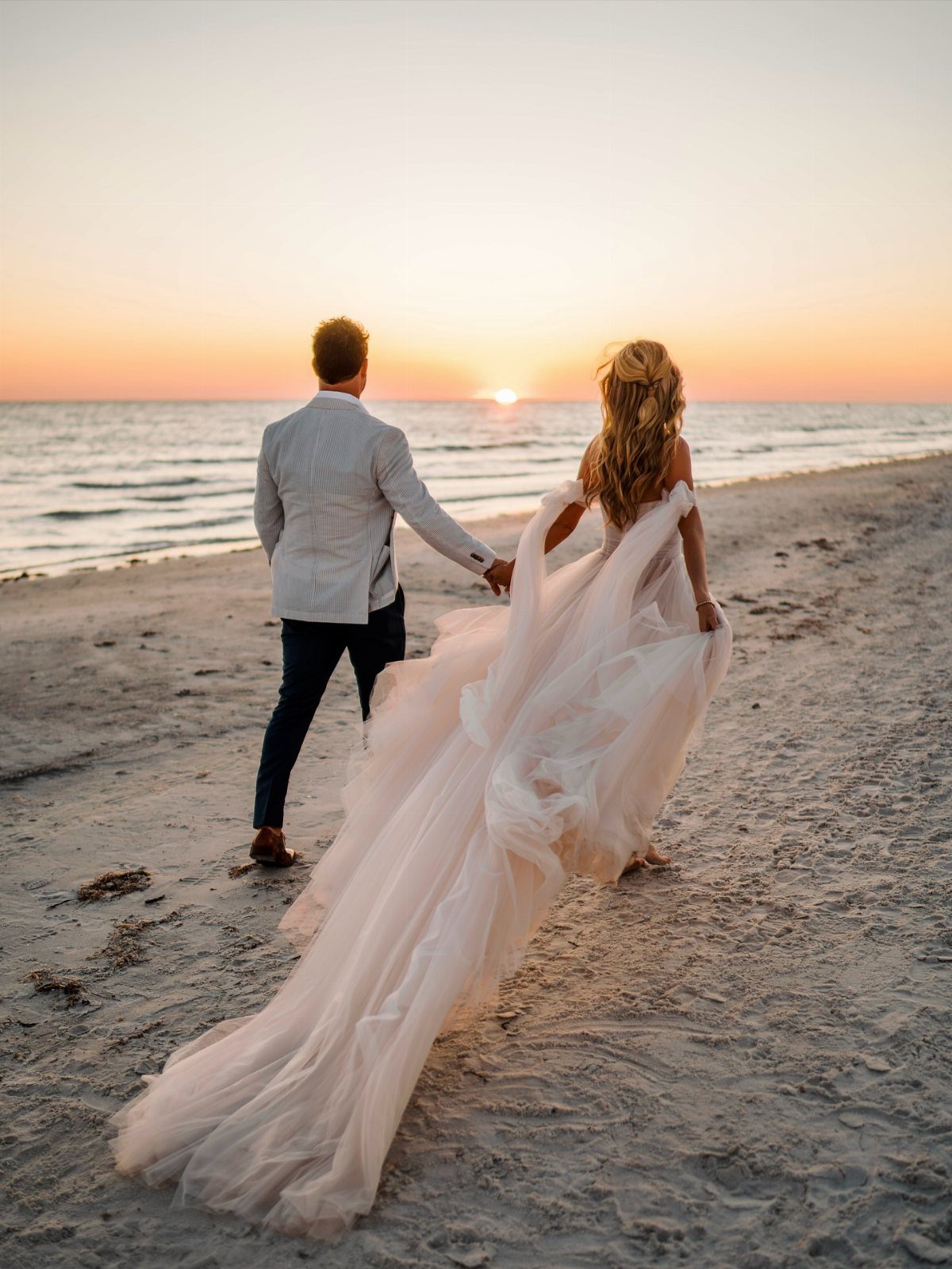
The fitted bodice opens into a full skirt that skims over the sand without dragging. That silhouette flatters almost anyone and moves easily, which matters when you’re walking barefoot on uneven ground or standing in wind.
Lighter fabrics keep the volume without weight. Chiffon and tulle work well for beach ceremonies because they catch the breeze without clinging.
If your venue sits right on the water, pin or bustle any train before you walk down. Sand sticks to lace hems and weighted fabric trails, and shaking it out between photos gets old fast.
2. Strapless Beach Wedding Dresses
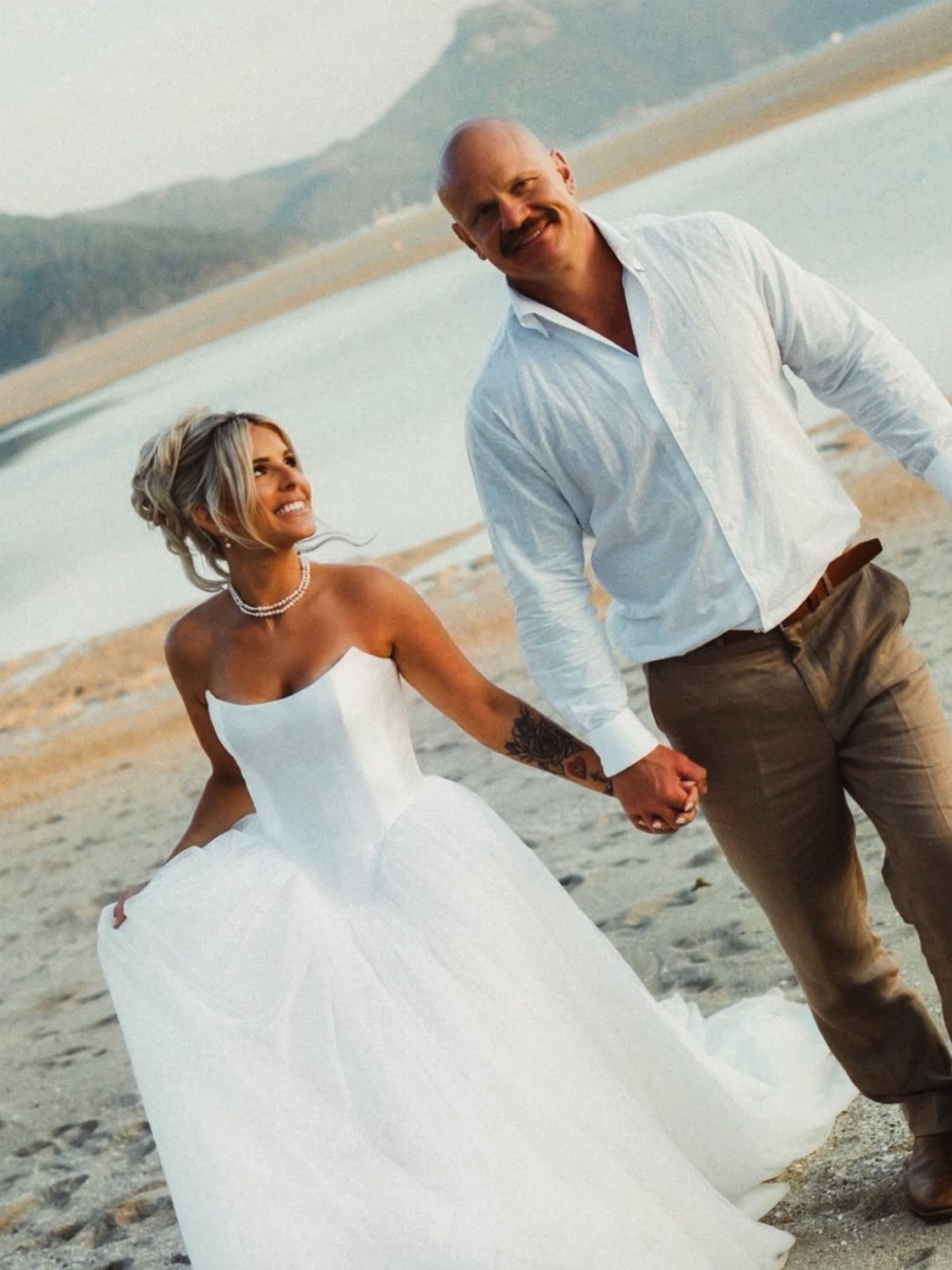
A strapless neckline keeps your shoulders and arms completely open, which helps in heat and looks clean in photos. The structure sits in the bodice, usually boned or fitted through the waist, so it stays in place without straps.
Fit matters more here than with any other style.
A strapless dress that gaps or shifts while you move will need constant adjusting, and that gets distracting. Bring a strapless bra to your fitting so the tailor can match the dress to how you’ll actually wear it.
If you’re between sizes or worried about support, ask about silicone grip tape along the top edge. It holds the dress to your skin without adding bulk.
3. Short Dresses
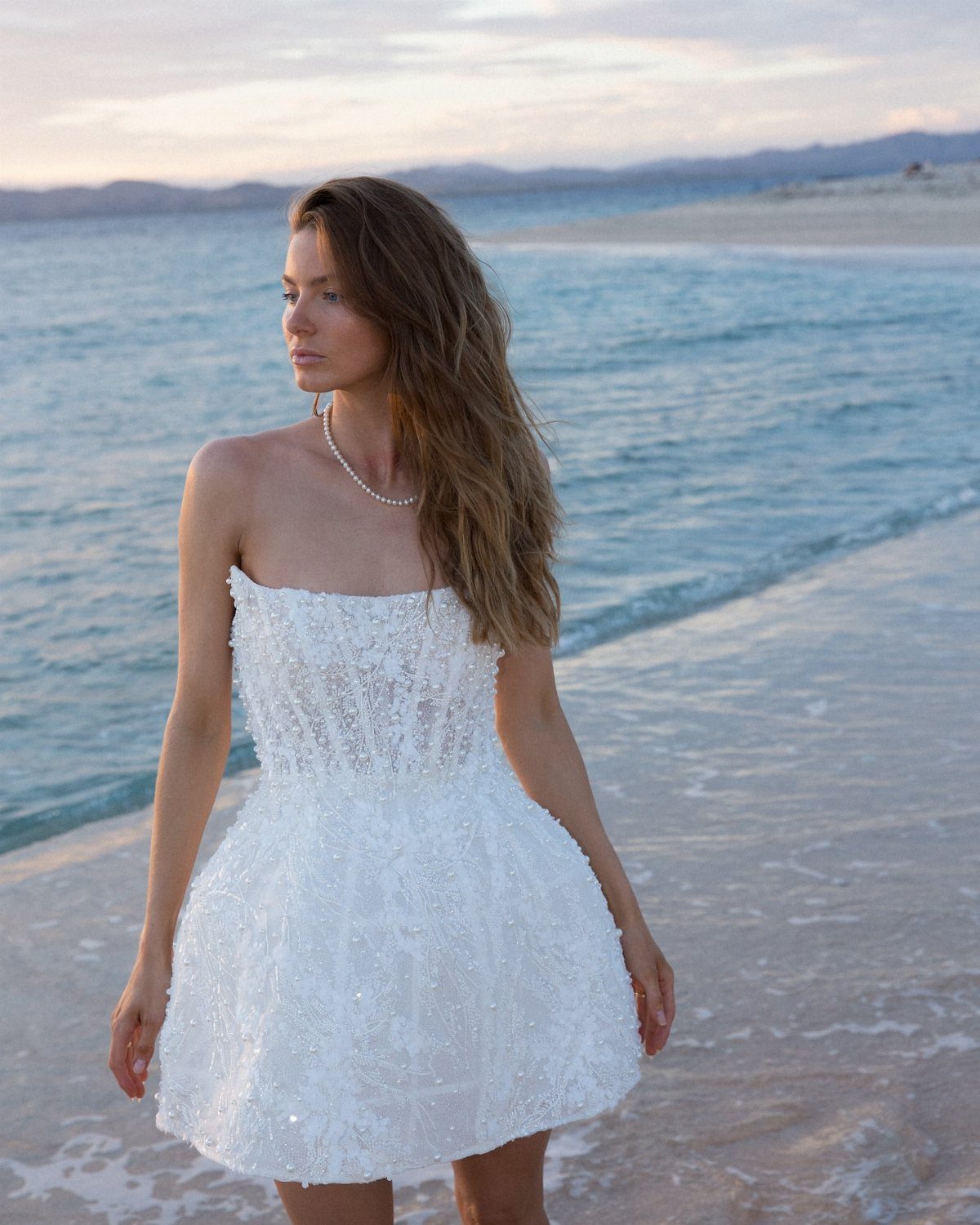
Hemlines that end above the knee or mid-thigh stay completely clear of sand and water, which makes walking and dancing easier. No lifting, no brushing off the back of your dress between every shot.
Short dresses also tend to cost less than floor-length gowns because they use less fabric and need simpler construction. Plenty of cocktail or bridal styles work without any alteration.
Beading or sequins add formality without length. The texture catches light and reads as dressed-up even when the cut is casual, so you get the ease of a short dress without losing ceremony.
4. Chiffon Beach Wedding Dresses
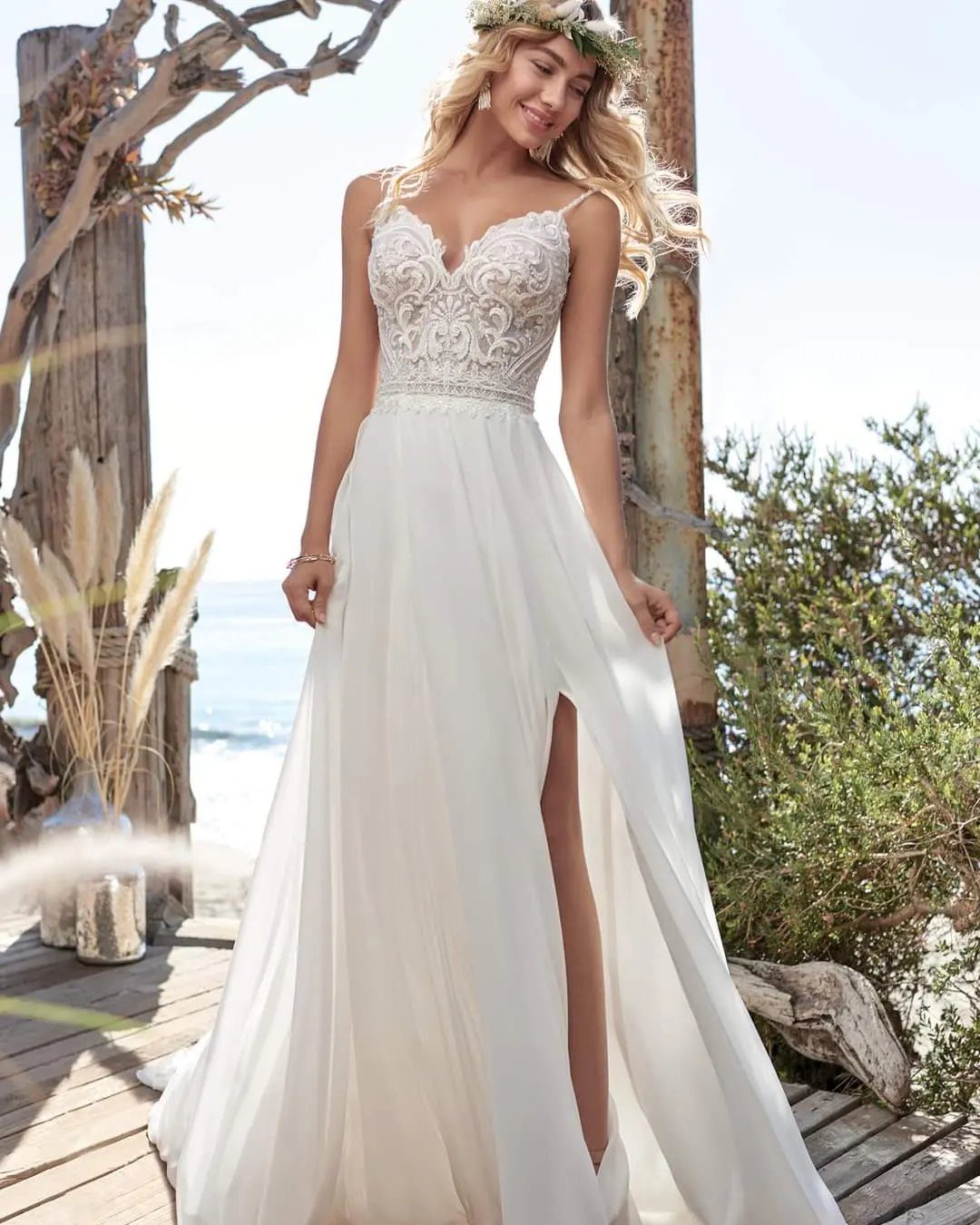
Chiffon drapes softly and moves with air, so it photographs beautifully on the beach when there’s any wind.
The fabric is sheer, which means most chiffon dresses layer it over a lining or use it for the skirt while the bodice stays structured in lace or satin.
It’s also one of the lightest options available. Chiffon weighs almost nothing, so you stay cooler than you would in satin or mikado, and the dress doesn’t cling to your legs when you walk.
Lace bodices paired with chiffon skirts give you detail where the camera focuses and airiness everywhere else. That combination holds up well in both close-up shots and full-length photos on the sand.
5. Bohemian Beach Wedding Dresses
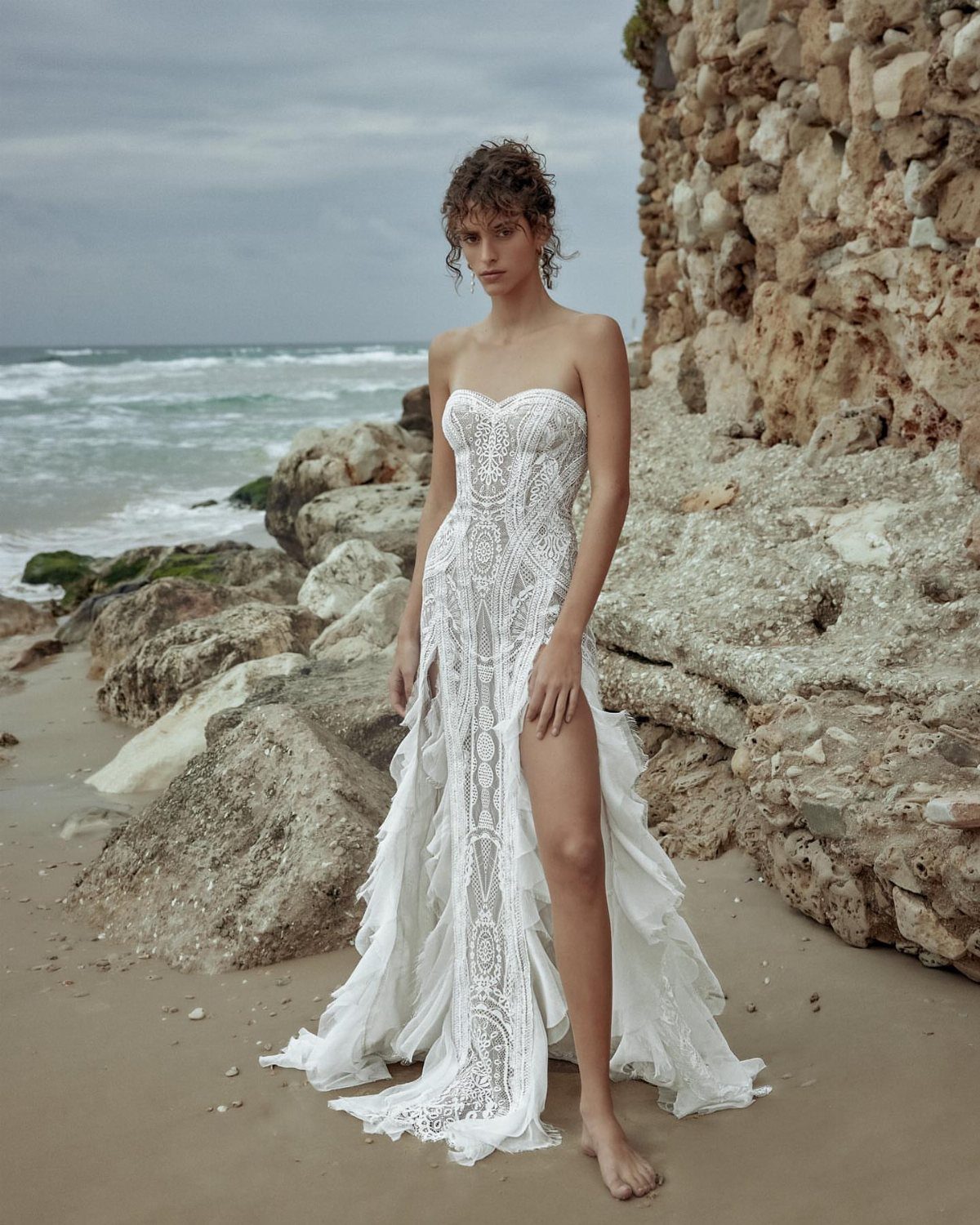
Lace details, high slits, and relaxed silhouettes define this style. The look leans textured and unstructured at once, with fabric that moves instead of holding a stiff shape.
Slits make walking on sand easier and keep the dress from tangling around your legs. They also add shape to a loose fit, so the dress doesn’t read as shapeless in photos.
Off-white, ivory, and champagne tones show up often in bohemian styles and photograph differently than bright white against sand and water.
If your venue has golden-hour light or a lot of natural wood, those warmer tones blend into the setting instead of standing out sharply.
6. Mini Dresses
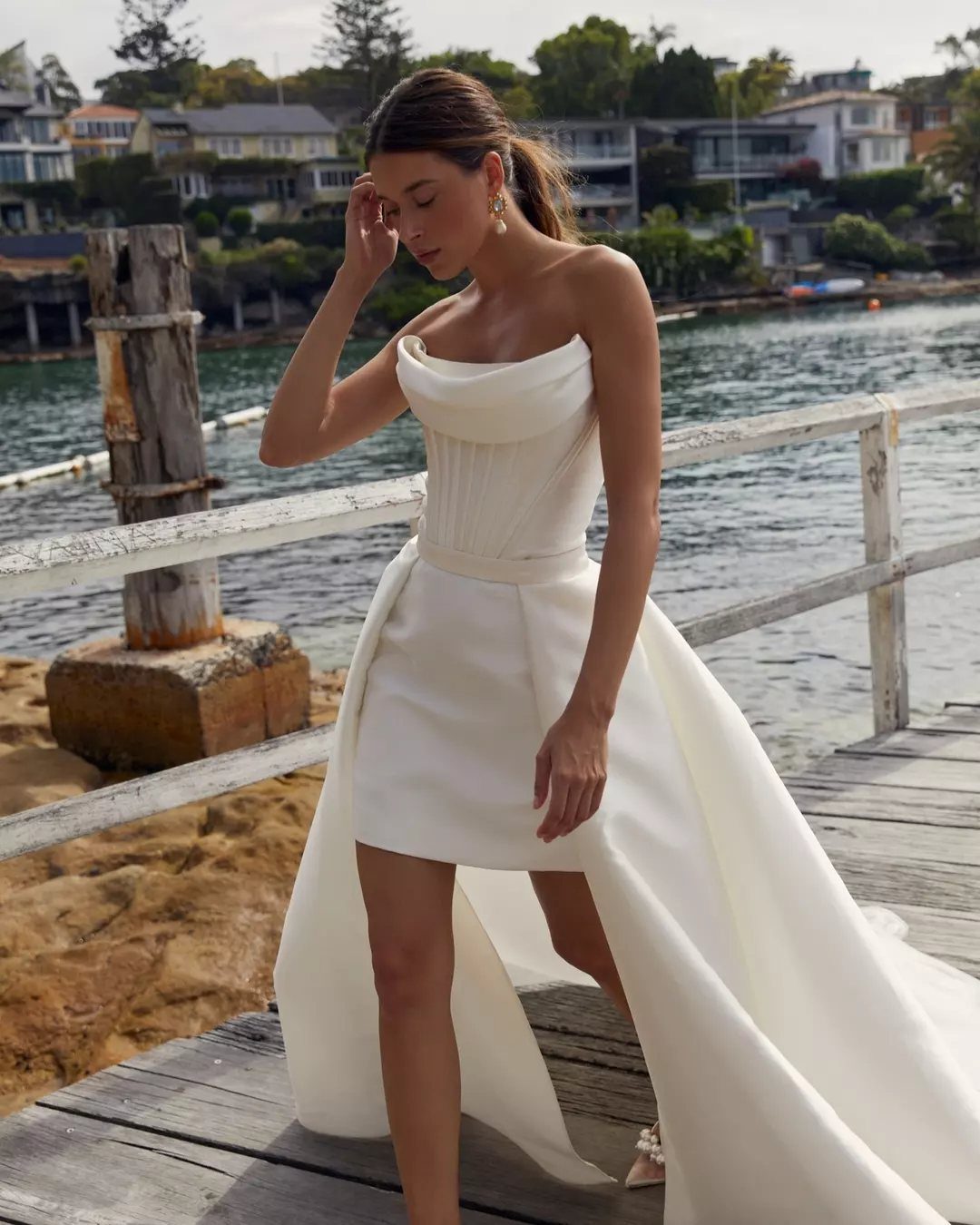
A mini dress with a detachable overskirt gives you 2 looks in 1. Wear the full skirt for the ceremony, then remove it for the reception when you want to move freely and dance without fabric in the way.
The base dress usually sits at mid-thigh, so it works on its own once the overskirt comes off. That length stays formal enough for photos but won’t drag through sand or catch underfoot.
Strapless or sweetheart necklines pair well with this setup because they keep the top half simple while the skirt does the work.
The overskirt typically attaches at the waist with hooks or a zipper, so removing it takes seconds and doesn’t require help.
Frequently Asked Questions
What do beach wedding dresses look like?
Beach wedding dresses use lightweight fabrics like chiffon or tulle that move with the breeze and keep you cool in heat.
Silhouettes range from A-line gowns with flowing skirts to short hemlines that stay clear of sand, with details like lace bodices, high slits, or strapless necklines.
Fabric that drapes softly and doesn’t cling or drag through uneven ground makes all the difference.
What should an older woman wear to a beach wedding?
A-line silhouettes with fitted bodices work well because they flatter most body types and move easily on sand without requiring you to lift the hem constantly.
Chiffon or other lightweight fabrics keep you comfortable in outdoor heat while still photographing beautifully.
If you want more coverage or support, add straps like a halter or illusion style instead of going strapless, which needs constant adjusting if the fit isn’t perfect.