The state offers everything from open-air sites at altitude where the ceremony needs no microphone to barns that seat hundreds and come with tables already set up.
The number of people you’re inviting decides which properties stay on the table, since a site that seats 80 won’t work for a larger reception and a barn built for 300 leaves a small dinner feeling sparse.
1. Mountain Backdrops
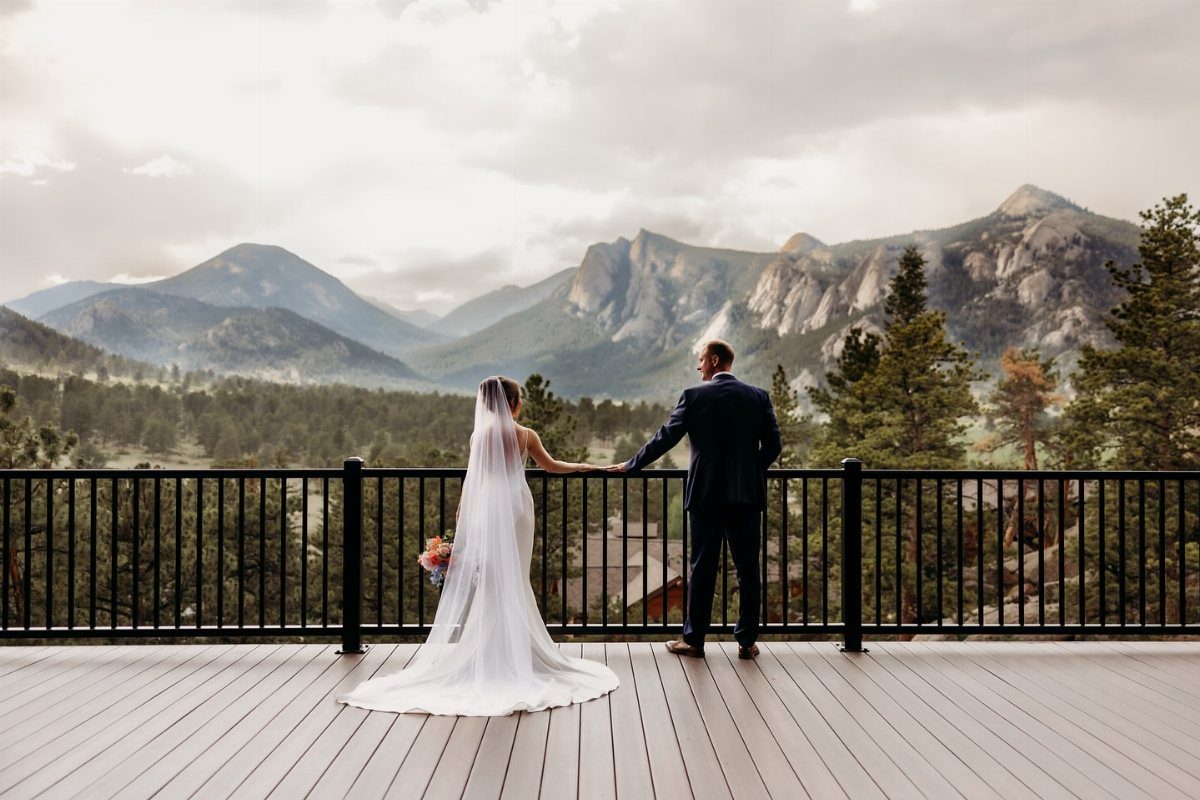
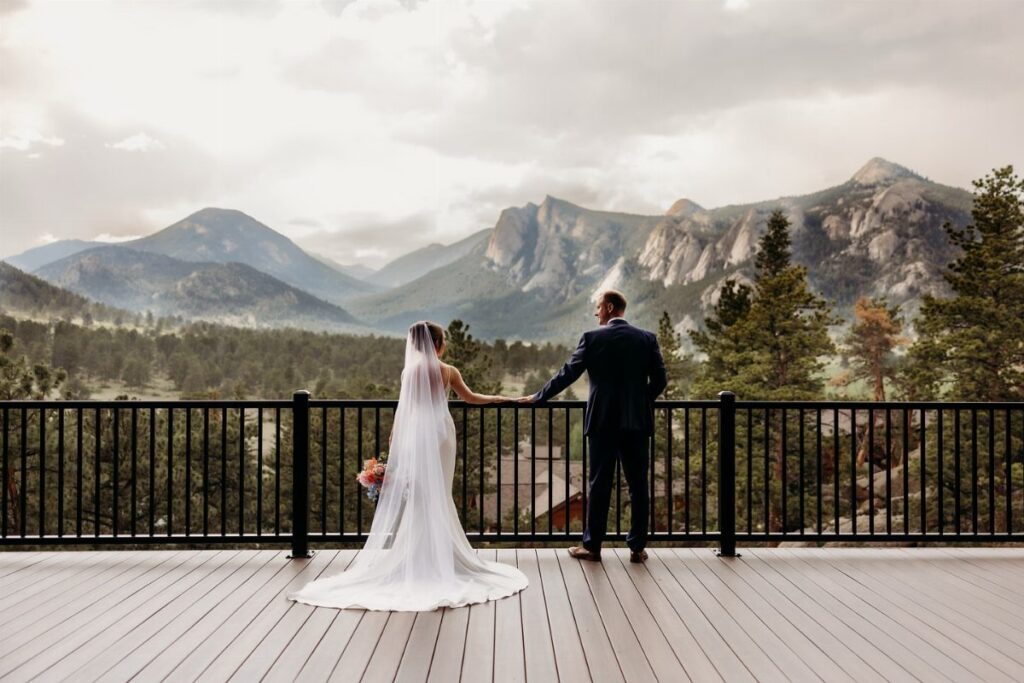
A venue with mountain views gives you a built-in focal point that runs the entire width of your ceremony or cocktail hour. The backdrop reads instantly in photos without needing florals or an arch to anchor the frame.
Look for properties with unobstructed sightlines from the ceremony site.
Distance matters: peaks that are too close flatten in photos, and ridges too far fade into haze. Mid-distance ranges hold definition and scale.
Altitude changes the light. Higher venues get sharper shadows and cooler tones by late afternoon, so golden hour arrives earlier than you expect.
2. Outdoor Ceremony Spaces
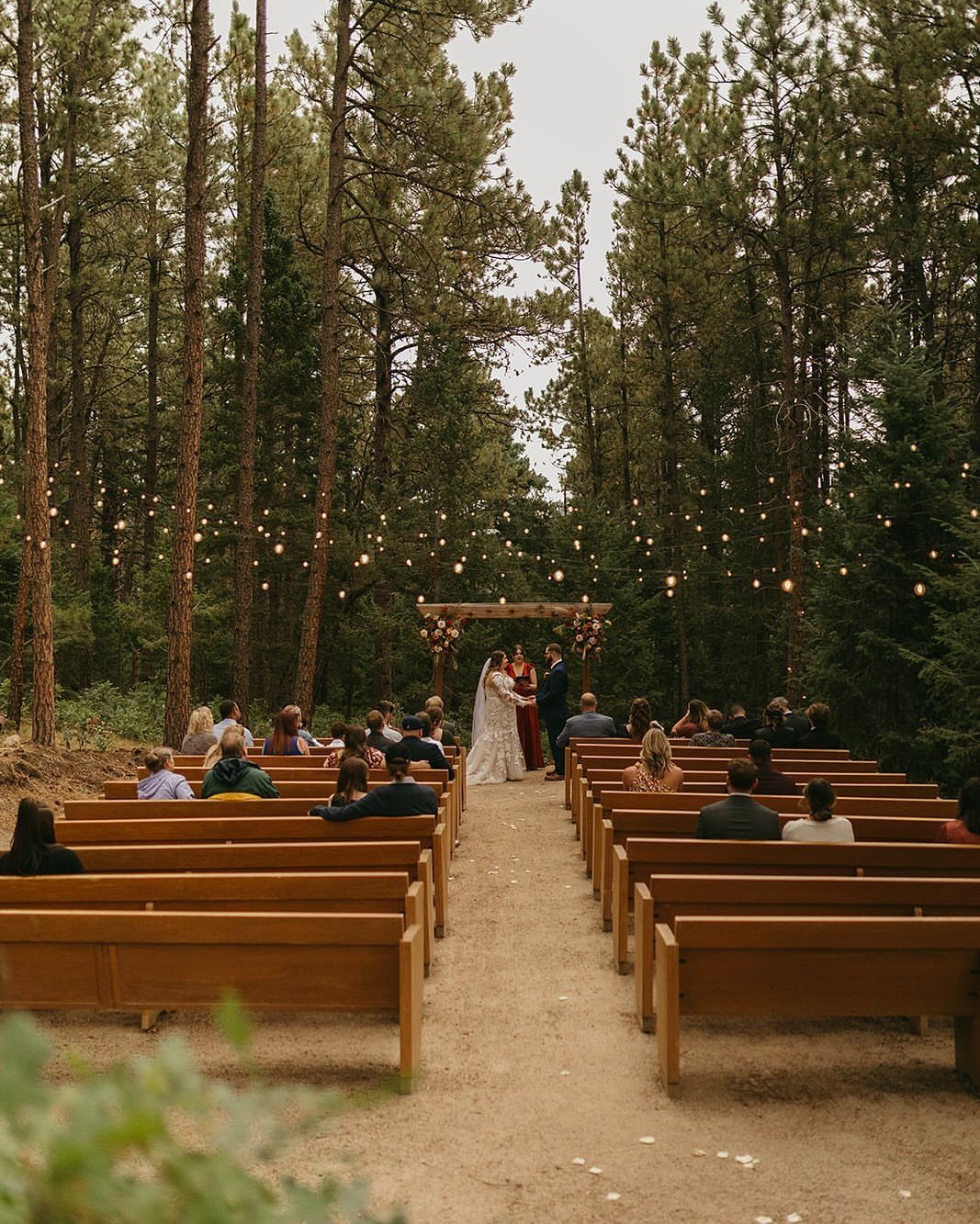
Outdoor ceremony spaces let you skip the transition from one room to another and keep guests in one location from the processional through cocktails. Colorado’s dry climate means fewer last-minute weather pivots than coastal or southern states.
Pinewood clearings and meadow sites come with natural sound dampening, so vows stay audible without a PA system if you keep the ceremony intimate. Larger groups need amplification regardless of setting.
String lights overhead mark the aisle and add structure to an open site. They also solve the problem of where to anchor décor when there are no walls or columns nearby.
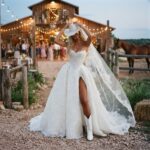
3. Rustic Barn Venues
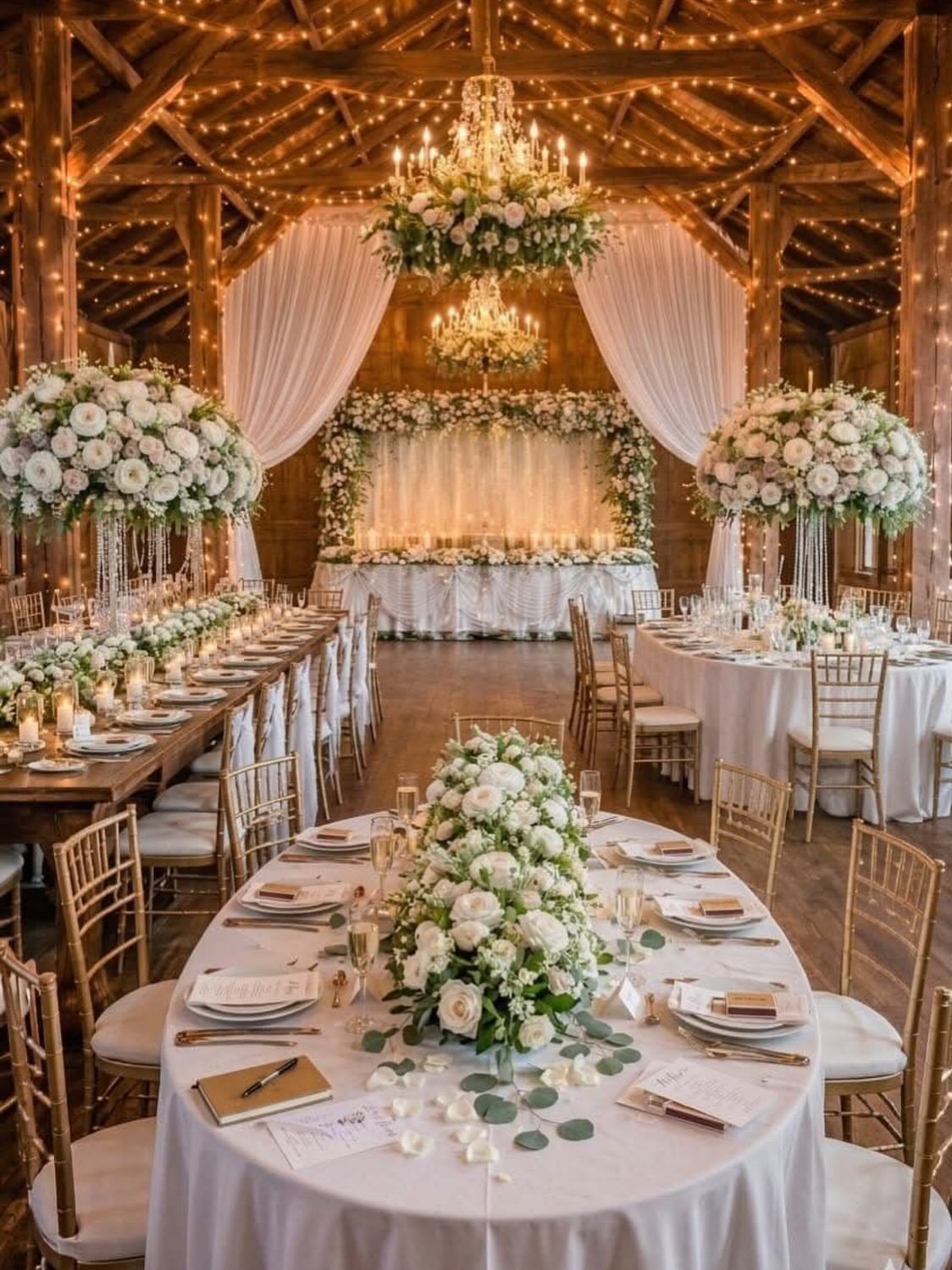
Barns offer climate control and built-in character without requiring you to dress the walls.
The wood structure and ceiling height do most of the visual work, so your floral budget can stay focused on centerpieces and personal flowers instead of covering blank surfaces.
Long farm tables suit the proportions better than rounds, and they seat more guests per square foot when space is tight.
Most barn venues include tables and chairs in the rental fee, which cuts your setup costs compared to raw outdoor sites where everything arrives by truck.
4. Private Estates
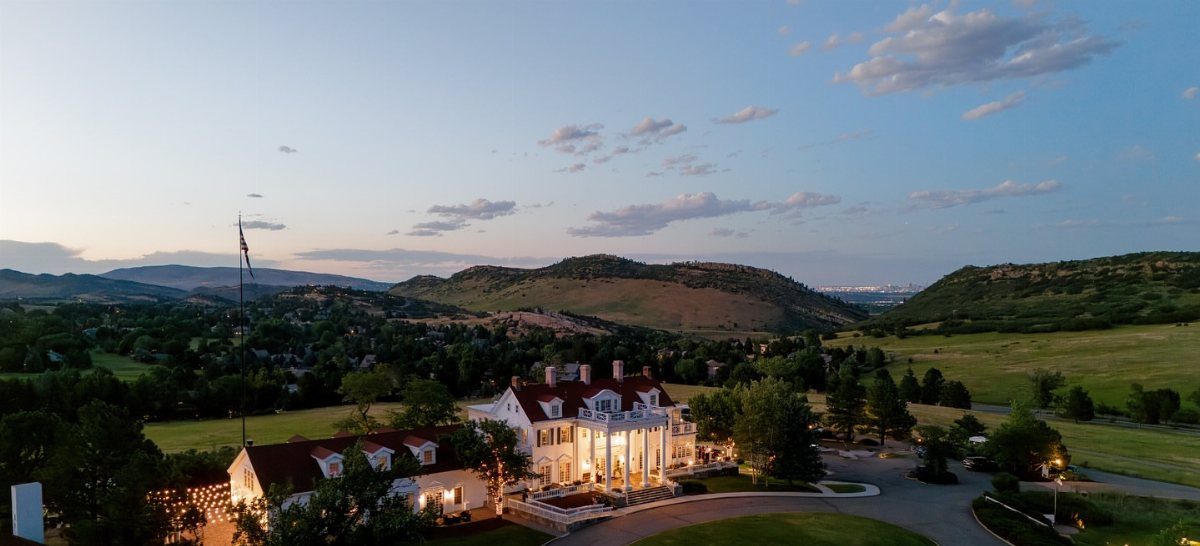
A private estate gives you exclusive access to the grounds, house, and schedule for the day. You set the timeline without worrying about another event starting right after yours or a venue curfew cutting your reception short.
The square footage matters more than the architecture.
A private estate handles a full dinner and cocktail hour comfortably if the floor plan flows and outdoor space extends the footprint. Smaller estates work better for micro weddings or intimate gatherings under 50.
These properties rarely include tables, chairs, or catering equipment, so your rental costs run higher than a full-service venue.
5. Glass Enclosed Pavilions
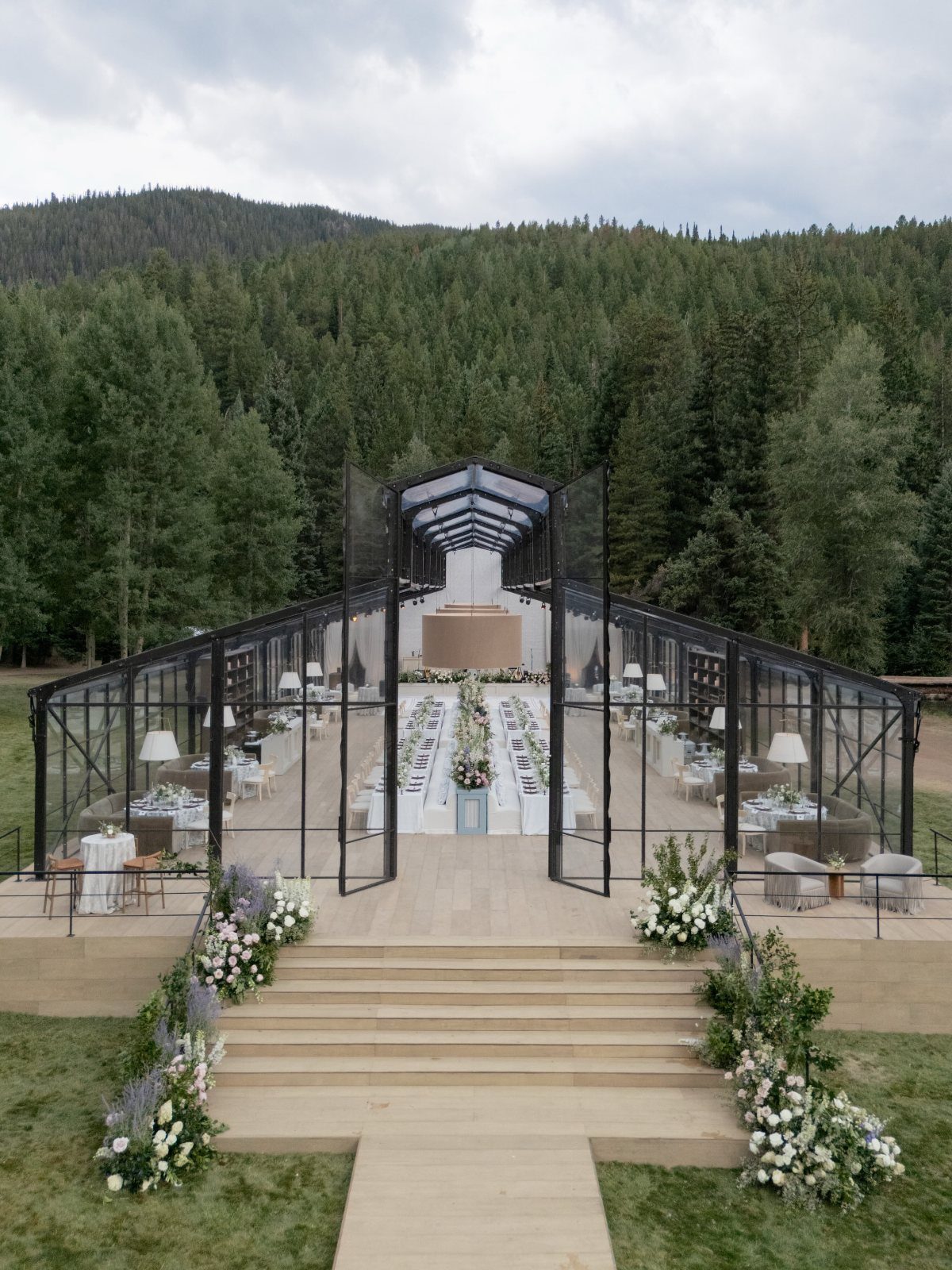
Glass walls let you hold a reception outdoors without gambling on weather. Guests get the full mountain view and natural light during dinner, but rain, wind, and temperature swings stay outside.
The structure itself provides the décor.
Transparent walls and minimal framing mean the landscape does the heavy lifting, so you need fewer florals and backdrops to make the space feel finished. Centerpieces stay low and simple since the view already fills the vertical space.
These pavilions suit couples who want an outdoor aesthetic but need a backup plan built into the venue rather than added as a separate tent rental.
6. Modern A-Frame Venues
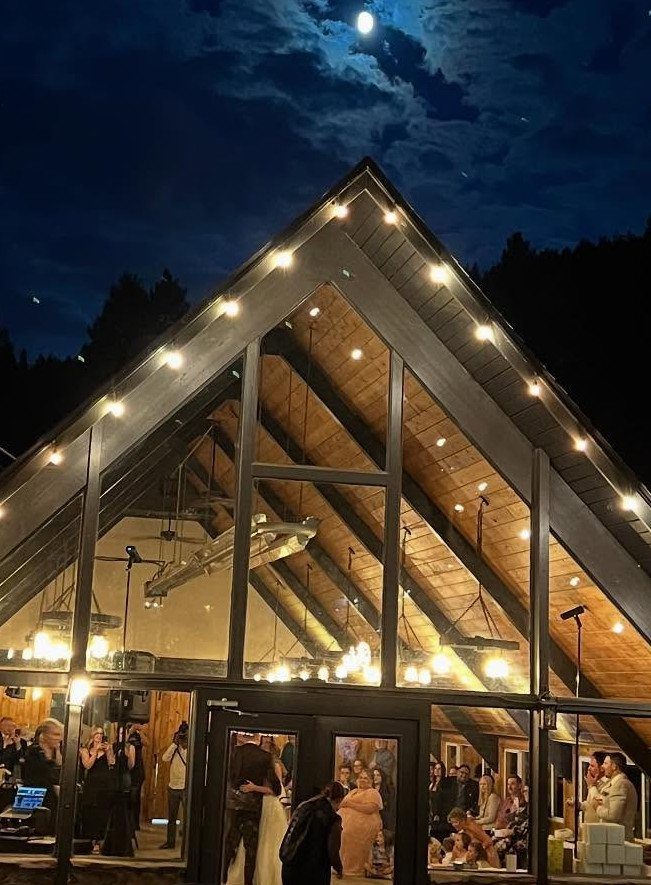
Tall glass windows and a peaked roofline give A-frame venues a cathedral feeling without the formality of a traditional chapel. The geometry reads modern, but the structure still works with mountain or forest surroundings.
Natural light floods the interior during daytime ceremonies and receptions, which helps photography and keeps the space from feeling enclosed despite the smaller footprint. After sunset, chandeliers and string lights reflect in the glass and double their impact.
These venues typically cap guest counts because the narrow floor plan limits table arrangements. If your list exceeds that, ask whether the property includes an adjacent outdoor space for cocktails or dancing.
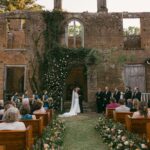
7. Historic Stone Hall Reception
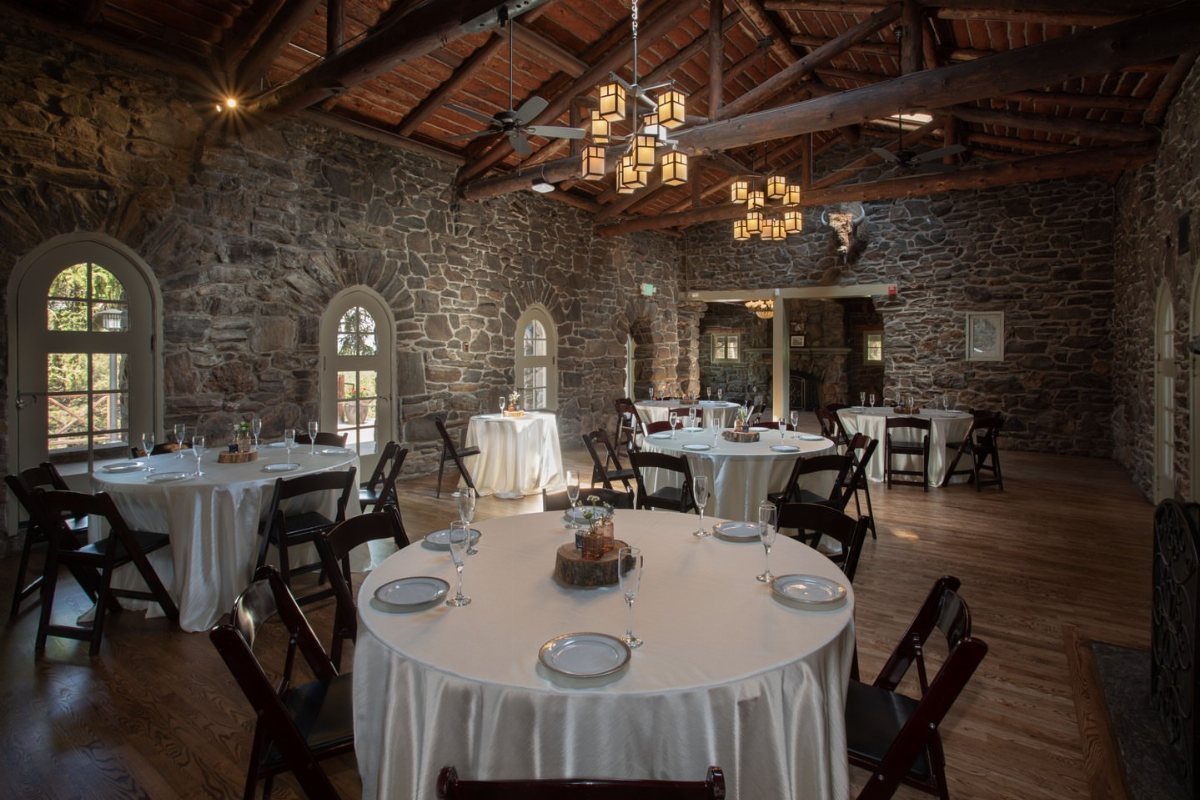
Stone walls and exposed beams give a reception hall warmth and texture without requiring you to bring in backdrops or fabric draping.
The architecture does the work, so your décor budget goes toward lighting and florals instead of covering surfaces.
Lanterns and Edison bulbs suit the proportions of these spaces better than chandeliers, and they cast softer shadows on stone.
If the hall includes uplighting along the walls, test it during your walkthrough since it can shift from amber to orange depending on the stone’s natural color.
Round tables fit tighter seating plans, but long rectangles often work better with the hall’s linear layout.
8. Tented Reception Walkways
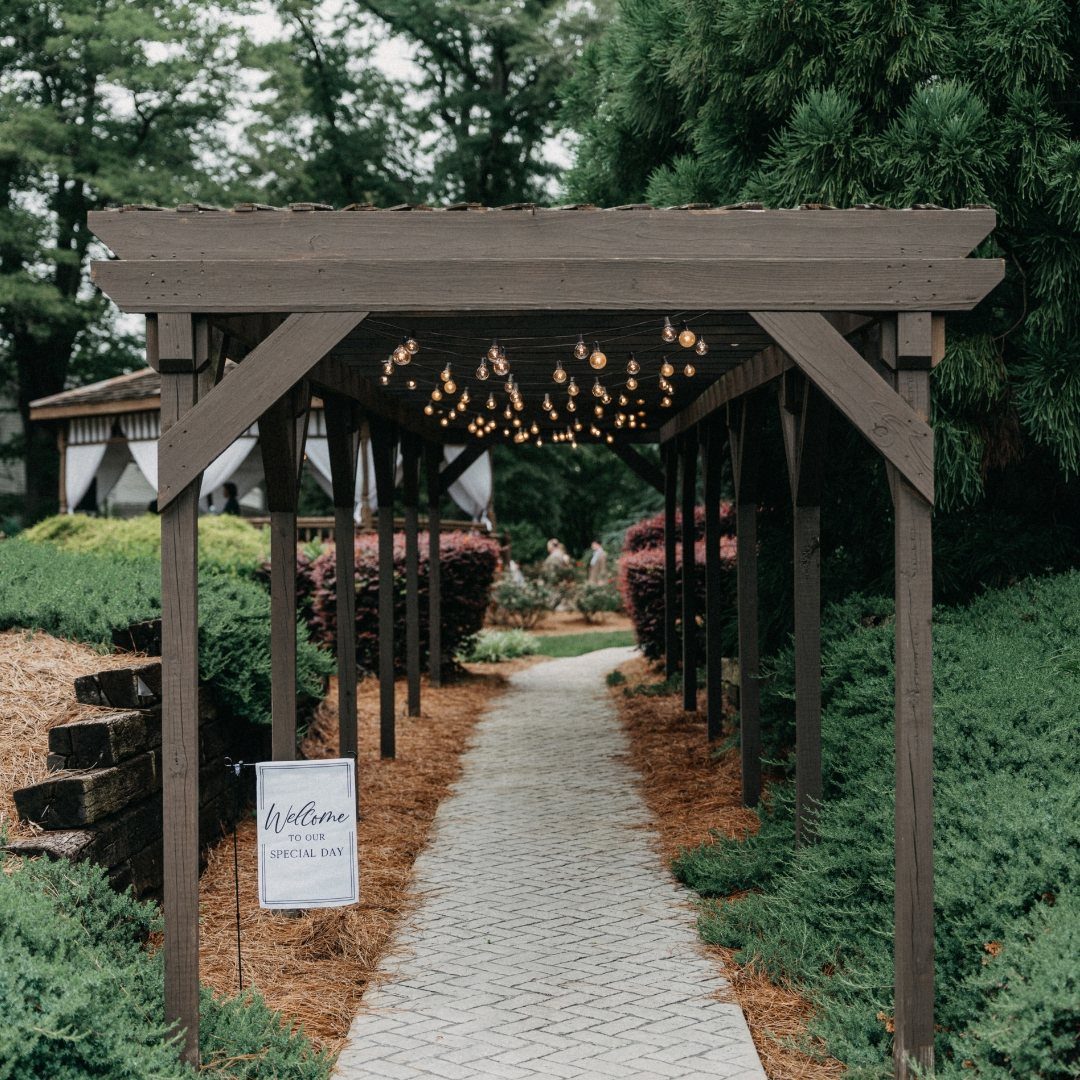
A covered walkway between your ceremony and reception keeps guests moving in one direction without confusion, and it protects them from sudden weather shifts during the transition.
String lights overhead extend the celebration into the path itself instead of treating it as dead space between 2 events.
Pergolas add vertical structure and give you anchor points for florals or signage without requiring ground stakes. If the walkway runs through grass, lay coir matting or plywood under gravel to prevent heels from sinking.
9. Clear-Top Event Tents
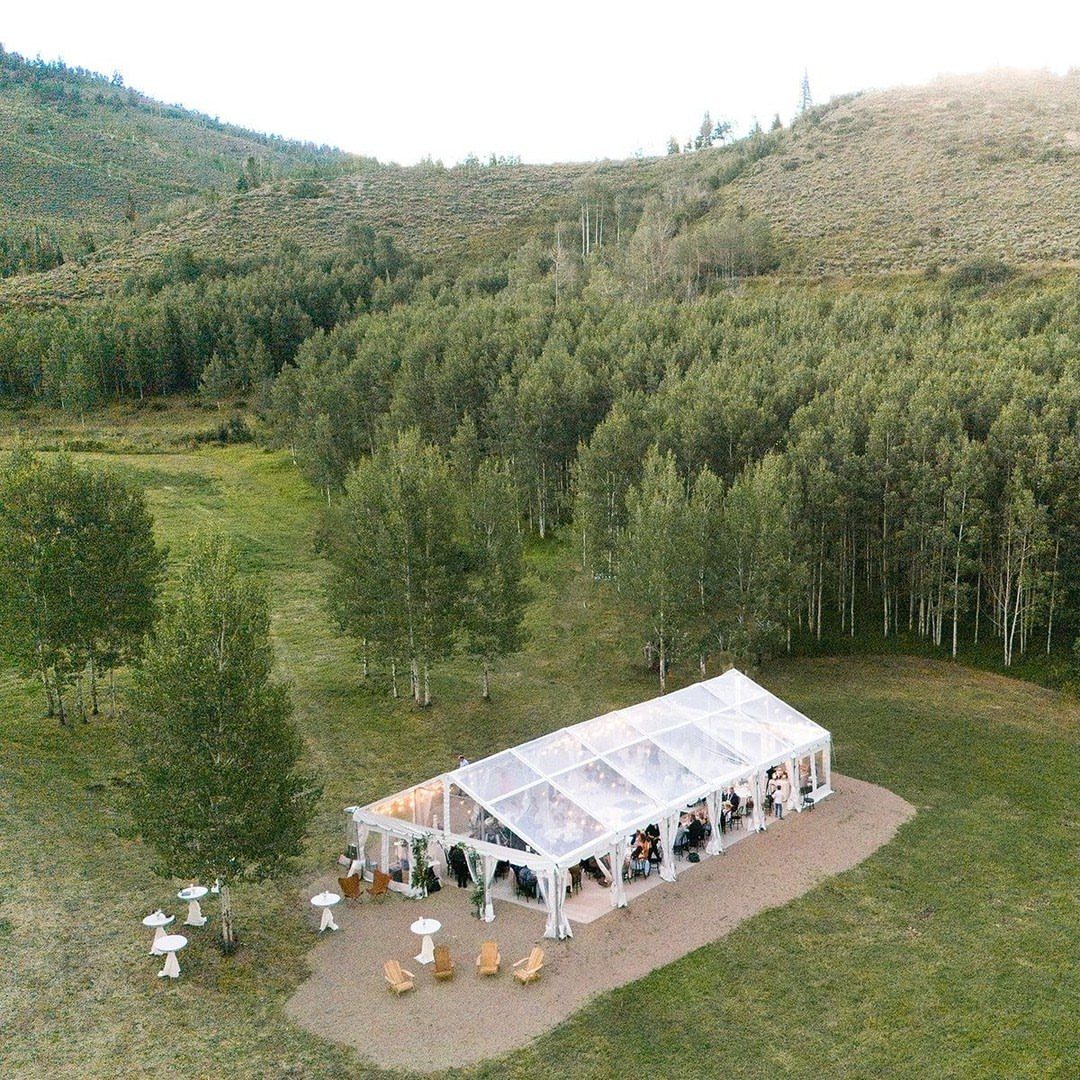
A clear tent roof keeps the sky visible during dinner and dancing, which gives you the openness of an outdoor reception with full weather protection.
Guests stay comfortable regardless of forecast, and you skip the last-minute scramble to move everything inside.
The transparency works best in settings where the surroundings matter. A meadow or grove gives you something to frame, while a parking lot or flat lawn offers less to see through the ceiling.
Tent companies charge more for clear panels than opaque fabric, and the material shows fingerprints and water spots, so budget for a cleaning the morning of your event.
10. Lakeside Dining Receptions
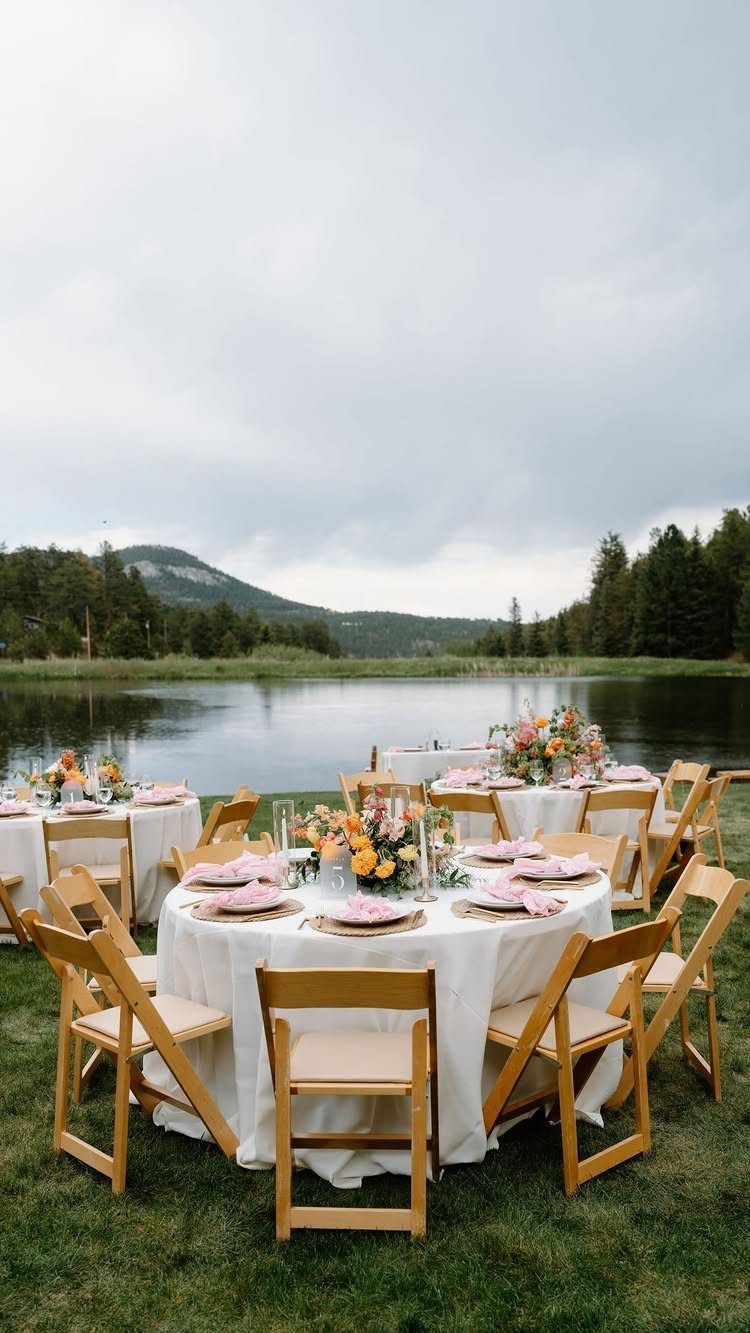
Placing tables directly along a lake edge lets every guest see the water and peaks during the meal, not just the ones seated near a window.
The reflection doubles the light at sunset, which helps your photographer and keeps the space feeling bright even as the sun drops.
Water amplifies sound, so conversation carries farther than it does on a completely flat lawn. If you want speeches or toasts to stay audible without a microphone, keep the tables close to the speakers.
Check the site for sprinkler heads and uneven ground before committing to a layout. Sloped lawns look fine but require table levelers.
11. Snowy Mountain Winter Ceremonies
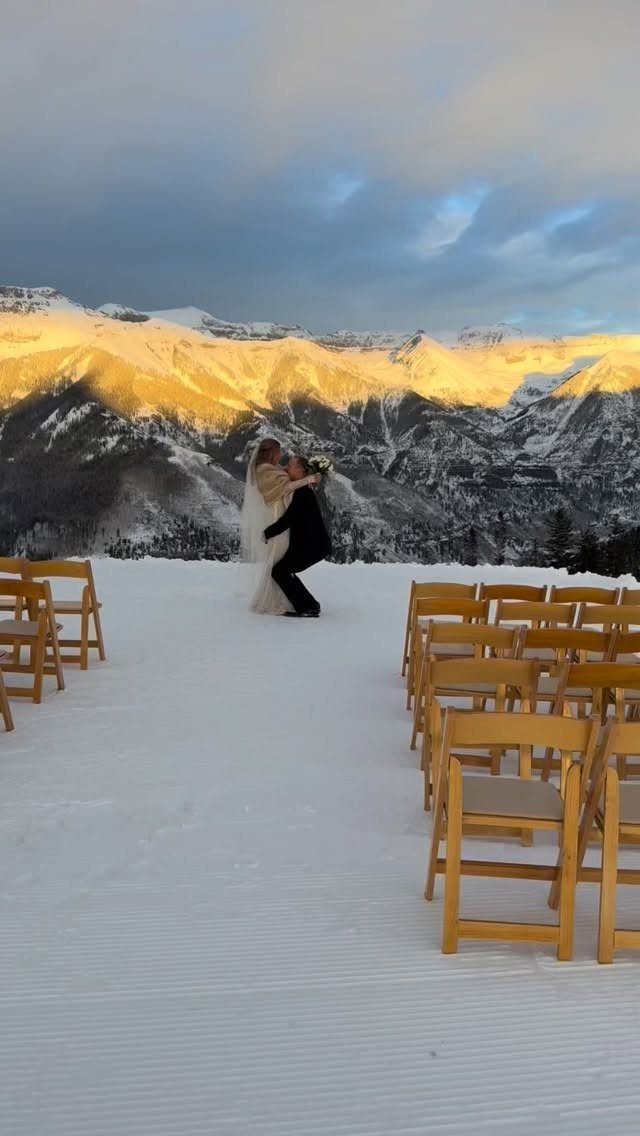
Snow on the ground eliminates the need for aisle runners, florals, or ground décor. The white surface and mountain backdrop create a clean, minimal aesthetic that photographs with high contrast and sharp focus.
Winter ceremonies stay short by necessity.
Cold limits how long guests can sit comfortably, so plan for a short ceremony and move everyone inside immediately after. Wooden chairs handle snow better than resin or metal, which ice over and feel colder to the touch.
Ask your photographer about exposure settings beforehand. Snow reflects a lot of light, and auto mode often underexposes skin tones in bright winter conditions.
12. Valley Marquee Tents
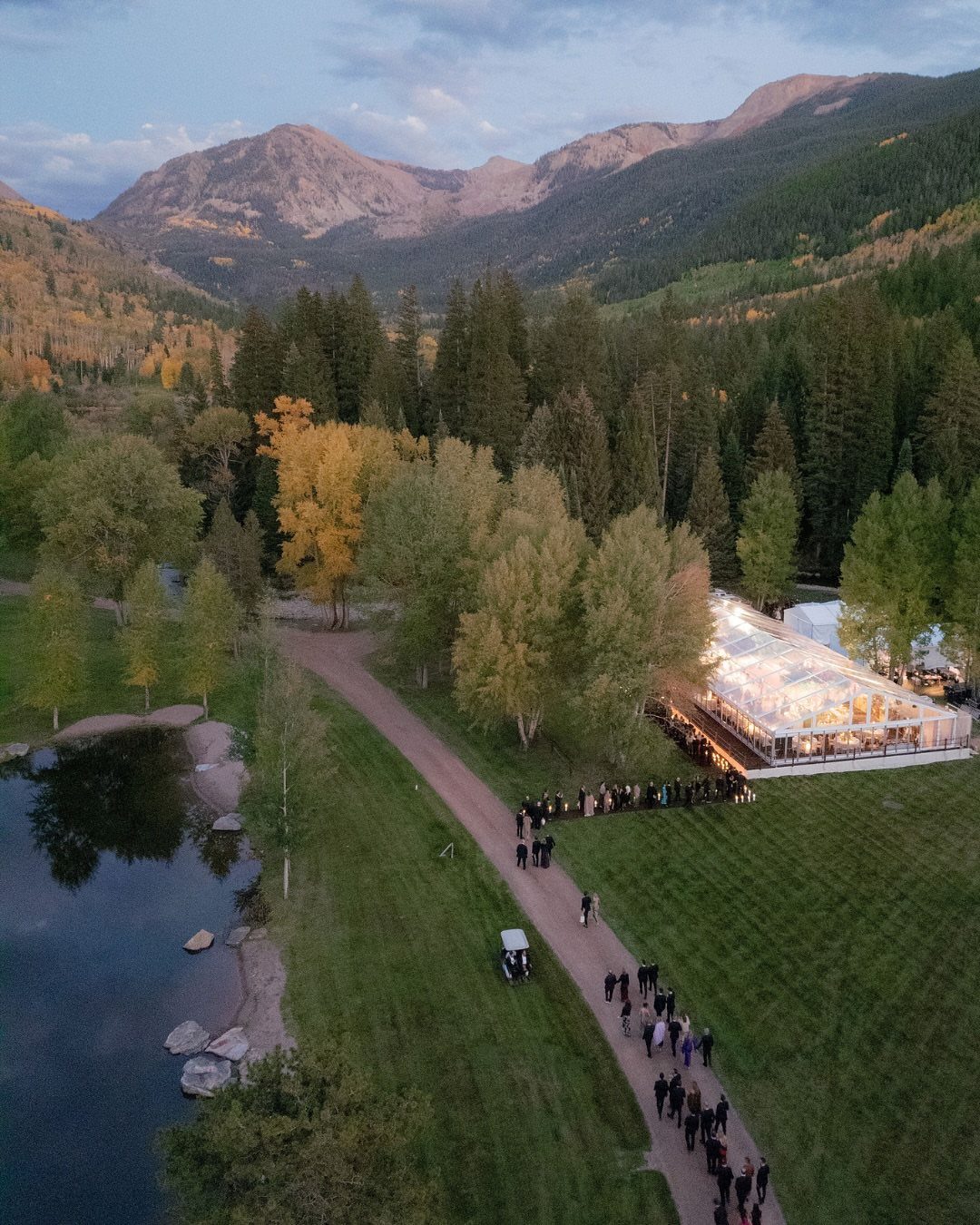
A marquee tent gives you a blank canvas with enough space to seat your full guest list under one roof.
The peaked shape and side walls create a room rather than just coverage, so it feels like an intentional venue instead of a temporary structure.
Valley sites let you position the tent with mountains in view from the entrance or dance floor, which keeps the setting visible even during the reception.
Ponds and fall color add foreground interest that prevents the landscape from reading as distant or flat.
Marquees require level ground and utility hookups for lighting and heating, so site prep costs run higher than pole tents or frame tents on simpler terrain.
13. Lush Forest Greenhouse Venues
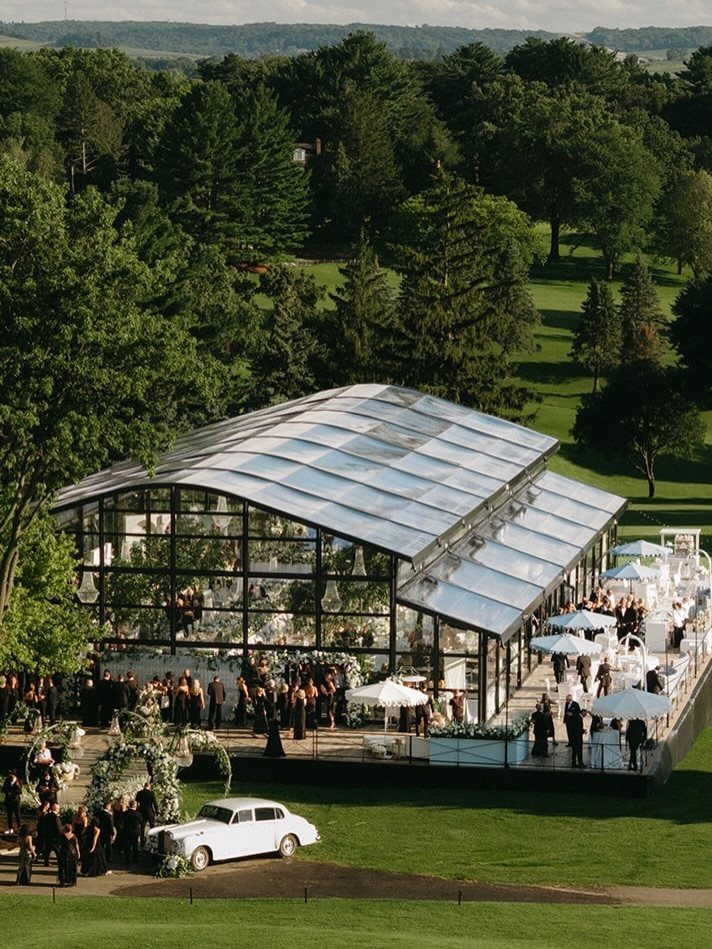
Glass walls bring the forest into the reception without exposing guests to wind or temperature drops.
The surrounding pines stay visible during dinner and dancing, so the setting works as your backdrop even after dark when uplighting hits the trees from outside.
The structure itself provides shelter and character, which means less money spent on draping or backdrops. Florals can stay minimal since the greenery outside already fills the view.
Most greenhouse venues include adjacent lawn or deck space for cocktails, which spreads guests across 2 zones and keeps the interior from feeling crowded during the meal.
Choosing the Right Venue
The number of people you’re inviting decides which properties stay on the table. A site that photographs beautifully but only seats 80 won’t work for a larger reception, and a 300-capacity barn leaves a small dinner feeling sparse.
Style matters once the practical filters are set.
Venues with natural light and open landscapes photograph well without requiring you to correct for dim interiors or awkward sightlines. A layout that flows logically keeps guests moving without confusion and gives your photographer clean moments instead of crowded transitions.
Accessibility covers parking, restroom count, and whether elderly or mobility-limited guests can reach the ceremony and reception without stairs or gravel paths. If the venue sits at high altitude, out-of-town guests may need extra time to adjust.
Indoor backup space should exist on-site, not as a Plan B you arrange separately. Colorado weather shifts quickly, and a covered option lets you commit to the location without gambling on the forecast.
Planning Timeline
Peak season runs May through October, and properties with mountain views or exclusive access fill first.
For November through April, you might find openings 6–9 months ahead, though winter properties still fill early for New Year’s Eve and holiday weekends.
Once you have a date range in mind, tour properties before signing. Photos show the setting, but a walkthrough reveals ceiling height, acoustics, and whether the layout actually supports the number of people you’re inviting.
Some venues look spacious online but feel tight once tables, a dance floor, and a bar are mapped out.
Backup Plans
Colorado weather changes quickly, even during summer. Afternoon storms arrive without much warning, so outdoor ceremonies need indoor backup space already built into the venue contract.
Most venues offer a covered option, whether that’s a pavilion, barn interior, or glass-enclosed room.
Confirm that the backup space seats your full guest count comfortably and that you can access it without moving chairs or décor across muddy ground.
A backup plan also includes timing. If the forecast shows possible rain during your ceremony window, decide that morning whether you’re moving inside rather than waiting until guests arrive.
Your photographer and coordinator need time to adjust lighting and layout, and last-minute pivots cost you coverage and composure.
Frequently Asked Questions
What is a cheap price for a wedding venue?
Budget-friendly Colorado venues start around $1,300 for intimate gatherings. Prices climb as guest count increases and when you add exclusive access or full-service packages that include tables, chairs, and catering equipment.
What are the best wedding venues in Colorado?
Top venues include Hotel Colorado in Glenwood Springs, The Broadmoor, Spruce Mountain Ranch, and Gold Mountain Ranch. Denver properties like the Botanic Gardens, Denver Art Museum, and Arrowhead Golf Club also draw couples looking for mountain or city backdrops.
What are some event spaces in Denver, Colorado?
Denver event spaces include the Denver Botanic Gardens, Denver Art Museum, Arrowhead Golf Club, Grant-Humphreys Mansion, and Ironworks. Many offer mountain views or urban architecture that works as a backdrop without heavy décor.