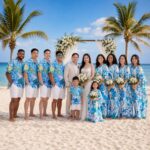
Filipino weddings run from quiet coin blessings at the altar to full folk dance performances during the reception, and the ones you include depend on how closely you want the day to reflect Catholic liturgy, cultural heritage, and family involvement.
The barong Tagalog and Filipiniana gowns set the visual tone, while ceremonies like the yugal cord and veil require sponsors drawn from extended family or close friends.
If you’re building a guest list that includes multiple generations and a reception structured around participation, the money dance, despedida de soltera, and traditional folk performances all give people something to do beyond sitting through dinner.
1. Barong Tagalog and Filipiniana Gowns
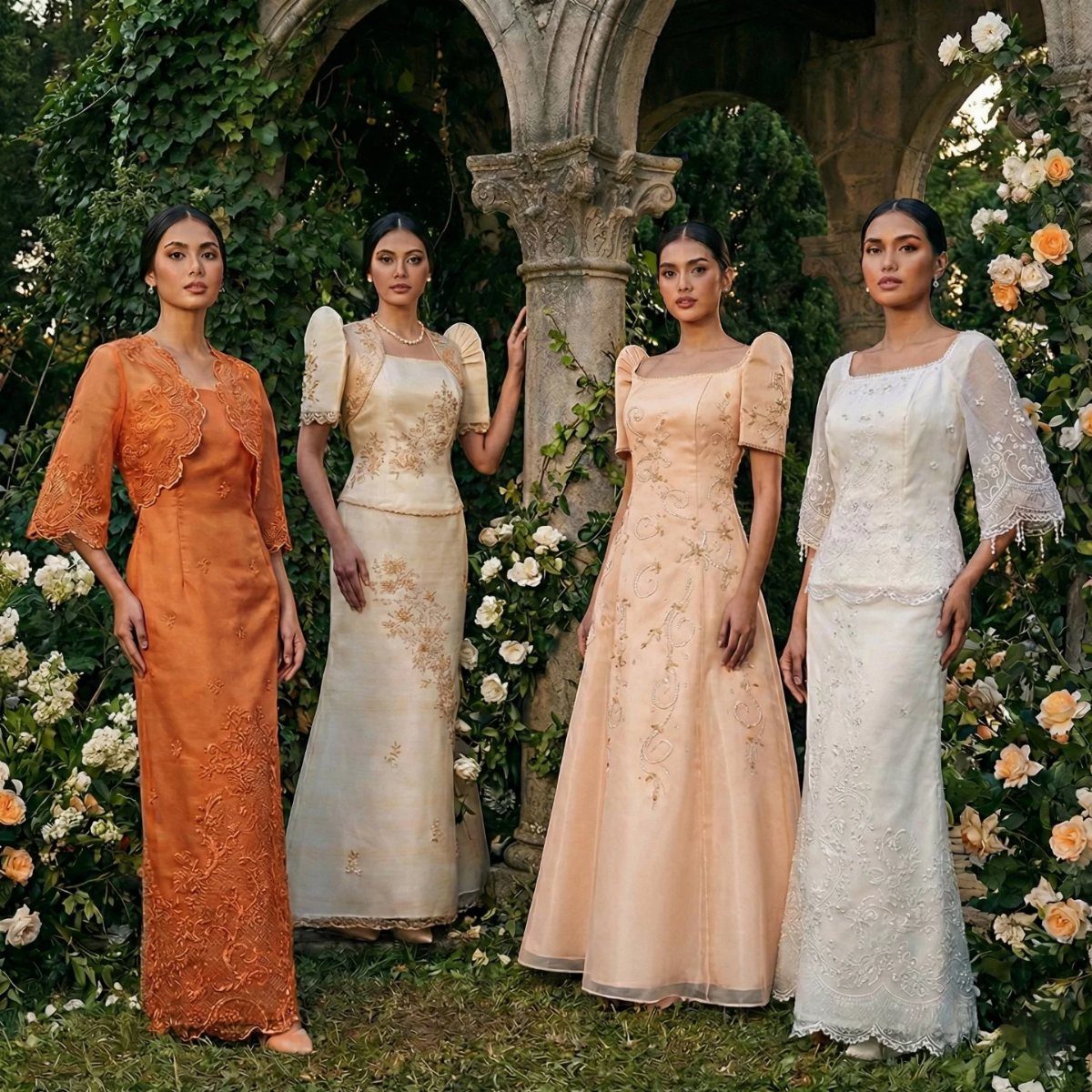
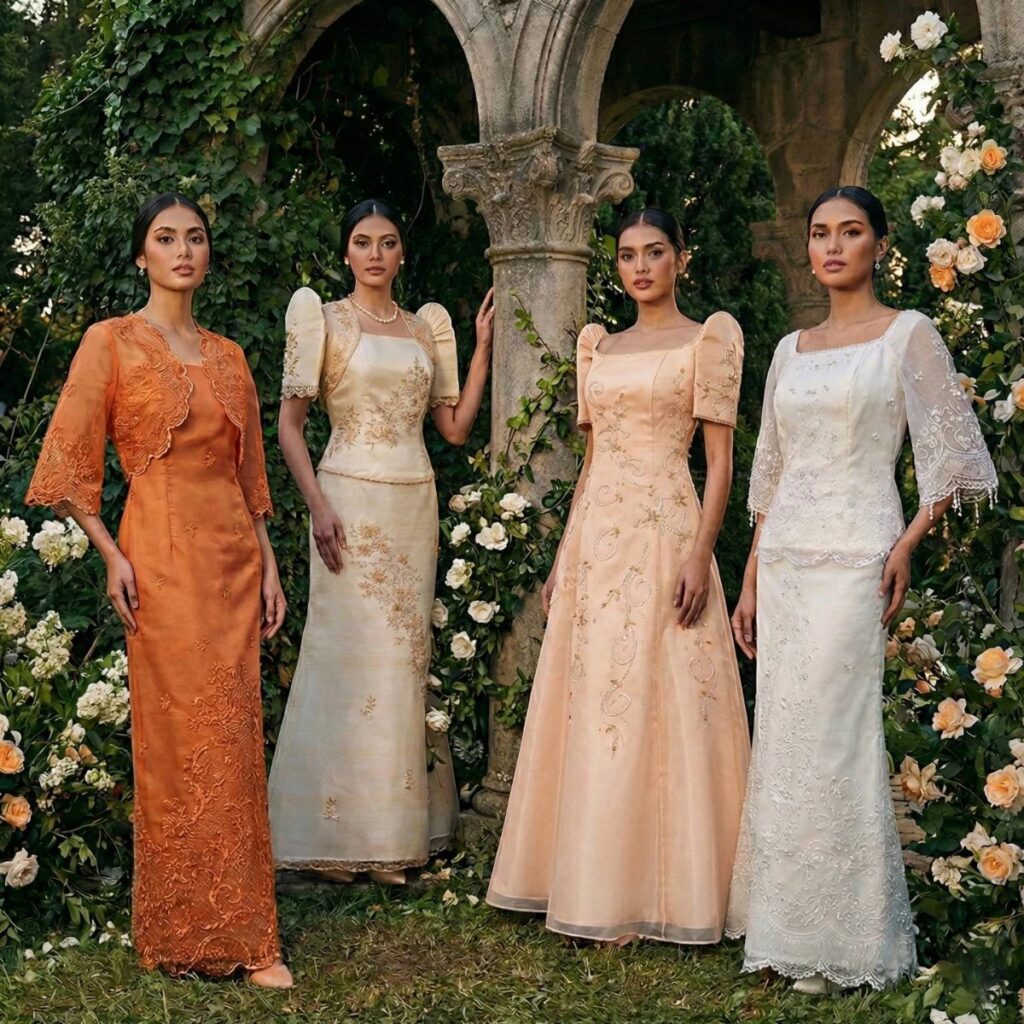
The groom wears a barong Tagalog, a lightweight embroidered shirt traditionally made from piña or jusi fabric, while the bride and her attendants wear Filipiniana gowns with butterfly sleeves and often floor-length skirts.
Both styles connect the ceremony to Filipino heritage and work particularly well for warm-weather weddings.
The barong is worn untucked and typically paired with dark trousers, while Filipiniana gowns come in a range of colors and can be coordinated across the bridal party.
If you’re incorporating these pieces, consider the formality of your venue. Intricately embroidered versions suit a church ceremony, while simpler designs fit a garden or beach setting.
2. Arrhae (13 Coins)
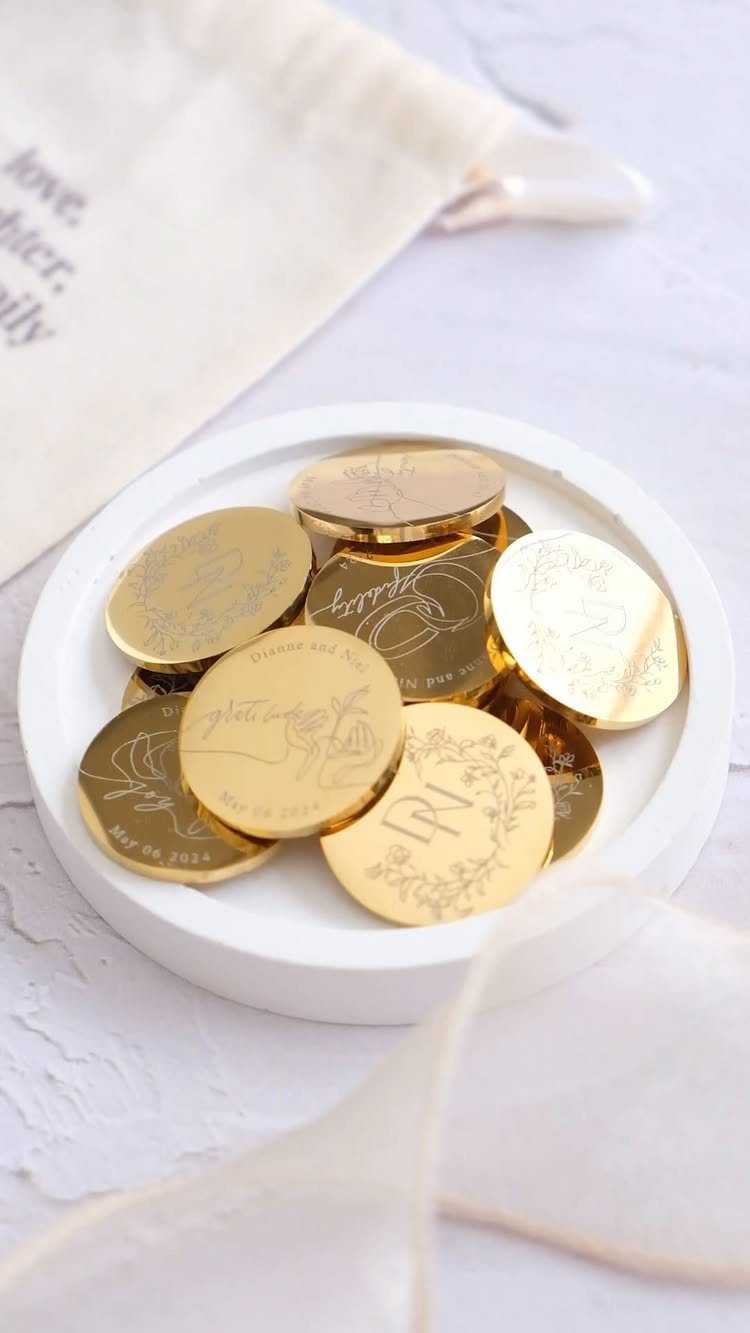
The groom presents 13 coins to the bride during the ceremony, symbolizing his commitment to provide for the family and her role in managing their shared resources.
The coins are often personalized with the couple’s names and wedding date, then placed in a small dish or pouch that sits on the altar.
After the priest blesses them, the groom pours the coins into the bride’s hands, and she returns them to his before they’re placed back in the container.
Many couples keep the coins and dish as a keepsake after the wedding.
3. Money Dance
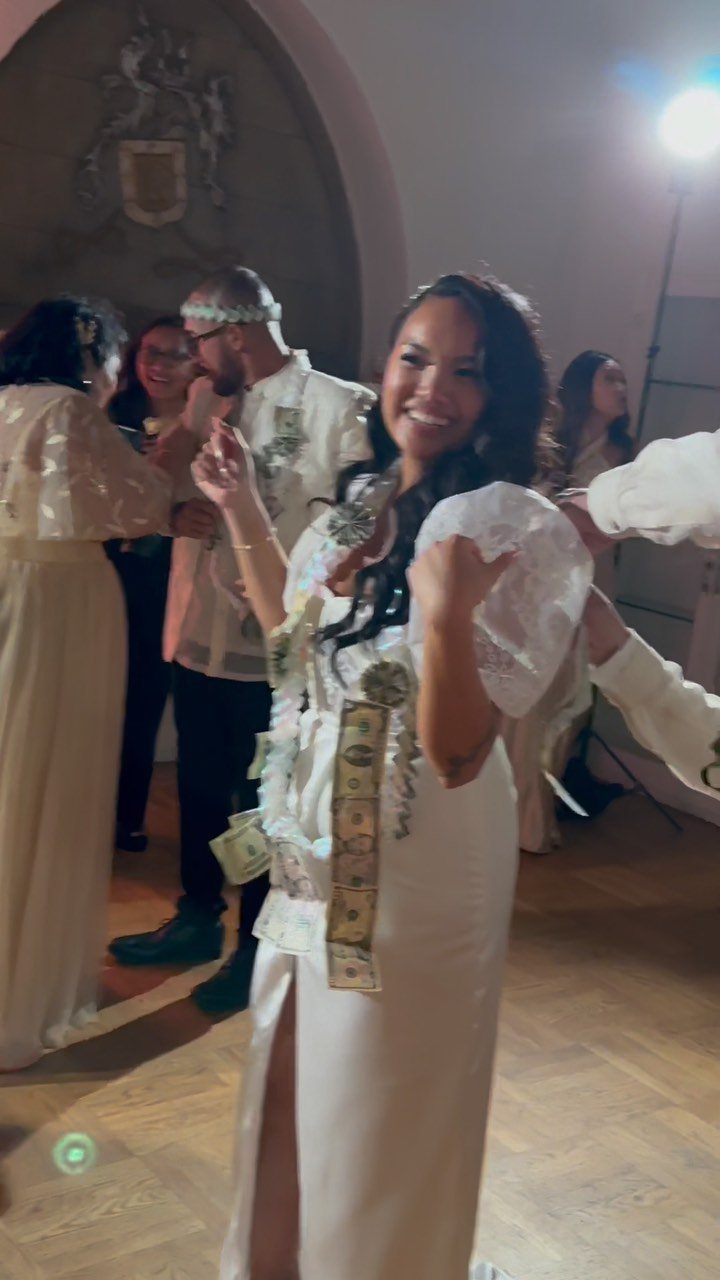
Guests pin bills directly onto the bride’s dress and the groom’s shirt while the couple dances, contributing money to help them start their married life.
The dance usually happens during the reception, with each guest taking a turn on the floor. Some couples play several songs to give everyone time to participate, while others keep it to one or two.
If you’re planning this, wear something that can handle pins without damage. The Filipiniana gown and barong both work well since the fabric is sturdy enough to hold the weight of multiple bills throughout the night.
4. Unity Candle
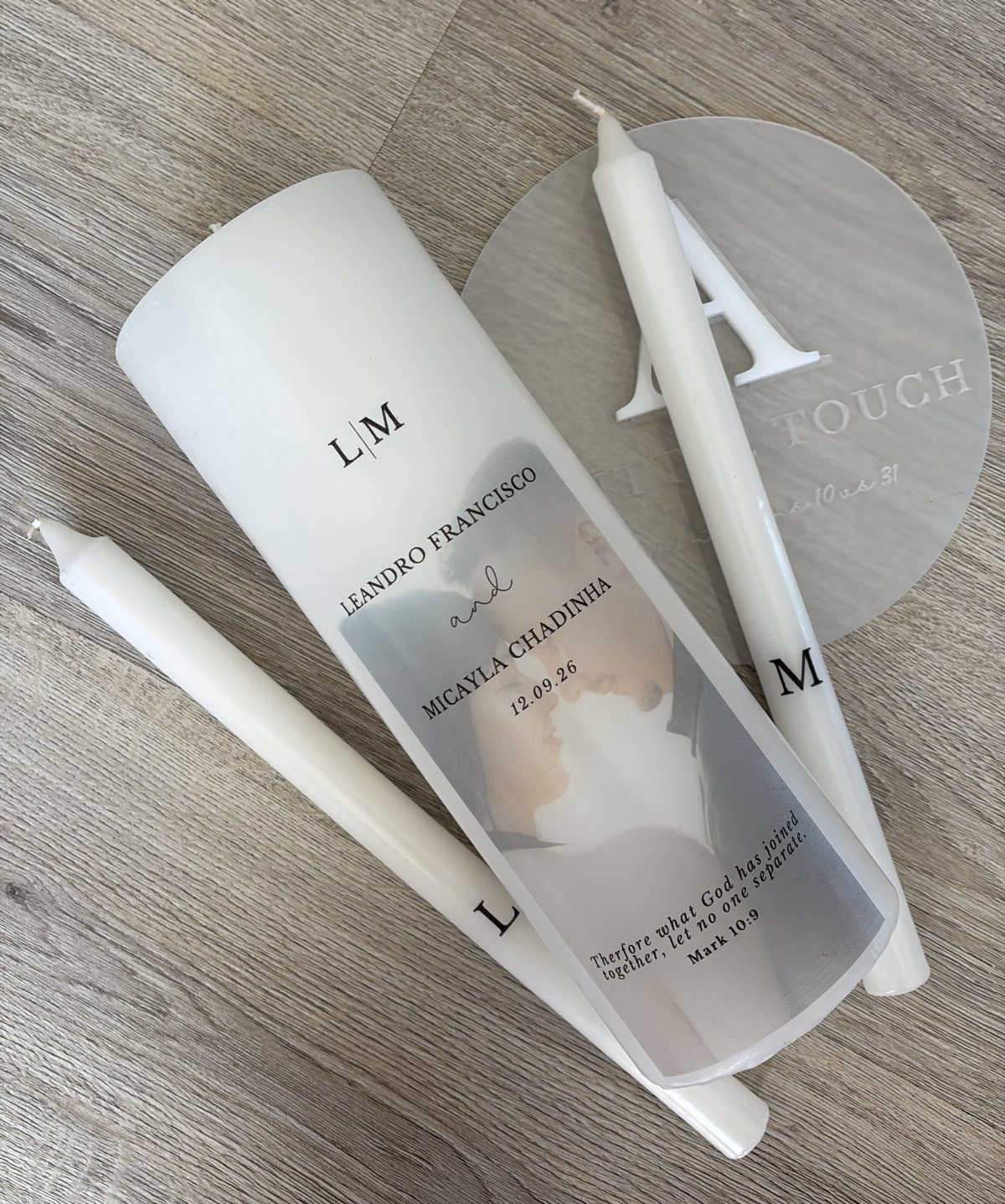
The couple’s mothers each light a taper candle at the start, and the bride and groom use those 2 flames to light a larger center candle together.
The center candle often features the couple’s names, wedding date, and a verse or message. Some couples add a photo or custom design to make it more personal.
This ritual happens after the vows and rings, typically near the end of the ceremony. If your venue doesn’t allow open flames, battery-operated candles can work, though the symbolism reads more clearly with real ones.
5. Despedida De Soltera
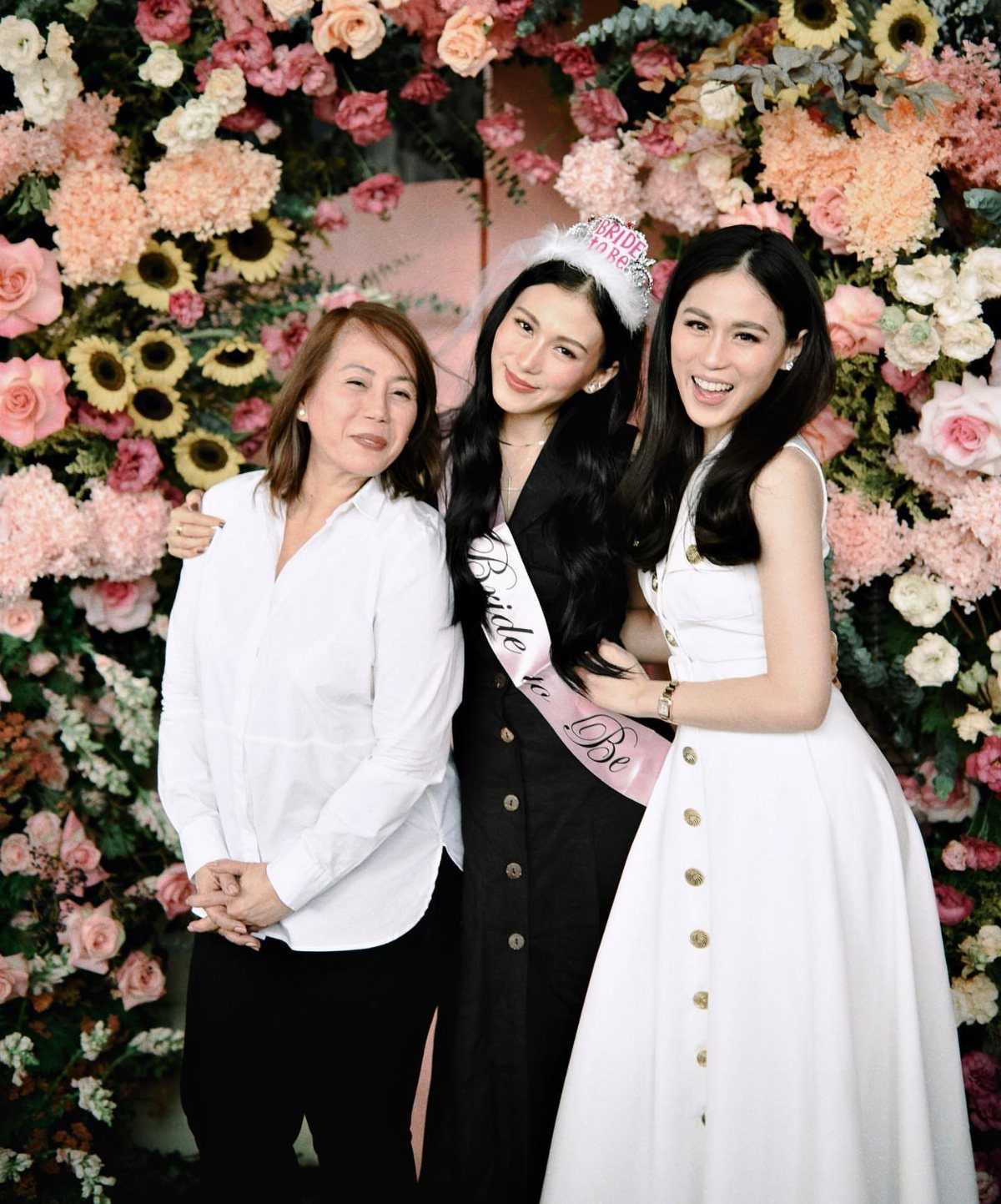
This pre-wedding gathering brings together the bride’s close friends and family to celebrate before she marries. It functions much like a bridal shower or bachelorette party, but the guest list often includes multiple generations.
The event can be as casual or formal as the bride prefers. Some hosts plan a meal at a restaurant, while others organize an afternoon at home with food, games, and a decorated backdrop for photos.
If you’re hosting, a floral wall or balloon setup gives the day a festive look and doubles as a photo area that guests will use throughout the party.
6. Catholic Nuptial Mass
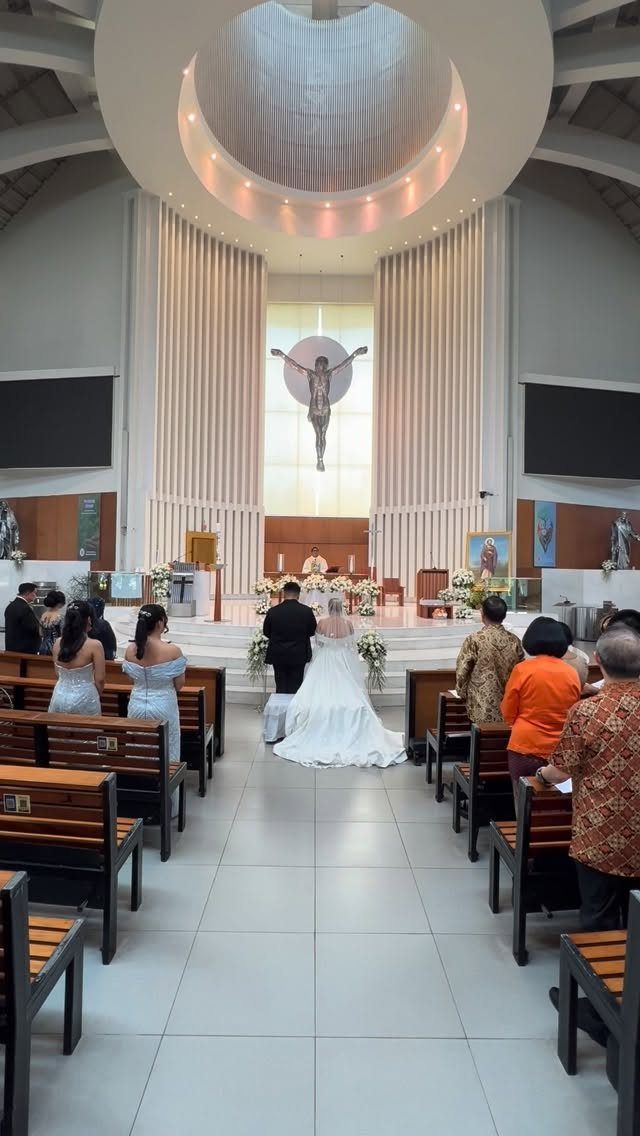
The ceremony includes an opening procession, Scripture readings, a homily from the priest, the exchange of vows and rings, and Holy Communion for baptized Catholics in attendance.
Guests should expect to stand, sit, and kneel at different points, following the liturgy. If many of your guests aren’t familiar with a Catholic Mass, a printed program helps them follow along.
The length makes this format best suited to couples who want a traditional, formal ceremony rooted in their faith.
7. Wedding Yugal or Cord Ceremony
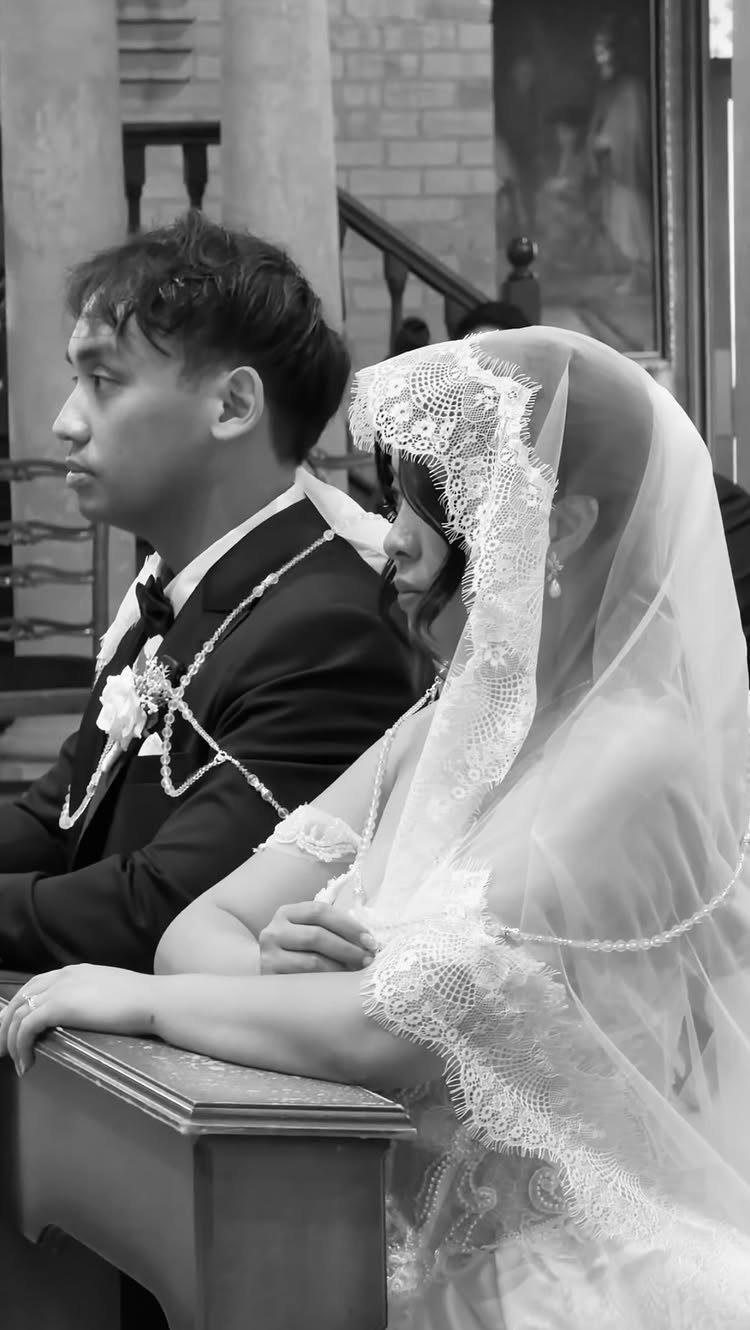
Sponsors drape a ceremonial cord over the couple’s shoulders in a figure-eight pattern, symbolizing their bond and the support of their families.
The cord can be made from silk, satin, or beaded strands, and it stays in place for the remainder of the ceremony.
2 sponsors, often chosen from the couple’s extended family or close friends, perform the ritual after the exchange of vows and rings.
Some couples keep the cord displayed in a shadow box after the wedding, along with other ceremony items like the coins and candle.
8. Wedding Veil Ceremony
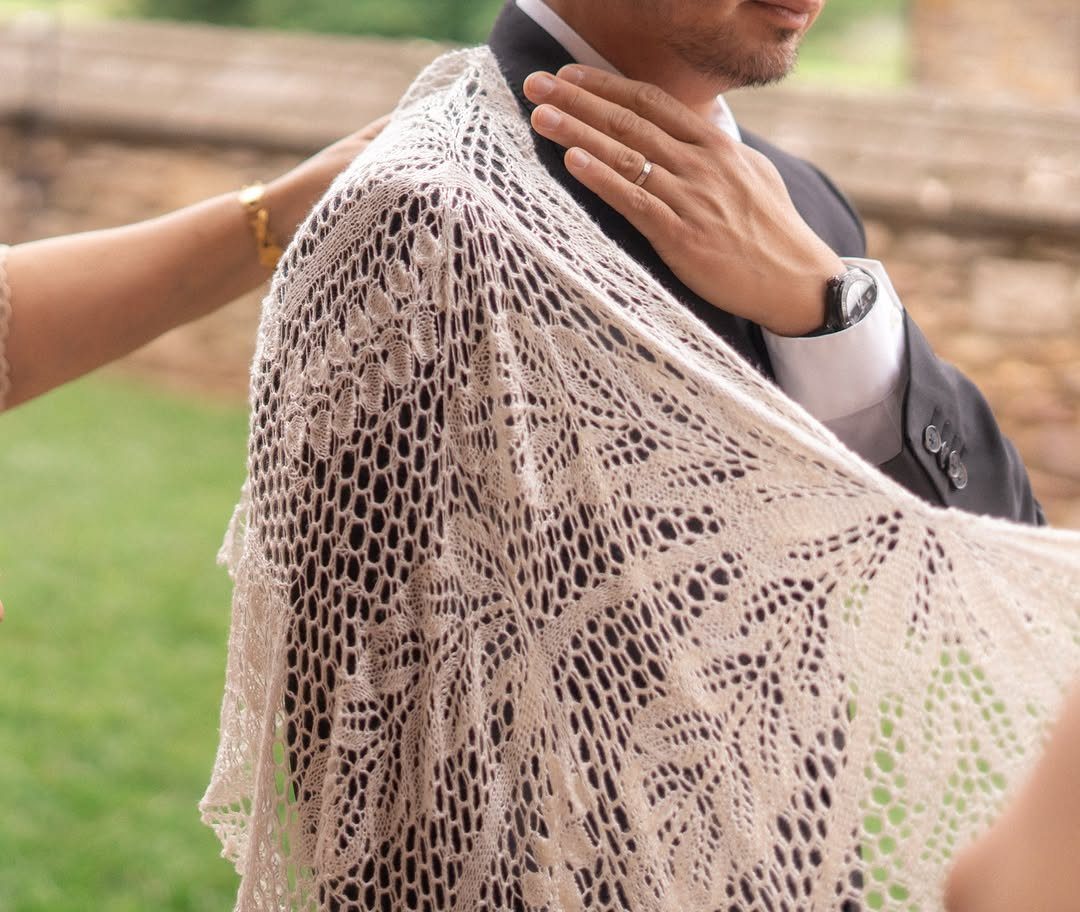
Sponsors place a single veil over the bride’s head and the groom’s shoulder, covering them as one unit to represent their union and the life they’ll build together.
The veil is usually white or ivory lace and large enough to drape across both people without slipping.
Like the cord ceremony, this happens after the vows and involves 2 sponsors who hold the veil in place briefly before draping it.
The veil stays on through the final blessings, then the sponsors remove it before the couple exits.
9. Traditional Folk Dance Performance
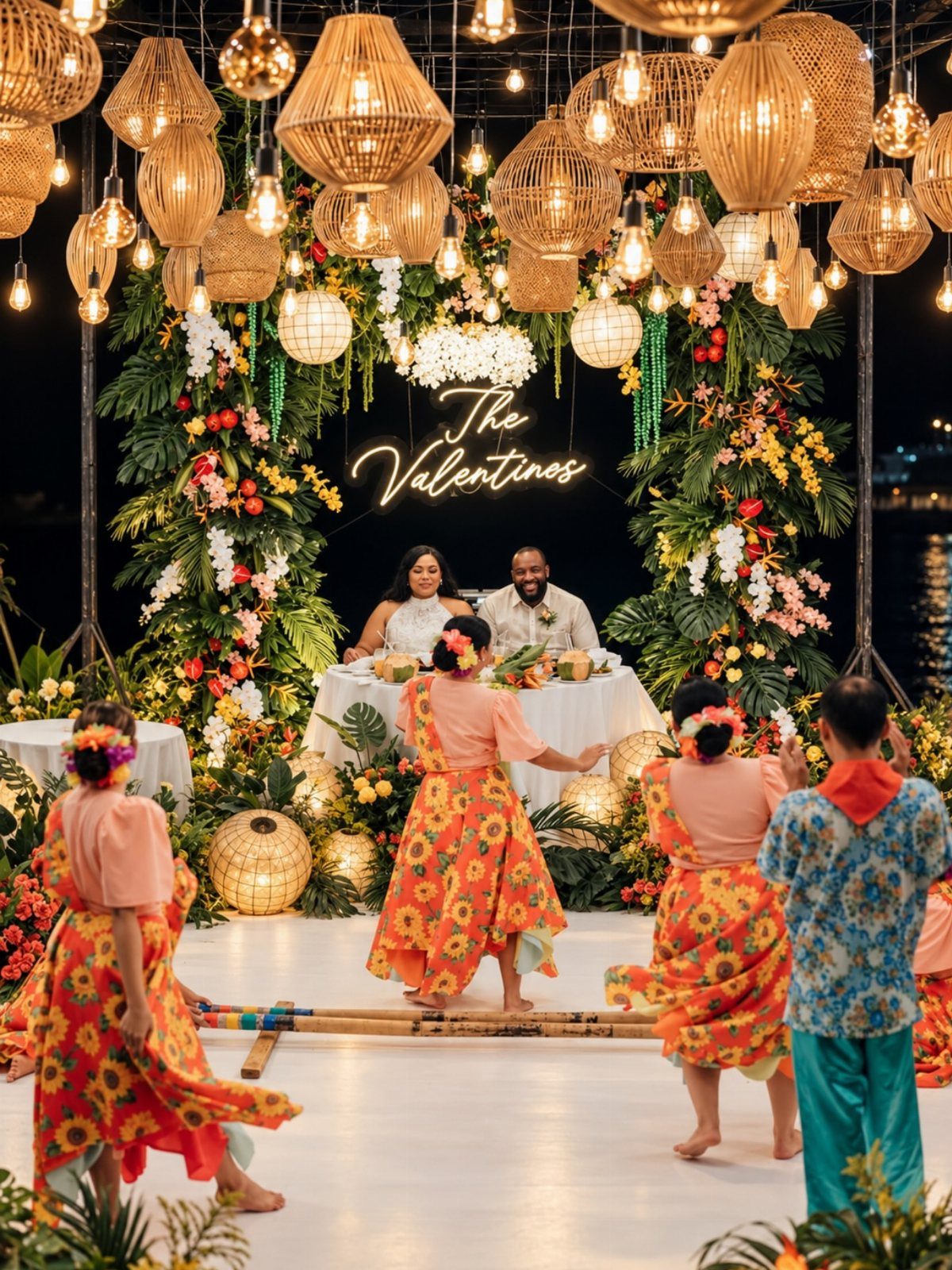
Professional dancers perform traditional Filipino folk dances during the reception, giving guests a live cultural element that also serves as entertainment between courses or after dinner.
The tinikling, a dance performed with bamboo poles, is a common choice, though couples sometimes request regional dances that reflect their family’s specific heritage. Performances can include audience participation if the dancers invite guests to join.
Book the performers early if your wedding falls during peak season, as cultural dance groups often fill their schedules months in advance.
Role of Family in Weddings
Both families play active roles throughout the day, starting with the ceremony itself. Ninongs and ninangs serve as principal sponsors, often drawn from close family friends or relatives who commit to supporting the couple after the wedding.
This structure reflects how Filipino weddings are built: the couple plans the event, but the families shape the traditions that give each generation something to do.
Parents, aunts, uncles, and godparents all have defined moments, and those moments carry weight because they signal ongoing support rather than a one-day appearance.
If you’re planning your own ceremony, expect conversations about who will fill each sponsor role. The list matters, and it’s longer than the bridal party alone.
Cultural Influences
Spanish colonialism in the 1500s brought Catholicism to the Philippines, and that influence shows clearly in the structure of the wedding itself.
The full Mass, the blessing of the coins, and the ritual use of the veil and cord all trace back to Catholic and Spanish wedding customs that became woven into local practice.
What reads as distinctly Filipino today is often a blend: the ceremony follows Catholic liturgy, but the roles of ninongs and ninangs, the specific symbolism of the 13 coins, and the reception traditions like the money dance reflect Filipino family structures and values layered on top.
This mix is why the ceremony can feel both formal and deeply personal. The religious elements provide the framework, and the cultural additions make it specific to the families involved.
Modern Adaptations
The reception is where couples adjust tradition to fit their own preferences.
The money dance still shows up at most Filipino weddings, though some couples now dedicate a specific song to it and call it a honeymoon fund, while others skip it to leave the dance floor open.
Dove releases have faded in favor of simpler send-offs.
What stays consistent is the size of the celebration and the number of people involved.
While the newlyweds are from cultures located on opposite sides of the world, they’re throwing an exuberant, colour-splashed ceremony that blends her Mexican heritage to his Filipino roots.