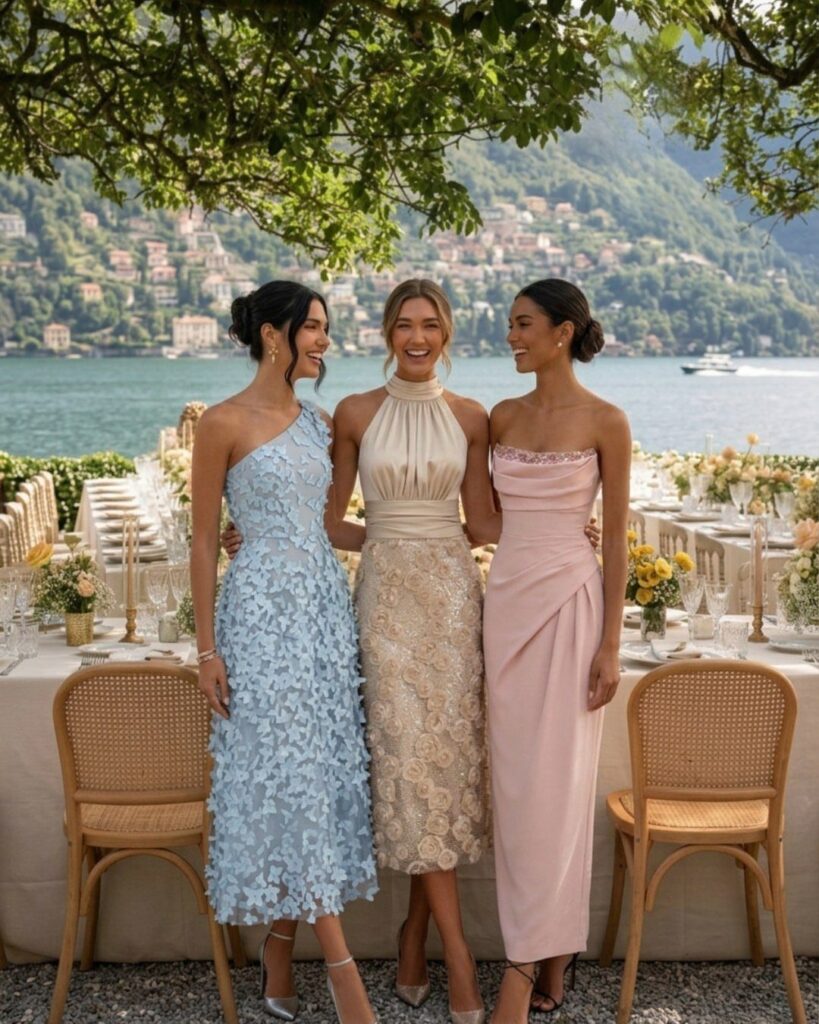
Formal midi dresses range from corset bodices and pleated skirts to one-shoulder cuts and high necklines.
Your venue and dress code decide how much structure or coverage you need: spring garden ceremonies suit one-shoulder florals with movement, while ballroom receptions call for satin or pleats that hold their shape under chandeliers.
1. Floral Midi Dresses
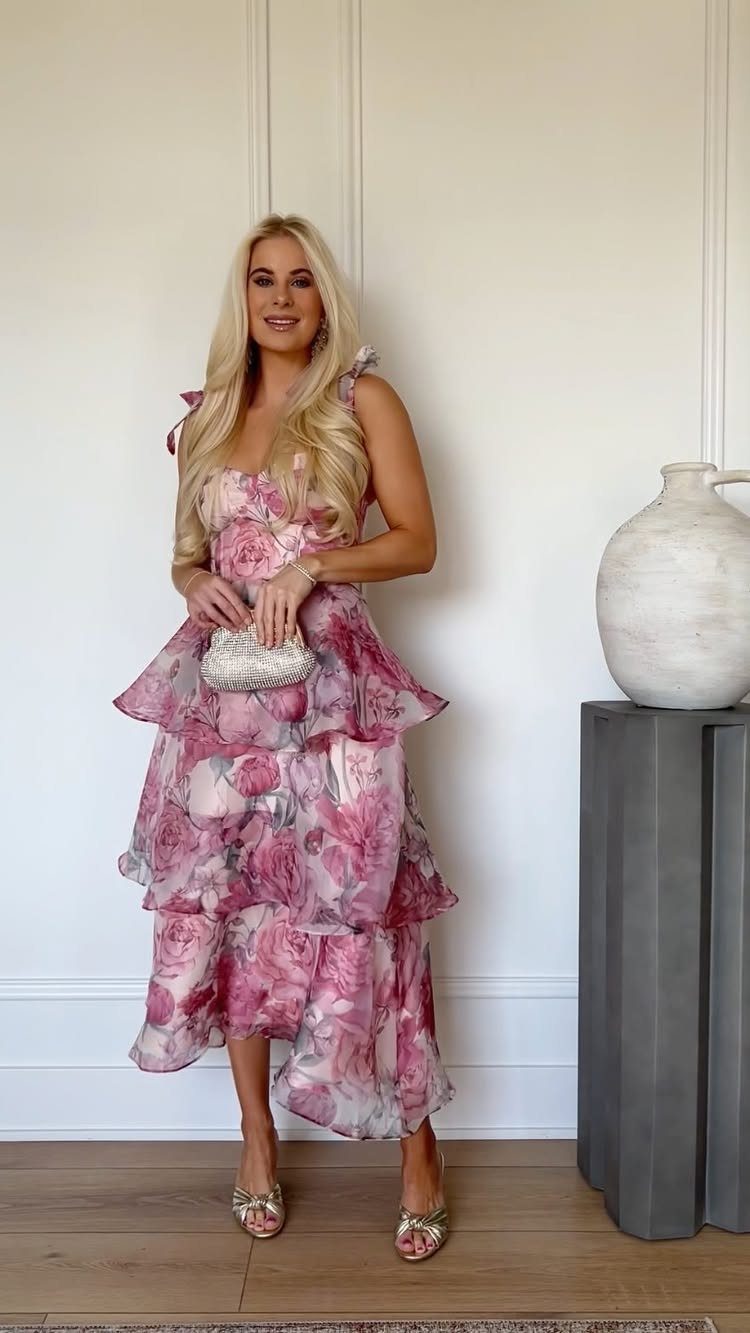
A tiered floral print brings movement and color without any extra styling. The pink-based palette here reads warm and romantic, and the tiers create volume that catches the light when you walk.
Floral midi dresses work across nearly every formal wedding setting, from garden ceremonies to ballroom receptions.
Look for a print with some contrast so the pattern stays visible in photos, and choose a fabric with structure like cotton sateen or a heavier crepe if the tiers are pronounced.
Pair with metallic heels and a simple clutch so the dress stays the focus.
2. Satin Midi Dresses
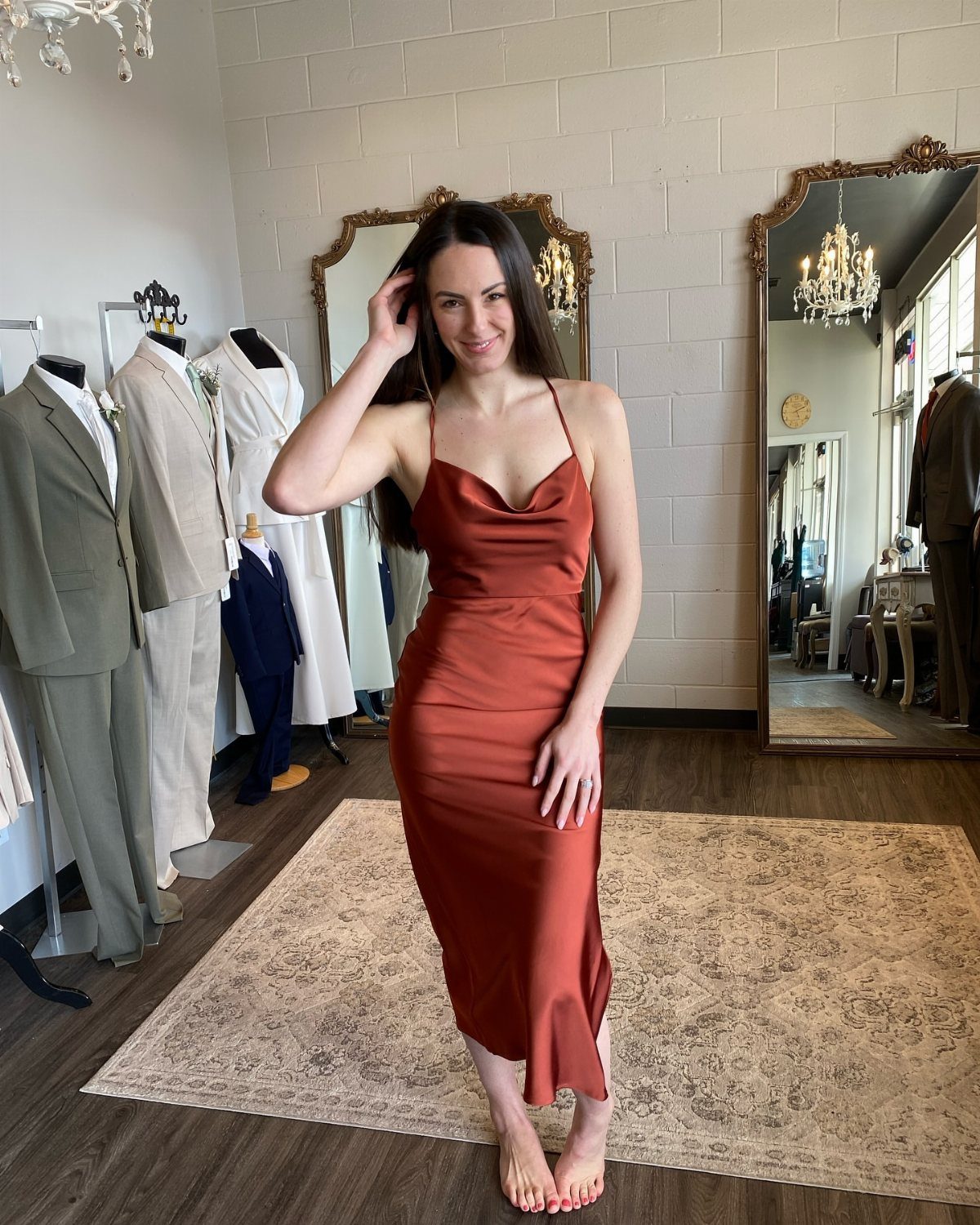
Satin catches light in a way cotton and chiffon never will, which gives a simple silhouette real presence. Rust tones bring out how the fabric catches light, the sheen shifts with every angle and reads formal without any embellishment.
A cowl neckline or a bias cut takes full advantage of how satin drapes.
The fabric can cling, so consider shapewear if you want a completely smooth line. Satin also wrinkles easily, so hang the dress as soon as you arrive and steam it if needed.
Stick with matte accessories to let the fabric do the work.
3. Corset Bodice Midi Dresses
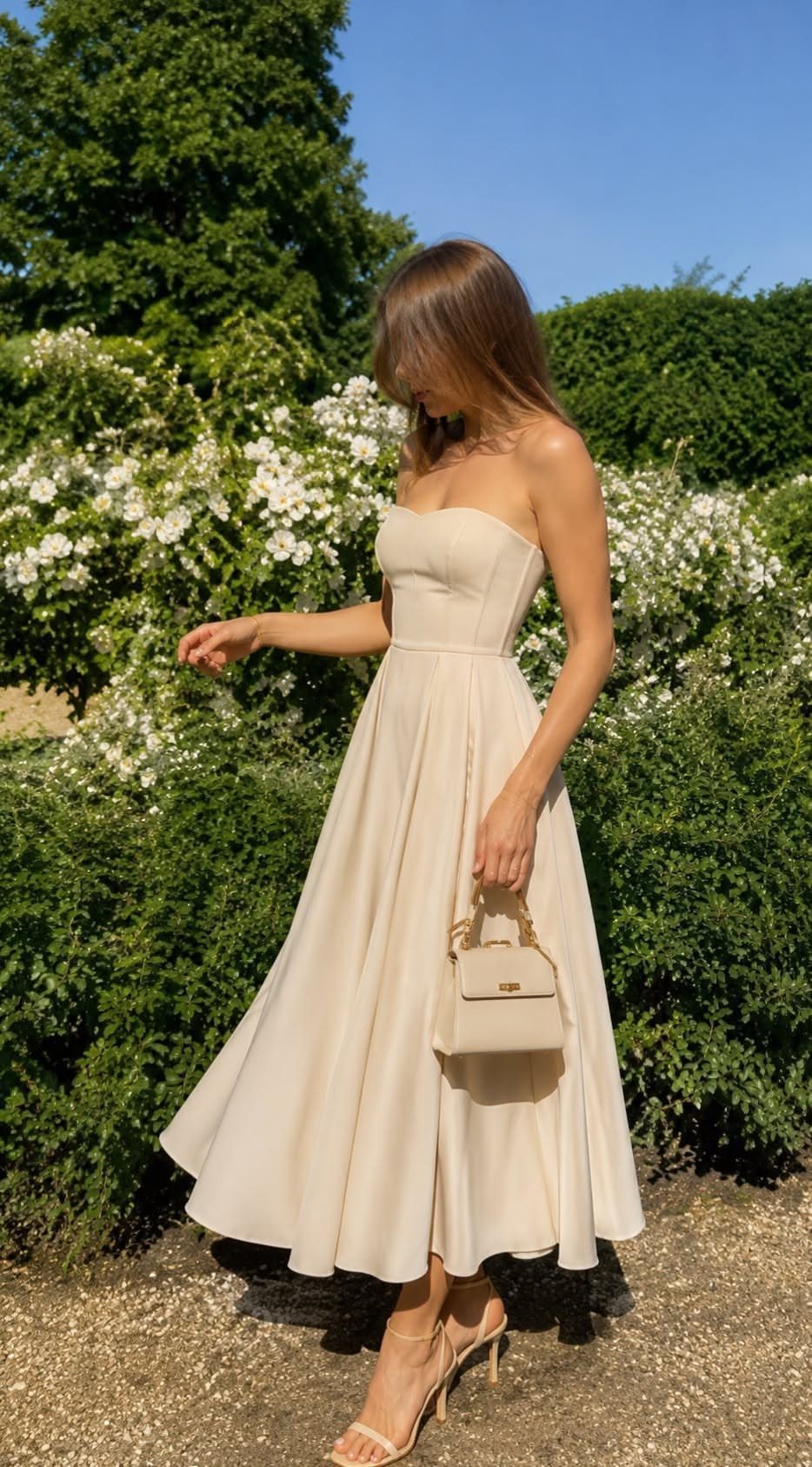
A fitted bodice creates structure through the torso and defines your waist without a belt.
Corset bodices suit formal weddings where you want a polished, tailored look.
Most built-in boning means you can skip a bra, but try the dress on with any shapewear you plan to wear so the fit stays smooth. The bodice should feel snug but not tight, you’ll be sitting and dancing.
Heels add height and keep the proportions balanced with the fitted top.
4. High Neckline Midi Dresses
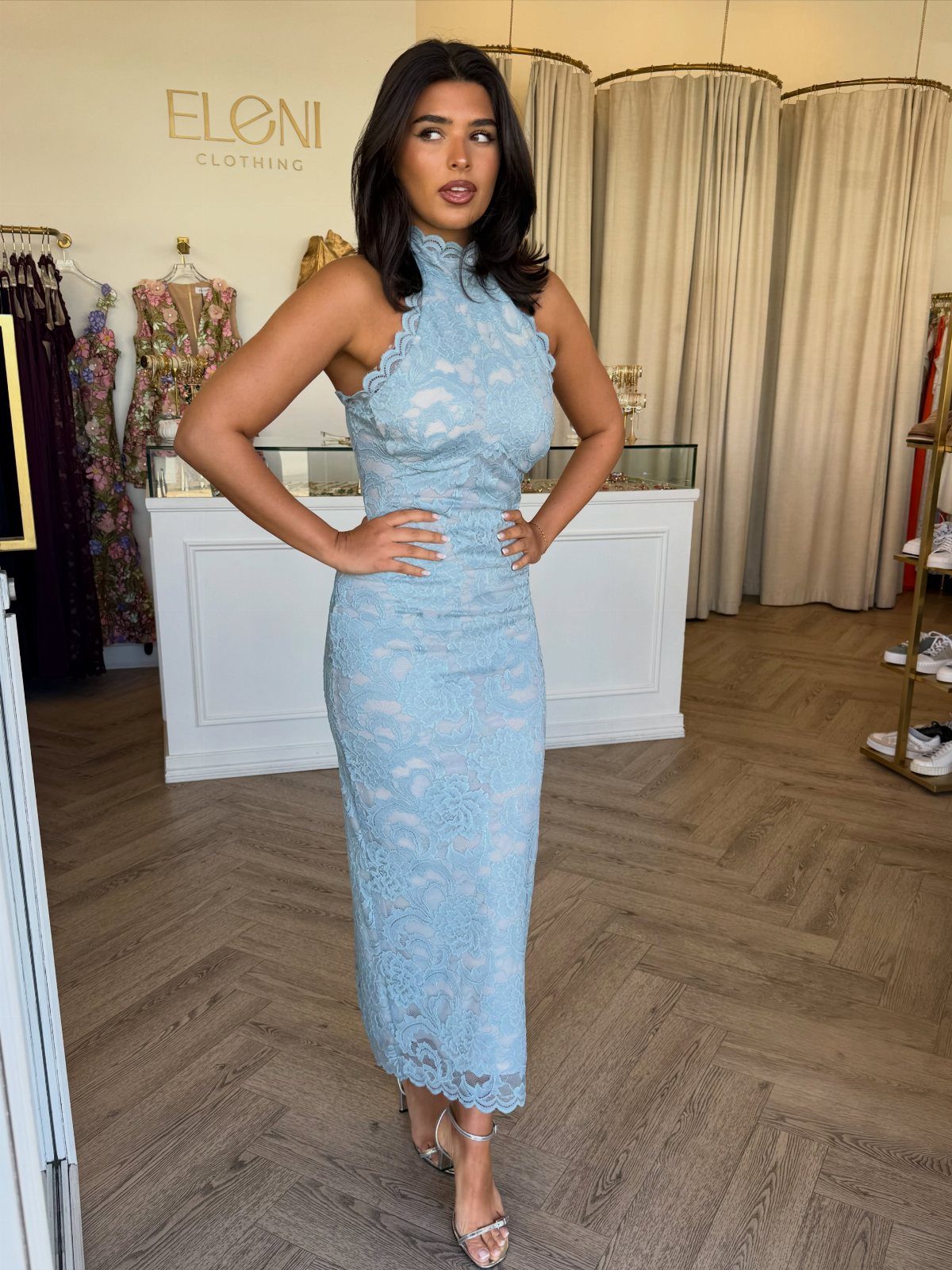
A high neckline gives coverage and a refined line, especially in lace where the detail sits right at your collarbone.
High necklines suit religious ceremonies and more traditional formal weddings.
The look works best when the rest of the dress stays simple, too much detail elsewhere competes with the neckline. Lace versions often include built-in structure, so you may not need much underneath.
Keep jewelry minimal, a high neckline already fills the space a statement necklace usually occupies.
5. Burgundy Midi Dresses
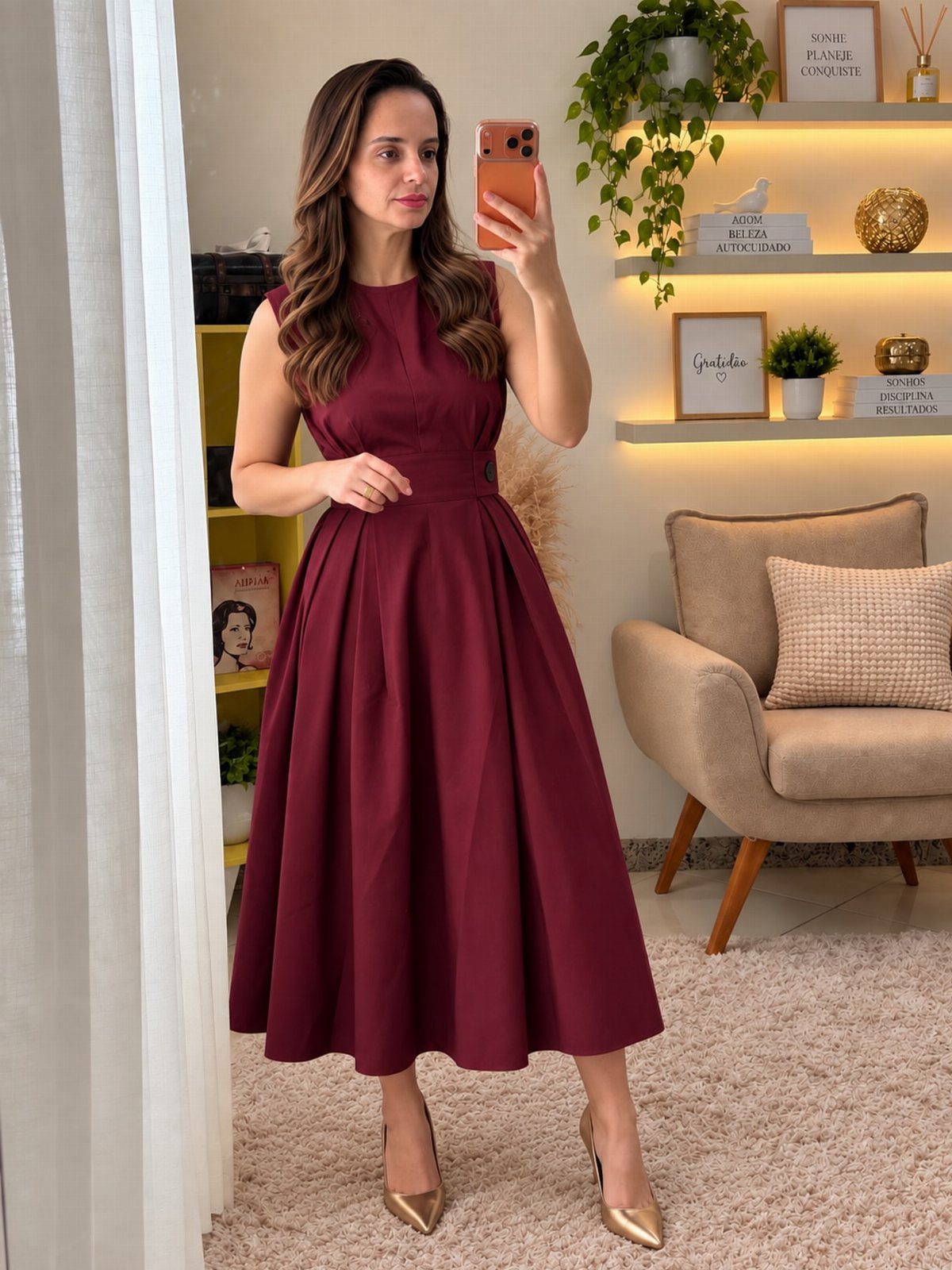
Burgundy reads formal in a way pastels and bright colors don’t, and the deep tone photographs beautifully in natural light and indoors.
Burgundy suits fall and winter weddings especially well, and the color pairs with gold, silver, and rose gold accessories without clashing. A fitted silhouette like this one keeps the look streamlined, while the hemline sits at mid-calf for balance.
Gold heels warm the color up, silver keeps it cooler. Both work.
6. One-shoulder Midi Dresses
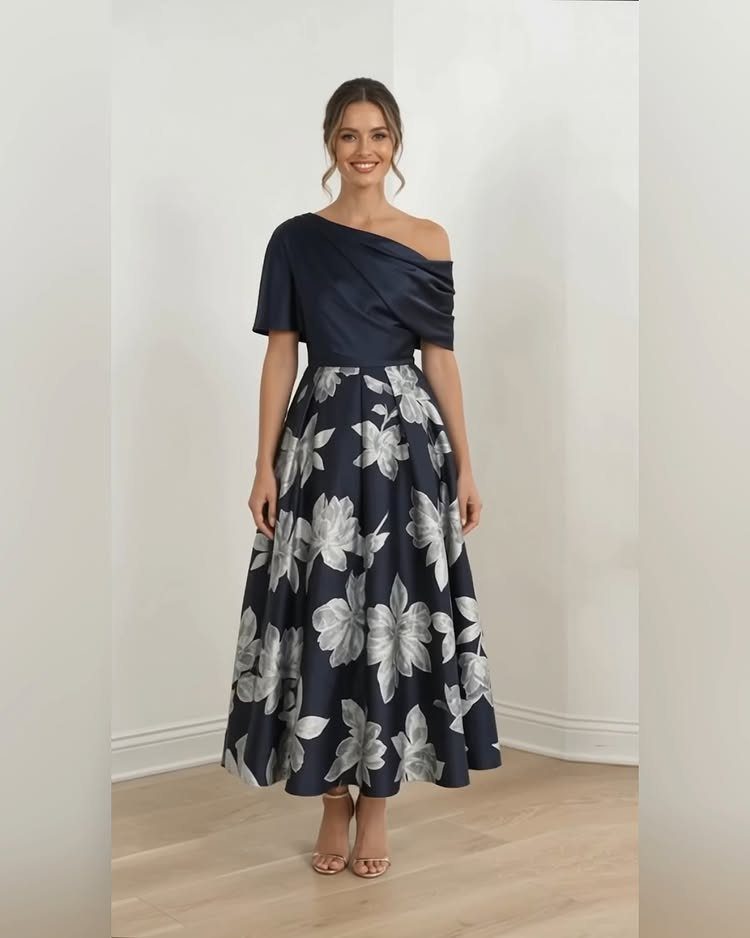
An asymmetrical neckline adds visual interest without pattern or embellishment, and the single strap keeps the look balanced.
This navy version pairs a solid bodice with a metallic floral skirt, the one-shoulder cut draws the eye up and keeps the overall silhouette streamlined.
One-shoulder dresses suit formal weddings where you want something current but not trendy.
The single strap can slip if it’s not fitted correctly, so check that the dress hugs your shoulder and underarm snugly. A strapless bra or adhesive cups usually work best.
Statement earrings sit on the bare shoulder side, keep the other side simple.
7. Pleated Midi Dresses
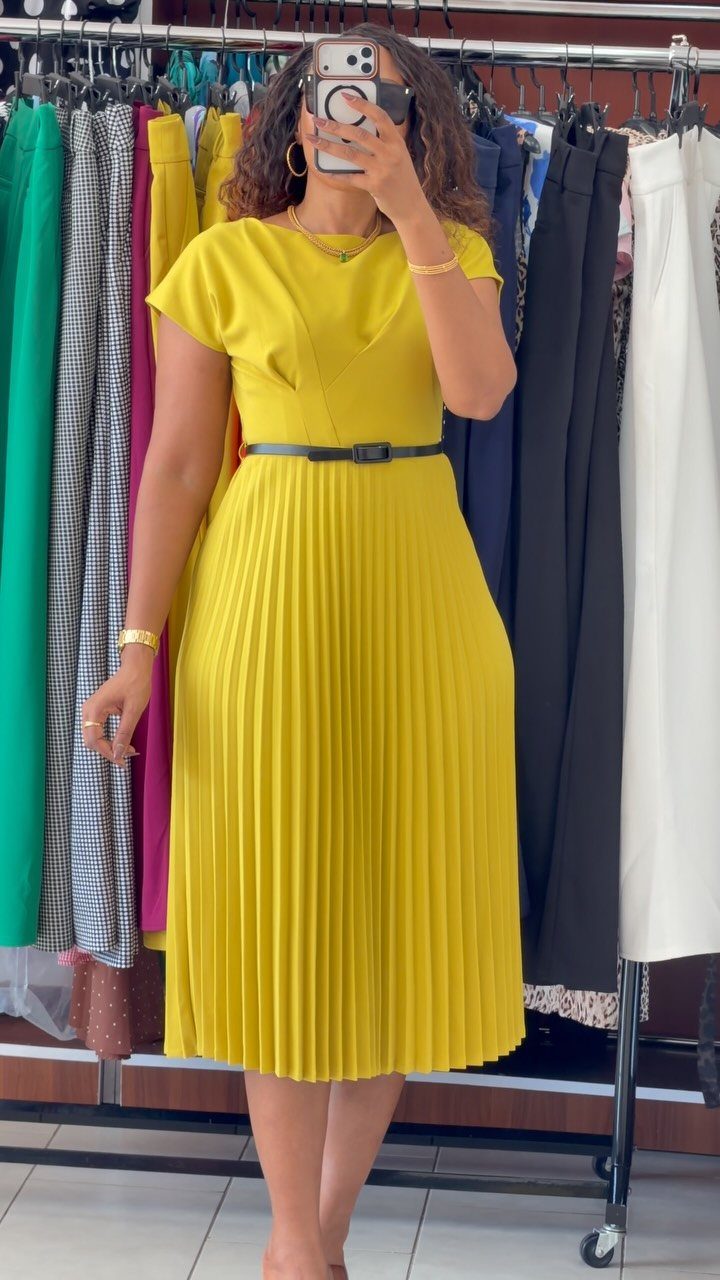
Pleats hold their folds through hours of sitting and dancing, which gives the skirt consistent texture and movement. The accordion structure catches light at different angles, so a solid color like this yellow stays visually interesting without any print.
Pleated midi skirts work across formal and semi-formal weddings.
The folds add volume, so if you’re petite, stick with finer pleats and heels to keep the proportions balanced. A fitted bodice or a belt defines your waist and keeps the silhouette from reading too full.
The pleats may flatten slightly after sitting, but they bounce back once you stand.