The invitation’s dress code sets the baseline, and this guide walks through 13 outfit directions that answer it, plus advice on fit and the mistakes that break an otherwise solid choice.
Black-tie calls for a tuxedo with satin lapels, groomsmen typically wear matching suits in the wedding party’s chosen color, and casual weddings still expect tailored separates over jeans.
1. Black-Tie Wedding
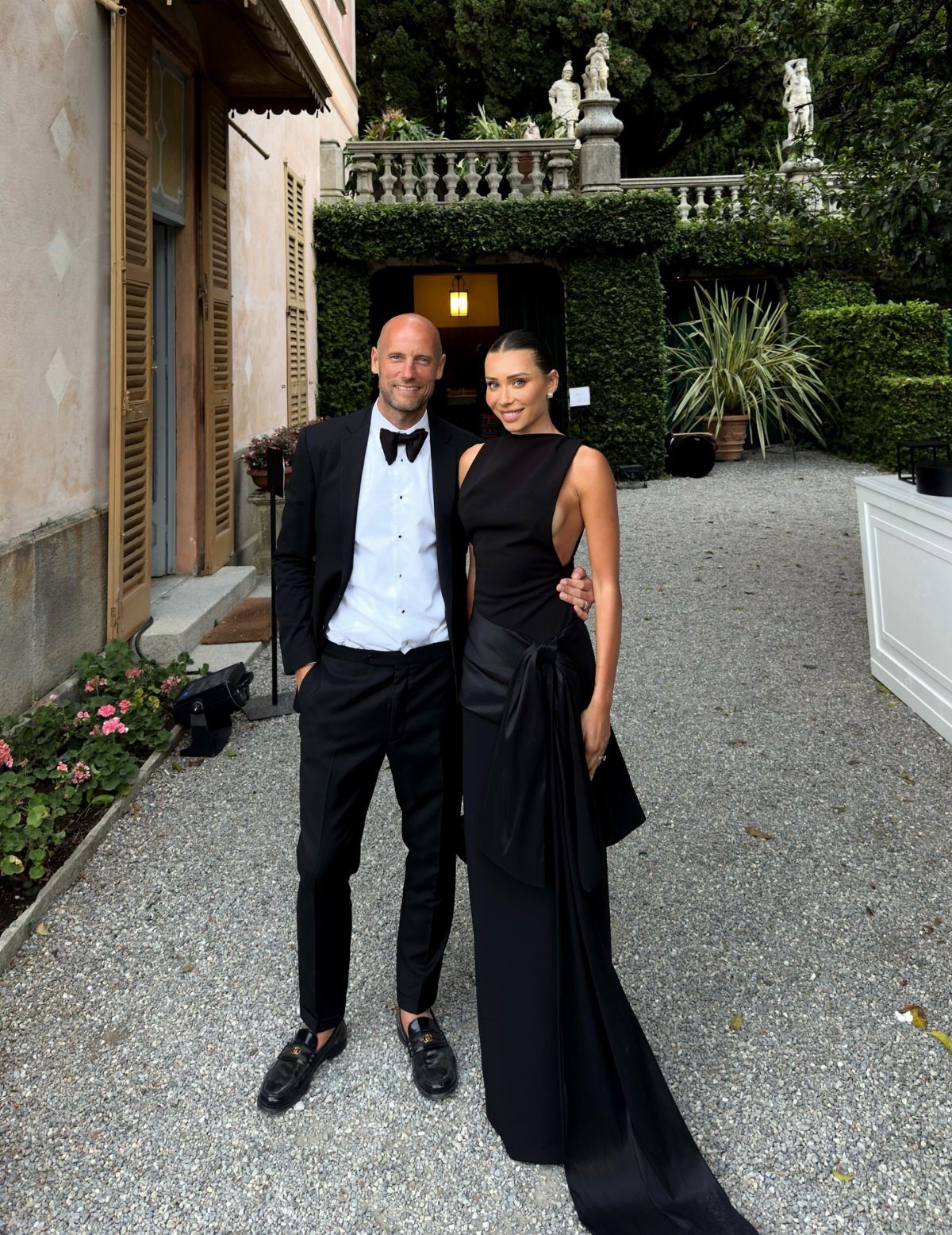
A black-tie wedding requires a tuxedo with a bow tie, formal shoes, and often a cummerbund or waistcoat.
The jacket should be black or midnight blue with satin or grosgrain lapels, paired with matching trousers that carry a single satin stripe down the outer seam.
Rent or buy depending on how often you attend formal events. A tuxedo rental gives you the fit and finish for one event, while purchasing one means you own it but pay more up front.
Patent leather oxfords or polished black dress shoes complete the look without drawing attention away from the overall formality.
2. Groomsmen Suits
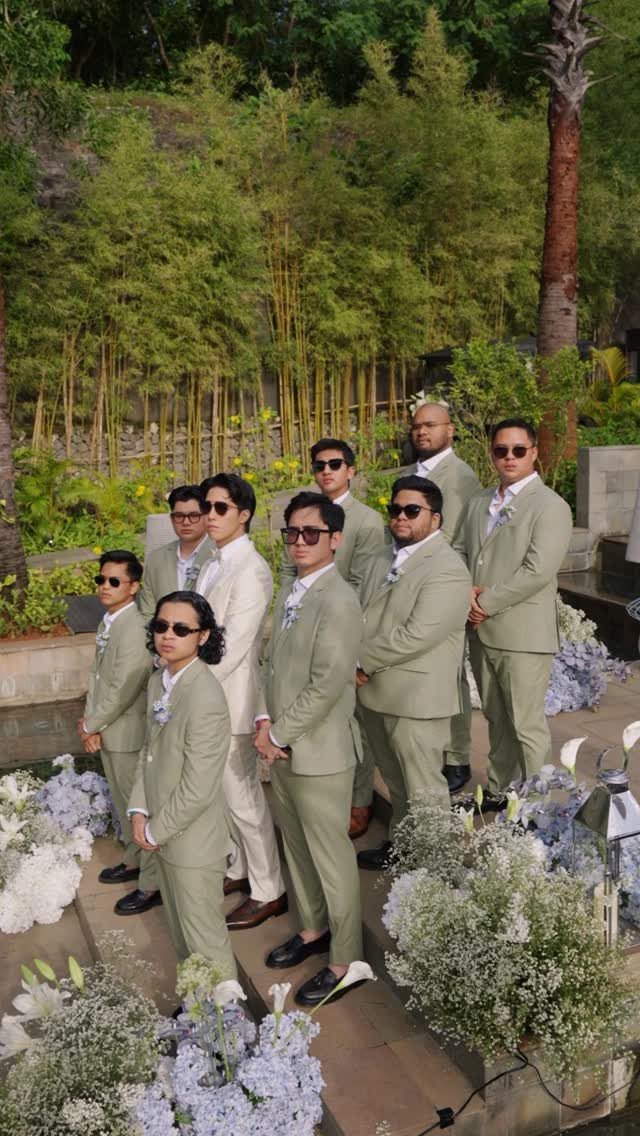
Matching suits give the groomsmen a unified look that supports the groom rather than drawing focus.
The suit color and style should complement the wedding palette and the groom’s attire, whether that means a slight variation in shade or a different vest and tie combination.
Coordinate early so everyone has time for fittings. A suit that fits well in the shoulders and sleeve length makes a bigger difference than an expensive fabric in a poor cut.
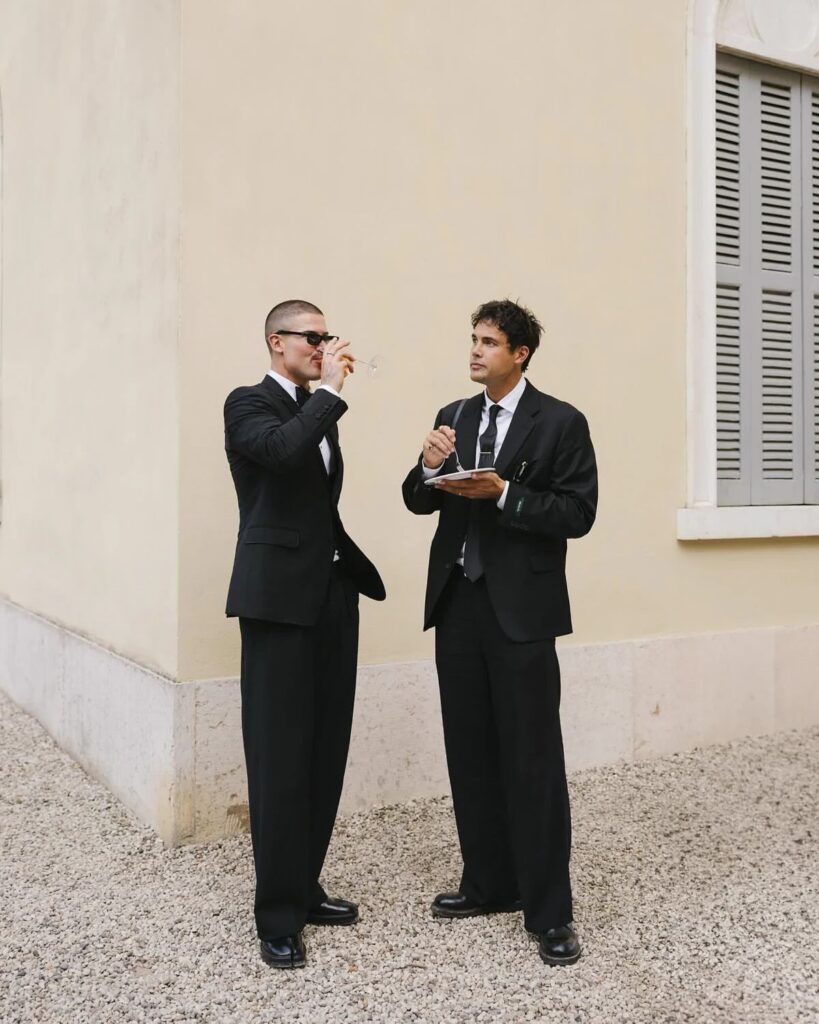
Sunglasses work for outdoor photos but come off during the ceremony unless the couple specifically asks otherwise.
3. Summer Wedding Attire
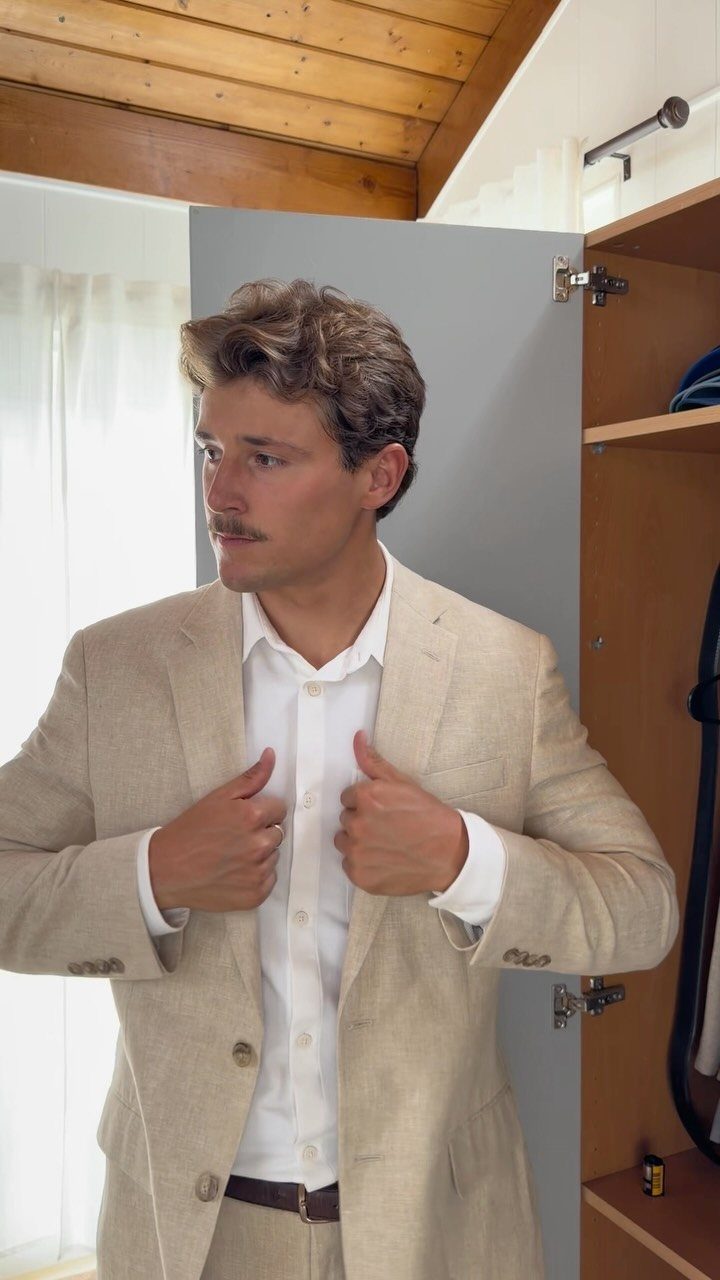
Linen suits in beige, tan, or light grey keep you cool without sacrificing structure. The fabric breathes better than wool, which matters when the ceremony or reception takes place outdoors in warm weather.
Pair the suit with a white or light-colored dress shirt and go without a tie when the dress code leaves that choice open. Loafers or suede dress shoes feel more appropriate than heavy leather oxfords in summer heat.
Linen wrinkles easily, and that relaxed texture is part of the look. If that bothers you, a lightweight cotton or tropical wool blend holds a crisper line.
4. Casual Weddings
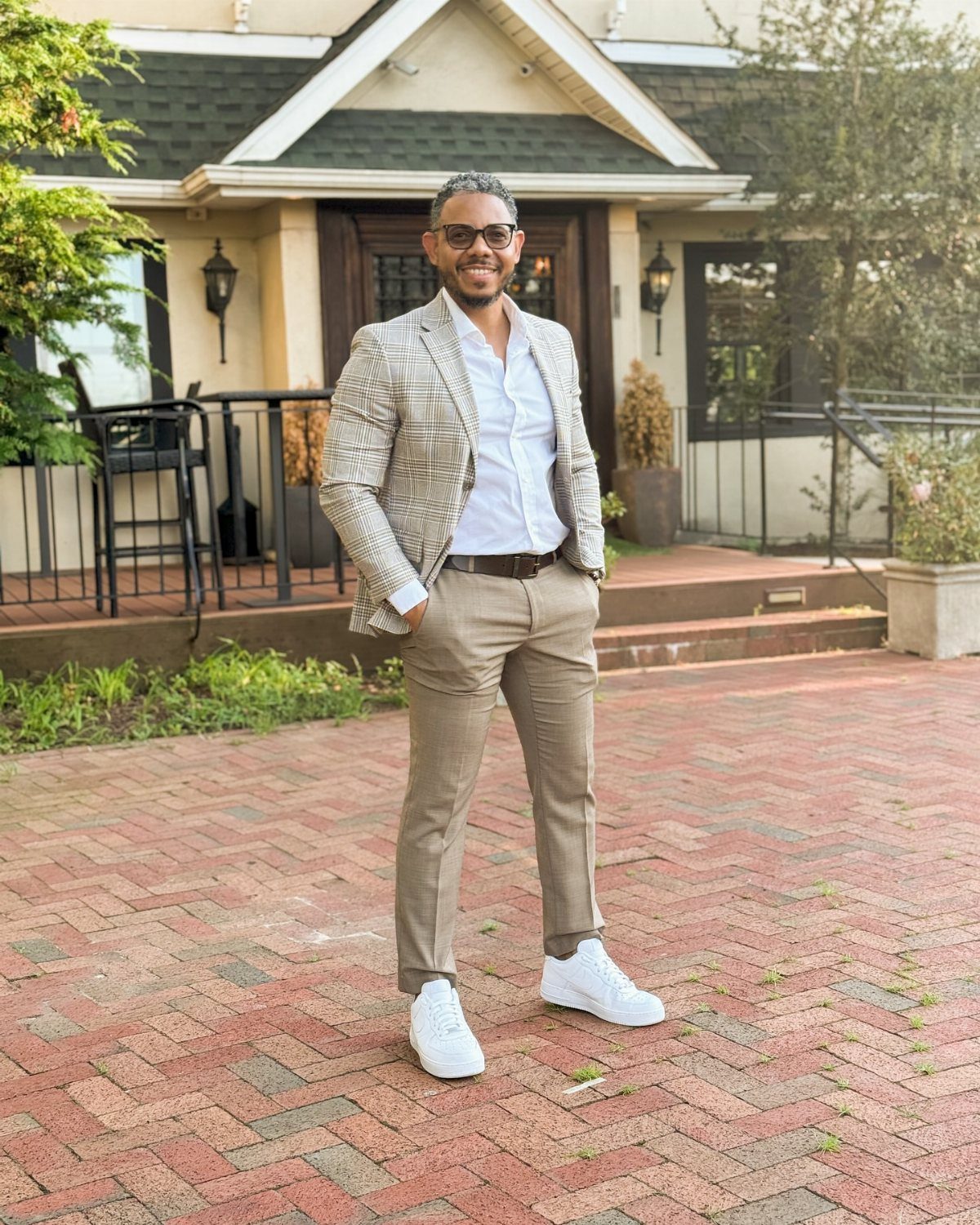
A blazer in plaid or textured fabric paired with chinos or dress trousers strikes the right balance for a casual wedding. The sneakers here work because the rest of the outfit keeps its shape and structure.
White or neutral sneakers stay more versatile than bold colors, and leather or suede options feel slightly more polished than canvas.
Skip the tie entirely or wear a knit version for something at the collar that stays short of silk formality.
This approach suits daytime weddings, backyard celebrations, or any event where the couple has explicitly said to dress down.
5. Tailored Suit
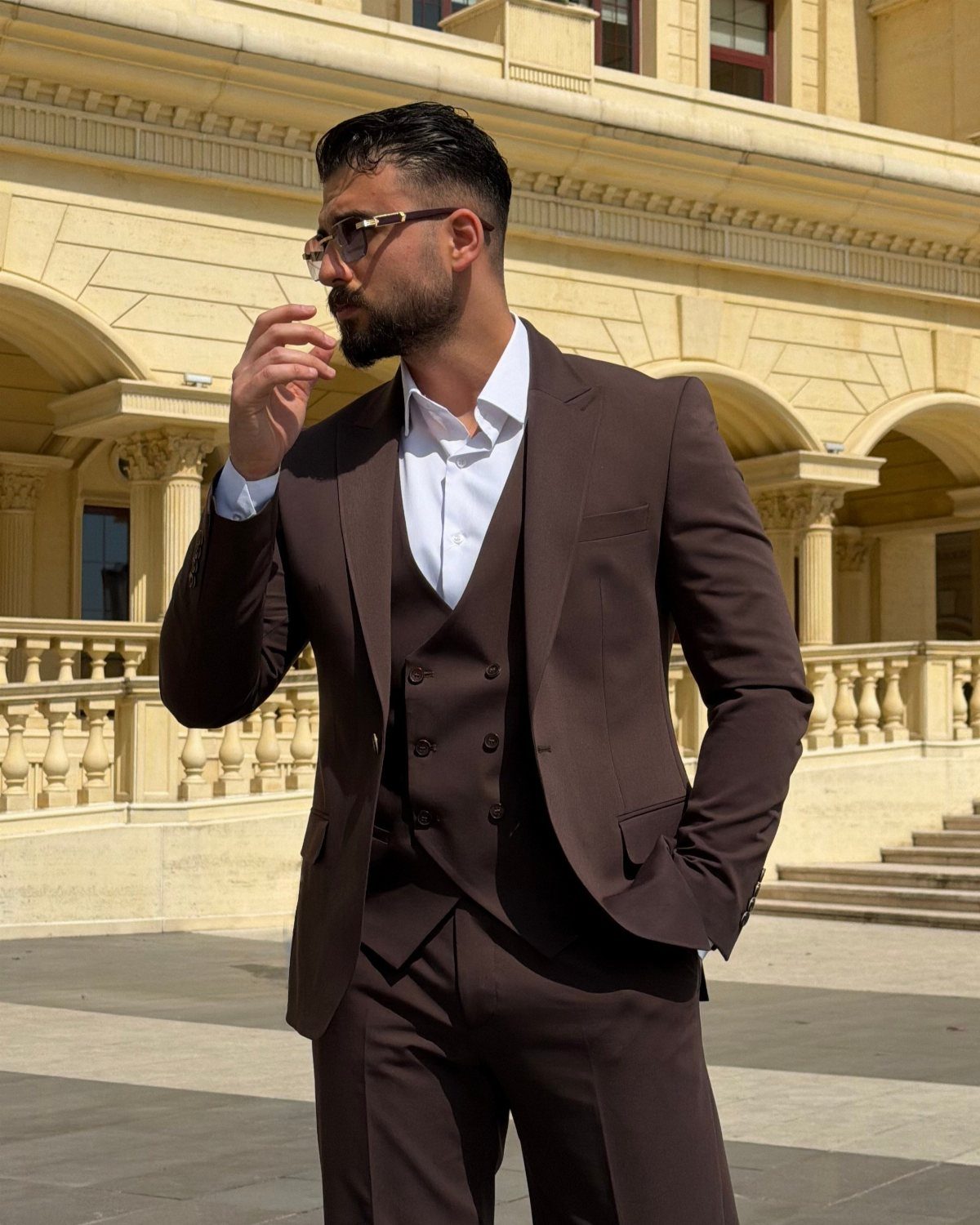
A tailored suit fits your shoulders, chest, and waist without excess fabric bunching or pulling. Off-the-rack suits rarely deliver that fit, so budget time and money for alterations even if you buy rather than custom order.
The three-piece suit here adds visual interest and formality through the waistcoat, which also lets you remove the jacket during the reception without looking underdressed. Brown suits offer more versatility than black for daytime and outdoor weddings.
Sleeve length should end where your wrist meets your hand, and trouser hems should break gently on your shoes with no pooling fabric.
6. Groom’s Attire
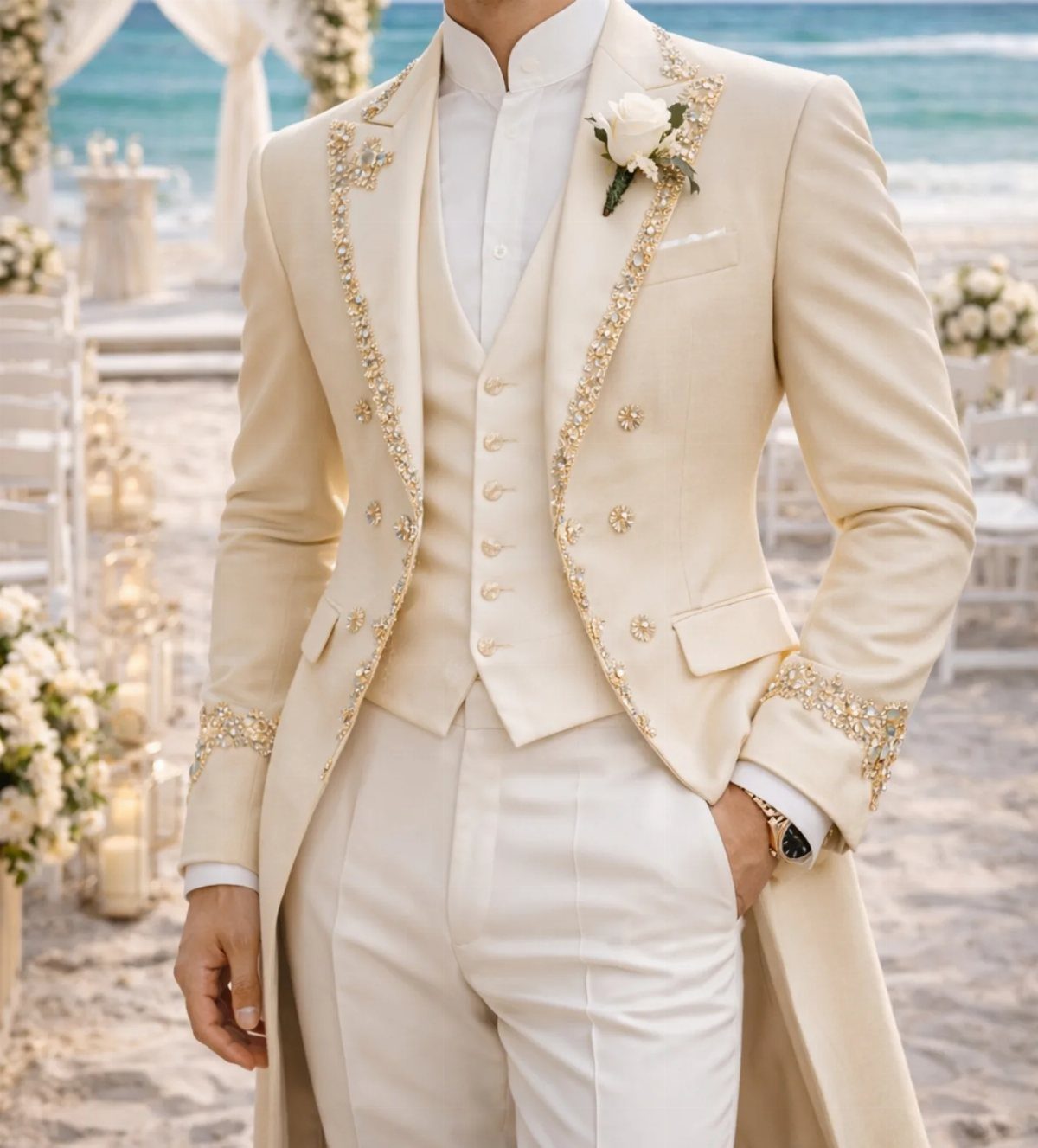
The groom’s outfit sets the tone for the entire wedding party and should reflect the formality and style of the event.
Embroidered details, a patterned waistcoat, or a unique fabric texture help the groom stand out from the groomsmen without clashing with the overall aesthetic.
A three-piece suit in cream or ivory works well for beach or destination weddings, where lighter colors feel more natural than dark wool. The embroidery here adds visual weight and texture that photographs beautifully in natural light.
Coordinate with your partner early so the level of formality and color palette align across both outfits.
7. Father of the Bride Attire
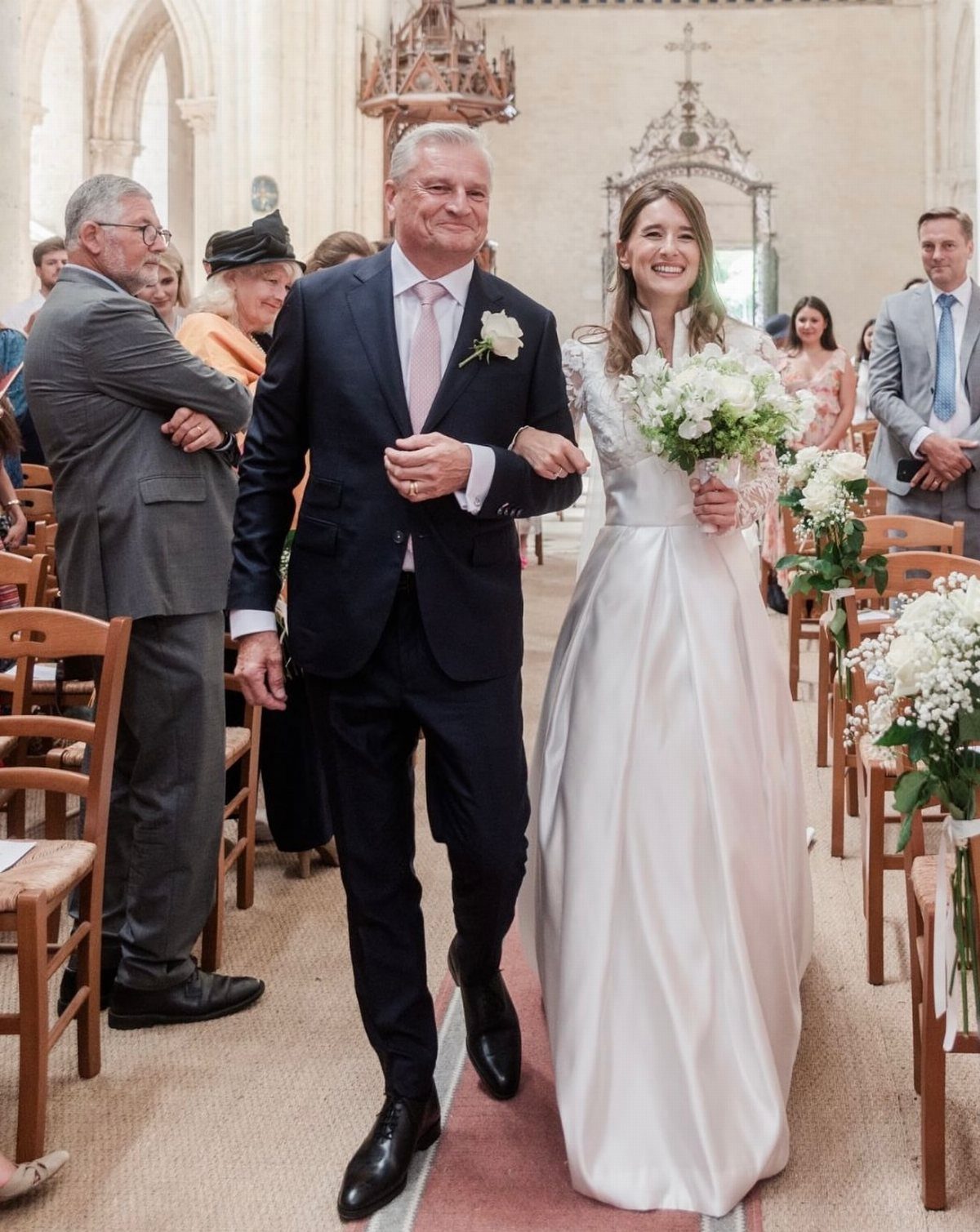
Navy suits in classic cuts work well for fathers of the bride because they photograph cleanly and stay out of the way of the groom’s outfit.
The pink tie here adds color that coordinates with common wedding palettes and keeps the overall look traditional.
Match your formality to the groom’s attire. If he wears a tuxedo, consider a dark suit with a waistcoat; if he wears a lighter suit, you can follow that lead.
Stick with black or dark brown leather dress shoes and skip patterns or textures that pull attention during the processional.
8. Colored Suits
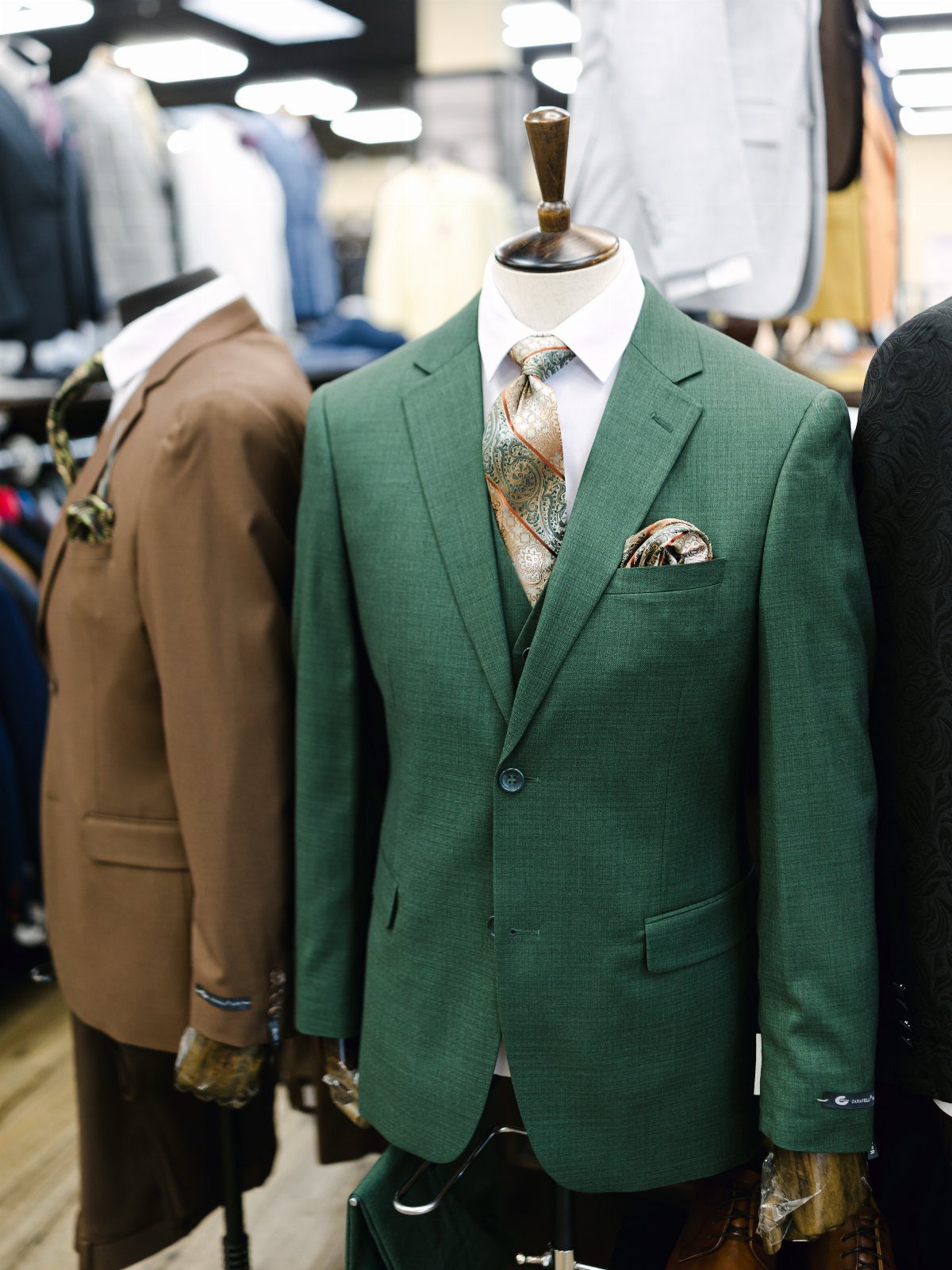
Green, burgundy, and blue suits offer color without looking costume-like when the fabric stays matte and the cut remains classic. A three-piece version in a rich tone photographs well and gives you structure that holds up across a long event.
Choose colors that work with your skin tone. Warmer skin usually pairs better with olive, rust, or tan, while cooler skin suits navy, charcoal, or deeper greens.
Patterned ties and pocket squares add detail if you prefer to keep the suit itself neutral.
9. Traditional Embroidered Sherwani
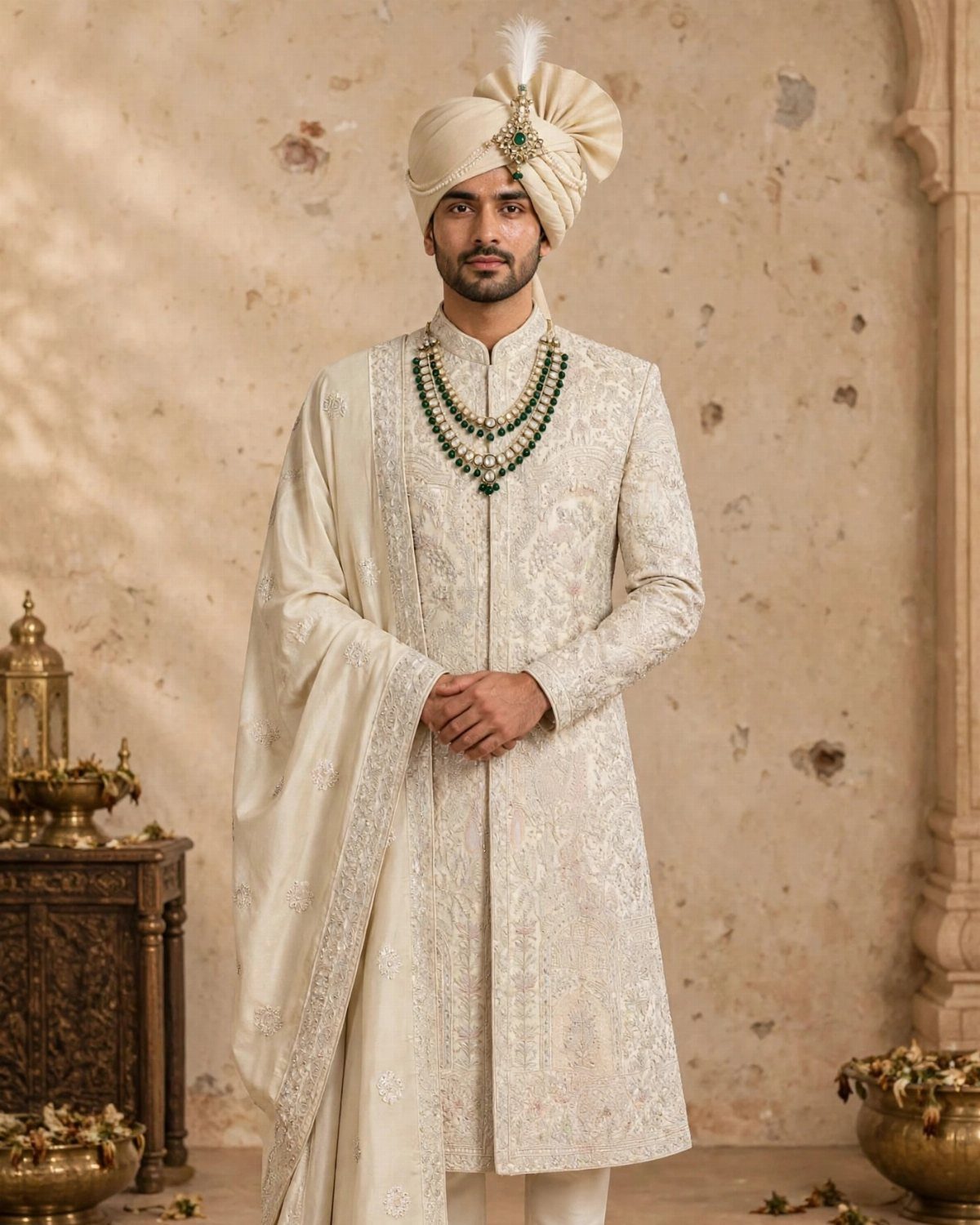
Sherwanis feature embroidered panels, a knee-length cut, and traditional tailoring that suits South Asian weddings and formal cultural celebrations.
Custom tailoring takes several weeks and costs more than renting, but owning a sherwani means you have formal attire for future events. Rentals work if you attend infrequently.
Embroidery density affects price and weight. Heavier embroidery looks more formal but can feel restrictive in warm weather.
10. Velvet Tuxedo Jacket
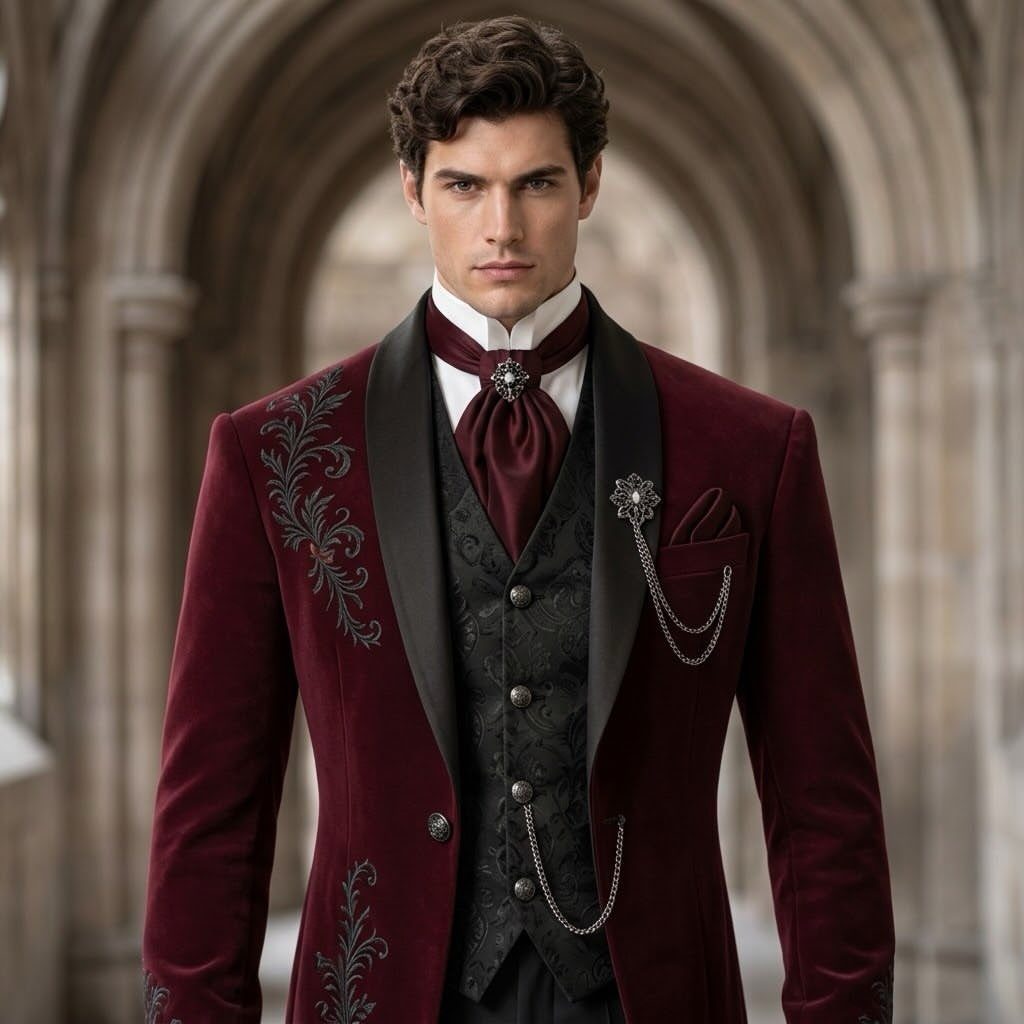
Velvet tuxedo jackets in deep colors like burgundy or forest green add texture and formality that wool cannot match.
The embroidery along the lapels and cuffs here lifts the look further, while the patterned waistcoat and cravat replace a standard bow tie with something more ornate.
Velvet photographs beautifully in low light and holds color depth that makes it stand out in evening or indoor weddings. The fabric does run warm, so save this option for fall or winter events.
Pair velvet with black trousers to avoid competing textures.
11. Smart Casual Separates
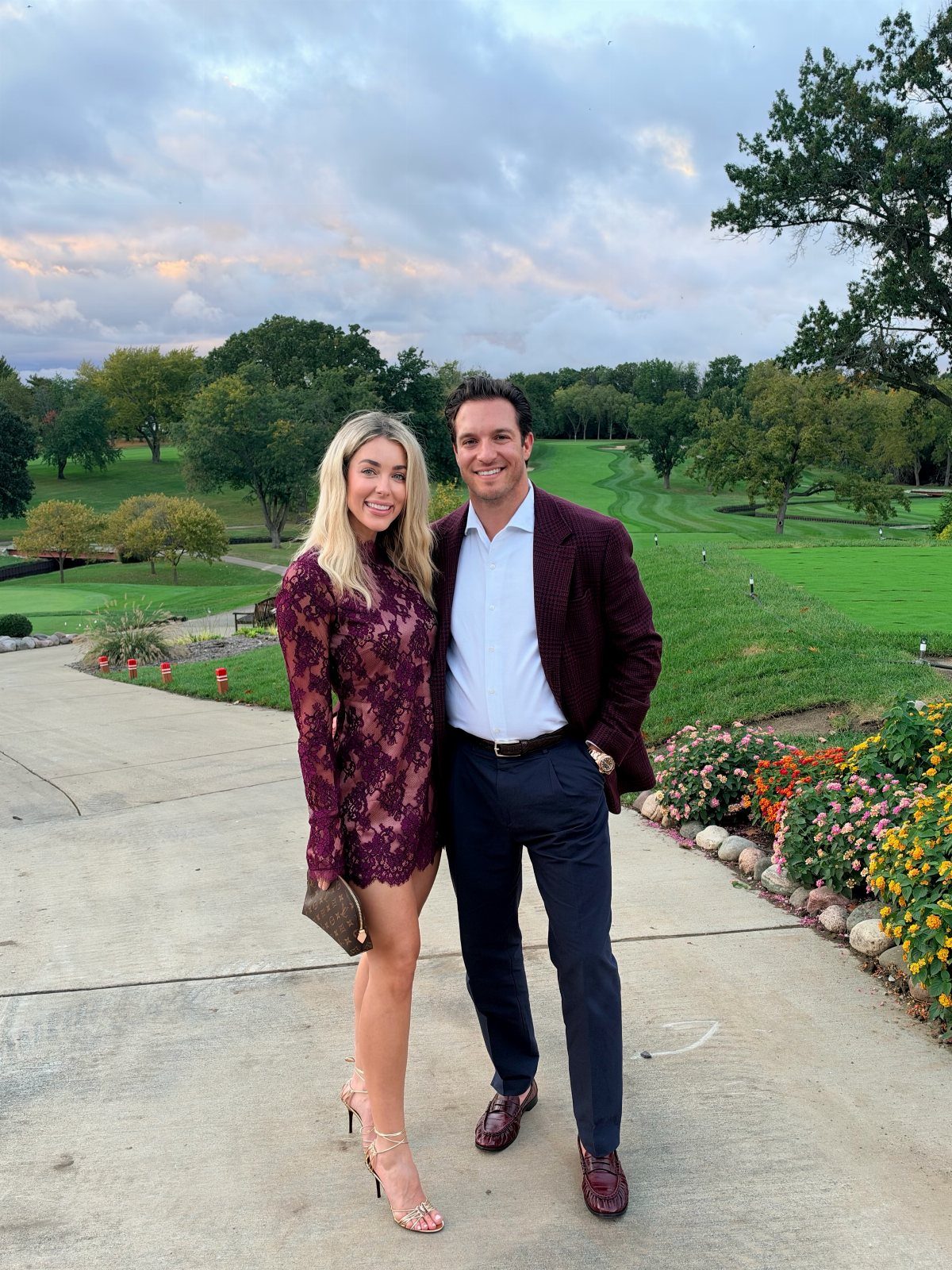
Separates let you mix formality without committing to a full suit.
A burgundy blazer paired with navy trousers gives you color and structure that feels intentional rather than mismatched, especially for daytime or outdoor weddings where a full suit reads too formal.
The colors should share a similar tone. Warm blazers pair with warm trousers, cool with cool, so the contrast stays controlled.
This option works well for semi-formal or garden weddings where the dress code leaves room for interpretation.
12. Three-Piece Turtleneck Suit
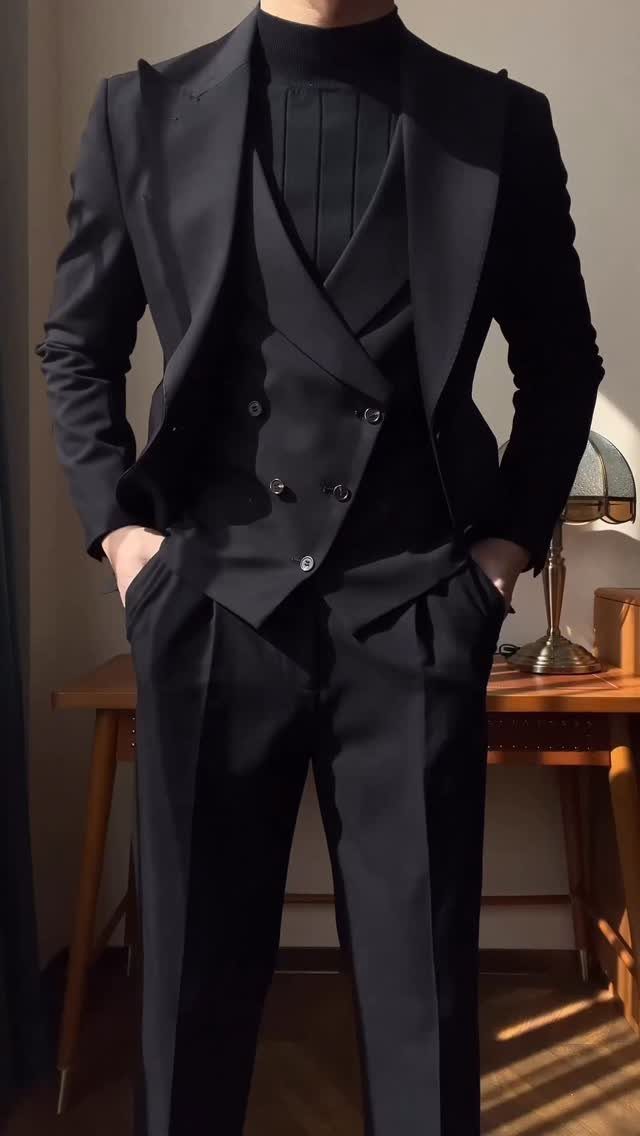
A fitted turtleneck under a three-piece suit replaces the dress shirt and tie with something sleeker and more modern. The monochrome black here creates a streamlined silhouette that suits evening weddings and minimalist aesthetics.
Fit matters more than usual. The turtleneck should sit close to your neck and body without bunching, and the waistcoat needs to cover the turtleneck’s hem completely.
This look skews younger and works better for contemporary weddings than traditional or formal celebrations.
Understanding Dress Codes
The invitation tells you what to wear, but the language stays vague enough that you need to translate it first.
Semi-formal allows a dark suit with a tie, where the formality comes from the fit and fabric rather than the garment itself.
Cocktail attire sits one step above semi-formal and opens the door to lighter colors, textured fabrics, and less rigid silhouettes.
Casual creates the most confusion because the range runs wide. A backyard wedding at 2 p.m. calls for something different than a casual evening reception at a restaurant, and reading the venue helps close that gap.
A suit rarely misses, but smart separates work when the couple has made the informality clear. Chinos with a blazer and dress shoes keep you polished without overdoing it.
When the dress code does not appear on the invitation, ask the couple directly rather than guessing.
Here’s the good news—it doesn’t really matter what type of frustratingly opaque instructions come appended to the bottom of your invitation. Most wedding dress codes still fall into three overarching categories: Formal, Semi-Formal, and honest-to-goodness Wear Whatever You Want.
— GQ
Common Mistakes to Avoid
Fit breaks an outfit before anything else does. A suit that pulls across the shoulders or bags at the waist reads as cheap no matter what the fabric cost, and trousers that pool around your shoes make you look shorter.
Skipping the dress code shows in photos.
Jeans, casual t-shirts, and athletic shoes belong nowhere near a wedding, even when the invitation says casual. That category still expects smart separates, a blazer, or at minimum a collared shirt with chinos and leather shoes.
Grooming matters as much as the outfit. A wrinkled shirt or scuffed shoes pull attention away from everything you did right, and facial hair looks intentional only when the edges stay clean.
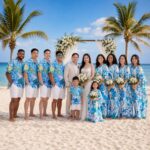
Context matters for color and pattern. A bold floral shirt works at a tropical destination wedding but clashes at a formal evening event.
Tailoring and Fit
Tailoring fixes what off-the-rack sizing cannot.
Alterations cost less than buying a size up and hoping it works.
Budget time for at least 2 fittings if you order custom or purchase a suit that needs adjustments. Sleeve length, trouser hem, and waist suppression make the biggest visual difference and should be handled first.
A well-fitting suit lets you move without restriction. If the jacket pulls when you cross your arms or the trousers feel tight when you sit, the fit needs correction before the wedding day.