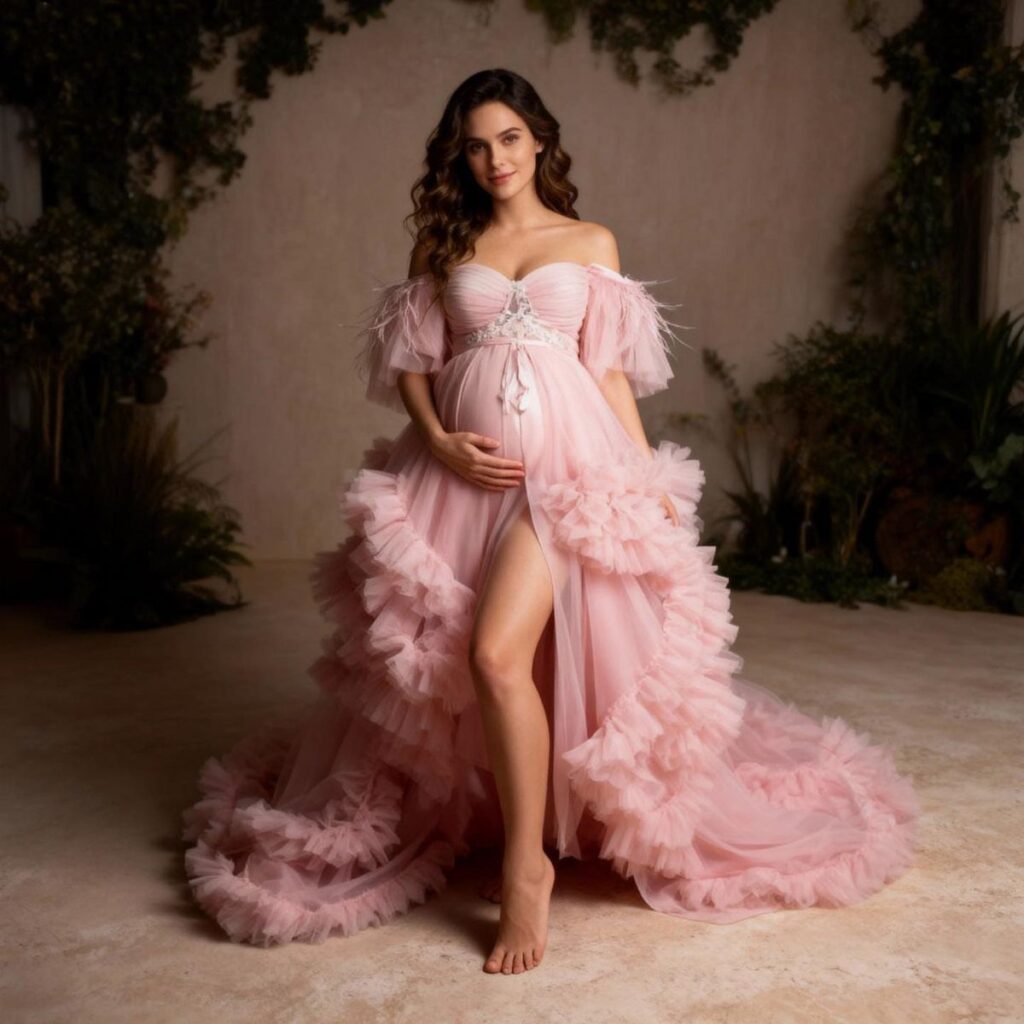
Empire waists, flowing maxis, fitted drapes and sparkly midis all photograph well when you’re pregnant, and the right cut depends on how much you want the bump to show.
Dresses that sit just below the bust or use soft drape give you room without looking oversized, while fitted styles with shoulder detail show your shape clearly.
Fabrics like ponte, crepe and stretch jersey follow your body through a full day of celebration without the restriction of taffeta or heavy brocade.
1. Empire Waist Dresses
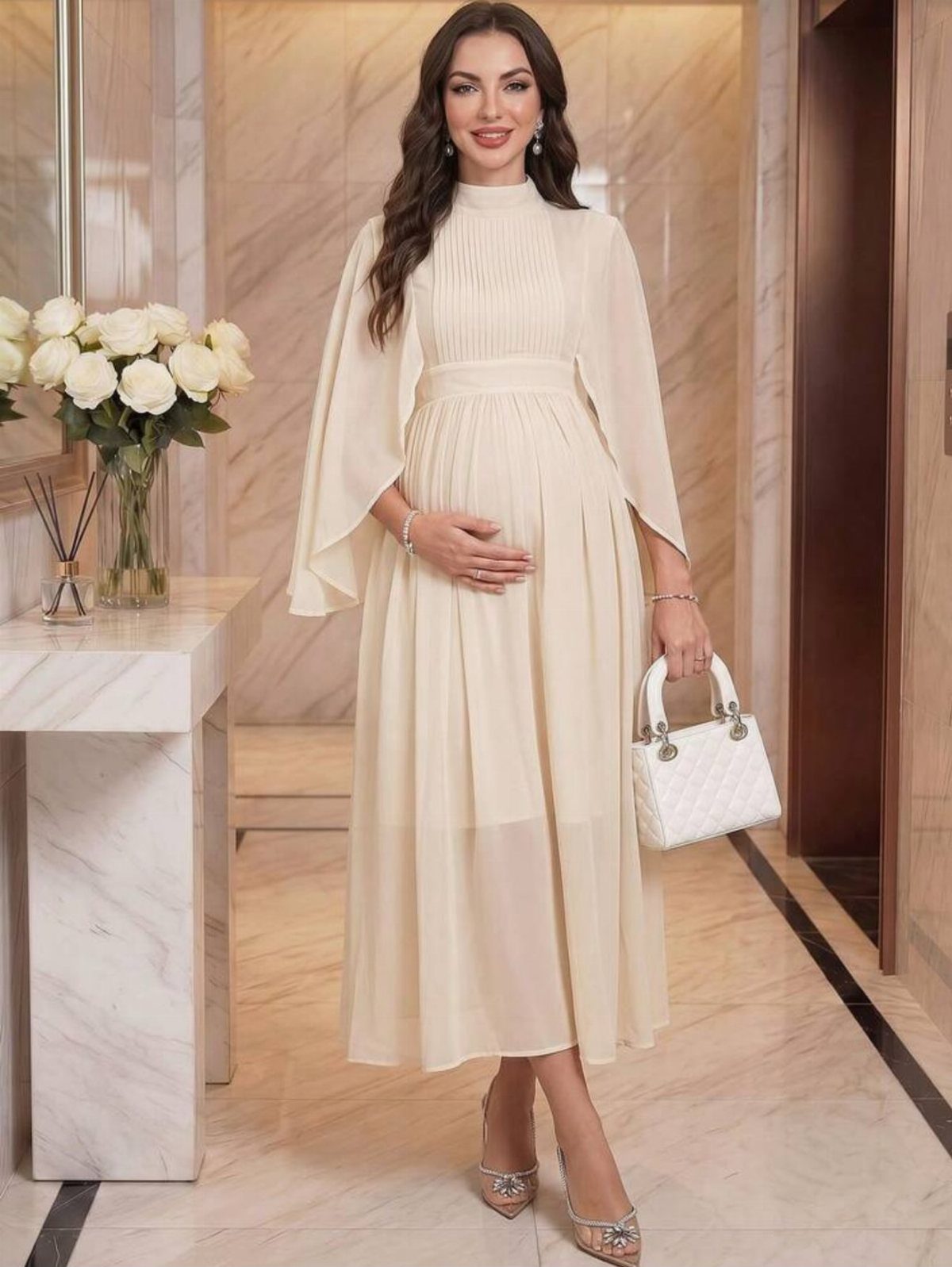
The seam sits just below the bust, which means the fabric skims over your belly instead of clinging. That gives you room to grow without feeling restricted, and the silhouette still reads as fitted through the shoulders and neckline.
A slightly heavier fabric holds its shape better than something too drapey.
Look for ponte, crepe or stretch jersey. Those materials support the structure without adding bulk, and they move with you through a full day of sitting, standing and dancing.
2. Maxi Dresses
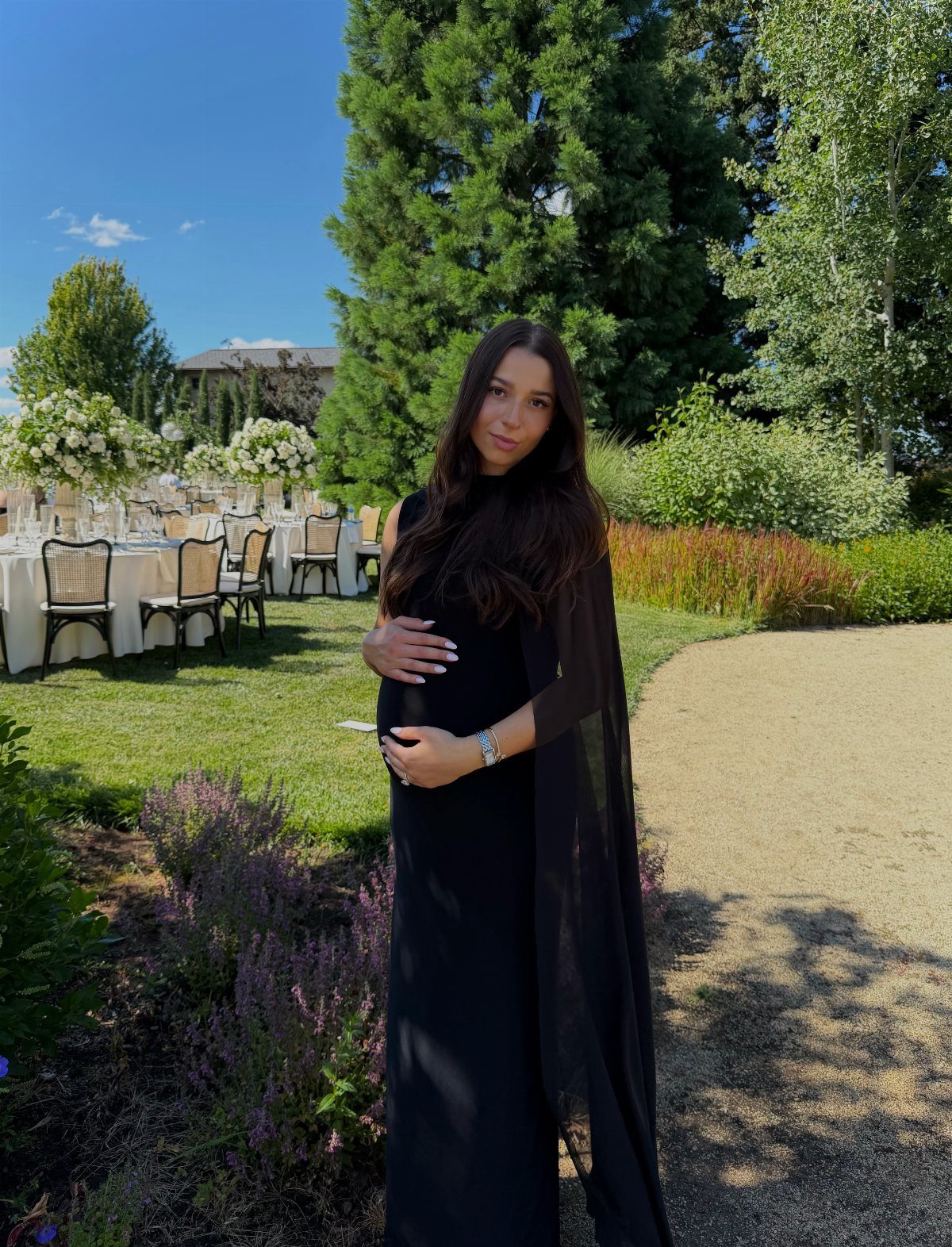
A long hemline covers your legs completely, which makes the proportions feel balanced even as your bump grows. The dress length grounds the silhouette, and you get coverage without having to adjust fabric all evening.
Black works for almost any dress code and keeps the focus simple.
If the wedding calls for something brighter, jewel tones or deep navy photograph just as well. Choose a fabric with some weight so the skirt falls straight instead of clinging at the hips.
3. Flowy Dresses
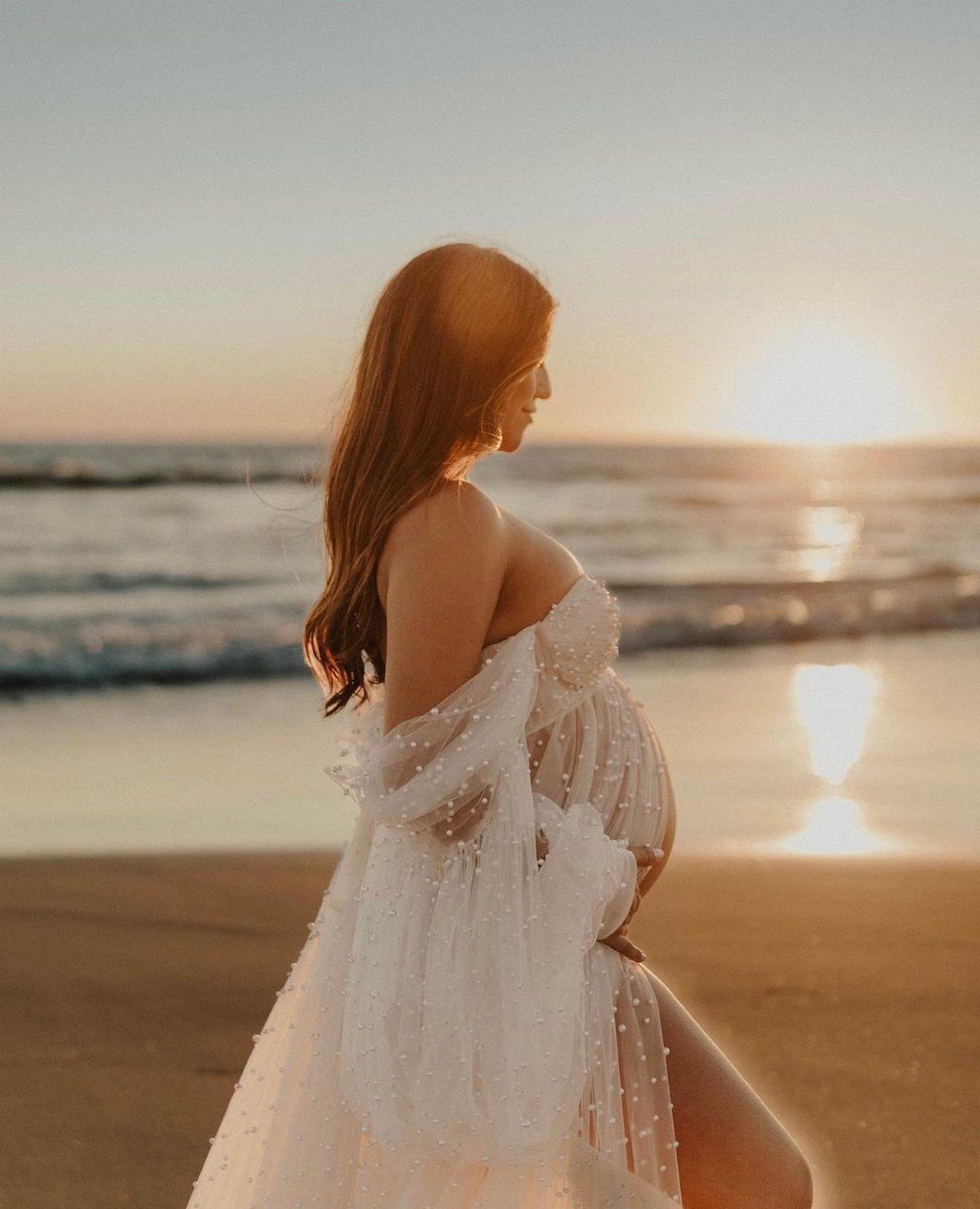
Soft, unstructured fabric gives you space to move and breathe, and it drapes over your bump without pulling tight anywhere.
That makes flowy dresses one of the most comfortable options for a full day, especially if you’re attending an outdoor wedding in warm weather.
Pearl or bead embellishment adds formality without requiring a fitted bodice.
The texture catches light, which elevates the look for evening ceremonies. Stick with lightweight materials like chiffon or silk if you’re wearing this in summer.
4. Maternity Saree Outfit
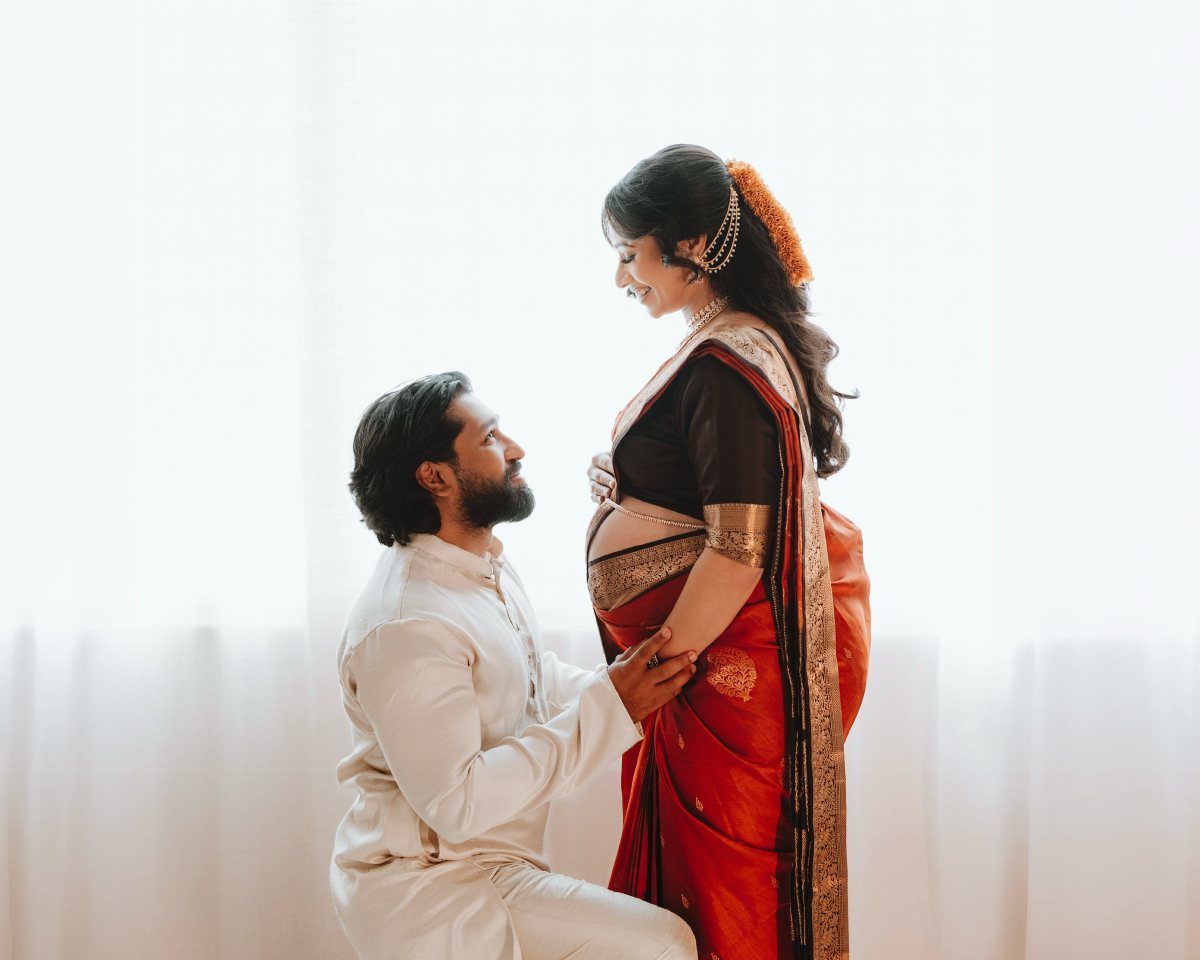
A saree wraps and drapes around your body, which gives you complete control over the fit. The pleating and pallu adjust to sit over your bump, and the drape moves instead of pulling tight.
Red and black combinations read as formal and traditional, which suits evening weddings and religious ceremonies.
The blouse can be tailored to fit your current measurements, and the skirt portion ties at the waist so you can adjust it as needed. Silk holds its structure better than lighter fabrics.
5. Strapless Vibrant Evening Gown
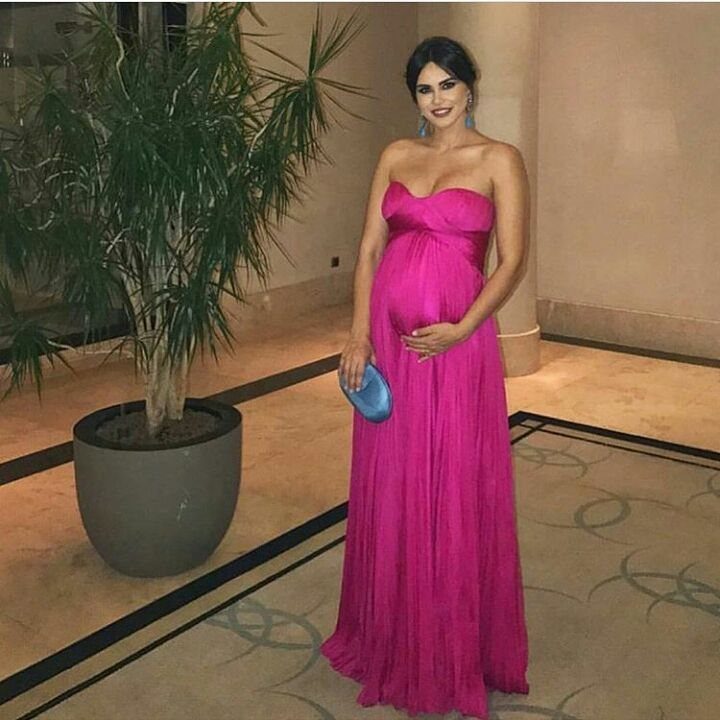
A strapless bodice stays in place if it’s fitted through the ribs and has internal boning or grippy elastic at the top edge.
The skirt falls straight from the empire or natural waist, leaving room for your bump without extra fabric where you don’t want it.
Bright pink makes a statement at evening weddings, and the saturated color photographs beautifully in low light.
Pair it with a contrasting clutch in blue, green or metallics to break up the single color and add visual interest at your hands.
6. Form-Fitting Draped Shoulder Dress
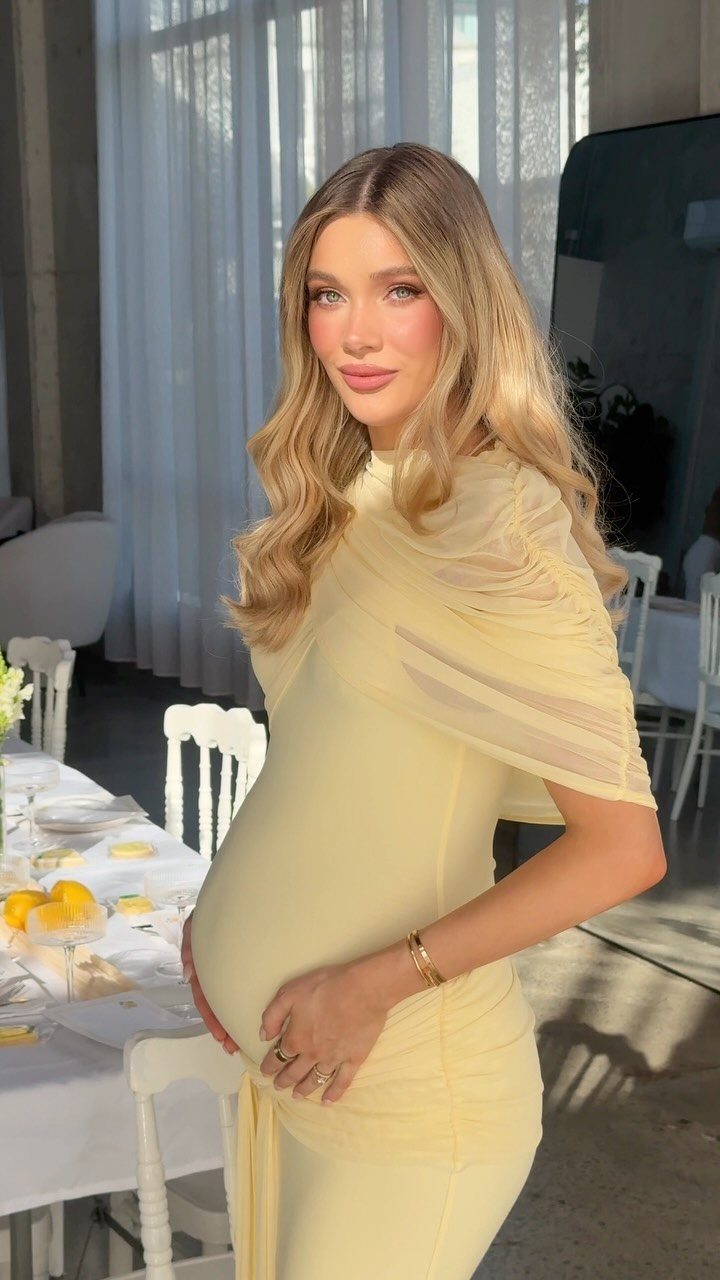
Draped shoulders add coverage and visual interest at the neckline, which balances a fitted silhouette through the body. The fabric gathers softly over your arms and shoulders, so you get structure without straps digging in or requiring a strapless bra.
Pale yellow works for daytime and garden weddings, and it photographs well in natural light.
The fitted shape shows your bump instead of hiding it, which suits anyone who wants a more tailored look. Choose a stretch fabric with some recovery so the dress holds its shape through the day.
7. Sparkly Bell-Sleeve Midi Dress
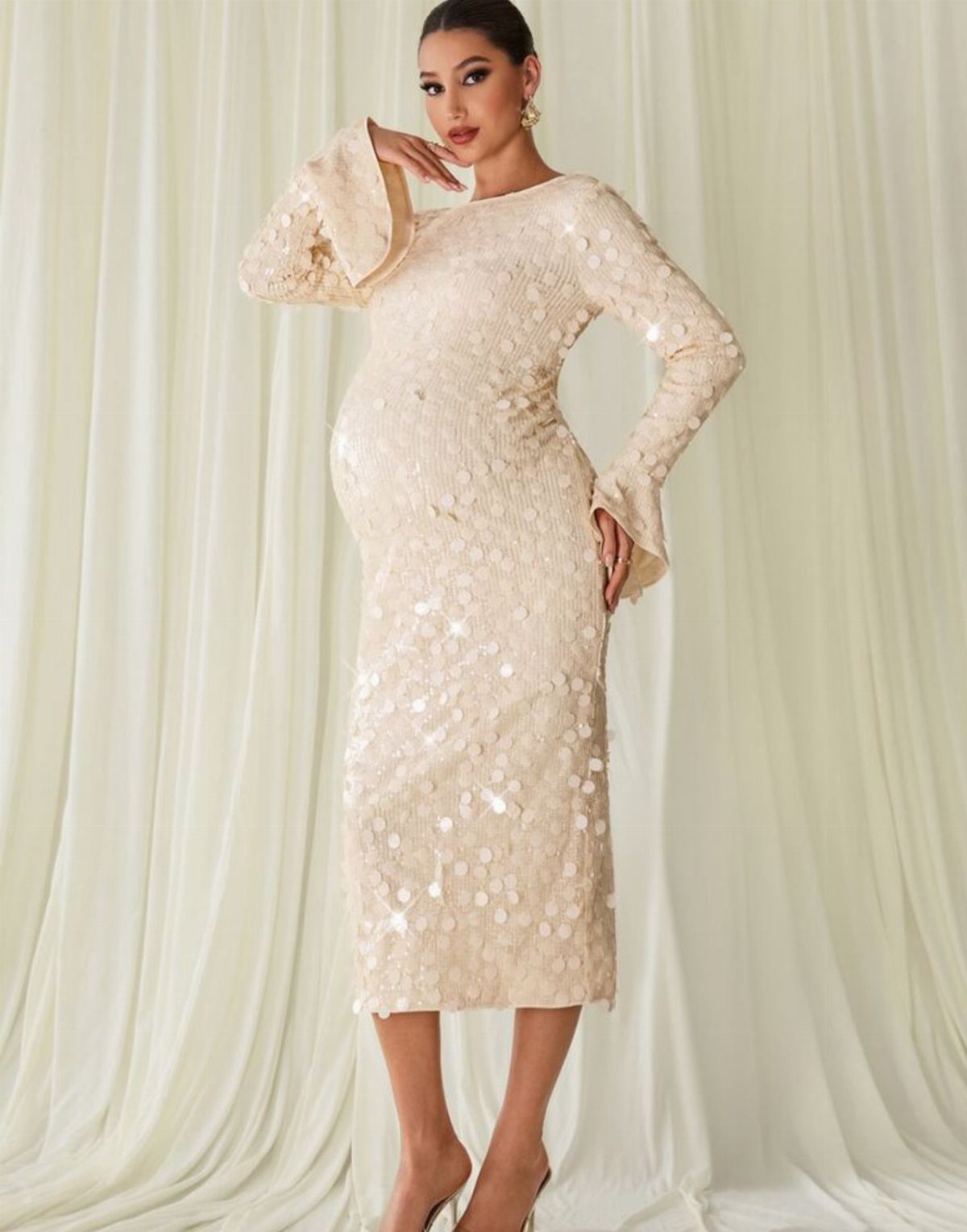
Sequins catch light at every angle, which makes this particularly strong for evening ceremonies and receptions with low lighting.
Bell sleeves balance the fitted silhouette through your torso and bump. The flared fabric draws the eye outward at your wrists, and the extra coverage means you can skip a wrap or jacket even if the venue runs cold.
A midi length keeps the proportions grounded. Metallic or neutral heels extend the line without competing with the sparkle.
Prioritize Comfort and Fit
Weddings keep you on your feet for hours, so the fabric matters as much as the fit.
Jersey, knit and smocked materials stretch and recover without losing their shape, which means they move with you instead of pulling tight when you sit or stand.
Skip taffeta and heavy brocade. Those fabrics hold structure, but they don’t breathe and they won’t adjust as your body changes between now and the wedding date.
If your usual size feels snug through the ribs or hips, go up one. A size that fits comfortably now saves you from adjusting fabric all evening, and alterations can bring it in later for another occasion.
Sizing Considerations
Maternity sizing typically matches your pre-pregnancy size. Designers build in extra room through the belly and adjust proportions for the way your body changes, so if you wore a size 8 before, you’ll likely wear a size 8 in maternity clothes.
That said, sizing up can give you more room through the ribs and hips, especially if the wedding is still weeks away and you expect to grow before then.
Frequently Asked Questions
What length dress is best for a pregnant wedding guest?
Maxi dresses work best because the long hemline balances your proportions as your bump grows and covers your legs completely. A floor-length hem means you can sit, stand, and move without tugging anything back into place.
Can I wear a non-maternity dress while pregnant?
Yes, empire waist and flowy styles work well even if they’re not labeled maternity. Look for fabric that stretches and bounces back, like jersey or ponte, and skip anything with a seam at the natural waist.
How early should I order a maternity wedding guest dress?
I’d order 4 to 6 weeks out so you have time for shipping and a quick hem if you need it.