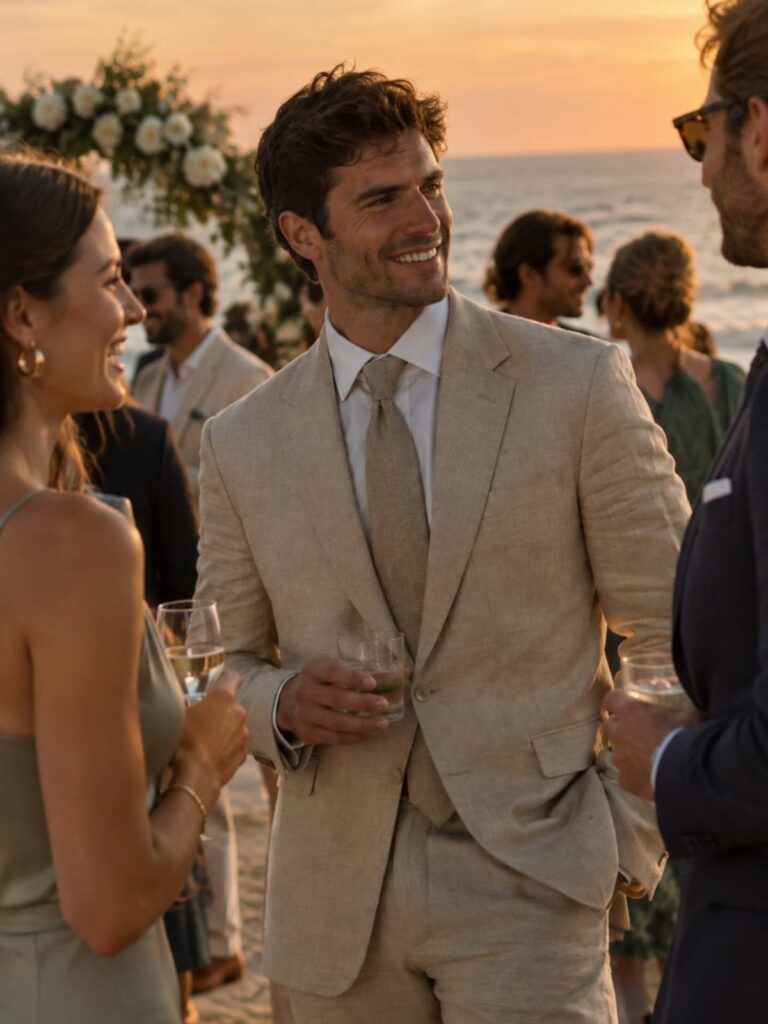
Linen suits range from solid tan three-pieces that photograph cleanly in full sun to double-breasted styles and linen blazers with drawstring trousers, and the choice comes down to the dress code on the invitation and how much heat you’re willing to tolerate.
A double-breasted jacket reads more formal than a blazer paired with drawstring trousers, but both work as long as the shoulders sit flat and the sleeve lands right at the wrist bone.
1. Solid-colored Linen Suits
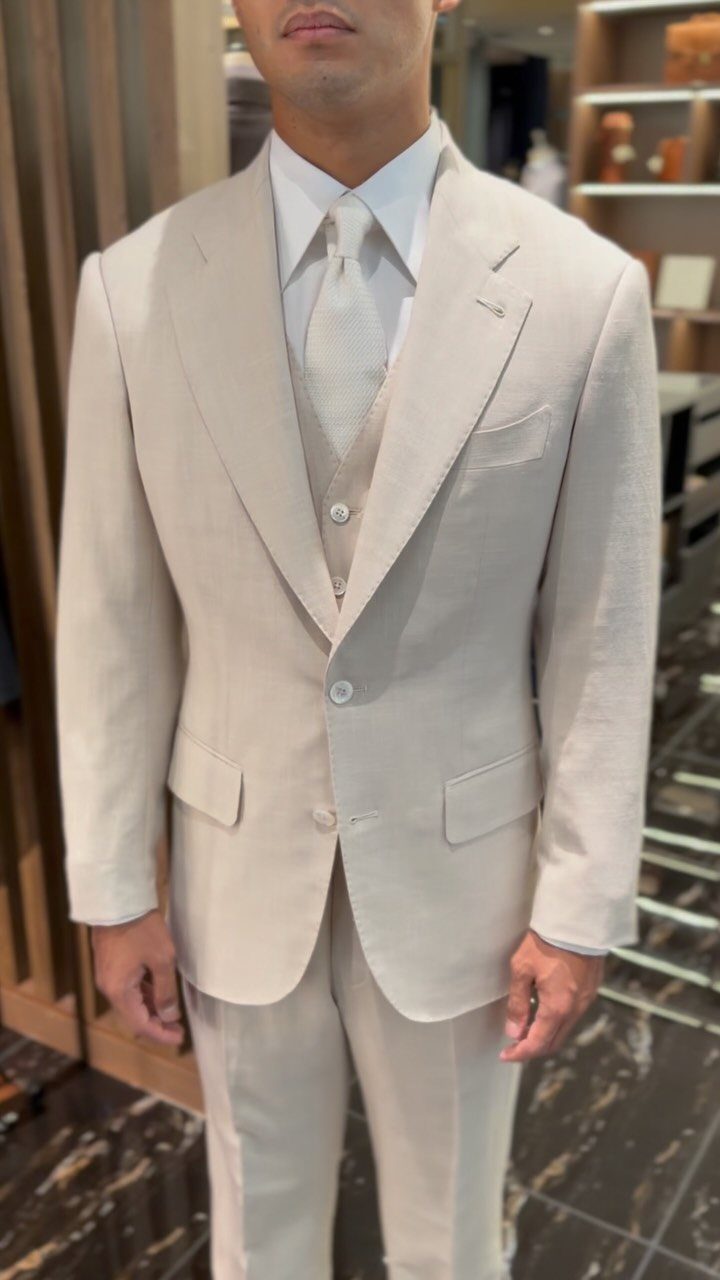
A single, unbroken color across the jacket, trousers and vest keeps the look clean and formal without pulling attention away from the ceremony itself.
Beige and tan remain the most reliable choices for warm-weather weddings because they photograph well in full sun and pair easily with any shirt color you already own.
If the venue leans formal, stick with the solid rather than reaching for a pattern; linen’s texture gives you enough visual interest on its own.
The three-piece version here adds structure without added weight, which matters when you’re standing through a full outdoor ceremony.
2. Coordinate with Wedding Party
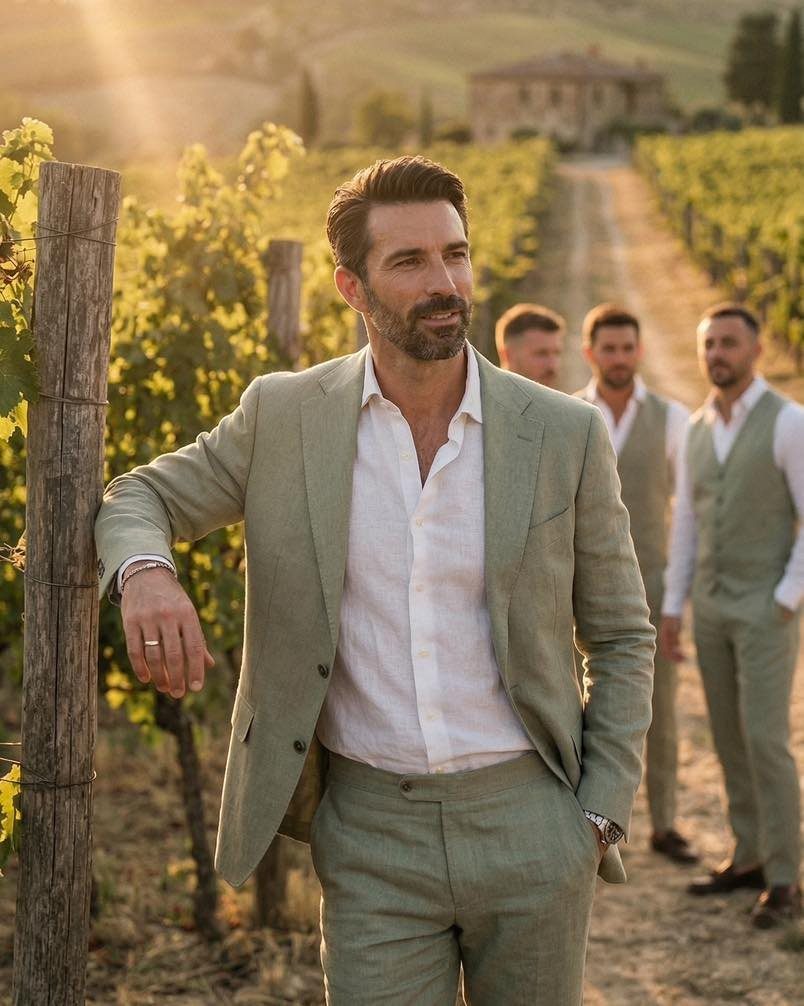
Matching the groomsmen in fabric and color gives the wedding party a unified look in photos, and linen makes that coordination possible without anyone overheating.
The light green here works because it’s pale enough to stay cool but saturated enough to read clearly in pictures.
If you’re coordinating, ask the groom or planner for the exact shade early; linen dyes vary between suppliers, and ordering from the same place keeps everyone aligned.
Vests keep the formality level consistent across the group, even when jackets come off during the reception.
3. Custom-fitted Linen Suit
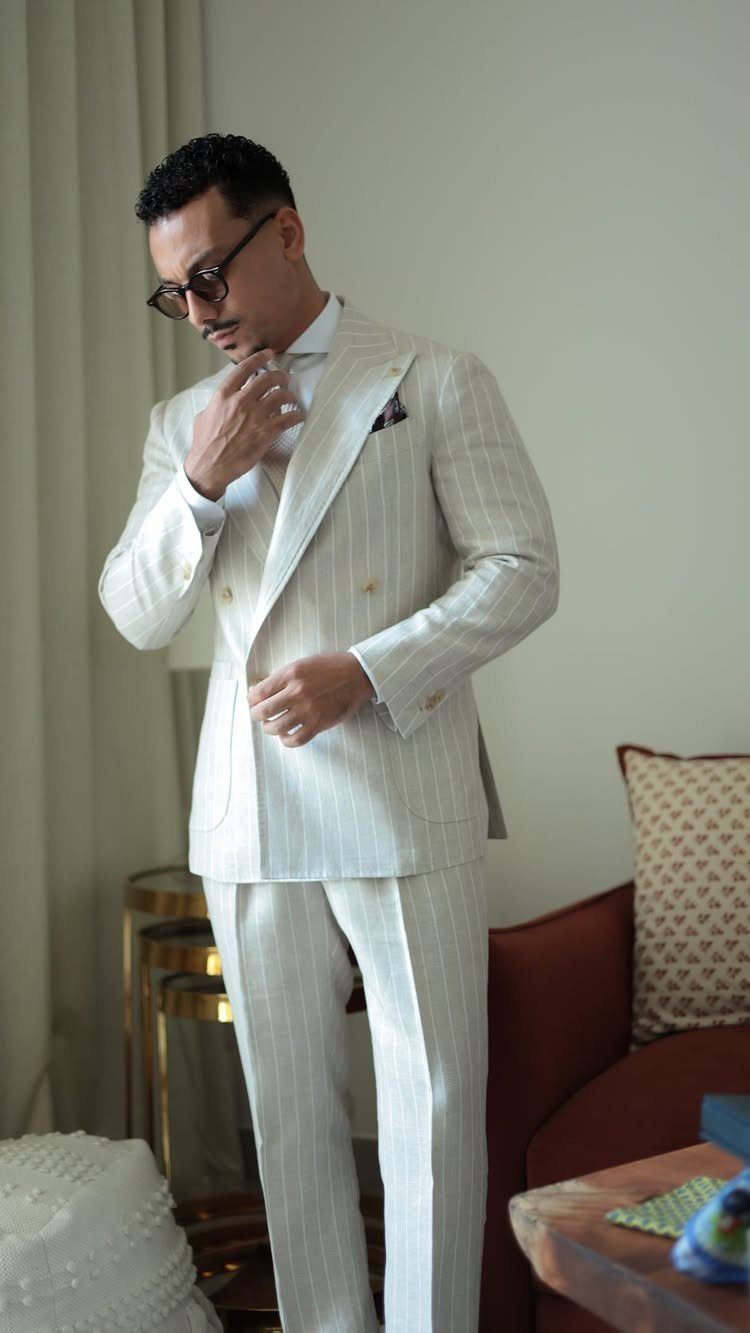
Linen drapes differently than wool, so a suit cut for your actual measurements will sit better through the shoulders and fall cleanly at the hem instead of bunching or pulling.
A tailor adjusts sleeve length, trouser break and jacket waist to your frame, which makes a bigger difference in linen because the fabric doesn’t hold its shape the way structured suiting does.
The pinstripe here adds formality without pattern weight, but the fit is doing most of the work.
If you’re buying off the rack, budget for alterations; hemming and sleeve adjustments are standard and usually finish quickly.
4. Light Colors

Light beige reflects rather than absorbs heat, which keeps you cooler during an outdoor ceremony and keeps the suit from looking heavy against a beach backdrop.
Sand, cream and pale gray all photograph well in bright sunlight without washing out your skin tone, and they pair cleanly with a white or light blue shirt.
Darker linens hold their structure better, but at a beach wedding the tradeoff tilts toward comfort and setting.
The open collar here works for a casual beach ceremony; add a tie if the invitation specifies formal attire.
5. Wrinkles as Charm
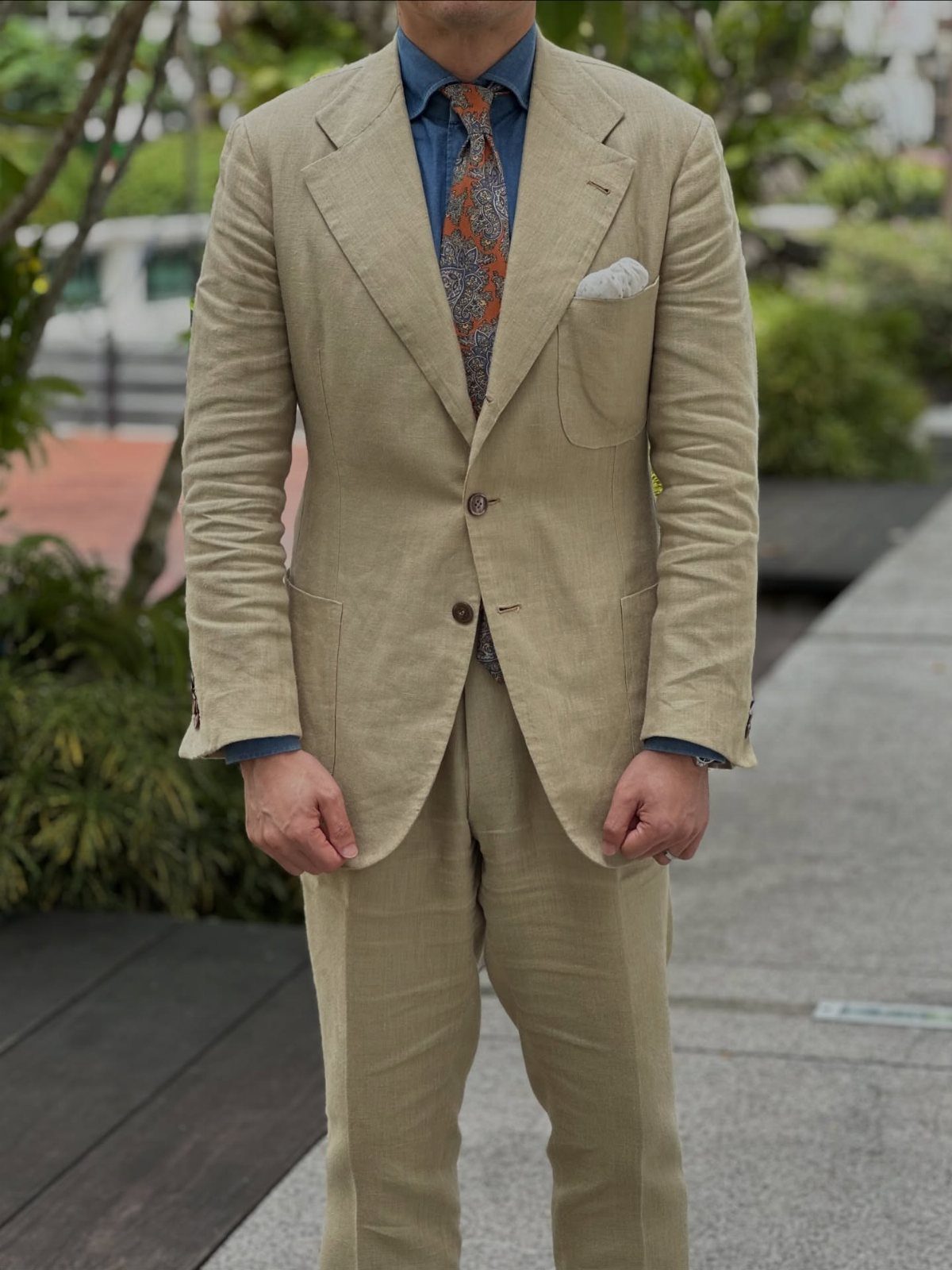
Linen creases the moment you sit down, and trying to steam it flat before every photo will cost you more time than the wrinkles ever will.
The fabric’s natural texture comes from its weave, and the slight rumpling that develops through the day is part of wearing it, not a flaw to fix.
A tan or beige suit shows wrinkles less than white or very dark colors, but even when they’re visible, they read as casual rather than sloppy if the fit is right.
Hang the suit the night before and let gravity do most of the work; that’s enough.
6. Linen Blazer with Drawstring Trousers
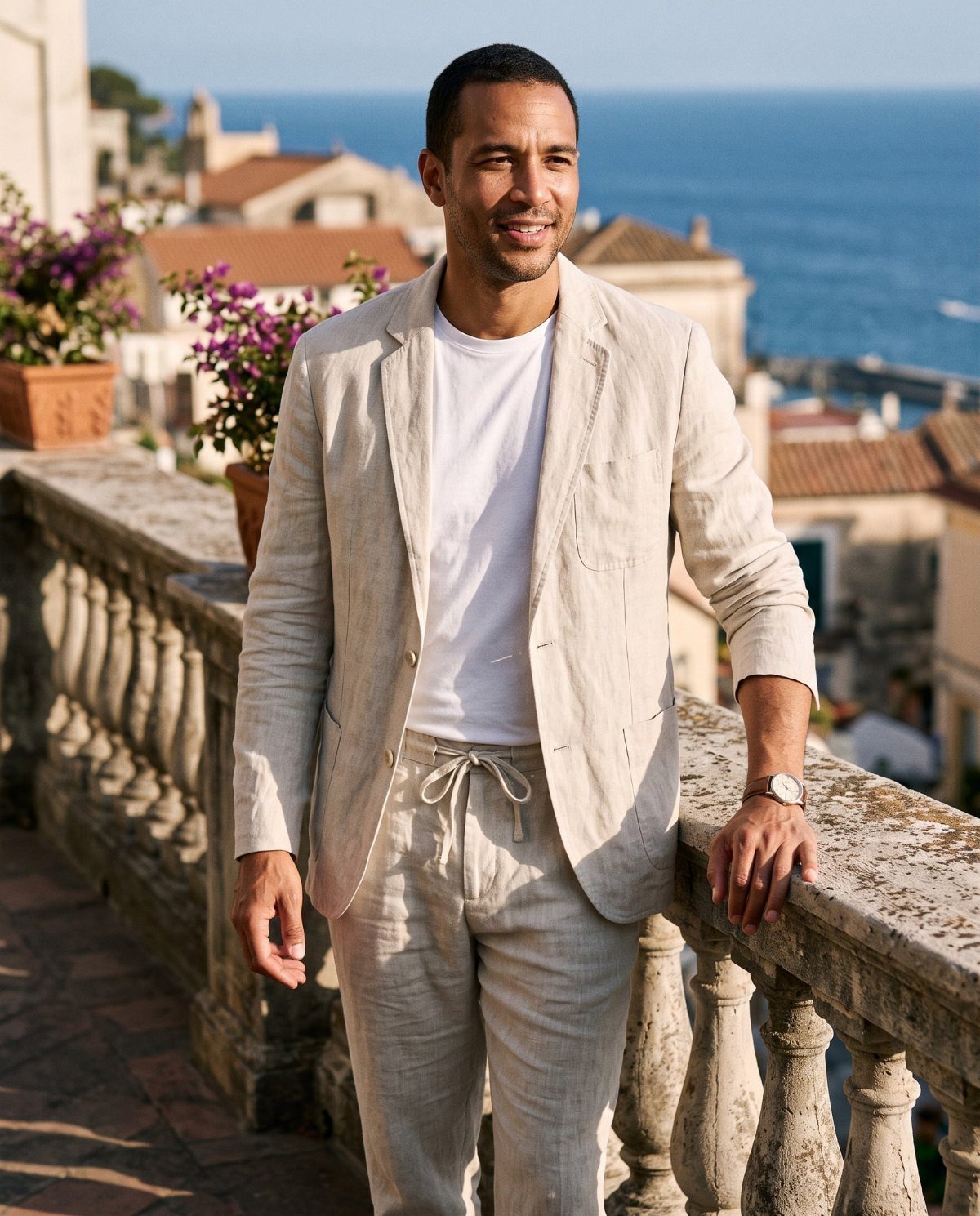
A blazer over drawstring trousers gives you the structure of a suit jacket with the comfort of elastic-waist pants, which works for a semi-formal wedding where you’ll be sitting through a long reception.
The drawstring keeps the trousers secure without a belt, and the relaxed fit through the leg balances the tailored cut of the blazer.
A white t-shirt keeps it casual; swap in a linen button-down if the dress code leans slightly more formal.
This version works best at destination weddings or outdoor celebrations where the invitation signals a relaxed tone.
7. Three-piece Linen Suit
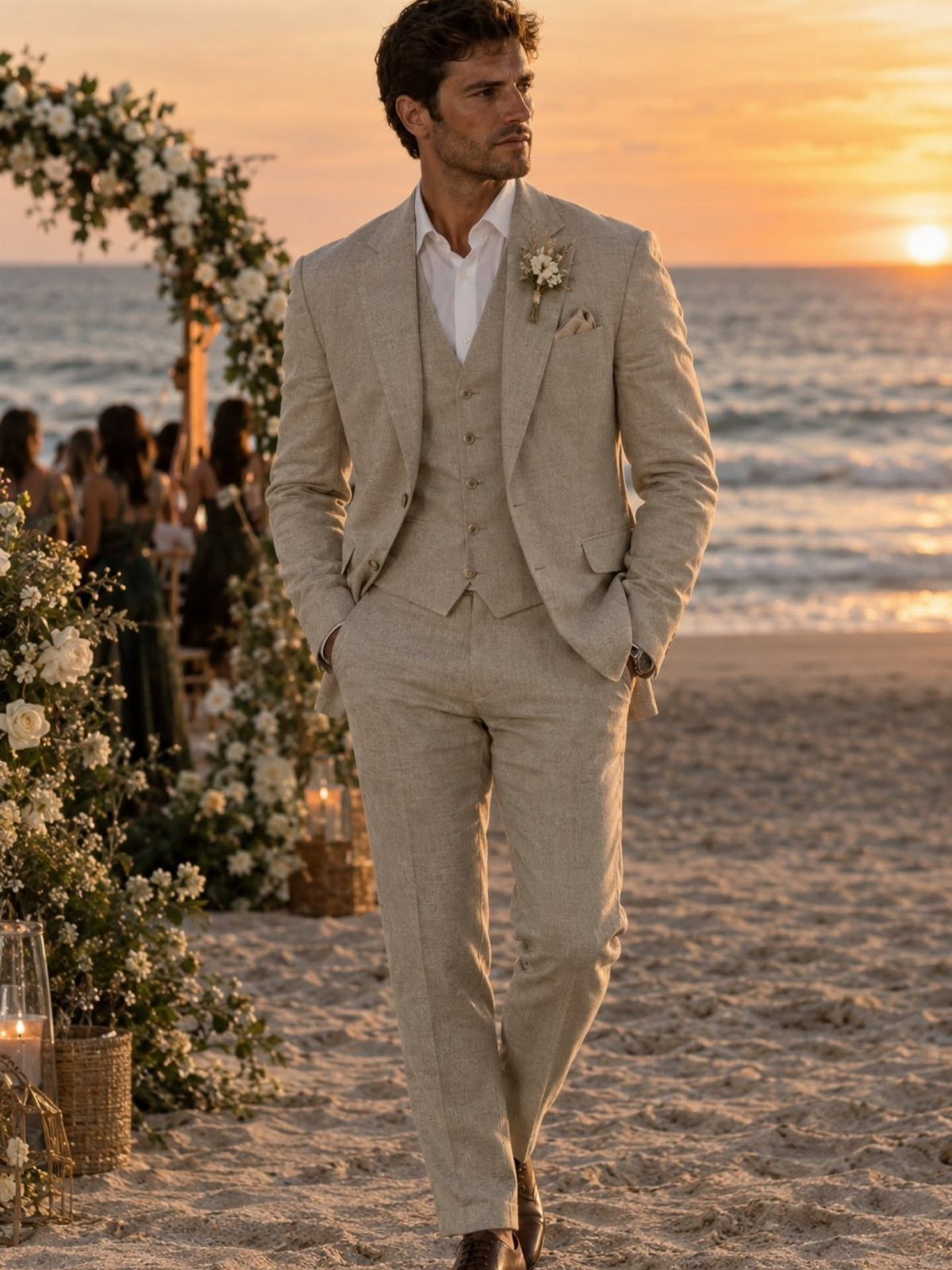
The vest layer keeps you looking formal when the jacket comes off, which happens at most outdoor receptions once the sun drops and the dancing starts.
A three-piece in linen adds that extra layer without the weight of wool, and the structure reads as intentional rather than overdressed at a beach or garden wedding.
The vest also covers your shirt back and keeps the waistband hidden, which matters in candid photos when you’re moving around.
Tan and beige vests stay cooler than darker colors and work with nearly any shirt you pair them with.
Ditch the tuxedo and opt for a pure linen suit—and then proceed to get blissfully sloshed off the gratis bubbly while the rest of the guests shvitz through their super 110s.
— GQ
8. Double-breasted Linen Suit
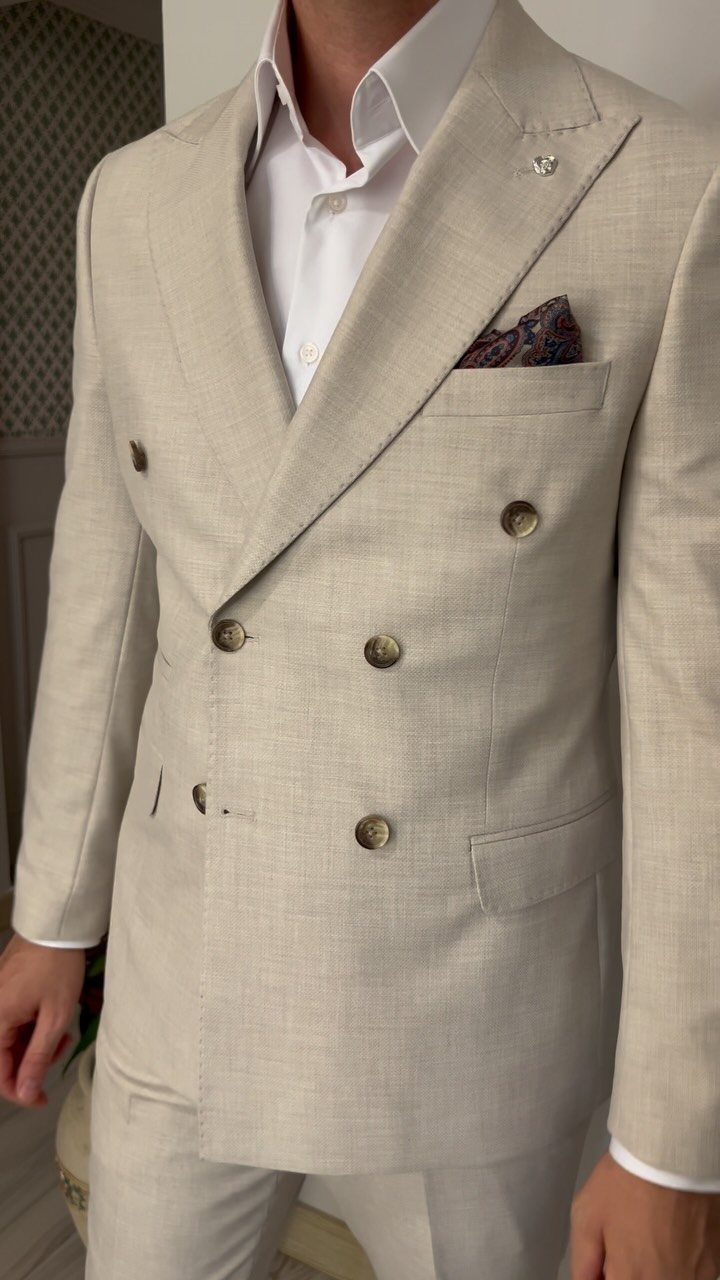
The extra buttons give the jacket a more formal silhouette, and the peaked lapels make your shoulders look broader without adding actual fabric weight.
Double-breasted cuts work best on taller frames because the button stance creates vertical lines; if you’re under 5’9", a single-breasted jacket with notch lapels will usually sit better.
The overlap at the front also means you can’t leave it open casually the way you would a two-button, so plan to keep it fastened through the ceremony.
The pocket square adds a finished detail that lets the jacket’s structure stay front and center.
9. Windowpane Check Linen Suit
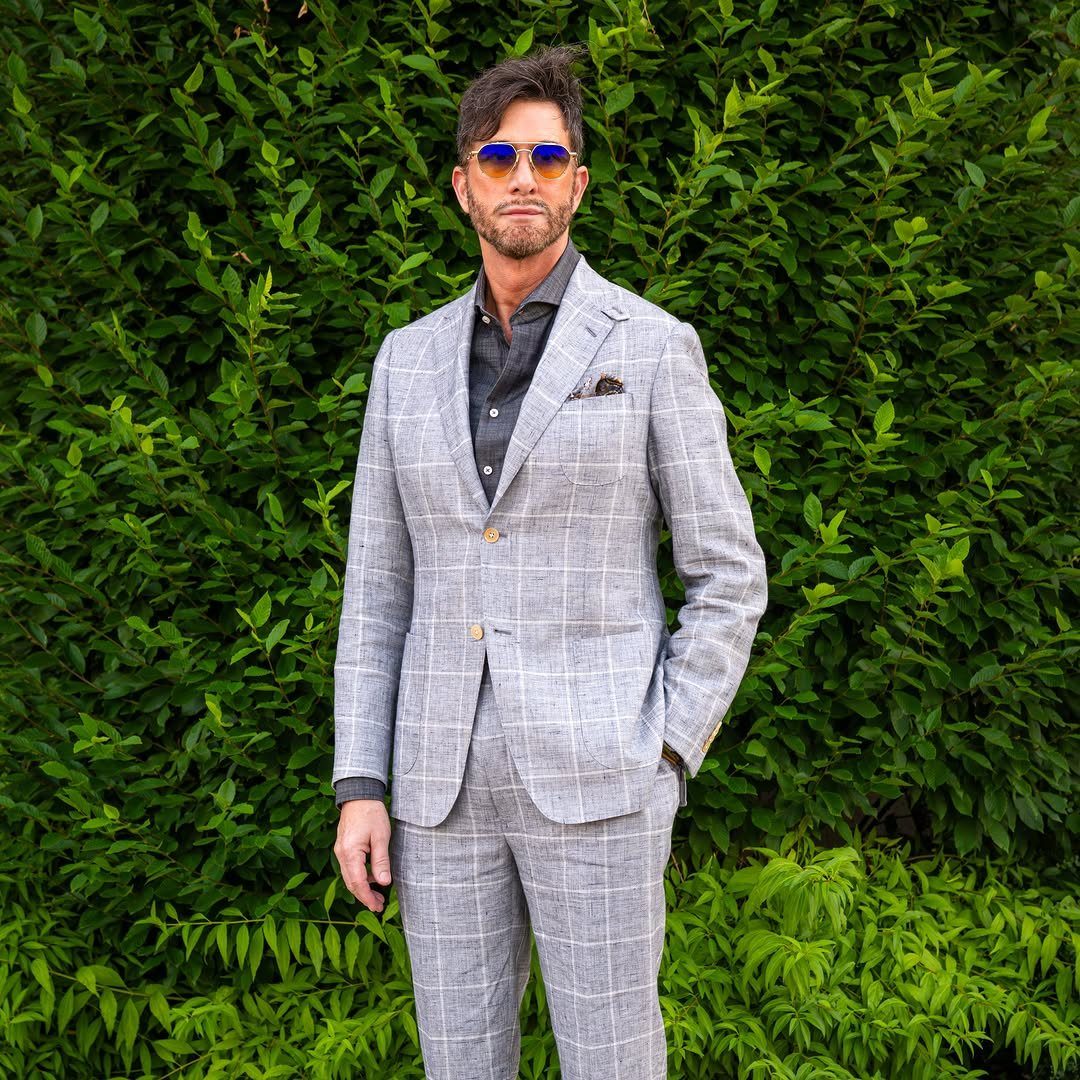
The grid pattern gives you visual interest without the formality of a solid suit, which works for a daytime wedding or a celebration with a garden or vineyard setting.
Grey linen with a windowpane check reads as semi-formal rather than business, and the darker shirt grounds the look so it doesn’t feel too light.
The pattern shows up clearly in photos but stays subtle enough that it won’t dominate group shots with the wedding party.
Sunglasses work here because the setting is outdoor; skip them indoors or during the ceremony itself.
Care for Linen Suits
Professional dry cleaning every 4–6 wears keeps the fabric intact and the structure where it should be.
Between cleanings, hang it on a wooden hanger and give it a full day to air out after you wear it; linen needs that time to shed moisture and relax back into form.
A suit brush removes surface dirt without abrading the weave, and a quick pass after each wear keeps dust from settling into the fabric.
For wrinkles, use a steamer rather than pressing the iron directly against linen. The steam relaxes the fibers without flattening the texture that gives linen its character.
If you’re traveling to the wedding, roll the suit rather than folding it to avoid hard creases. Unpack and hang it as soon as you arrive, then steam it lightly before the ceremony.
Fit and Tailoring
The shoulders should sit flat without pulling or bunching across the back.
If the seam extends past your natural shoulder line or stops short of it, the jacket is the wrong size; tailoring cannot fix the shoulder without rebuilding the entire upper.
The jacket should cover your backside, and sleeves should land right at the wrist bone so about half an inch of cuff shows when your arms are at your sides.
Linen does not hold a pressed crease the way wool does, so a straight leg without excess fabric works better than a wide break that folds and creases unevenly.
Wedding Attire Appropriateness
Linen suits work for weddings, particularly outdoor ceremonies in warm weather where wool would be too heavy and synthetic fabrics trap heat.
The fabric comes from flax fibers, which breathe better than most alternatives and handle humidity without clinging or overheating.
The texture keeps it from appearing too casual, even in lighter colors that would soften a smoother fabric.
If the invitation lists formal attire, linen still works as long as the cut and fit are sharp.
The fabric itself does not lower the formality; a well-tailored linen suit in a solid color holds the same visual weight as wool.