Bridal hair and makeup ranges from natural looks with soft definition to full glam with sculpted contour and bold lips, and what works best is the style that feels like an intentional version of you.
1. Bridal Hair and Makeup Trials
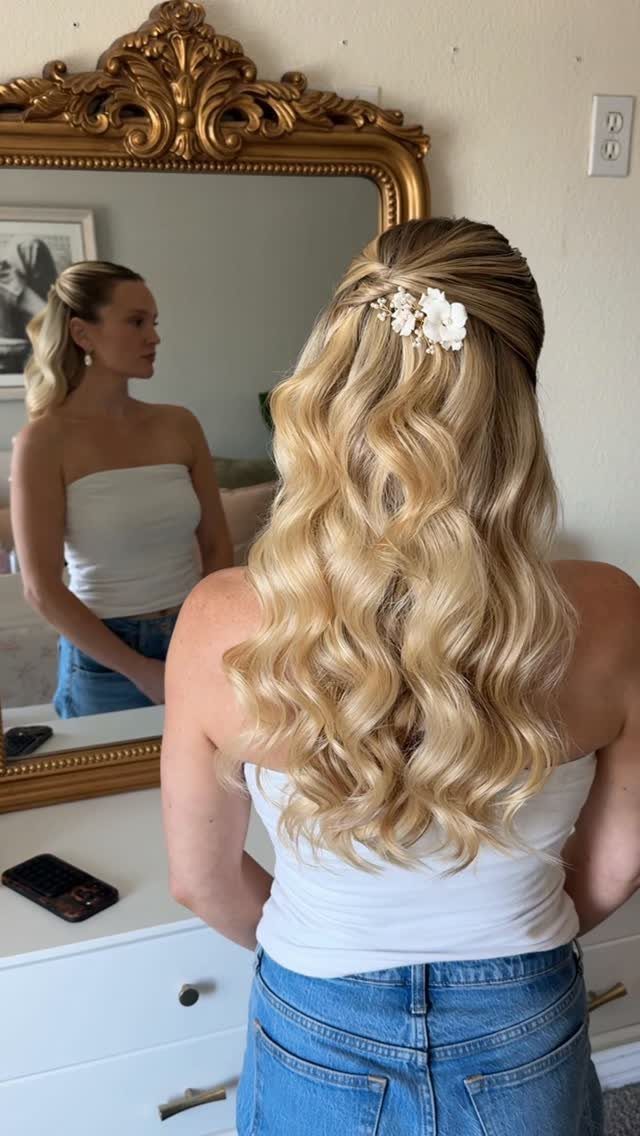
A trial lets you test your wedding hair and makeup before the day itself, so you walk in knowing exactly what you’re getting.
You sit for the full service, see how the look photographs, and catch anything that needs adjusting while there’s still time to fix it.
Book your trial 4–6 weeks before the wedding. That gives you enough distance to test the look but keeps you close enough that any style changes feel relevant.
Bring your dress or a similar neckline, your veil or accessories, and a few reference photos if you have a specific finish in mind.
2. Natural and Glamorous Styles
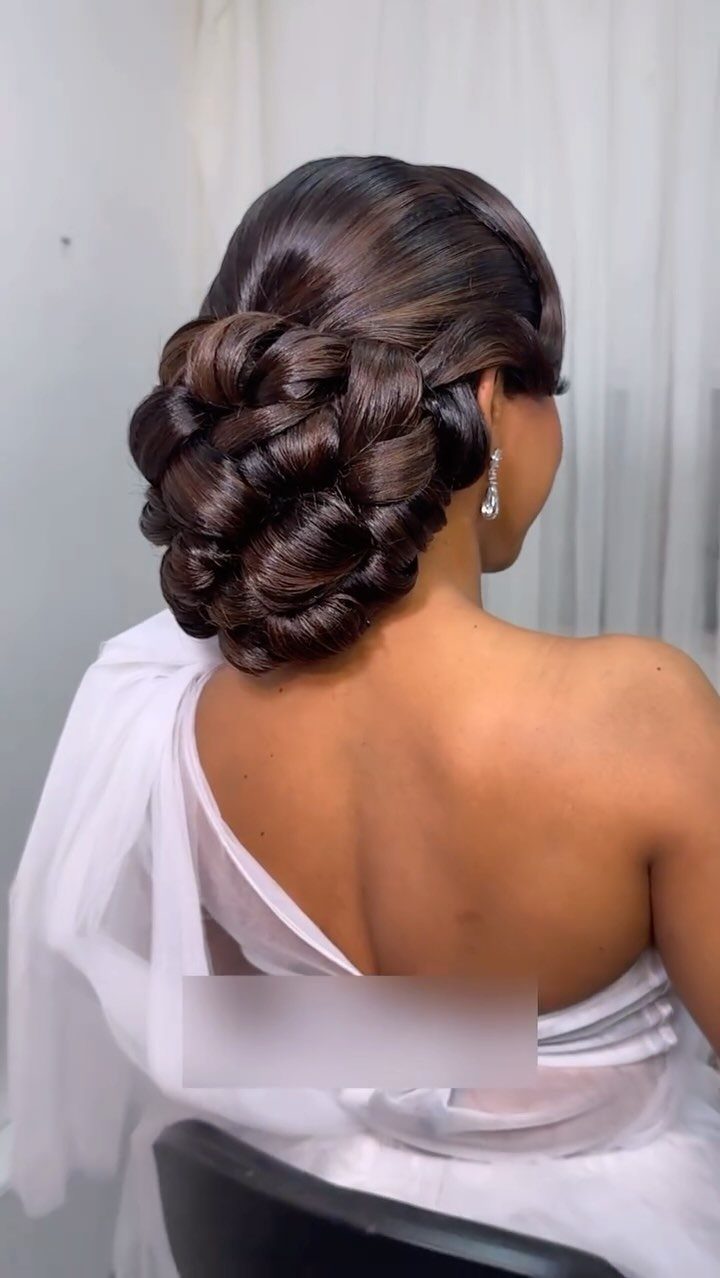
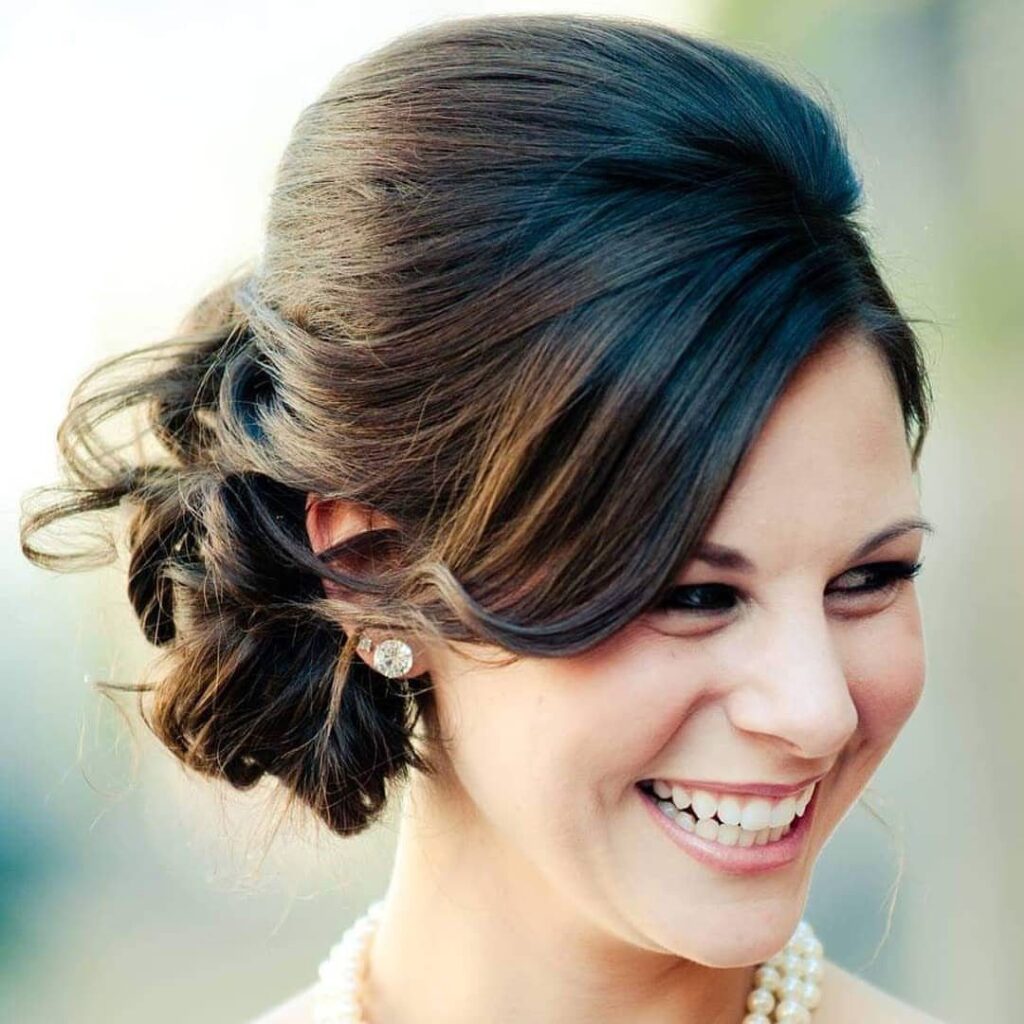
Hair and makeup artists work across a full range of styles, from barely-there natural to full glam with lashes and contour.
A polished braided updo with clean edges and a structured finish pairs well with refined makeup that stops short of looking overly done.
Tell your artist which end of the spectrum you’re aiming for. Natural usually means skin that looks like skin, soft definition around the eyes, and a lip close to your own color.
Glamorous leans into stronger brows, defined lashes, sculpted cheeks, and a bolder lip. Most brides land somewhere in between.
3. Hair and Makeup for Bridesmaids
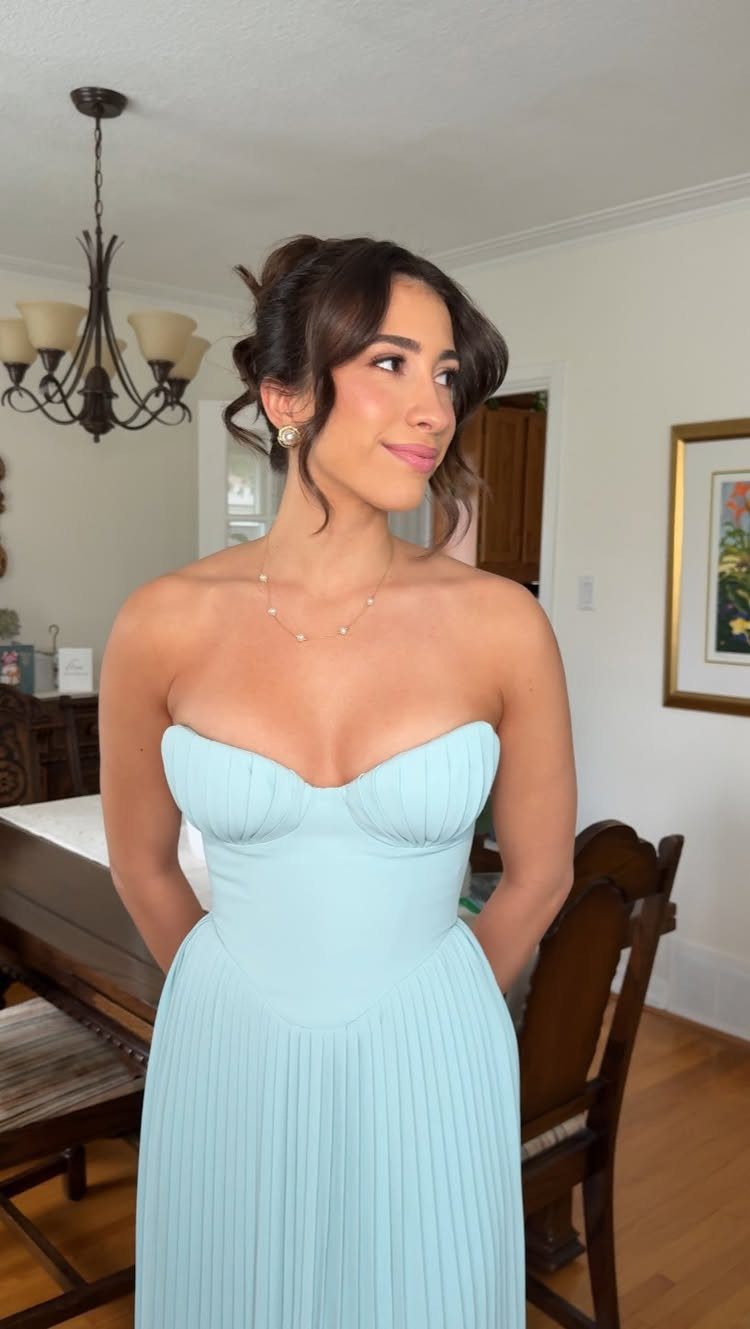
Many bridal hair and makeup artists offer services for bridesmaids, either as an add-on or part of a full party package.
Pricing is typically lower per person than the bride’s rate, and the artist schedules each bridesmaid in sequence on the morning of the wedding.
Confirm pricing and timing early.
A bridesmaid style takes time for both hair and makeup, so a party of 5 needs several hours of back-to-back appointments. Some artists require a minimum number of people to book the date.
4. Finished Looks Across Skin Tones
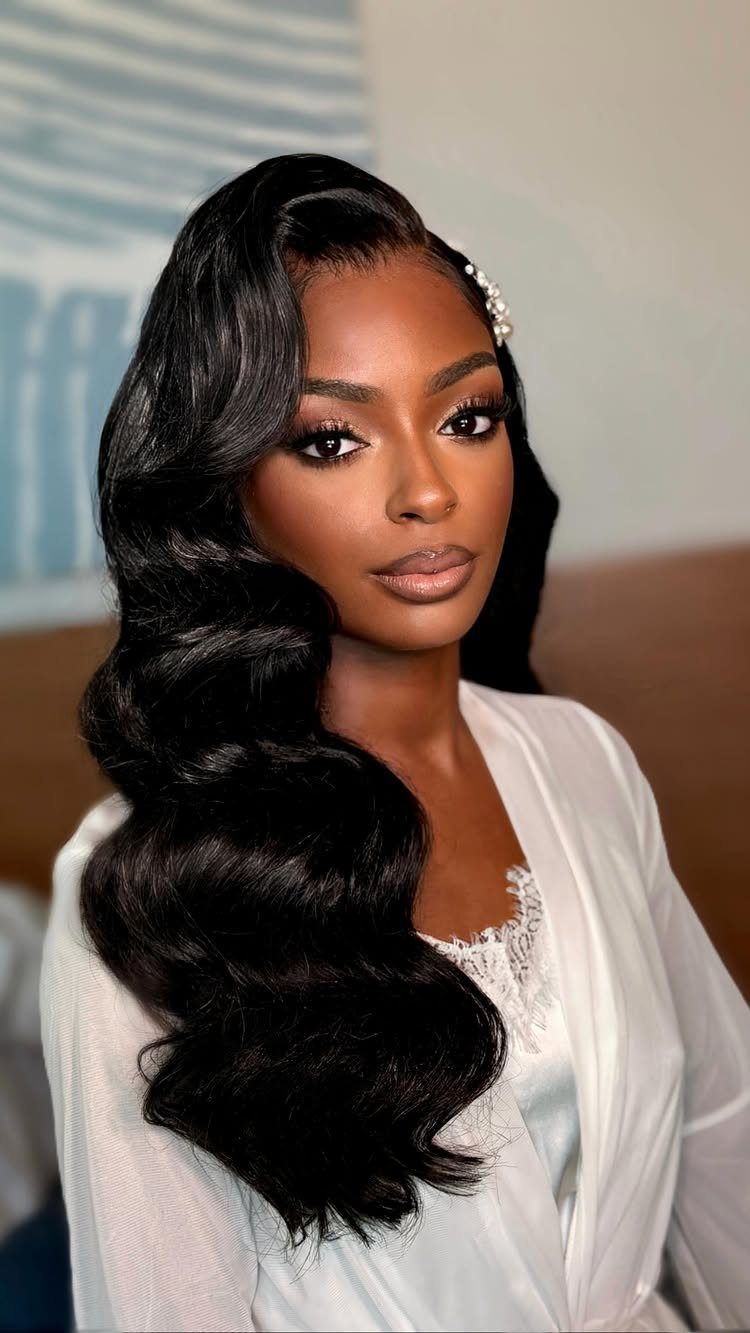
A skilled artist matches foundation to your skin tone, chooses blush and contour shades that actually show up, and selects lip colors that flatter your natural undertone.
This bride’s look features long, wavy black hair with a pearl accessory and glamorous makeup that enhances her deep complexion without looking ashy or washed out.
Ask to see their portfolio across different skin tones before you book.
If the images skew toward one range, ask directly whether they have experience with yours. Foundation oxidizes differently depending on your skin’s chemistry, so a trial becomes even more valuable for ensuring your color stays true all day.
5. Unique Bridal Looks
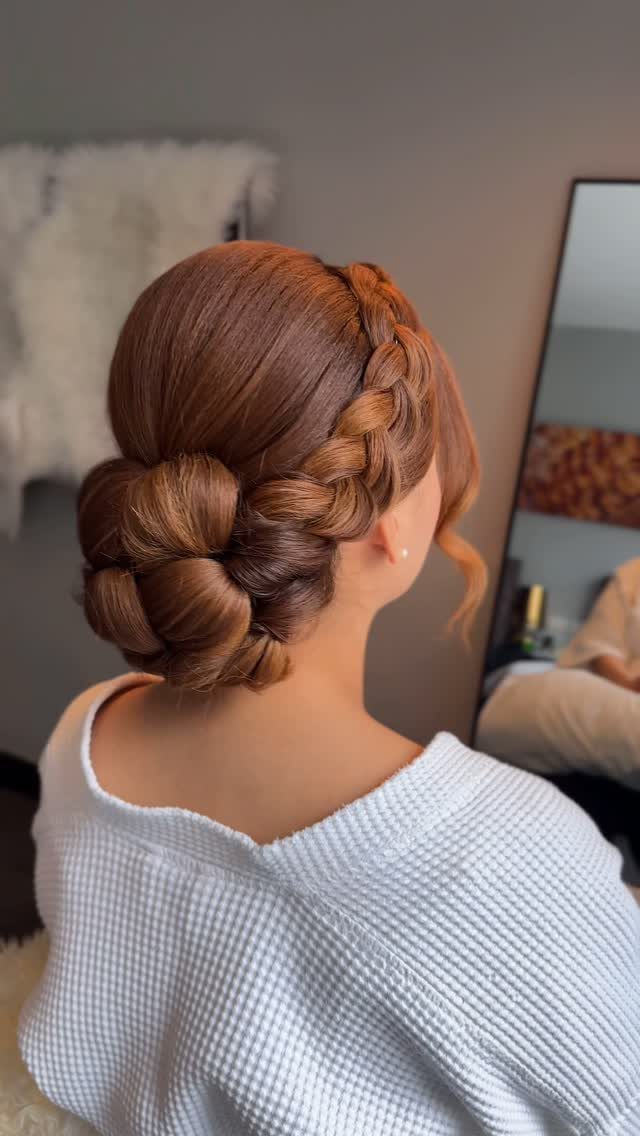
Custom bridal looks move past the standard soft wave or romantic updo and lean into something that feels specific to you.
This bride’s style features an intricate braided updo with texture and detail woven through the back, finished low at the nape.
Bring reference photos that show the vibe you’re after, not just a single angle.
Your artist can pull techniques from different images and adapt them to your hair type, length, and face shape. If you want something unusual, schedule your trial early so there’s room to refine it.
6. Wavy Downstyle with Bridal Makeup
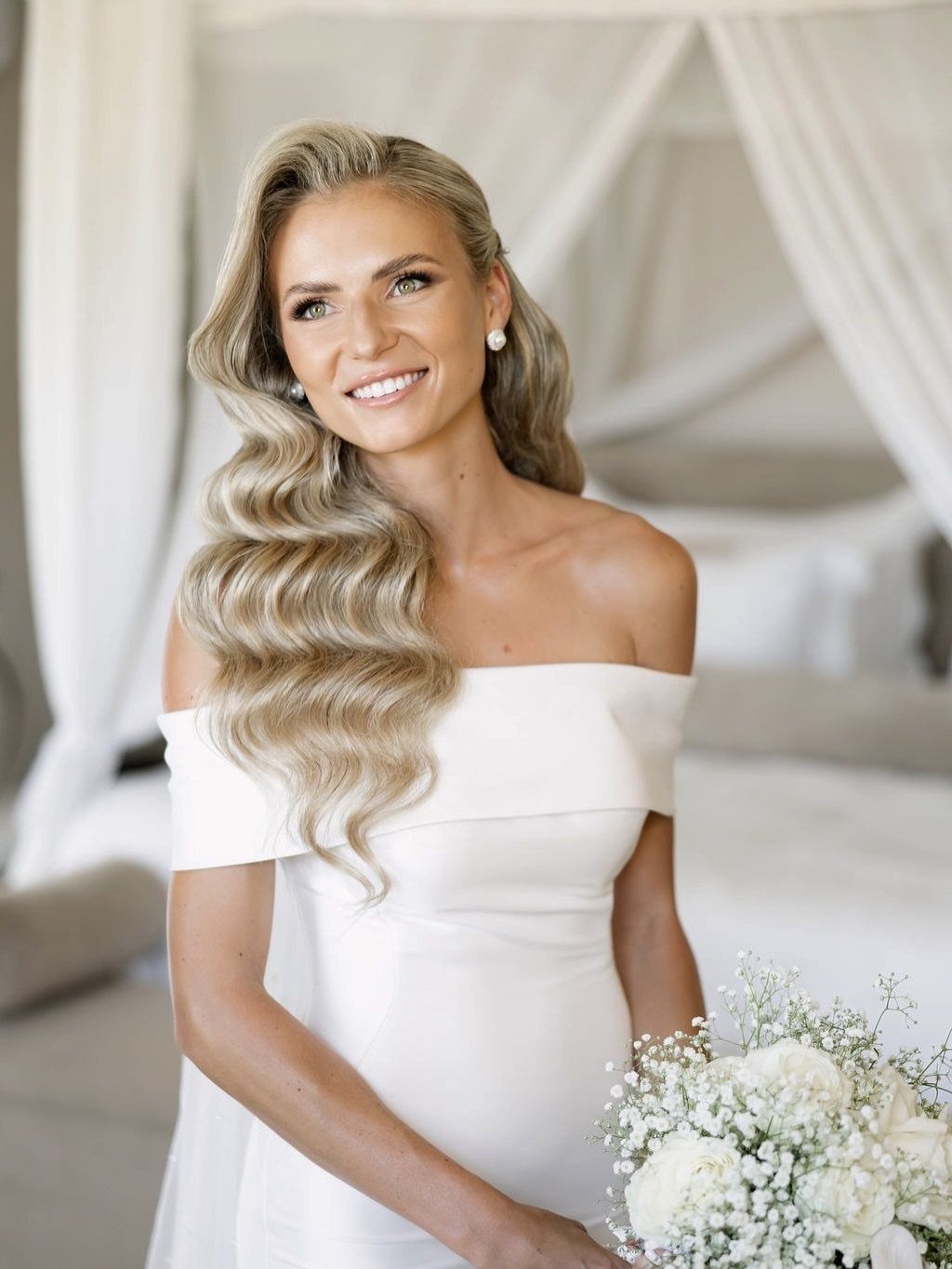
A wavy downstyle keeps your hair loose and flowing, styled with soft bends that move as you do.
This bride wore her blonde hair in relaxed waves paired with natural makeup and an off-the-shoulder gown, keeping the overall look fresh and unfussy.
This style works well if your hair holds a curl and you want something romantic without the structure of an updo.
Ask your stylist to set the waves with a large-barrel curling iron or hot rollers, then brush them out lightly for a softer finish. Plan for a strong-hold spray if you’re getting married outdoors or in humidity.
7. Classic Elegant Bridal Updo
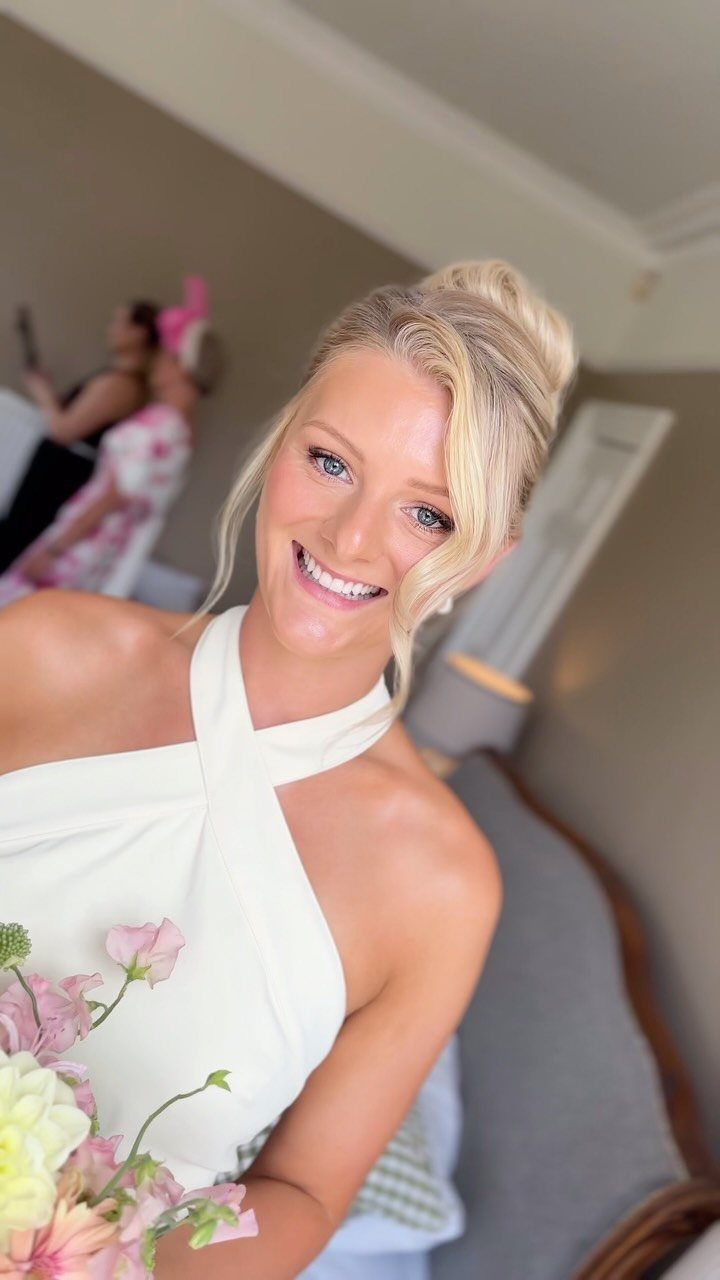
An updo that sits high and pinned gives you a polished, formal silhouette that pairs well with structured gowns and statement necklines. This style clears the shoulders and shows off halter straps, a deep back, or dramatic earrings.
Hair is pinned in sections, twisted or rolled into place, then secured with bobby pins and finished with medium-hold spray.
The look stays locked all day, which makes it practical for long receptions or outdoor ceremonies where loose hair might fall.
If your hair is fine or slippery, ask your stylist to add texture spray before pinning so the sections hold better.
8. Slicked-Back Modern Hair and Makeup
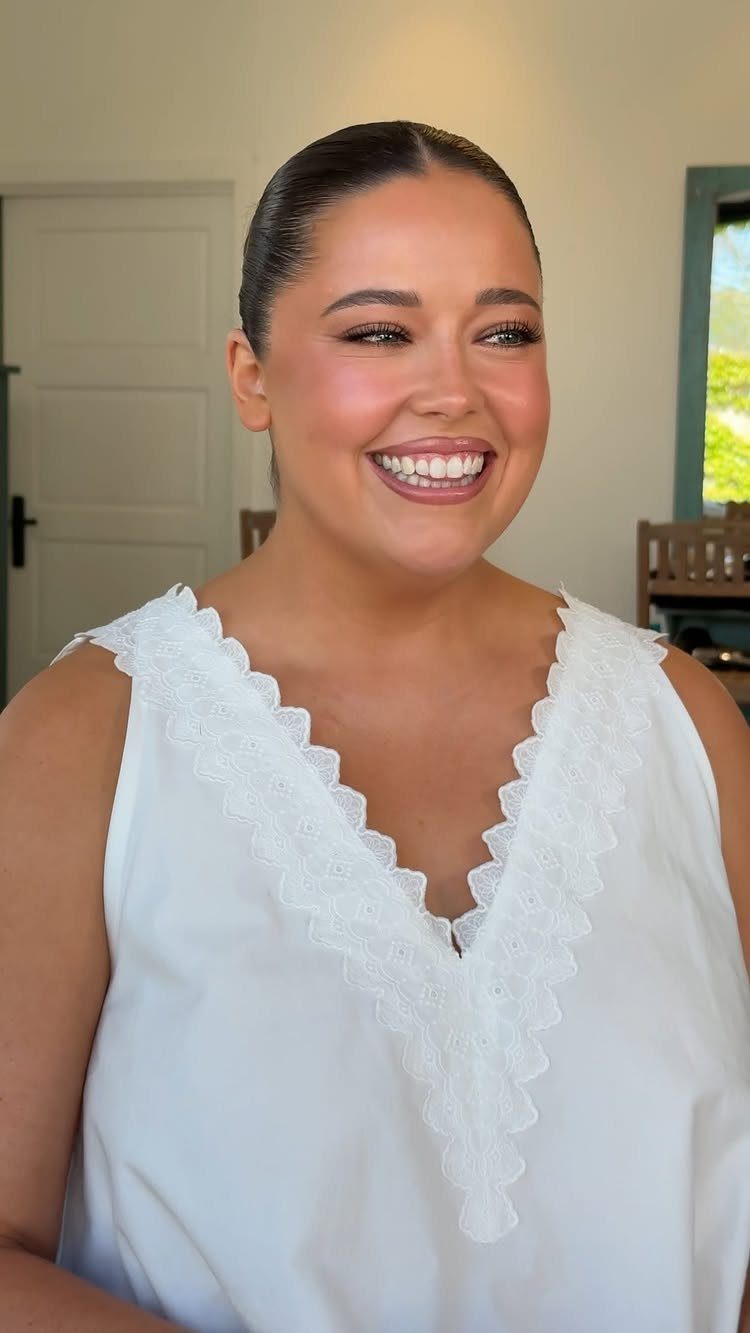
Slicked-back hair pulls everything away from your face, giving your makeup full visibility and a sharp, modern finish.
Gel or pomade smooths flyaways and holds the style flat against your scalp, then the length is either tucked into a low bun or left down.
This style works best on straight or wavy hair that can be brushed flat without frizz.
Apply the product to damp hair, comb it through from root to ends, then blow-dry with a paddle brush for a glossy finish. Pair it with bold makeup since the hair isn’t competing for attention.
9. Half-Up Half-Down Bridal Hairstyle
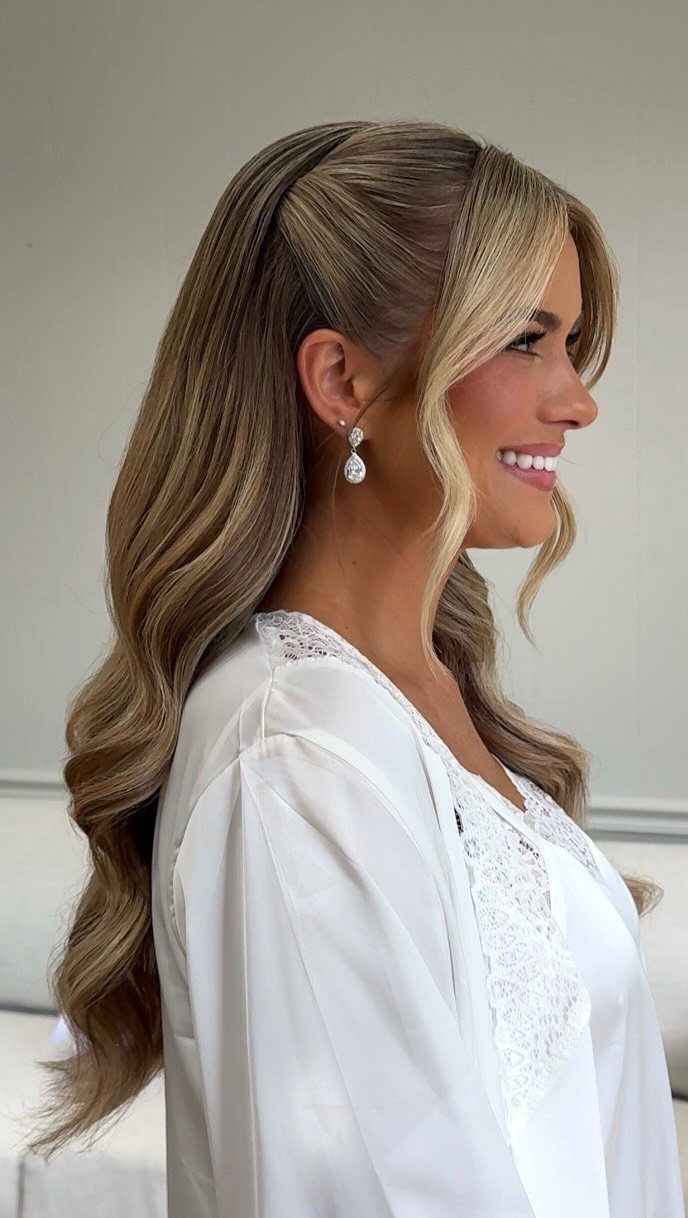
A half-up style pulls the top section back and leaves the rest down, so you get structure at the crown without losing length or movement. This look balances formal and relaxed, and the curls stay visible from every angle.
Your stylist will curl the loose section first, then gather hair from the temples or crown and pin it at the back.
Ask for soft, voluminous curls rather than tight ringlets if you want the style to feel romantic. Teardrop earrings or a delicate hair accessory sit cleanly against the pinned section without getting lost in loose waves.
10. Traditional Indian Bridal Hair and Makeup
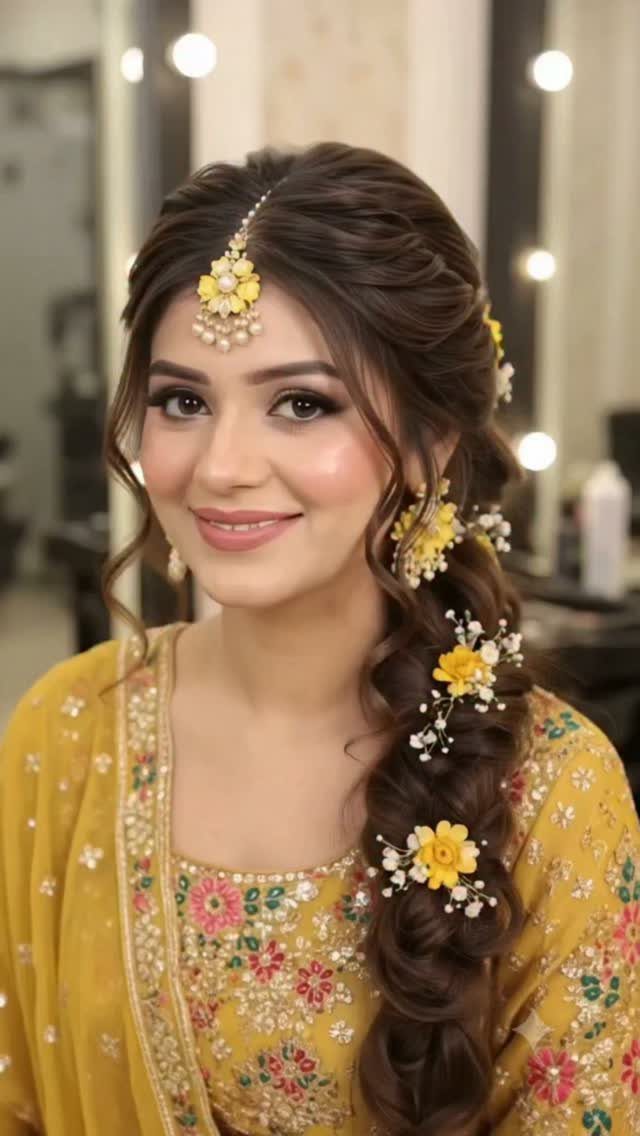
Traditional Indian bridal hair and makeup leans into bold color, intricate jewelry, and detailed styling that coordinates with your outfit and cultural customs.
This look features a long braid woven with fresh flowers, statement earrings, a forehead piece, and richly pigmented makeup with defined eyes and a strong lip.
Find an artist experienced in South Asian bridal styling.
The makeup needs to hold up under heavy jewelry and long ceremonies, so expect a full-coverage base, setting powder, and waterproof products. Hair is often braided or pinned low to support the weight of floral garlands or decorative pins.
Questions to Ask Your Artist
Ask whether the trial is included in your package or billed separately. Some artists roll it into the total, others charge per service and apply it as a credit if you book.
Ask how they time the morning and who goes first. If you’re doing hair and makeup for the bridal party, ask whether they bring help or work alone.
Confirm what’s included.
Airbrush foundation, false lashes, hair extensions, and hairpieces are sometimes extra. Ask if they stay for touch-ups through the ceremony, and whether travel costs extra.
Common Bridal Styles
Vintage pulls from specific decades with winged liner, victory rolls, or finger waves. Modern keeps everything clean and graphic, often with slicked hair and strong brows.
Most brides pick based on how they already wear makeup day to day.
If you rarely go bold, a dramatic lip on your wedding day can feel jarring in photos. If you love a full face, dialing it back too far leaves you looking underdone.
Importance of Reviews
Read reviews before you book.
Look for consistency across multiple weddings, not just one glowing testimonial. Pay attention to comments about timing, how the makeup held up through the reception, and whether the artist listened during the trial.
If several reviews mention the same issue, running late or a look that didn’t match the request, take it seriously.
A portfolio shows what an artist can do under ideal conditions. Reviews show what actually happens on a wedding morning when the schedule tightens and the pressure climbs.
Frequently Asked Questions
How much should I budget for bridal hair and makeup?
For the bride with a trial, expect to spend $350–$850.
Each bridesmaid typically costs $125–$275, though editorial specialists can charge $1,800 or more for bridal work. A bride plus 6 attendants usually lands between $1,200 and $2,200.
Do I need both hair and makeup from the same artist?
Many bridal artists offer both services, either as a package or separately priced.
Others split the work between a hair stylist and a makeup artist who coordinate the timing. Either approach works as long as the trial confirms the look you want.