
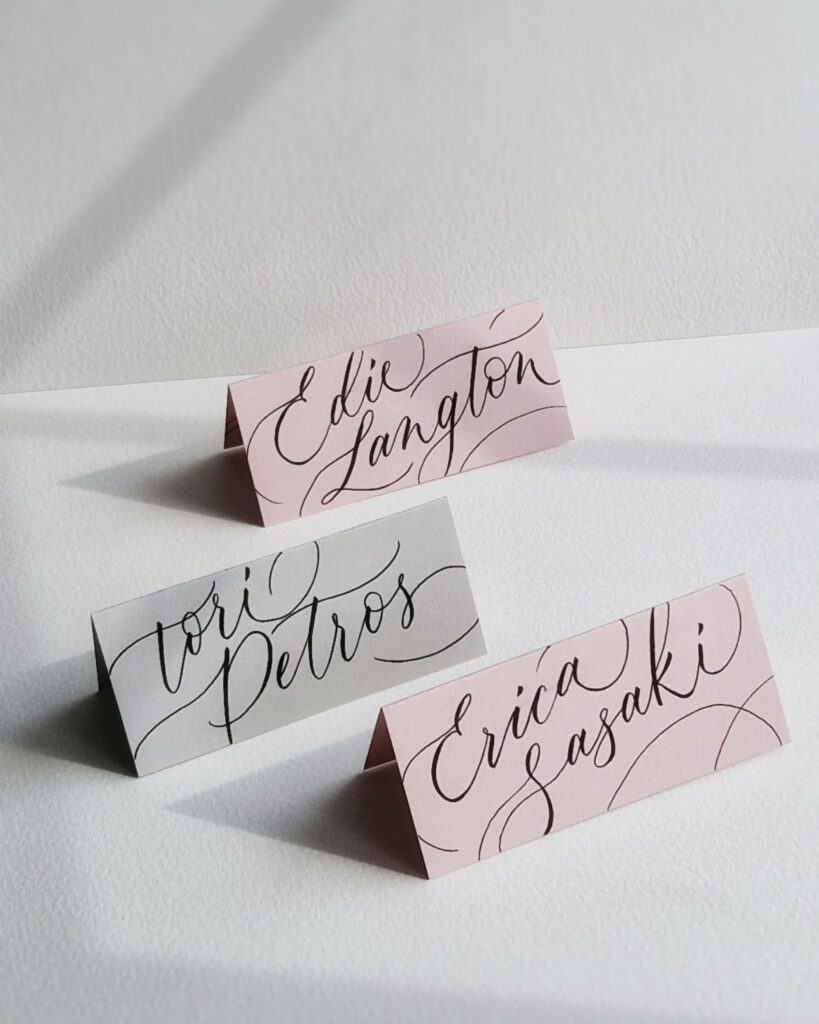
Place cards run from printed sets that arrive ready to use to hand-lettered designs that take a few minutes each, oyster shells that double as a favor, or bud vases that hold a single stem.
Printed cards cut setup to zero, while calligraphy adds a custom look if you’re willing to spend the evening writing them or hire someone who charges a few dollars per card.
1. Place Cards with Printed Guest Names
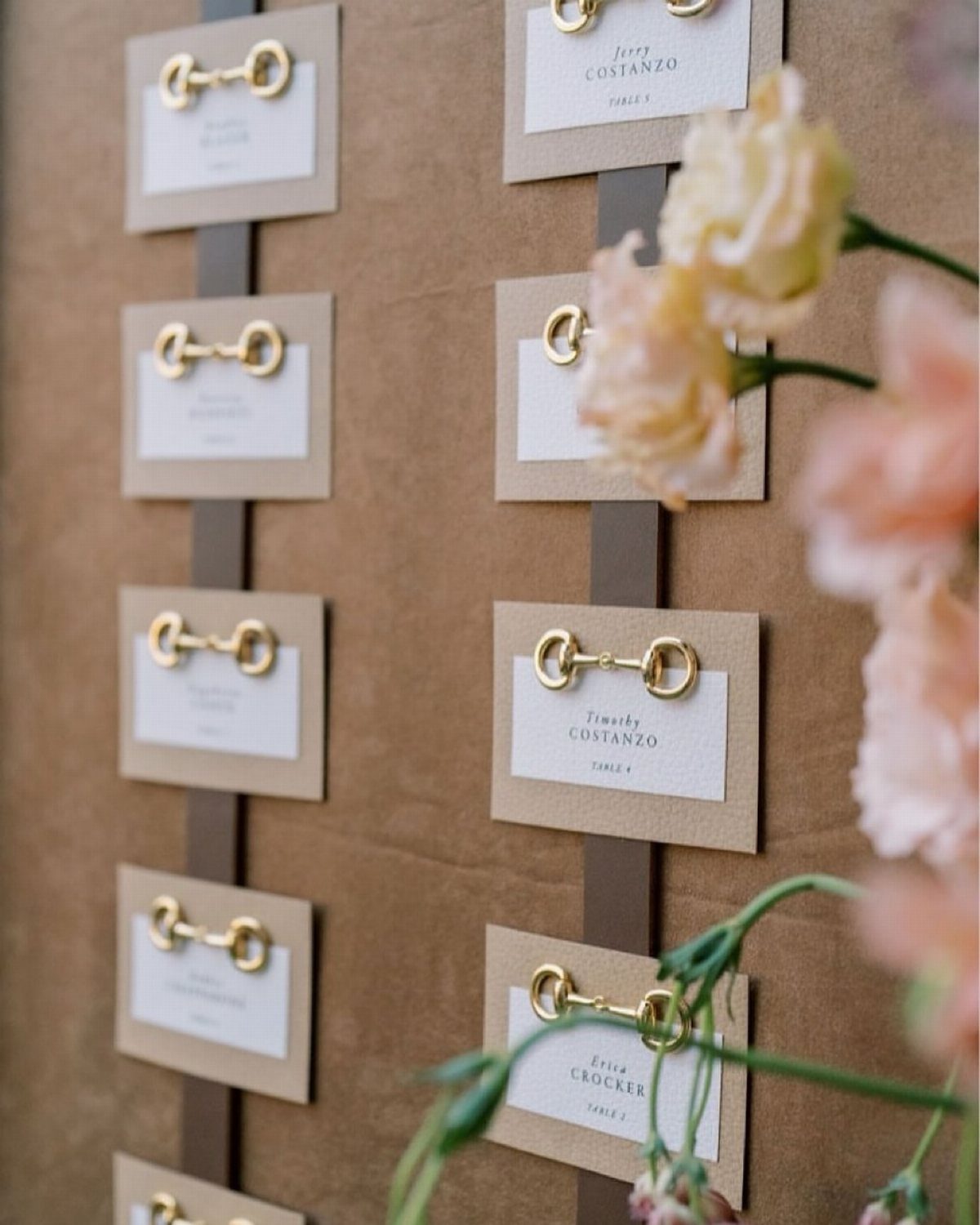
Printed place cards cut setup time to zero and give you one less thing to worry about a week before the wedding.
Most stationers include guest names in the base price when you order a set, so there’s no upcharge for printing over leaving them blank.
The trade is personalization.
If calligraphy or hand lettering matters to your table design, printed cards read more uniform. But for a couple working through a long guest list, printing saves time and still looks polished.
2. Place Cards with Meal Choices
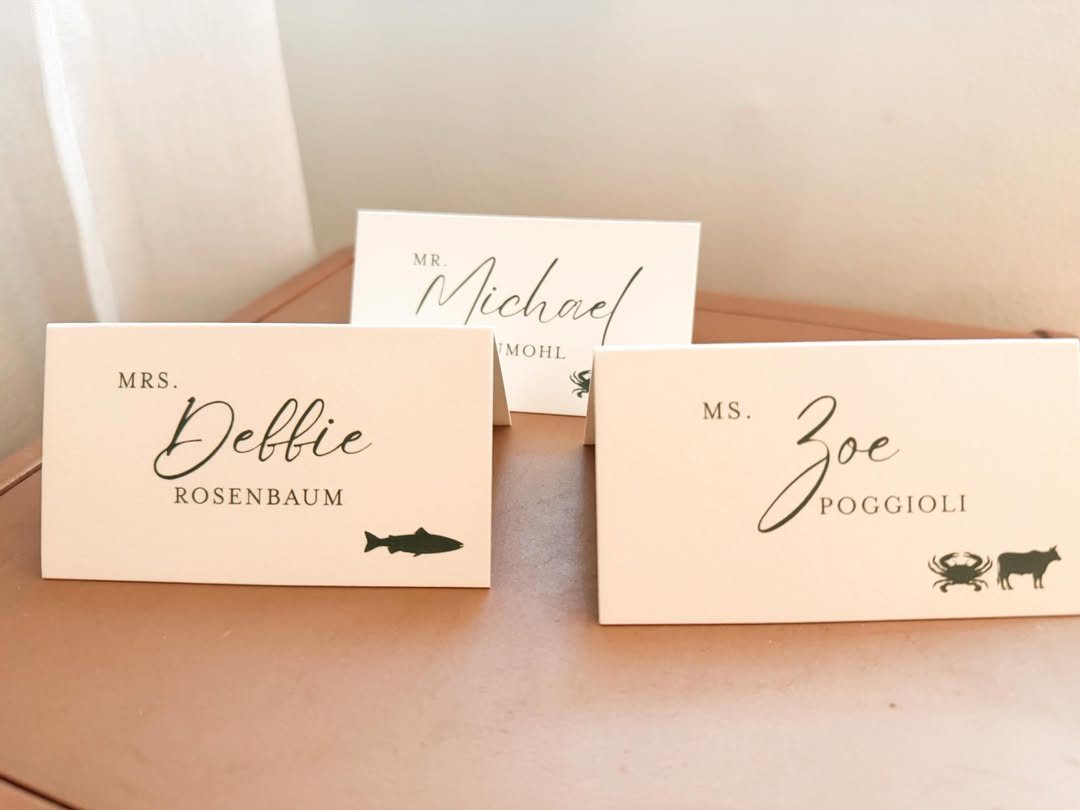
Adding meal icons to place cards tells your caterer which entrée goes where without asking guests to announce their choice at the table. A small printed symbol next to the name solves the problem before anyone sits down.
This approach assumes you’ve already collected meal selections through your RSVP.
The caterer gets a visual cue, service moves faster, and no one has to remember what they ordered back when they sent their reply. If you’re serving a plated dinner with options, this one detail keeps the kitchen on track.
3. Place Card Holders
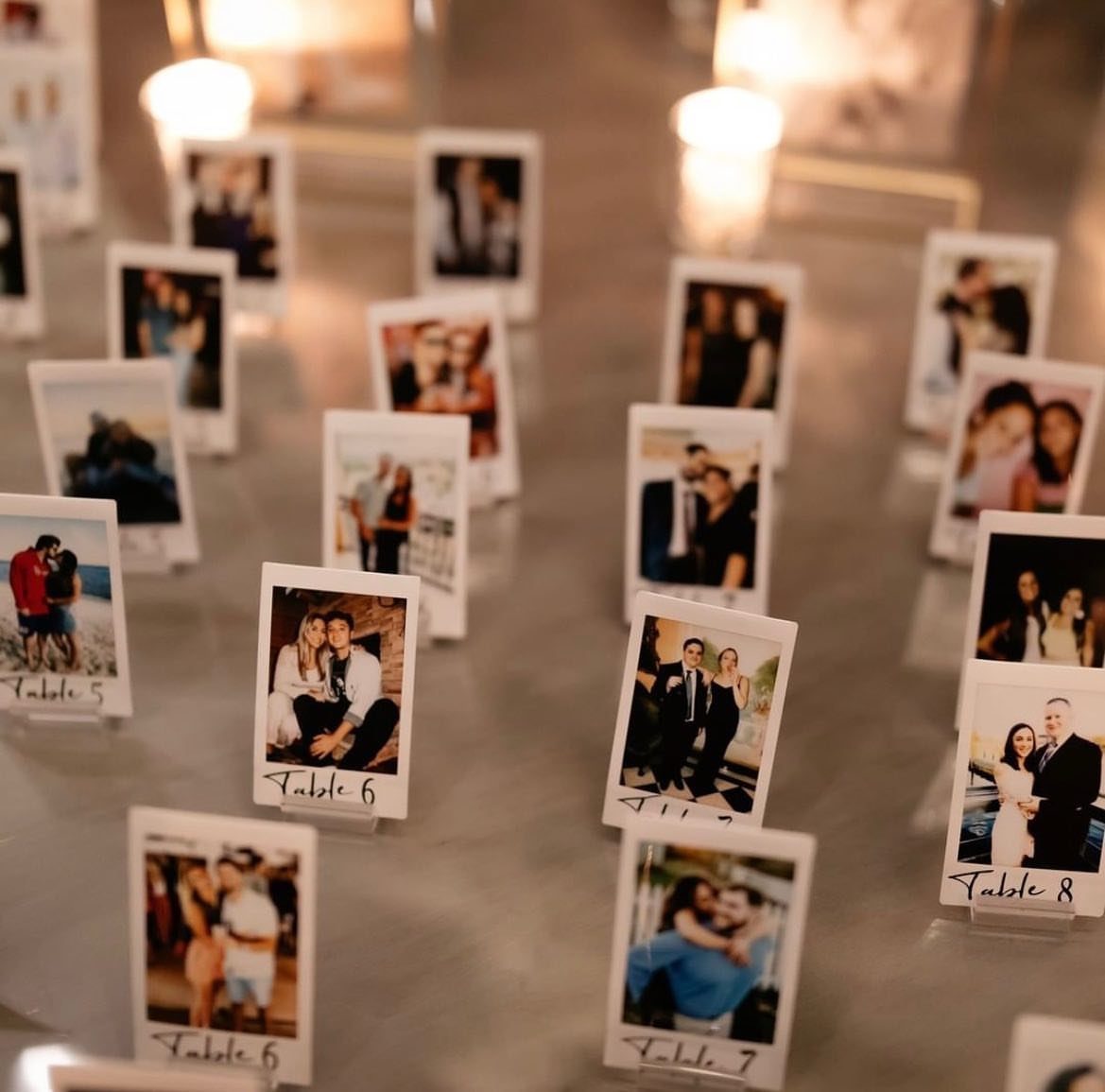
Clear acrylic holders keep cards upright and visible without covering the design. They slot into a base that sits flat on the table, so cards stay put even when guests brush past or the venue has a breeze.
Holders work for any card weight and let you use photos, thicker cardstock, or layered designs that won’t stand on their own when folded.
Most holders cost a dollar or two each, and you can reuse them for table numbers or buffet labels if your venue needs them.
4. Calligraphy Hand Written Place Cards
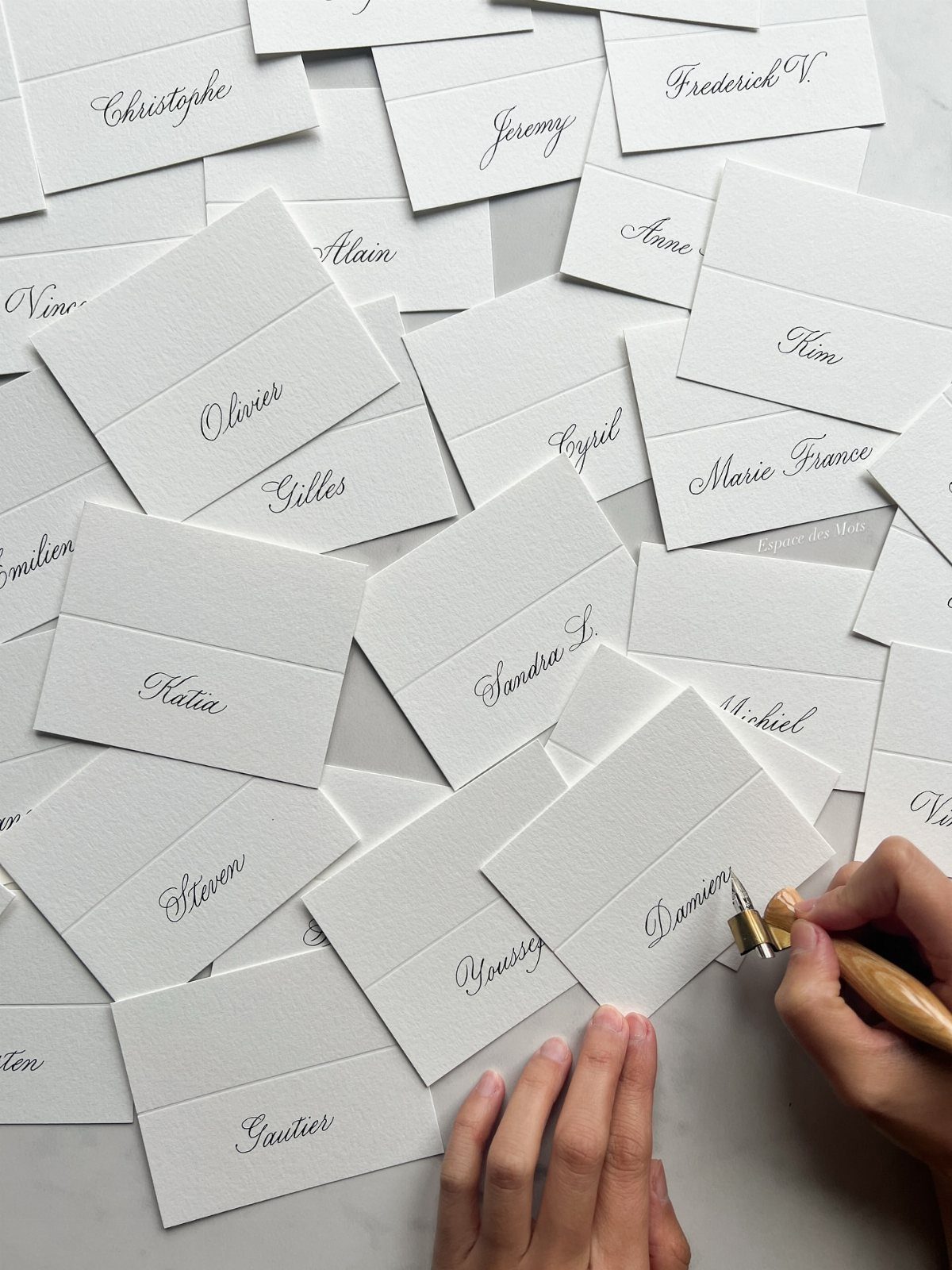
Hand lettering each card with a calligraphy pen gives you full control over the look and spacing. Folded white cardstock provides a clean surface that shows off the ink, and the fold keeps each card standing without a holder.
Writing them yourself takes a few minutes per card, longer if you’re new to calligraphy. Hiring a calligrapher usually runs a few dollars per card, which adds up fast but saves the time if your schedule is tight.
5. Deckled Edge Cards with Tassels
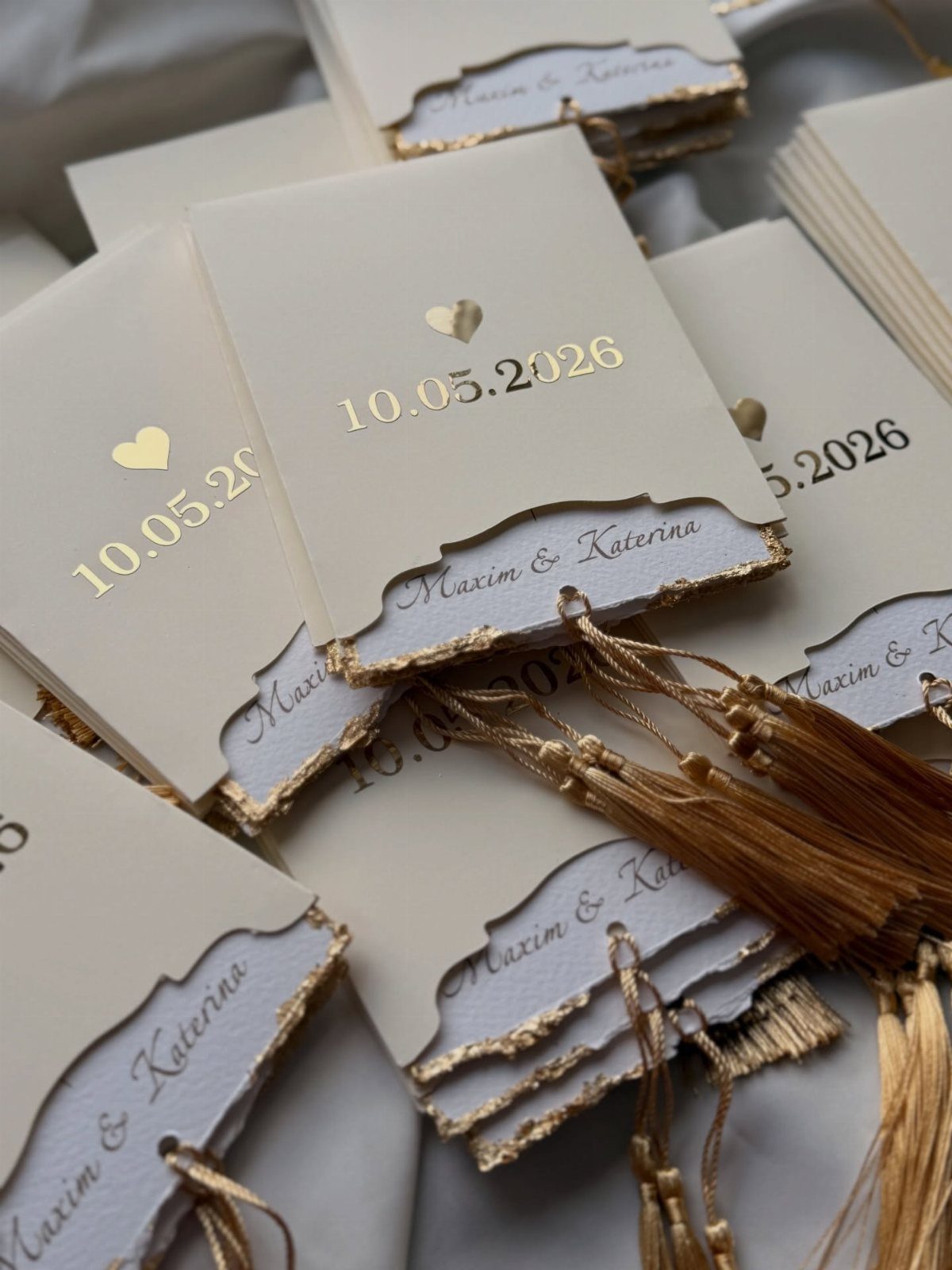
Torn edges gilded in gold foil turn a flat card into something guests pick up and look at twice.
The uneven deckle gives texture, and a small tassel attached at the base adds weight so the card stands or drapes over the edge of a plate.
Gilding takes patience.
You tear the edge first, apply adhesive along the raw edge, then press gold leaf onto it and brush away the excess. Each card needs some time if you’re working by hand.
For a smaller guest count, it’s doable. For 100 or more, order them finished or plan several evenings to get through the set.
6. Cards Decorated with Flower Petals
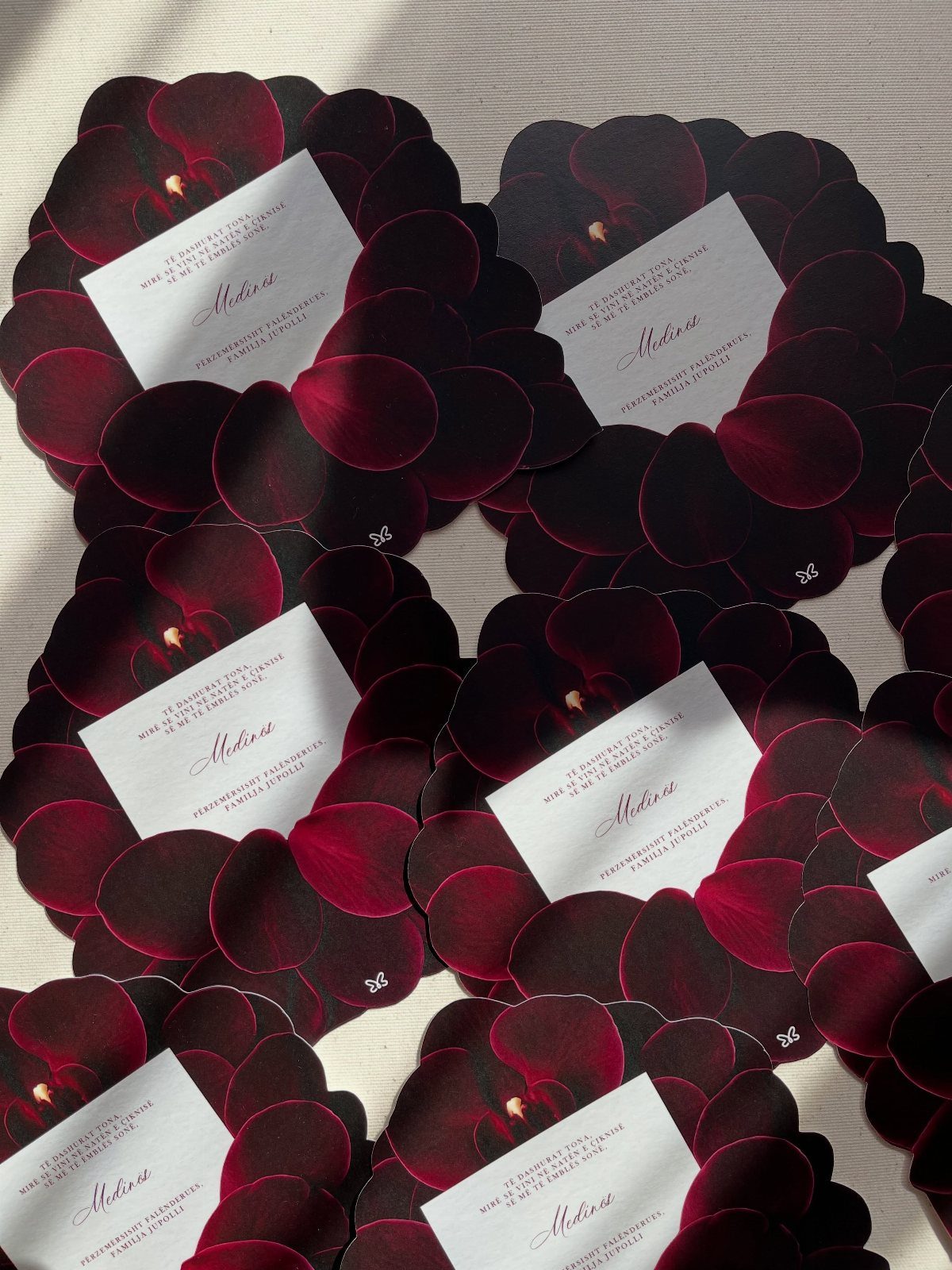
Orchid petals frame each card and add deep color without covering the name. The petals sit flat under rectangular cardstock, so the text stays readable and the card itself stays simple.
Fresh petals last a day or two before they start to brown at the edges, so assemble these the morning of or the night before if your venue has refrigeration.
Dried petals hold their shape longer but lose some of the richness. Budget 1 fresh orchid bloom for a handful of cards, depending on petal size.
7. Bud Vase Place Cards
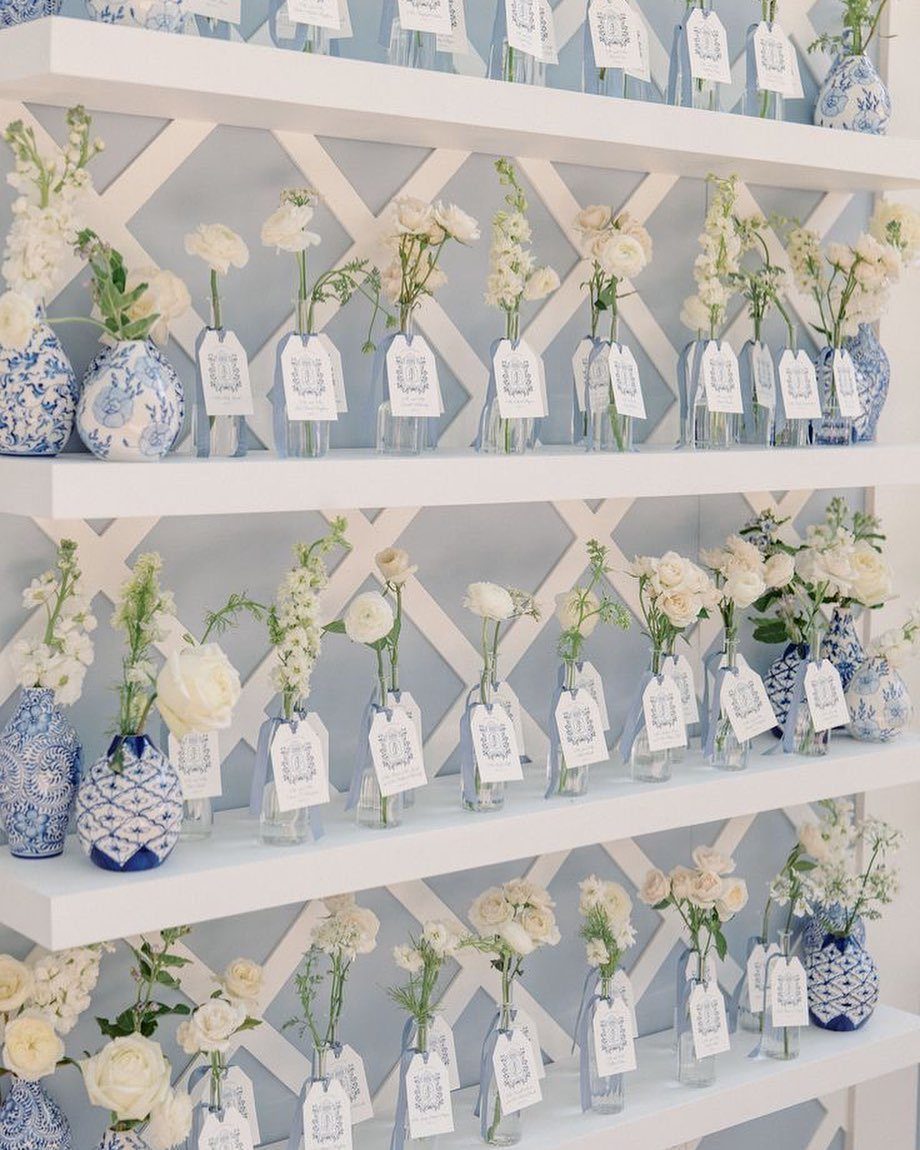
A single stem in a small vase turns into a favor and a place marker at once. The card hangs from a ribbon tied around the neck, so guests spot their name and then take the whole arrangement home.
Fresh flowers need water, which means setting these up the morning of your wedding. Budget 1 stem per guest and enough small vessels to hold them.
If your florist is already delivering centerpieces, ask about adding stems for individual vases. The vases themselves can be ceramic, glass bottles, or vintage finds if you have time to collect them.
This option works best for smaller weddings where you can source and fill the vases yourself or have help the day of.
8. Oyster Shell Place Cards
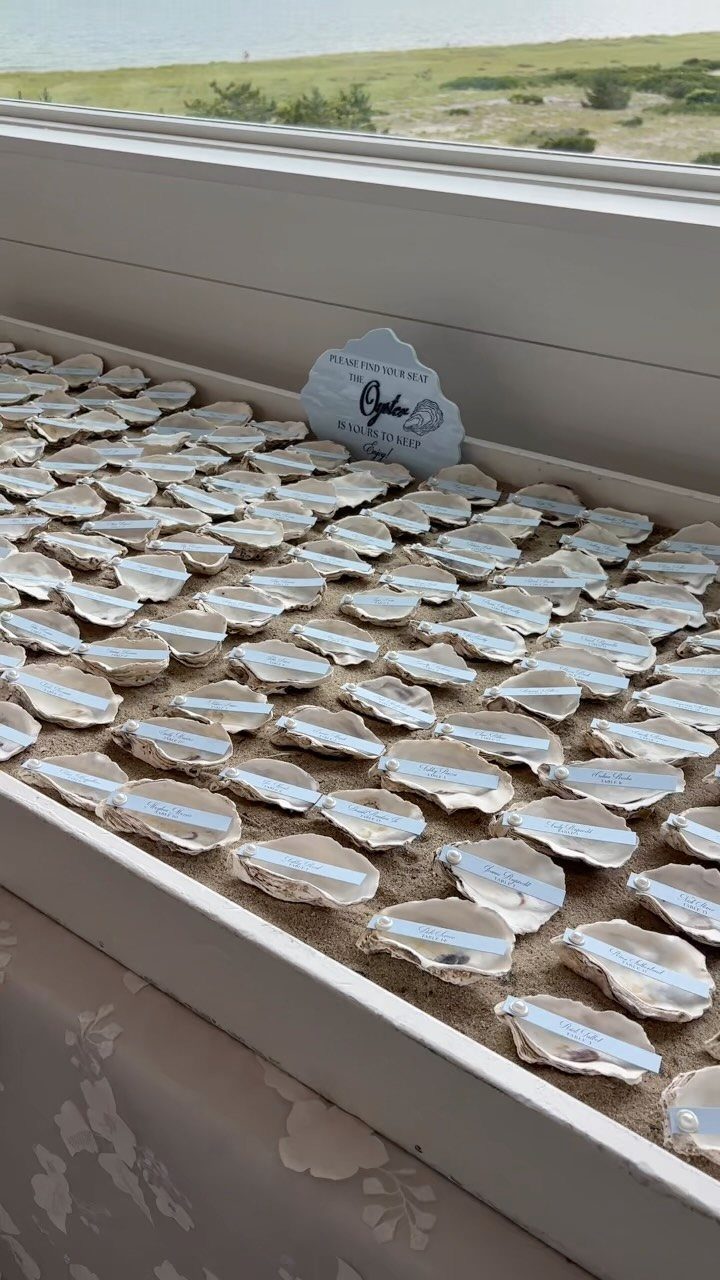
Oyster shells hold a name strip and double as a favor guests can take with them. Set the shells on a tray or scatter them across a table near the entrance, and let people find their own.
Real shells need cleaning before the wedding if you collect them yourself.
Craft suppliers sell pre-cleaned shells in bulk, which saves time but adds cost. The paper strips can be handwritten or printed, then tucked into the shell where it curves.
This one suits a coastal venue or a menu that already includes oysters. Inland weddings can still use them, but the connection feels stronger when the location or the meal ties in.
9. Dried Fruit Accent Cards
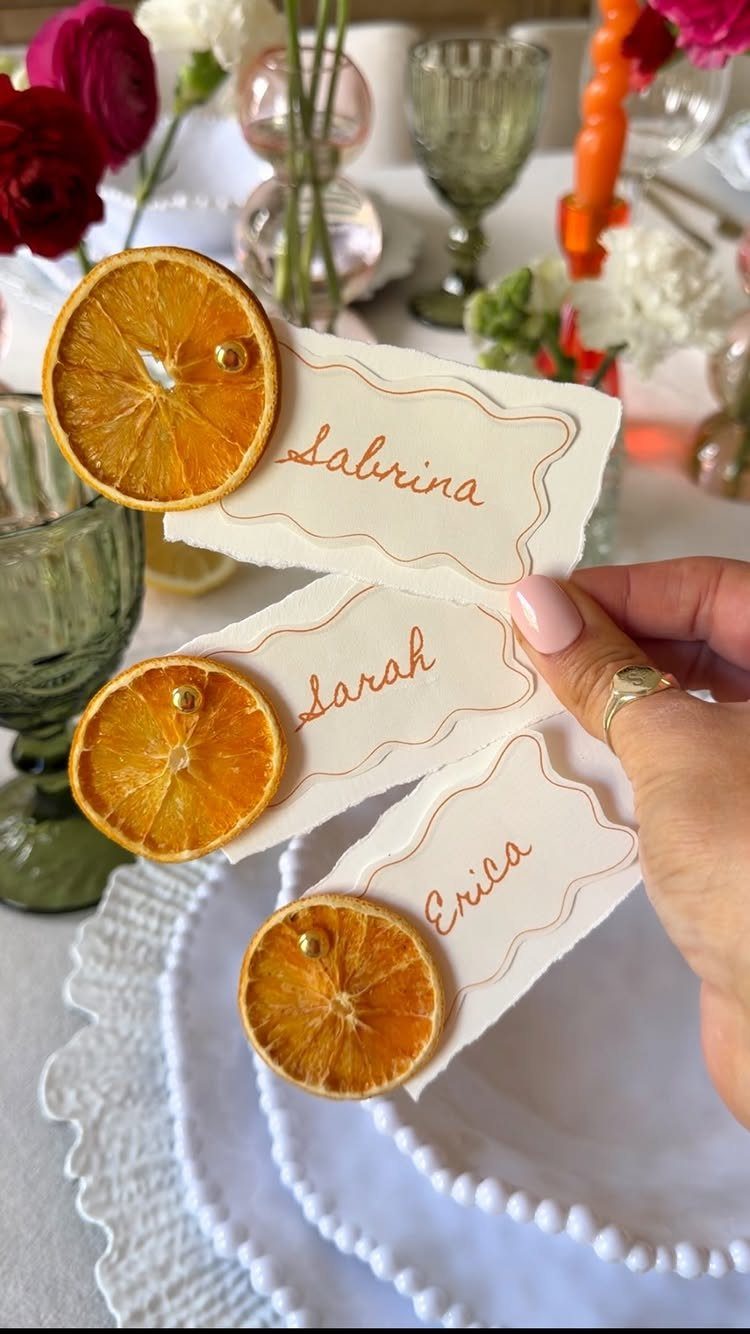
Dehydrated orange slices pinned to torn-edge cards bring color and texture without fresh flowers. The fruit dries flat and holds its shape for months, so you can prep these weeks ahead and store them in a cool, dry spot.
Slice citrus thin, then dry it in a low oven for a few hours until the slices are stiff but not brittle.
A small hole punched near the edge lets you thread a pin or tie twine through to attach it to the card. The torn edge and handwritten names add to the casual, organic feel.
If you’re already using citrus in your bar or table design, this ties the pieces together without adding another material to source.
10. Ribbon Stemware Place Cards
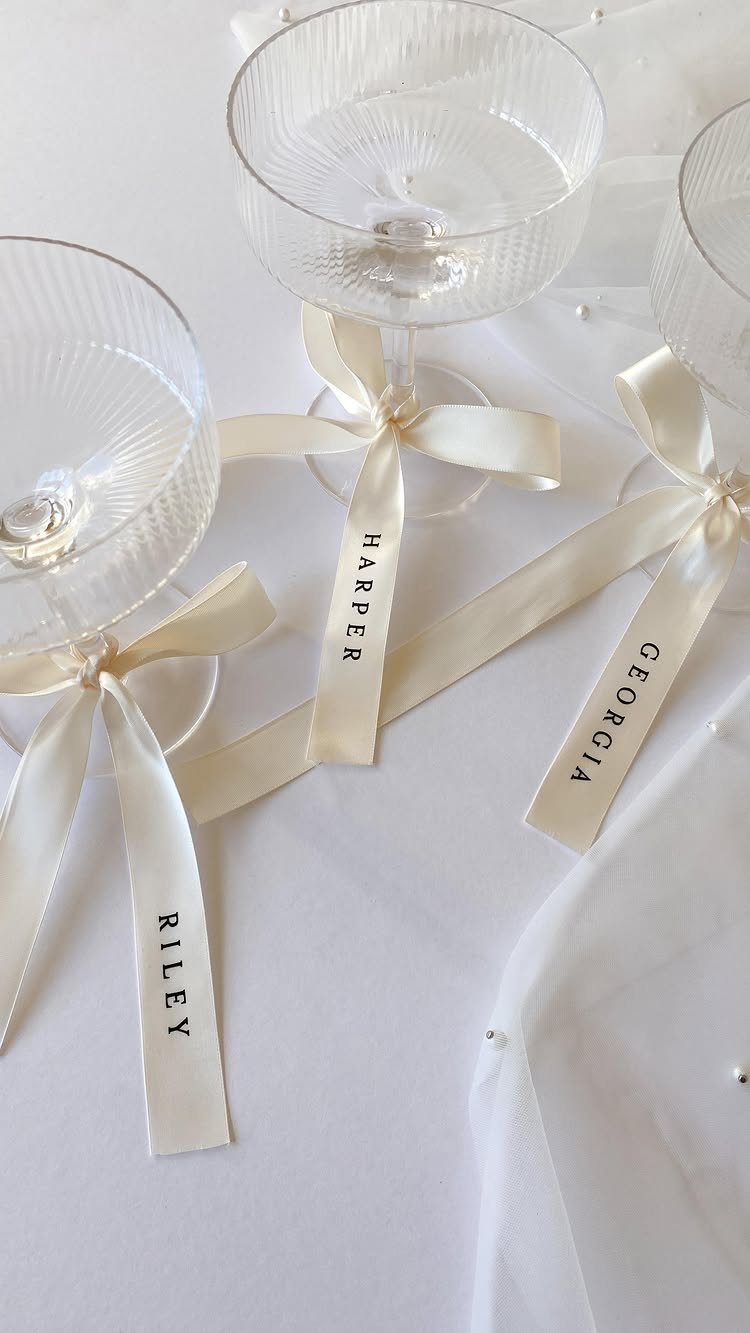
Ribbon tied around the stem of each glass holds the guest’s name and marks their seat without adding clutter to the table.
The ribbon stays on until the guest picks up the glass, so it works for cocktail hour seating or dinner service that starts with a drink already poured.
Order ribbon printed with names through a custom stationer or use a fabric printer.
Satin holds ink well and ties neatly without fraying. Cut each ribbon long enough to wrap the stem and leave tails that show the name clearly.
This approach assumes your venue is setting glassware in advance and that you have time to tie each one before guests arrive.
For a large wedding, recruit help or prep the ribbons pre-tied so you can slip them onto stems quickly.
How to Use Place Cards
Escort cards point guests toward a table number, and place cards assign them to a particular chair.
Place cards go right at the seat, usually beside the charger or folded into the napkin.
They mark the exact spot where each person sits, and you see them most often at formal weddings or plated meals where the seating arrangement needs to be precise.
Some weddings use both.
Escort cards guide guests to the right table, then place cards show them their exact seat. This combination works well for large guest counts or multi-course meals where the caterer needs to know who sits where.
Printing Options
You can upload names through a spreadsheet or add them manually, then preview each card to check spacing and layout before the order prints.
The service lets you adjust colors and fonts so the cards match the rest of your stationery. You’re not limited to preset palettes, and the system shows you what each name will look like on the final card.
If you’re ordering cards separately or switching vendors partway through planning, confirm whether printing is included or charged per card.
Design Considerations
Place cards that match your invitations in color, font, or layout tie the reception together visually. They don’t need to be identical, but picking up a few design elements from the invitation suite keeps the whole event feeling cohesive.
Basic Invite and Minted both offer place cards that coordinate with invitation designs.
Minted’s cards measure 3.5" x 2" and come flat or folded, printed on signature, recycled, or pearlescent paper. Folded cards give you a front and back to print on, while flat cards leave one side blank.
If your invitations use a specific color palette or script style, repeating that on the place cards reinforces the theme without requiring custom printing for every piece.
Frequently Asked Questions
What is a place card at a wedding?
A place card assigns each guest to a specific seat at the table. Plated dinners and formal receptions usually need them, while buffet-style weddings can skip them if guests pick their own table.
What to write on wedding place cards?
Most place cards show the guest’s name, and some include a small printed symbol for their meal choice if you’re serving a plated dinner with options.
The symbol lets your catering team deliver the right plate without asking anyone what they chose.
What are the etiquette rules for using wedding place cards?
Use the name each guest prefers and include titles if they expect them. The text needs to be large enough to read easily from a standing position, so guests can find their seat without leaning over the table.