Brooklyn venues range from garden ceremonies to waterfront dining rooms and raw industrial lofts, and the rental fee is only the starting line.
A raw loft gives you decorating freedom but means you’re coordinating caterers, rentals, and restrooms yourself, while a winery or restaurant buyout hands you professional service and cuts your vendor list in half.
Guest count decides layout faster than style does: under 30 fits a library-style dining room, 75 to 150 works in most lofts and conservatories, and anything above that needs a ballroom or you’ll be shopping for decor to fill dead space.
1. Brooklyn Botanic Garden
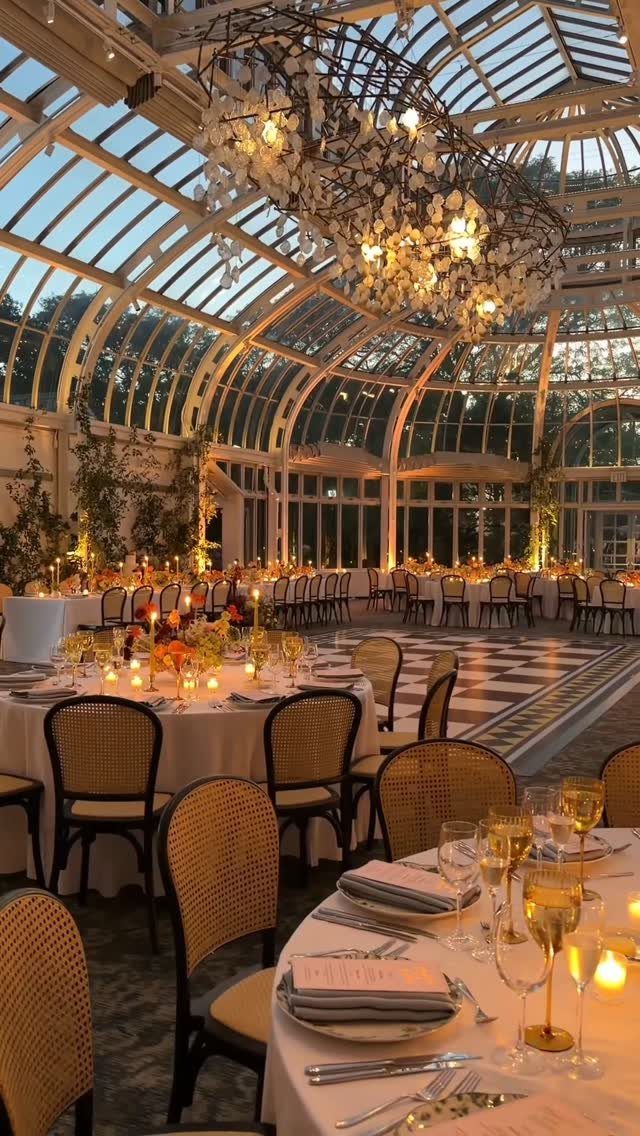
A glass conservatory turns a garden wedding into something you can host year-round. The ceiling and walls let in natural light while keeping weather out, and the plants inside give you built-in decor without needing much added florals.
Tables fit comfortably around a central dance floor, and a statement chandelier pulls the eye up without blocking sightlines.
If your guest count runs above 100, check capacity limits early. Most conservatory spaces cap closer to 150 for a seated dinner.
2. Brooklyn Winery
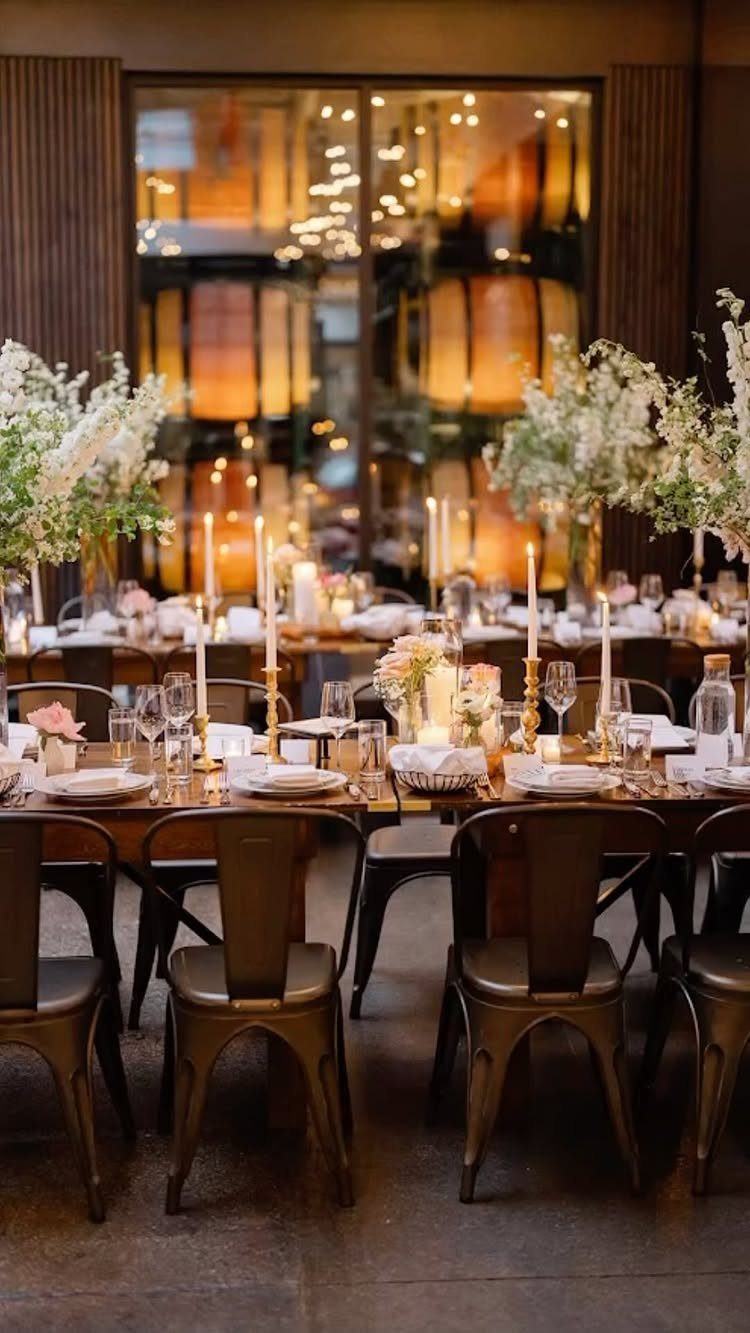
A winery venue usually includes tasting options for your cocktail hour, which gives guests something memorable to do while you’re off taking photos.
Long farm tables work better than rounds in narrow tasting rooms. Keep centerpieces low so conversation flows across the table.
If you want dancing, ask about floor space. Some winery event rooms prioritize dining over a full dance floor.
3. River Cafe
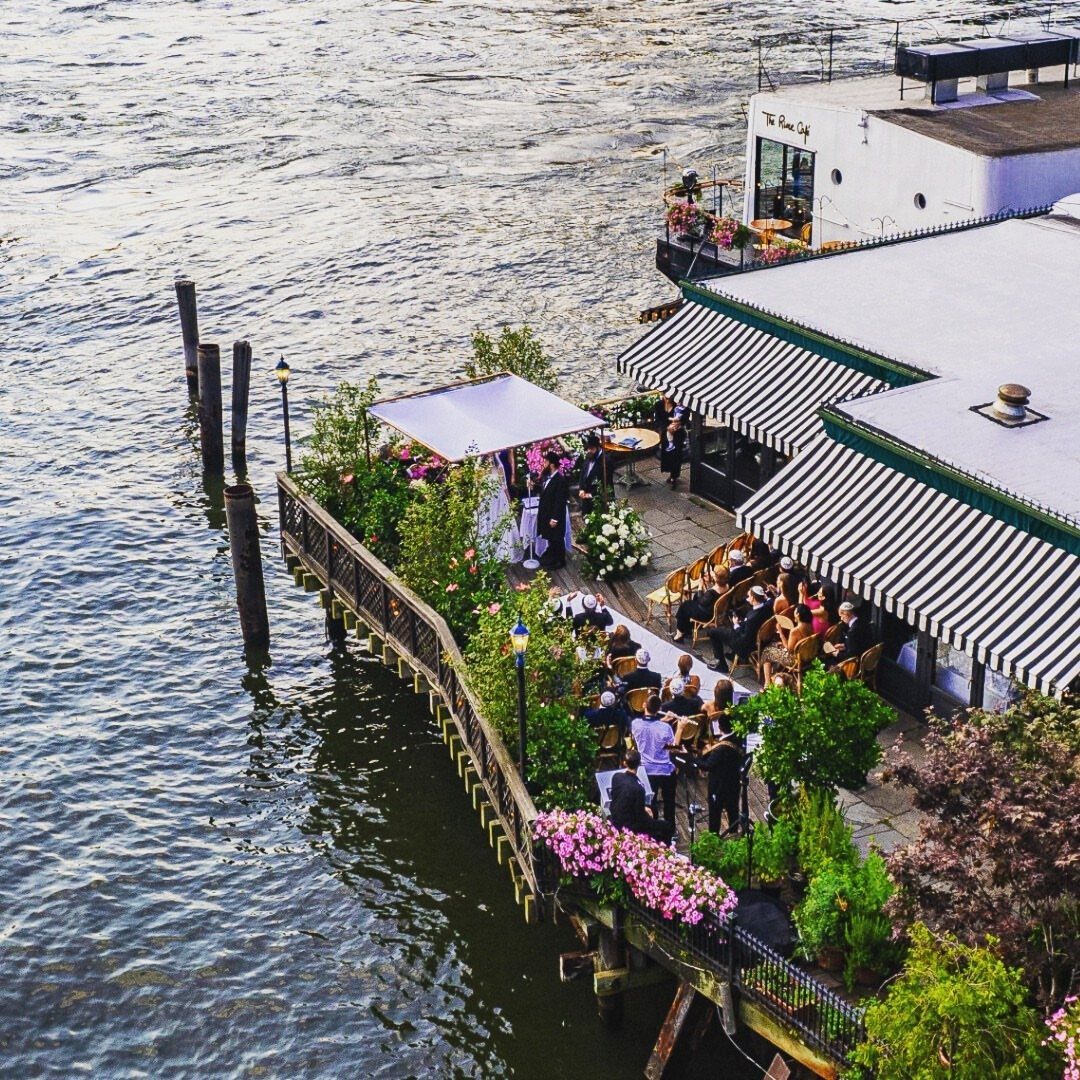
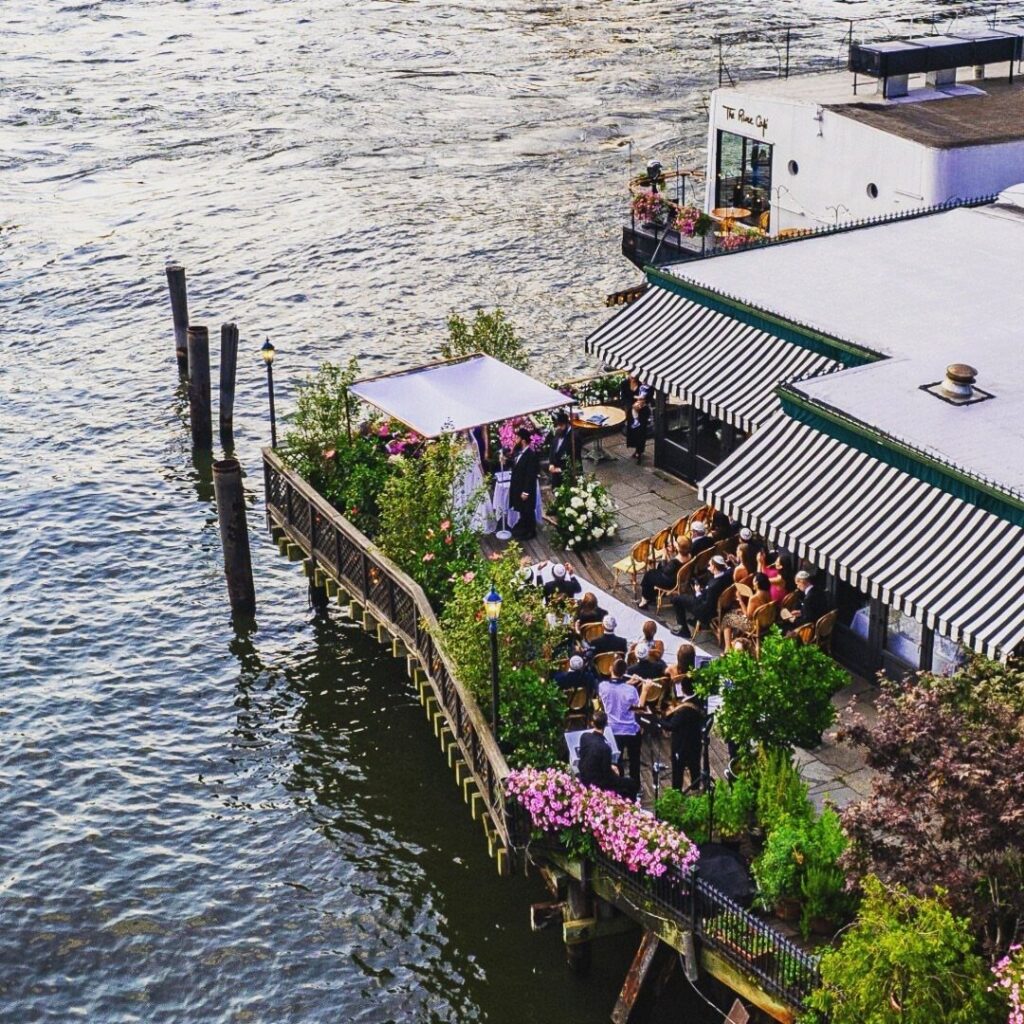
You get water views and the Manhattan skyline from this spot, and the outdoor deck lets you hold your ceremony right by the river.
A canopy provides some shade without blocking the view, though you’ll want a backup plan if wind picks up.
Waterfront venues book far in advance, sometimes a year or more out for peak season.
Evening receptions here catch sunset and the lights across the water. If your budget is tight, expect higher minimums at well-known riverside restaurants.
4. Dumbo Loft
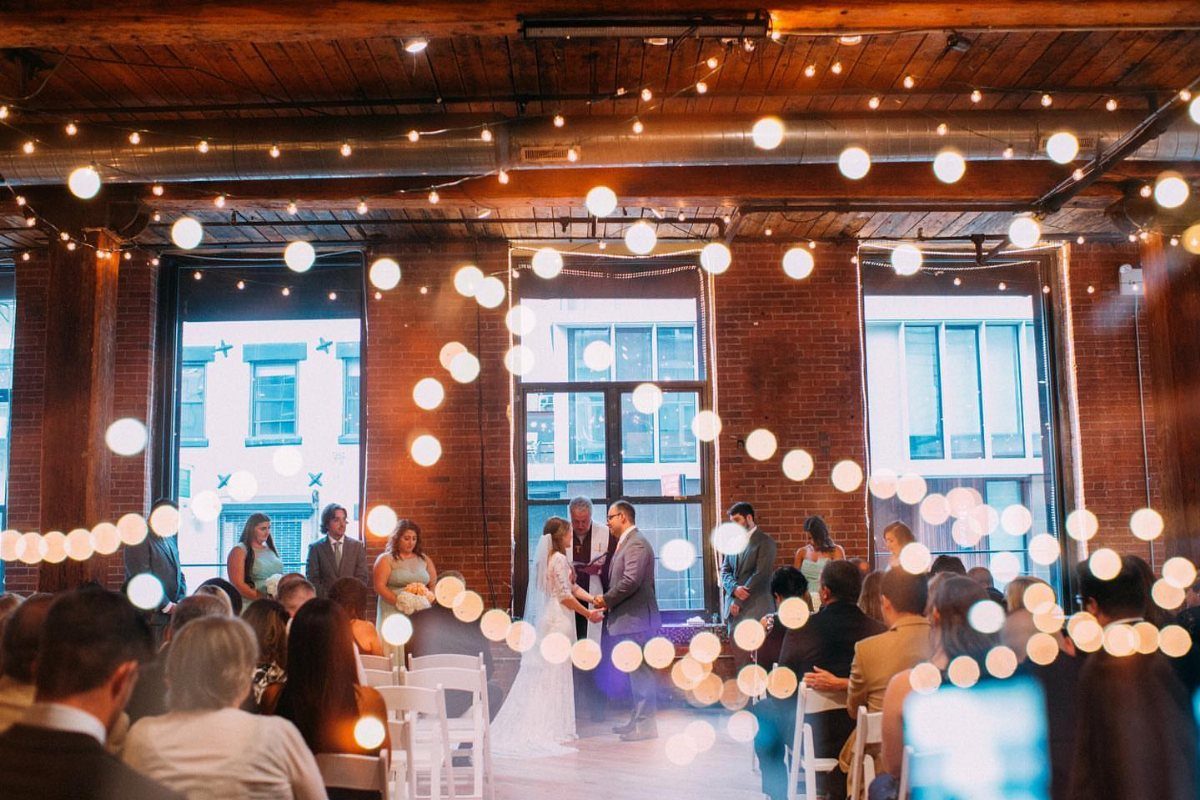
Exposed brick and wood beams give you an industrial frame that works with almost any decorating style. String lights soften the raw materials without covering them up, and the open layout lets you arrange seating however you need it.
Loft spaces give you more control over the setup, but that also means you’re handling more of the details yourself.
You’ll need to bring in your own caterer, rentals, and sometimes even restrooms. That flexibility suits couples who want full control over every detail.
5. Weylin
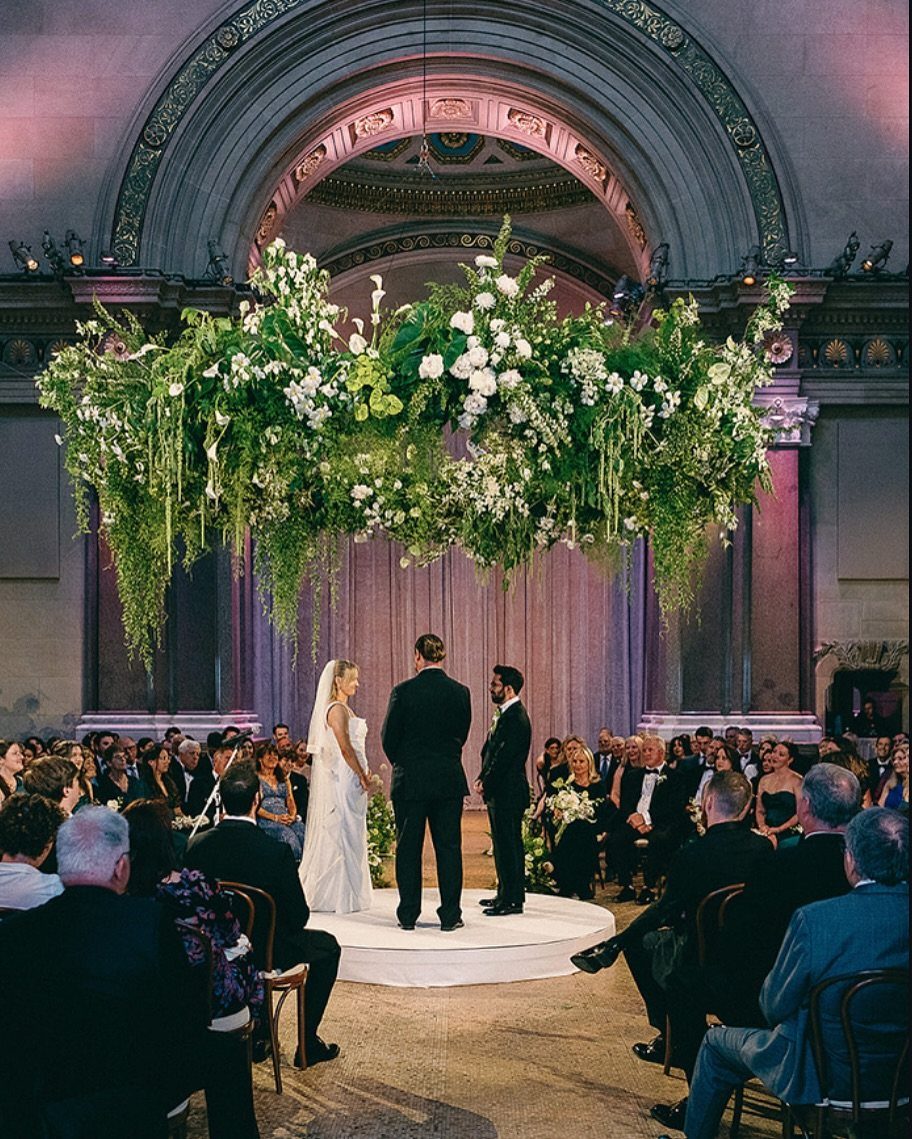
A soaring ceiling and architectural details mean you’re starting with a dramatic space before you add anything.
The floating floral installation here anchors the ceremony without needing an arch or altar, and the historic bones of the building do most of the decorating work.
Grand venues like this one usually carry higher rental fees, but you’ll spend less on decor because the space already reads formal.
If your guest list sits under 75, a room this large can feel empty unless you zone the space carefully.
6. Aurora
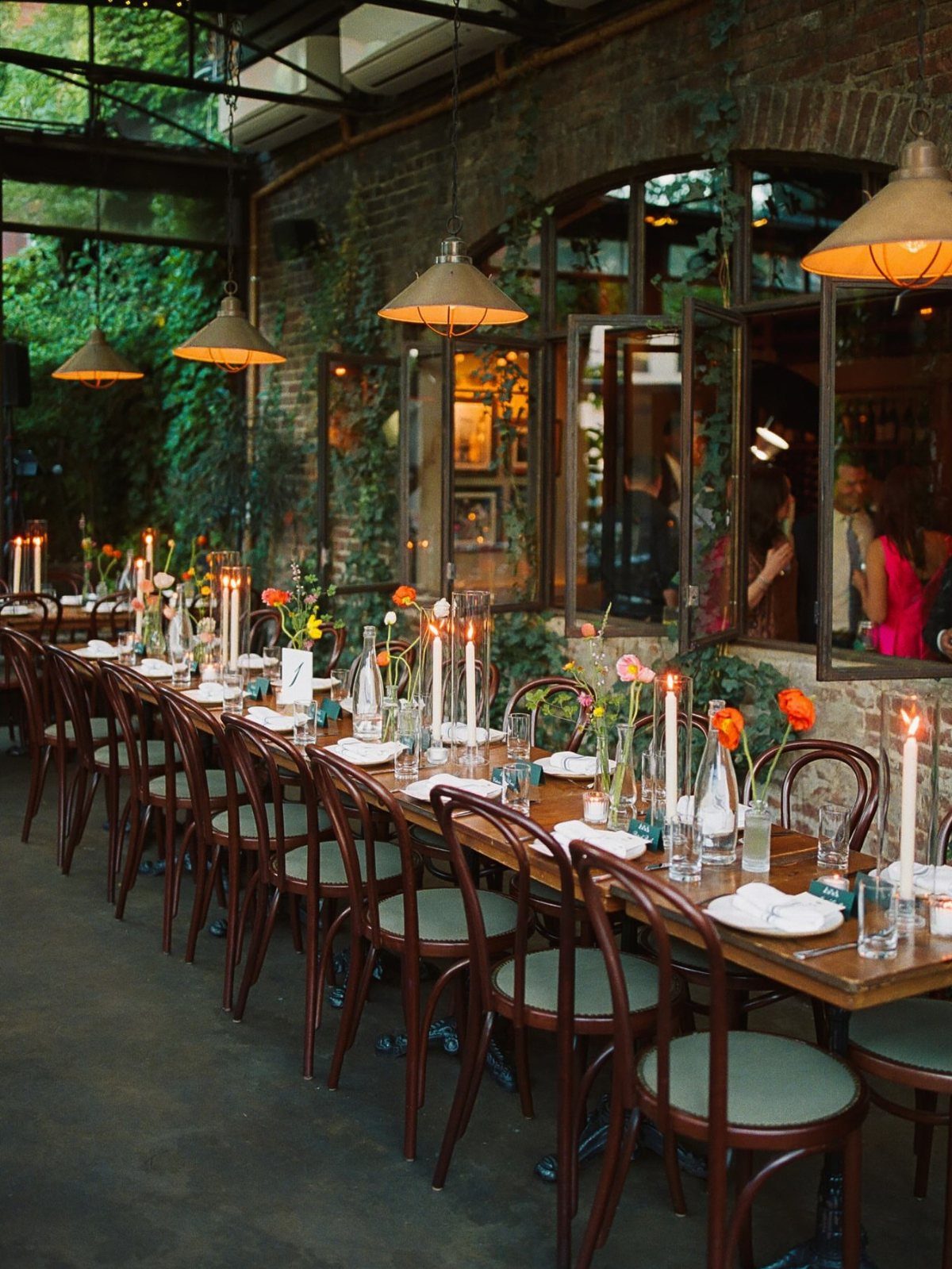
An Italian restaurant with a private courtyard gives you a casual outdoor reception that still feels special. Brick walls and bistro lights create an intimate setting, and you can serve family-style Italian dishes straight from the kitchen.
If your date lands in summer, ask about fans or misters for heat. Restaurant buyouts often include a food and beverage minimum rather than a flat rental fee, so your final cost depends on your guest count and menu choices.
7. Prospect Park Boathouse
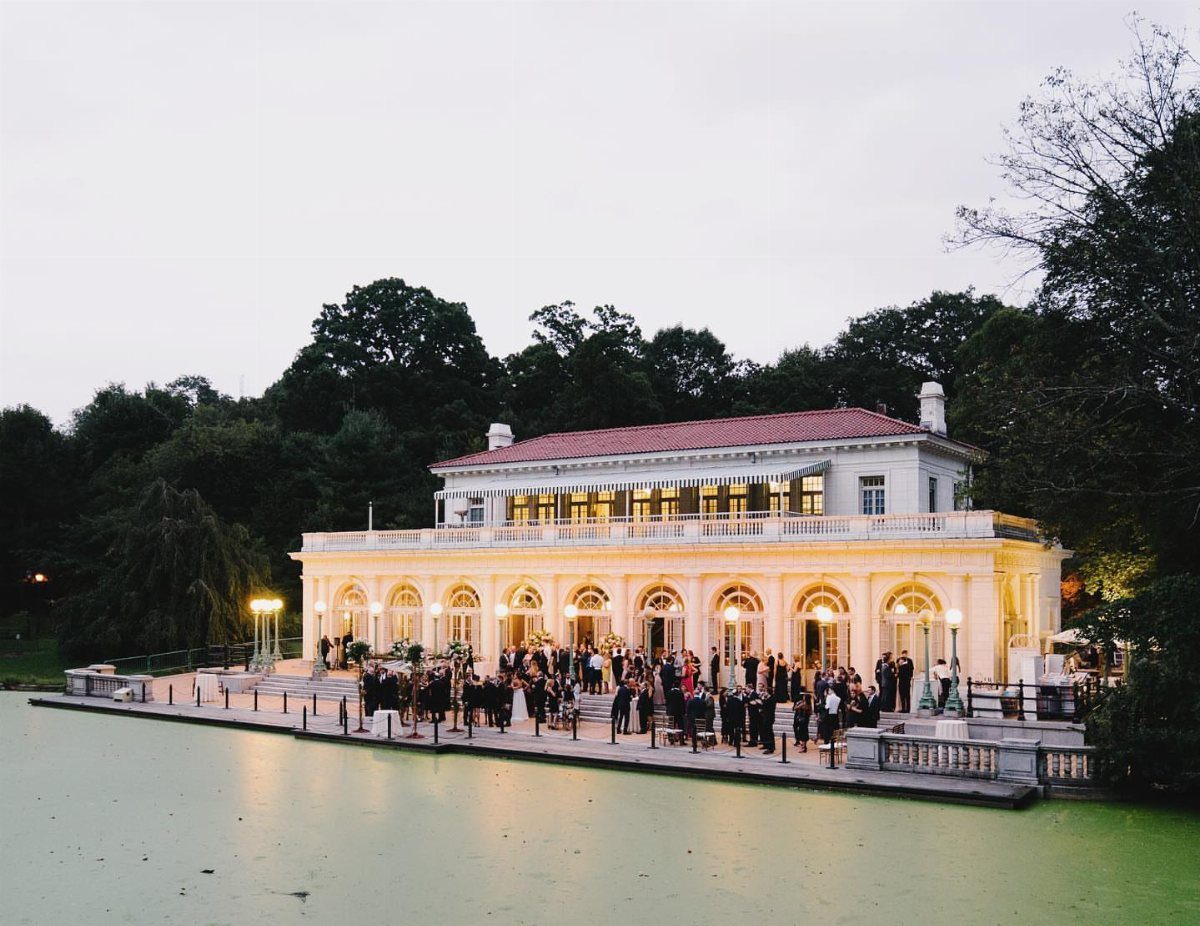
A lakeside terrace gives you an outdoor ceremony with water views and a historic building as your backdrop. The location sits inside a public park, which keeps the setting green and open without requiring a rural drive.
Outdoor venues here depend on season and weather. Spring through early fall works best, and you’ll need a tent or indoor backup if rain is likely.
Park venues often require permits and come with noise restrictions, so check curfew times before booking if you want dancing late into the night.
8. Rooftop Ceremony with a Skyline View
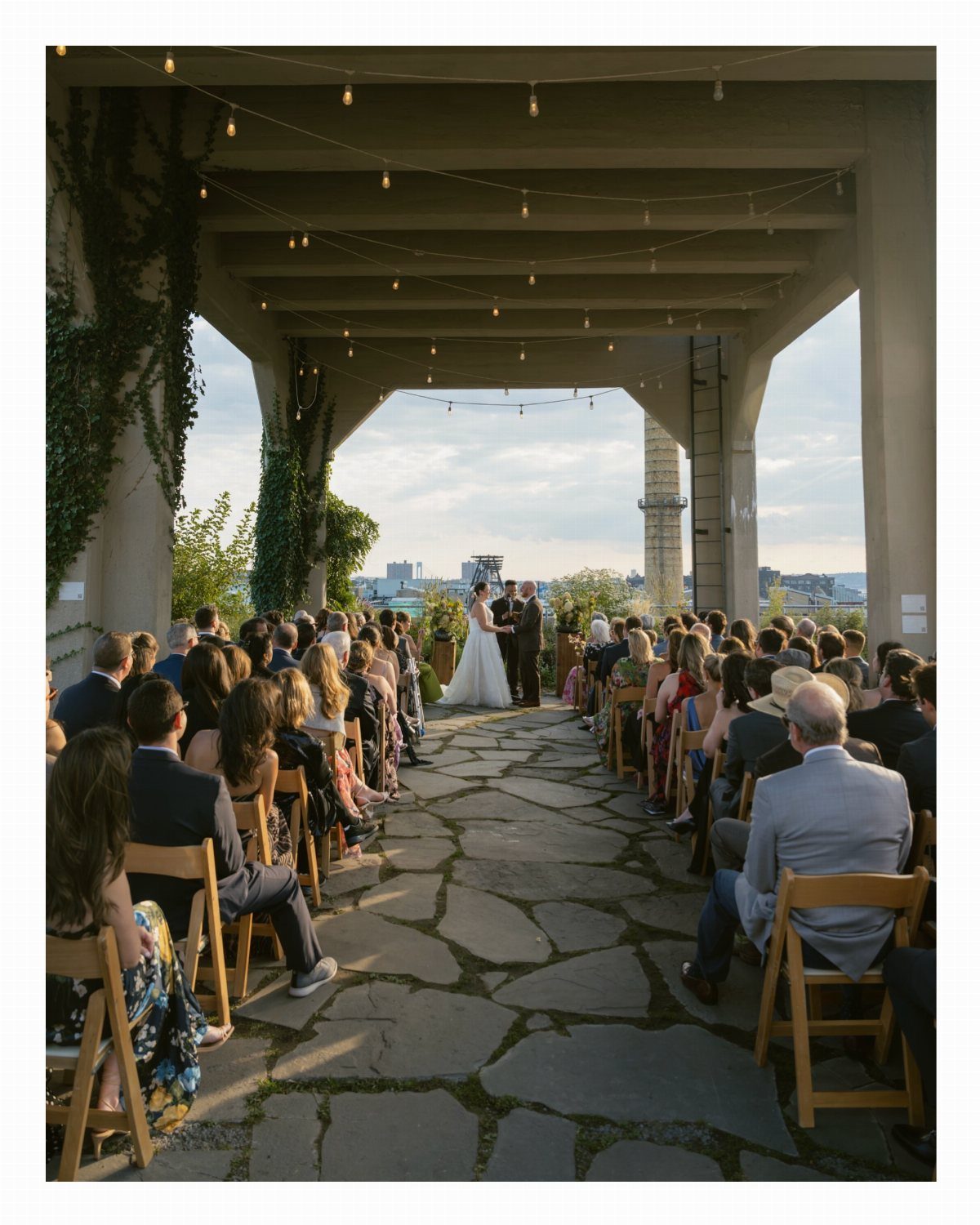
A covered rooftop lets you hold your ceremony outdoors without gambling entirely on weather. The pavilion structure provides shade and some wind protection while keeping the skyline visible behind your vows.
Rooftop access means stairs or elevators, which can slow guest arrival.
If older family members or anyone with mobility limits is attending, confirm how guests reach the space. Wind picks up faster at height, so secure any loose decor and warn guests about heels on grated surfaces.
9. 501 Union
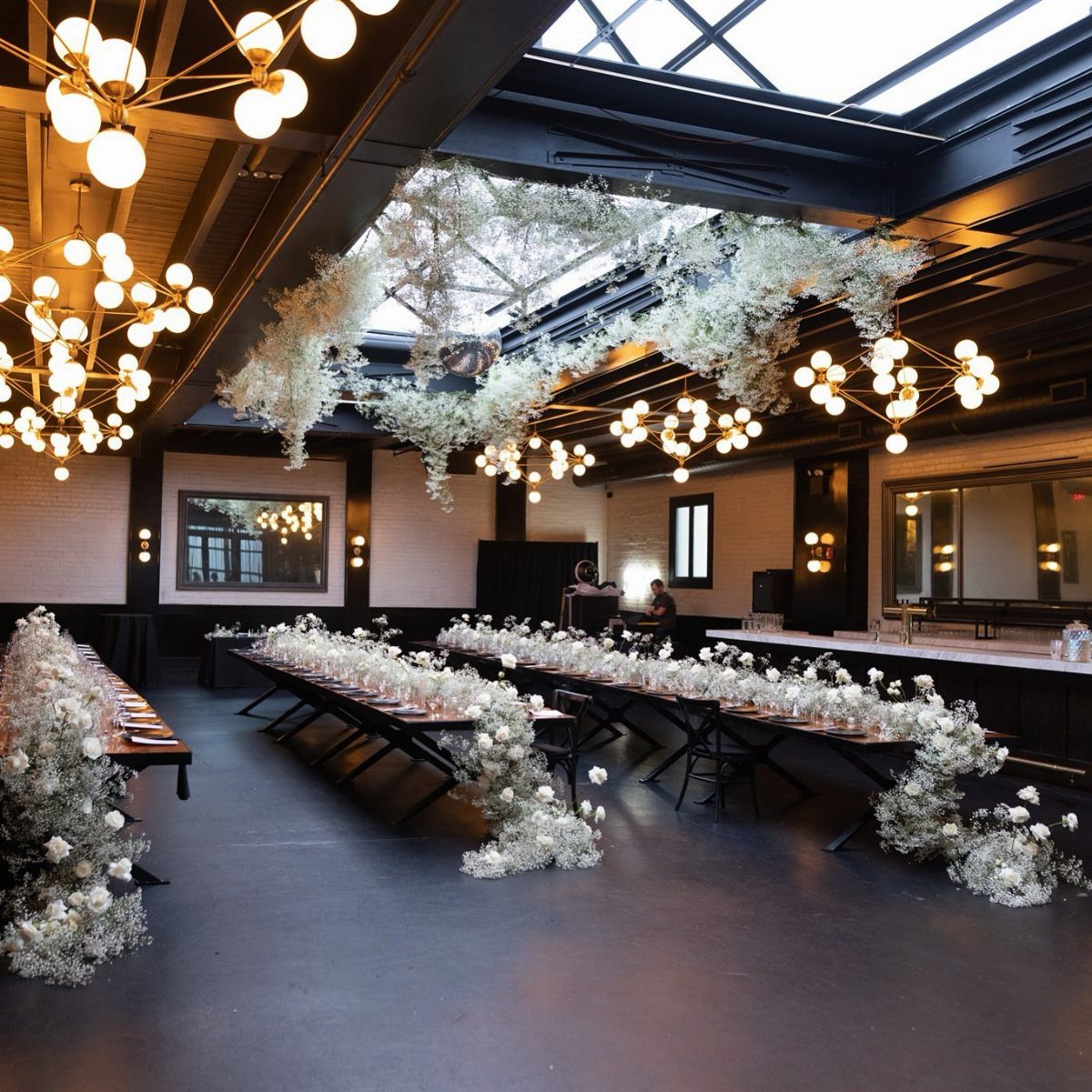
Black walls and ceilings make a bold frame that lets your florals and lighting stand out sharply. The dark backdrop works especially well with white or greenery-heavy arrangements, and modern fixtures keep the look current instead of feeling too raw.
Industrial venues with painted surfaces tend to run quieter than exposed concrete spaces, which helps with acoustics during toasts.
If your style leans minimal, a dark room like this one needs less decor to feel finished than a white-walled loft would.
10. Glass Atrium with Checkerboard Floor
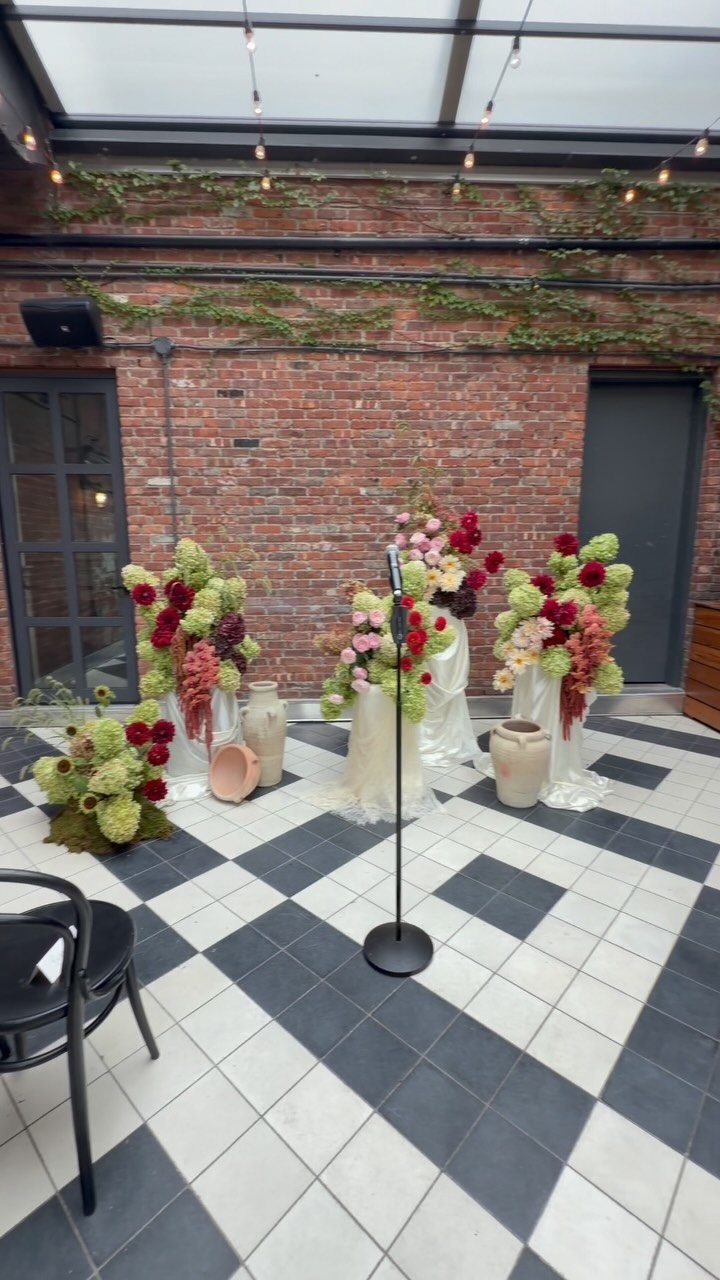
A glass ceiling brings daylight into a covered space, and the checkerboard floor gives you a graphic base that reads formal without needing much added decor.
Brick walls warm up the look and provide texture that keeps the room from feeling too stark.
String lights overhead add warmth for an evening reception when natural light fades.
If your florals run simple, the strong floor pattern carries enough visual interest on its own. Venues with patterned floors photograph well but can compete with busy table linens, so keep your cloth choices solid.
11. Industrial Hall with Stained-glass Accents
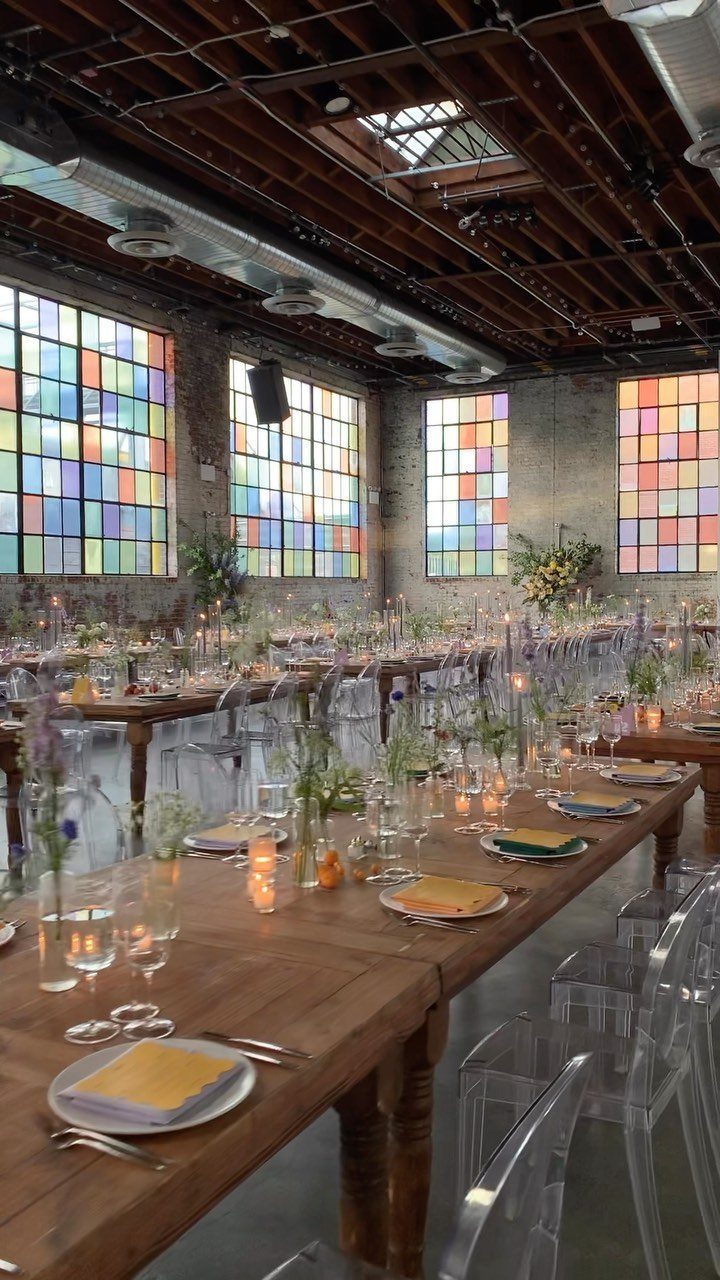
Stained-glass windows bring color into an industrial space without softening its edges. The mix works because the windows stay architectural rather than decorative, and the color they cast changes as daylight moves.
Clear acrylic chairs keep sightlines open in a large hall, and long tables maximize seating in a narrow footprint.
If your guest count exceeds 120, check whether the space allows for a separate dance floor or if you’ll need to clear tables after dinner. High ceilings amplify sound, so ask about acoustics during speeches.
12. Cozy Library-style Private Dining Room
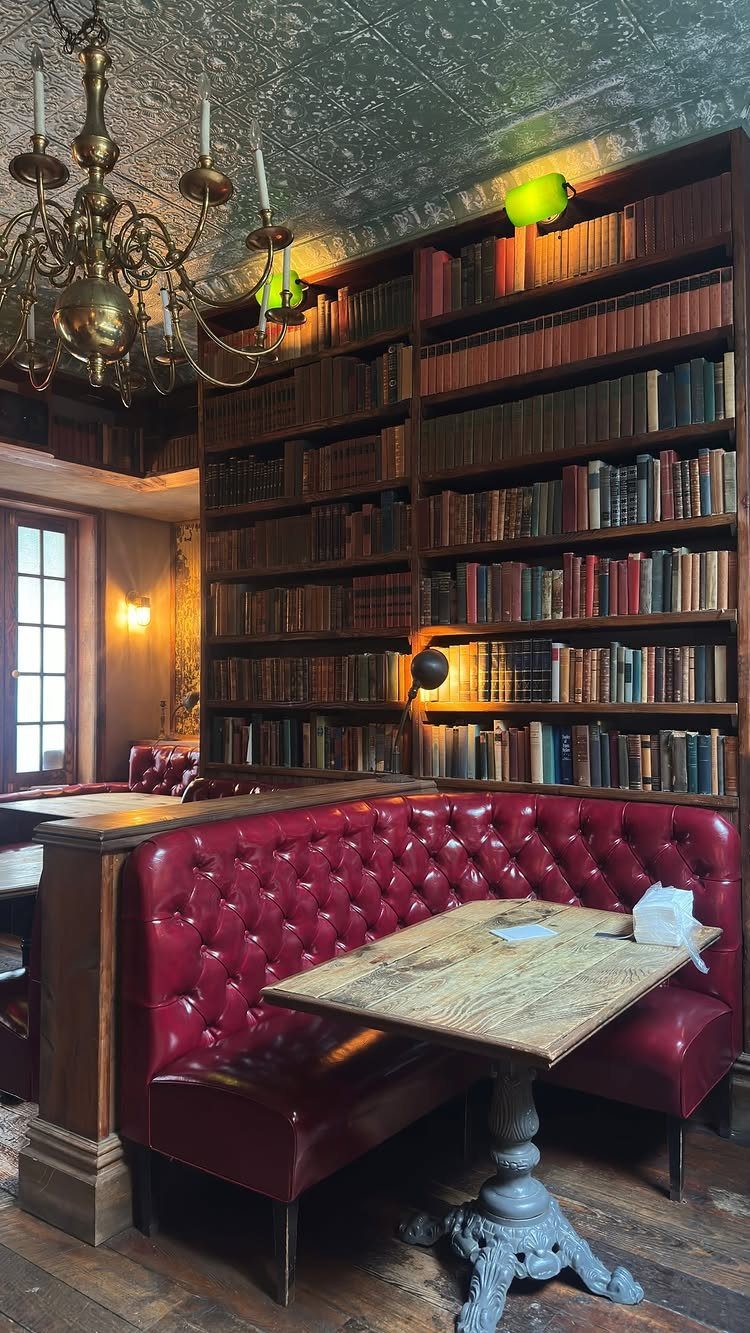
A private dining room with built-in bookshelves suits a small wedding that prioritizes conversation over a full reception. The tufted booth and wood table create an intimate setting that feels more like a dinner party than a ballroom event.
This layout works best for guest counts under 30. If you want a seated dinner with multiple courses, a restaurant buyout gives you professional service and an existing kitchen without needing to coordinate outside vendors.
Venue Features
Indoor backup matters more than most couples think when they first fall for an outdoor ceremony site.
Catering setup changes your timeline and your budget. A raw space where you bring in your own caterer gives you menu freedom but adds vendors, rentals, and load-in time.
Accessibility shows up in unexpected ways.
Guest Capacity
Most Brooklyn venues I see couples consider fall between 75 and 150 guests. That range fits a seated dinner with a dance floor in a loft or restaurant space without the room feeling packed or empty.
Smaller venues work well under 30 people.
A half-empty ballroom reads awkward in photos, and filling the space with decor to make it feel right costs more than booking a smaller room.
Capacity limits sometimes depend on layout.
Budget Considerations
Venue rental fees in Brooklyn start around $2,000 for smaller spaces and climb to $10,000 or more for high-demand months at well-known spots.
Off-season months drop the price. A January or February Saturday at a popular loft might run $4,000 while the same space in October costs $14,800.
If your guest count sits under 50, a minimum spend can feel steep, but it often includes service, which saves you from hiring separate staff.