Floor-length gowns suit formal and black-tie ceremonies, while midi and tea-length options work for semi-formal or daytime garden weddings. The dress code on the invitation tells you which length and fabric level the event calls for.
1. Floor-length Dress
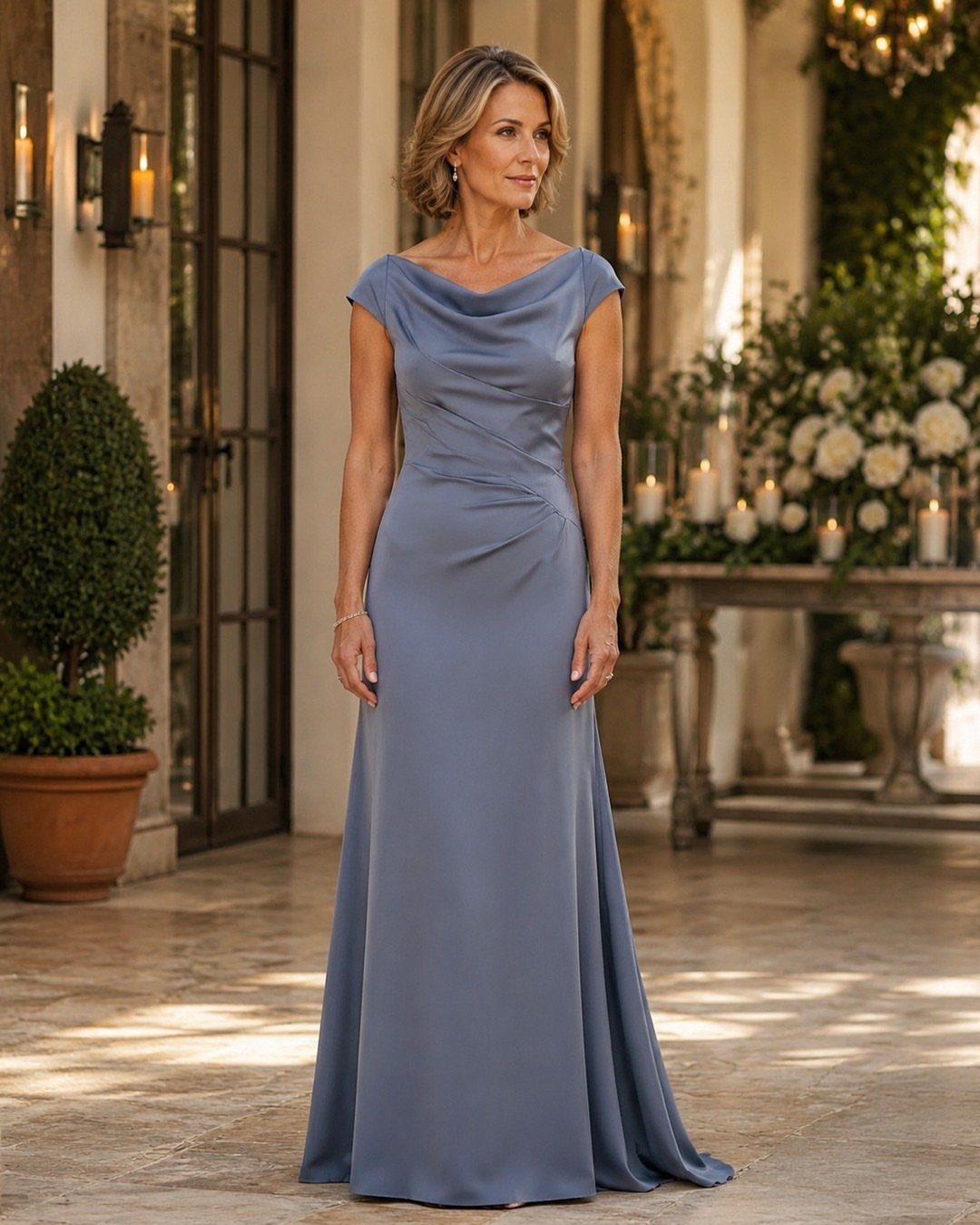
A floor-length gown in slate blue or a similar muted jewel tone reads formal without feeling costume-like, and the long hemline suits seated ceremonies where shorter styles can bunch or ride up.
The coverage keeps you comfortable through outdoor cocktail hours and air-conditioned ballrooms alike.
Fitted through the bodice and skimming the hips gives structure without clinging. Pair with low heels or dressy flats, since the hem will reach the floor either way.
2. Draped Dress
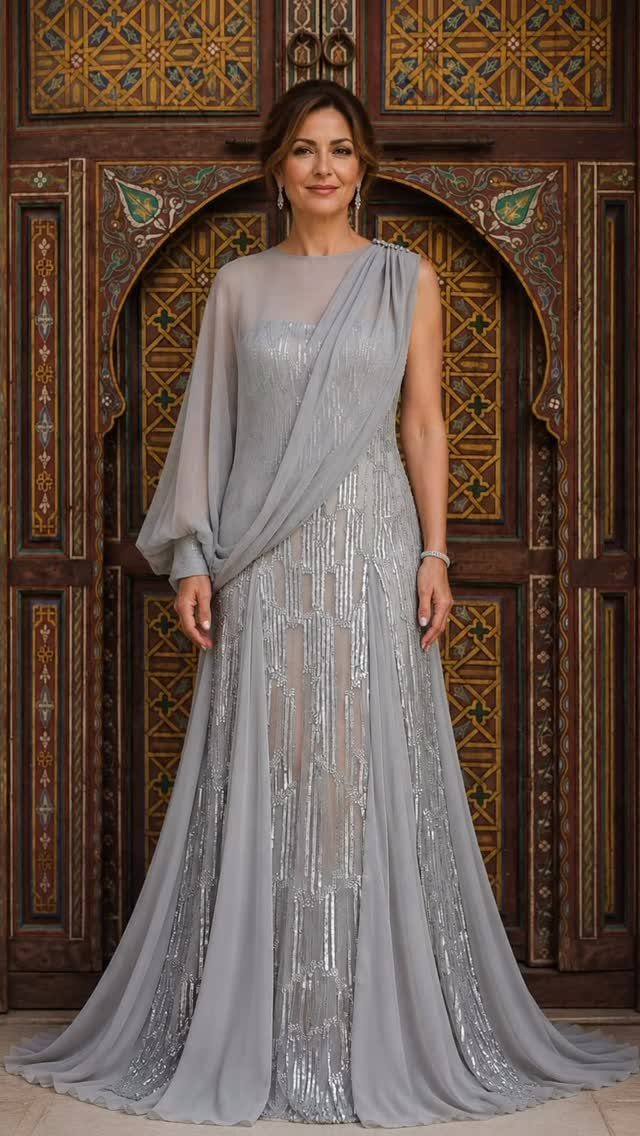
Draped fabric gathers softly at the waist or shoulder instead of pulling tight, so the silhouette moves with you and flatters without feeling restrictive.
Grey or charcoal with scattered sequins catches light during evening receptions, and the sheer sleeve adds coverage that still feels dressed up.
Look for a dress where the draping sits at the natural waist rather than below it, which keeps the proportions clean.
The extra fabric means more weight in the skirt, so this style works best in thinner materials like jersey or silk blends.
3. Midi and Tea-length Dresses
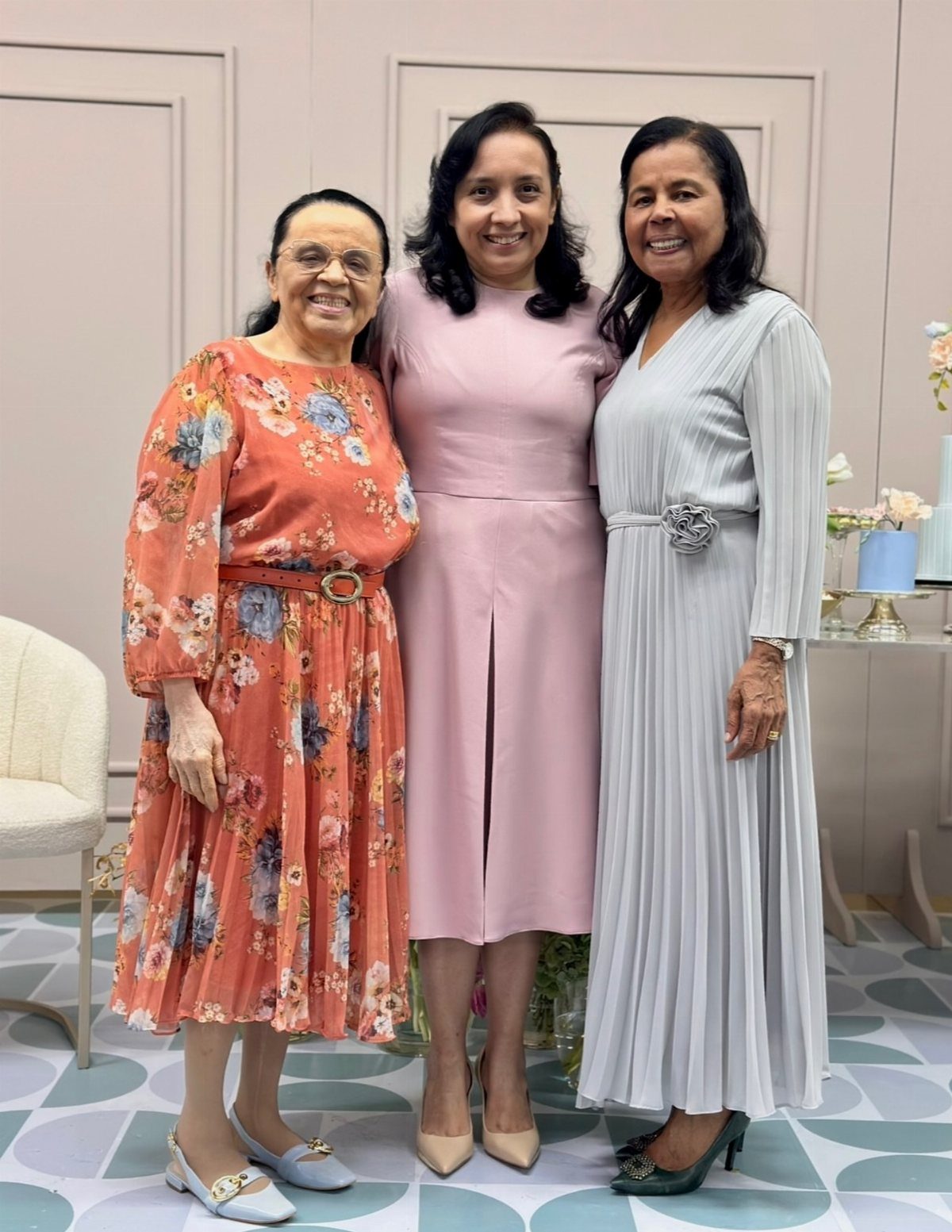
Midi and tea-length hems fall between the knee and mid-calf, which keeps you looking polished when seated and eliminates any worry about tripping on stairs or grass.
These lengths suit daytime garden weddings and semi-formal indoor events equally well, and they pair easily with block heels or kitten heels.
Pleated skirts add movement, while solid colors in pink or grey stay neutral enough to wear again. A floral print in warm tones brings more personality if the wedding leans casual.
4. Lace Jacket and Matching Dress
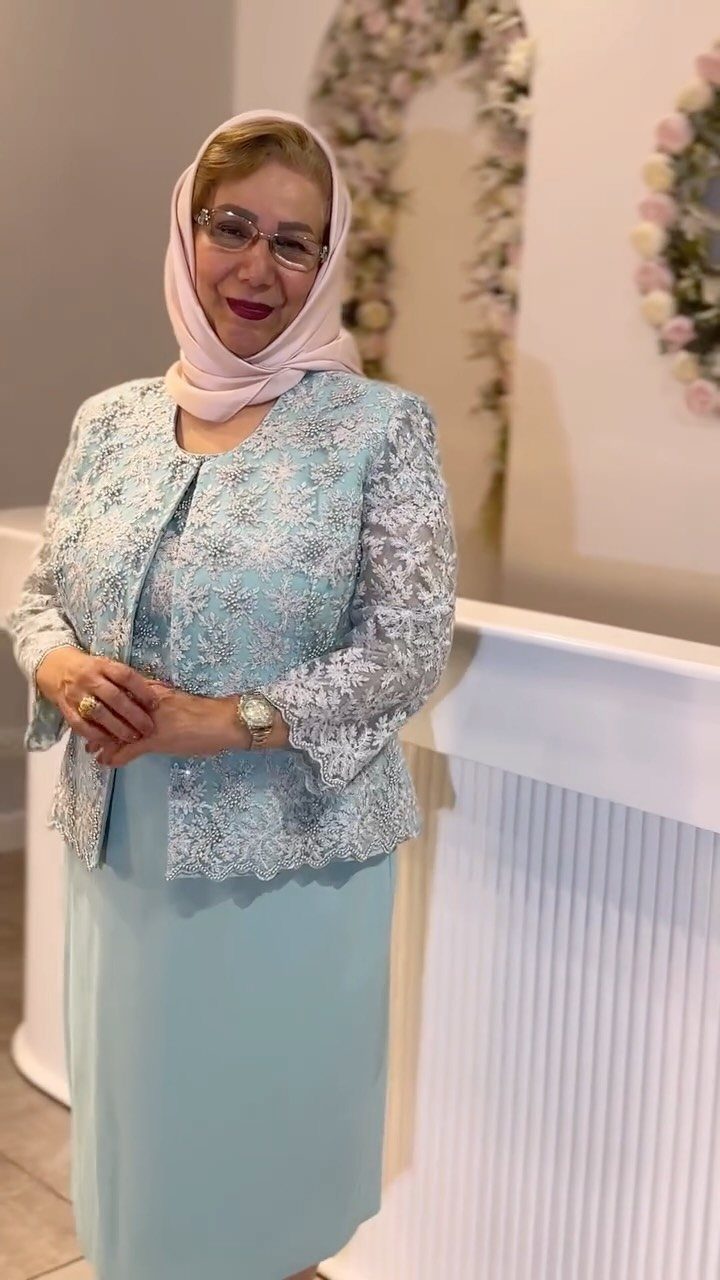
A lace jacket over a matching dress gives you the option to adjust your coverage between the ceremony and reception, and the coordination makes the outfit feel intentional rather than pieced together.
Light blue lace feels more modern than ivory or champagne, and the knee-length dress underneath stays formal enough for most wedding settings.
The jacket usually hits at the hip, so it works best over a fitted dress rather than one with a full skirt. You can remove it for dancing or keep it on if the venue runs cold.
5. Floral Print Wrap Dress
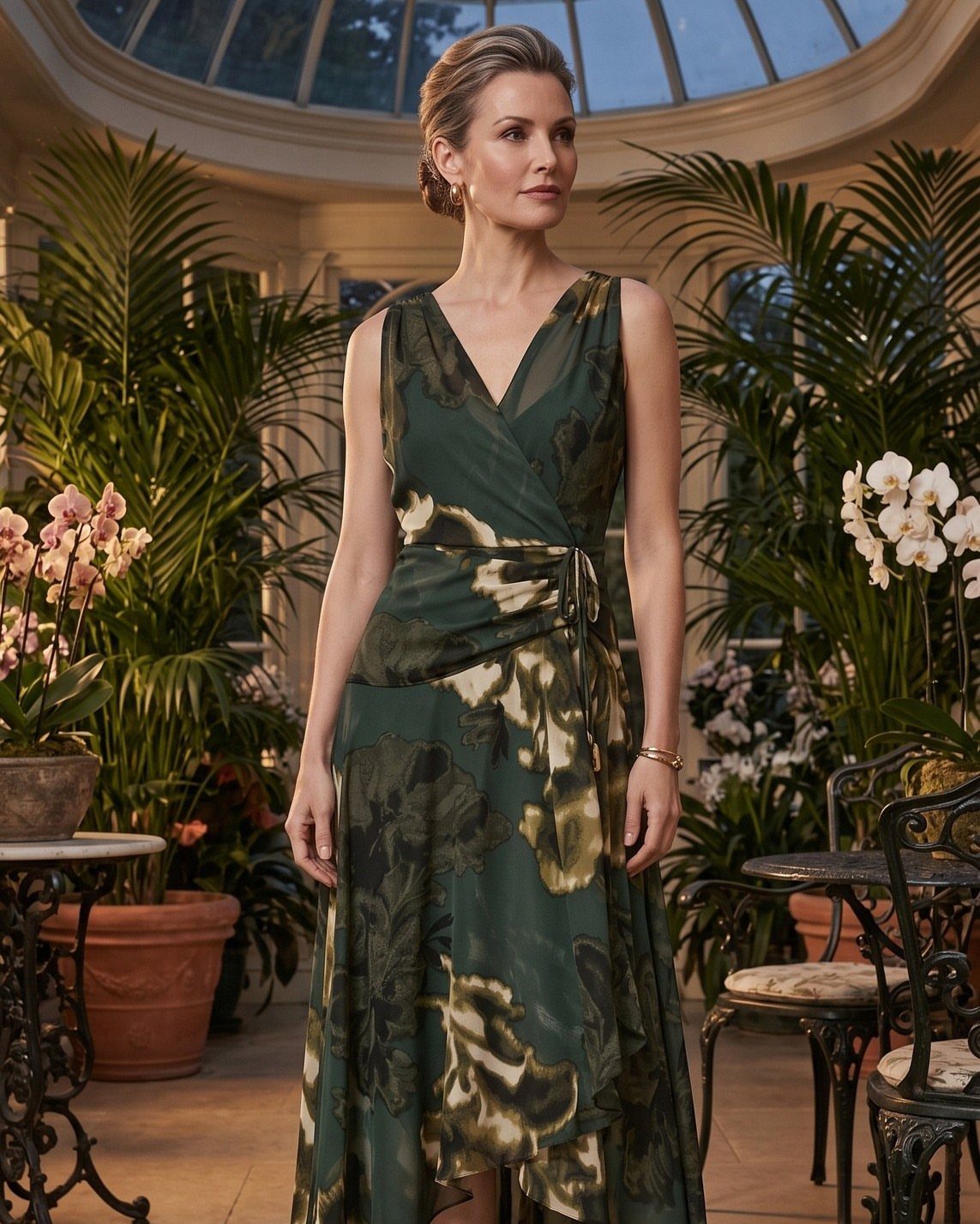
A wrap dress adjusts to your exact measurements at the waist, which makes it easier to find a comfortable fit off the rack.
Dark green with a floral print feels festive without leaning too casual, and the sleeveless cut works for spring and summer weddings in warmer climates.
The V-neckline elongates your torso, and the tie at the waist stays secure as long as you knot it properly and tuck the ends. Add a small clutch and drop earrings to finish the look.
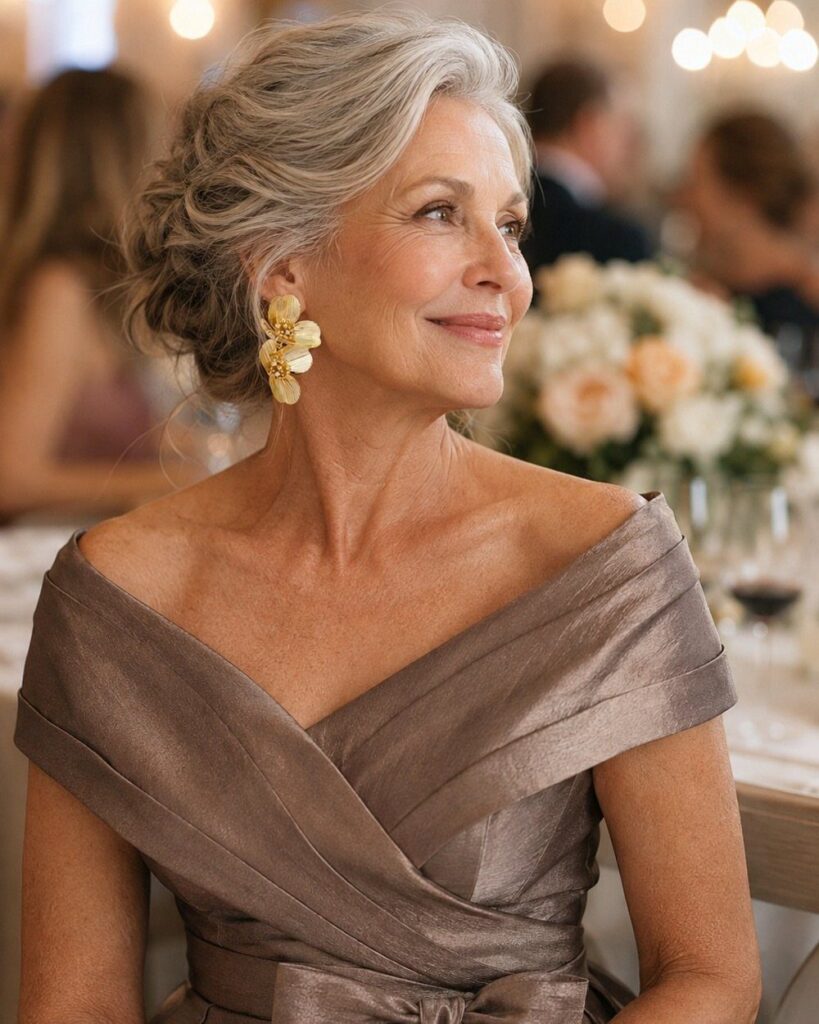
6. Belted Long-sleeve Dress
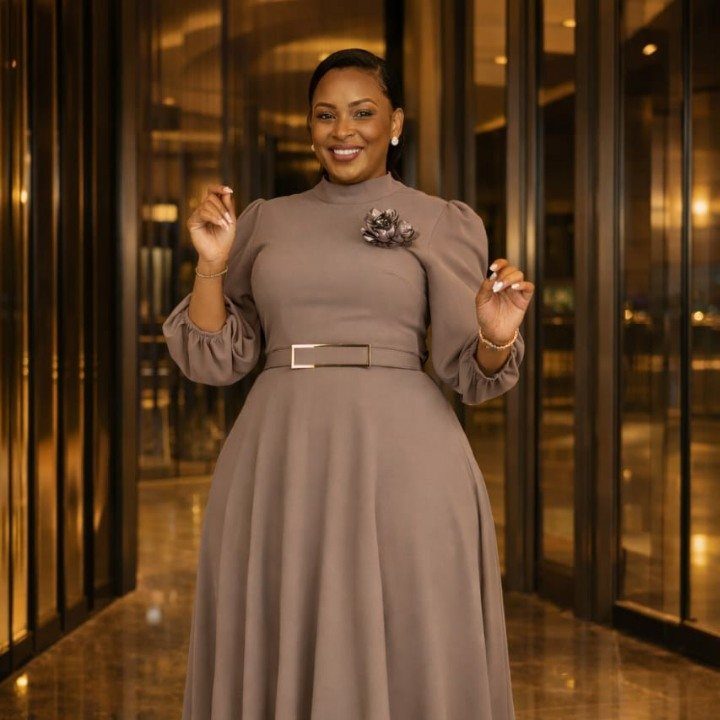
Long sleeves and a high neckline give full coverage for religious ceremonies or formal fall and winter weddings, and the belt defines your waist without adding bulk.
Taupe reads neutral but more refined than black, and a floral brooch at the shoulder or chest adds detail without competing with the dress itself.
The structure here means the fabric holds its shape, so you stay polished through hours of sitting and standing. Pair with simple pumps and skip the necklace, since the neckline already sits high.
7. Floral Appliqué Bodice Dress
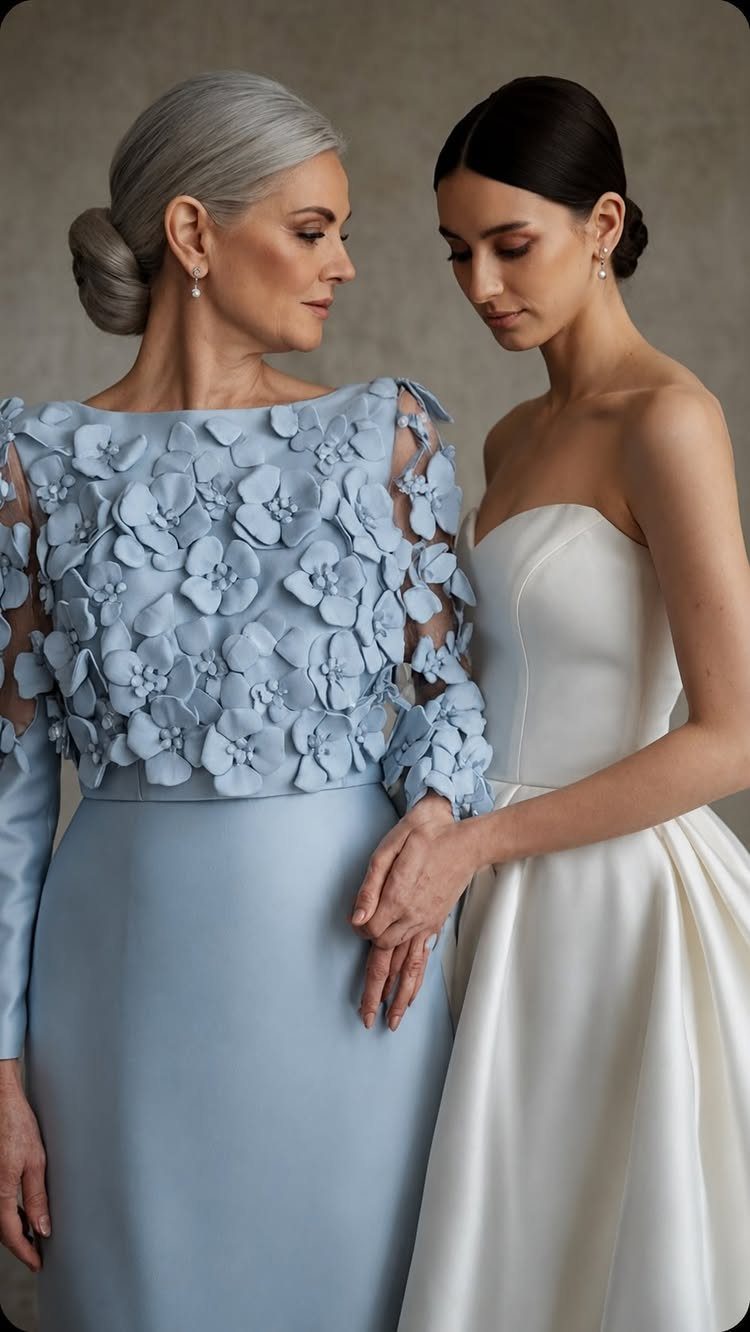
Floral appliqués built into the bodice add dimension and texture that photographs beautifully without the formality of a fully embellished gown.
Light blue reads soft and appropriate for daytime or evening weddings, and the three-dimensional flowers give you a focal point that draws attention upward.
The appliqués usually stop at the waist, so the skirt stays simple and the dress feels balanced rather than busy. This works well for spring and summer celebrations where floral details feel seasonal.
Comfort Considerations
Sit down, lift your arms overhead, and notice whether the bodice shifts or the sleeves bind. Walk a few steps to see if the hem catches your stride, and check whether the neckline holds steady when you move.
Unlined lace and thin jersey often cling or shift over the course of a long event, while heavily boned bodices can feel restrictive once you sit down for dinner.
If a dress needs repositioning after you stand from a seated position, it will need the same attention all evening.
A simple fitting-room test covers most of this: sit, raise both arms, then stand. If the fabric bunches, the waistline rides up, or the straps pull, keep looking.
Dress Code Guidance
The invitation usually lists the dress code, which tells you how formal the event will be and what length and fabric suit it.
Cocktail or semi-formal invitations call for knee to midi length in chiffon, crepe, satin, or lace. Formal dress codes open the door to a refined midi or a full gown, and black tie still expects floor length.
Measure your bust, waist, hips, and height and match those numbers to the brand’s size chart instead of choosing your typical size. Most guest dresses fall between $95 and $205, with free shipping over $159.
Check how long tailoring takes for that particular dress, then factor in shipping so you have room for alterations before the date.
Coverage Options
Sleeve length and coverage affect both comfort and how formal the dress reads. Sheer panels, low backs, fitted sleeves, and high slits change what undergarments you can wear and how much adjusting you will do throughout the event.
Think through which bra, shaping piece, or slip works under the dress before you place the order.
Frequently Asked Questions
What length dress should a woman over 50 wear to a wedding?
The right length depends on the formality and setting, not your age. Midi and tea-length hems stay polished when seated and work for most semi-formal celebrations, while floor-length gowns suit formal evening weddings and ballroom settings.
What colors should I avoid as a wedding guest?
Skip white, ivory, cream, and anything with all-over white lace that could read as bridal in photos.
Find out what the bridesmaids are wearing before you buy, and check with the couple before choosing red if their traditions reserve it for the bride.
Do I need sleeves on a wedding guest dress?
Sleeves come down to personal comfort and how you want the dress to look, not a rule. Three-quarter or full sleeves give coverage for religious ceremonies and cooler venues, but sleeveless styles work fine for spring and summer celebrations.
What fabrics hold up best over a full wedding day?
Crepe, heavy satin, and lined lace keep their shape all day and still photograph well by the time dancing starts. Unlined lace and thin jersey wrinkle fast and can look worn out in any photo taken after cocktail hour.