Radhika Merchant’s wedding outfits spanned 9 distinct looks, each matched to its ceremony’s dress code and symbolic weight.
The right outfit for you depends on which event you’re dressing for: a Panetar lehenga’s white silk and gold thread suit the main ceremony, while a yellow haldi look with floral jewelry fits the turmeric ritual, and a purple embellished lehenga works for pre-wedding festivities once you’ve changed.
1. Bridal Panetar Lehenga
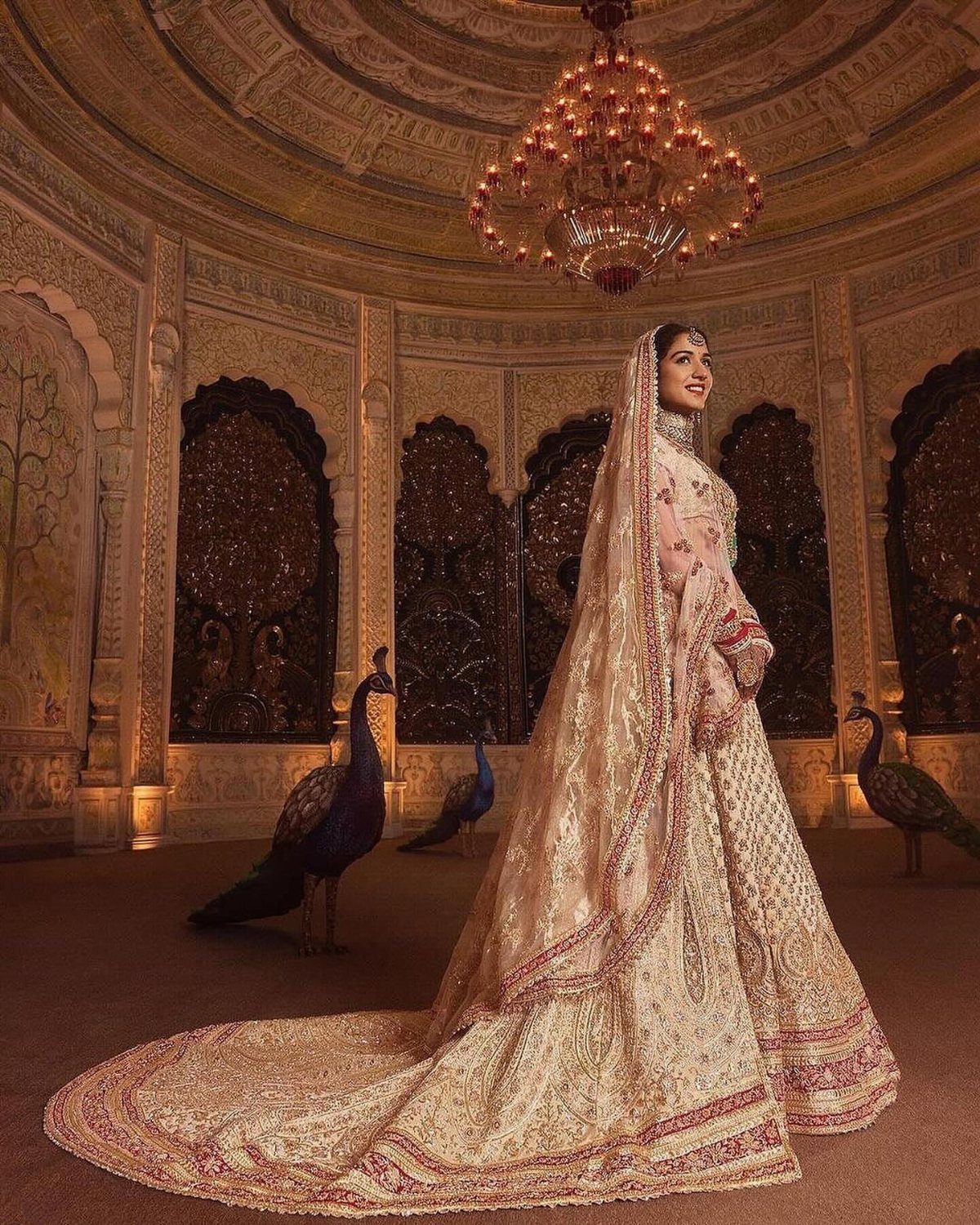
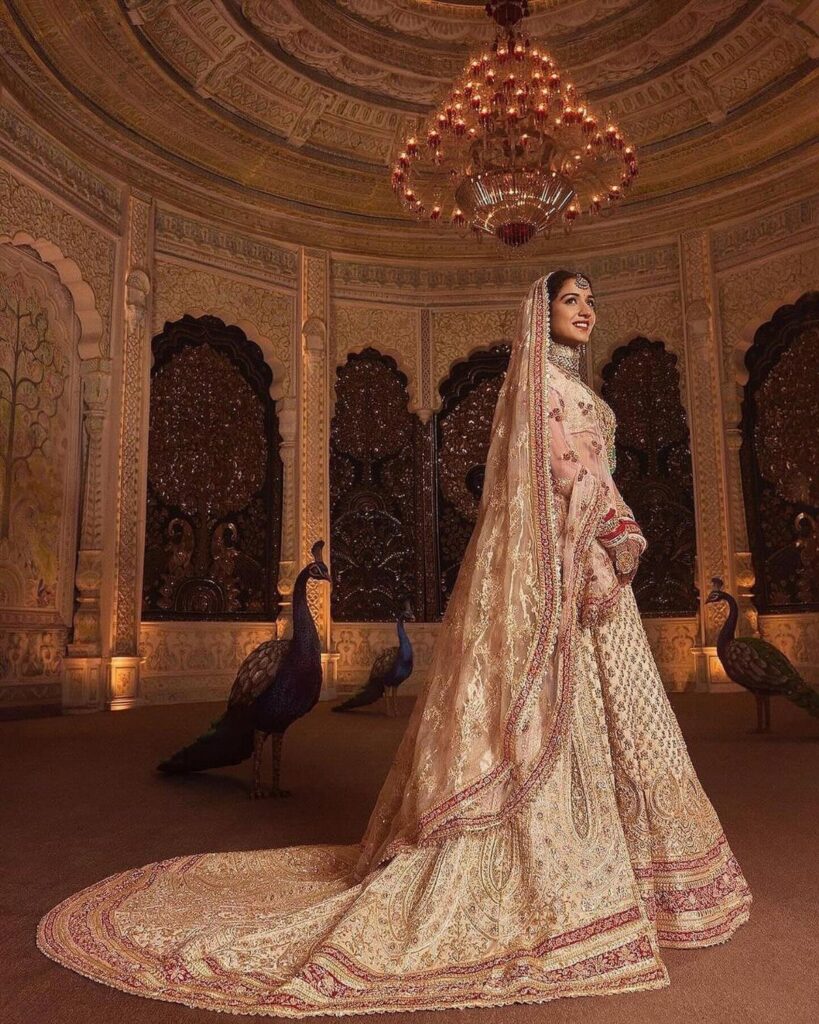
A Panetar lehenga holds sacred meaning in Gujarati weddings: white silk symbolizes purity, red brings blessings, and gold thread woven through the fabric honors tradition.
The long trail adds dramatic presence for ceremony photos and makes the walk down the aisle feel significant.
Gujarati brides typically receive the Panetar from their maternal uncle during pre-wedding rituals, though many now work with a designer to create a custom version that honors the palette while adding their own details.
The white base keeps embroidery work visible, so even dense gold zardozi stays crisp.
2. Shimmering Cream Embellished Saree
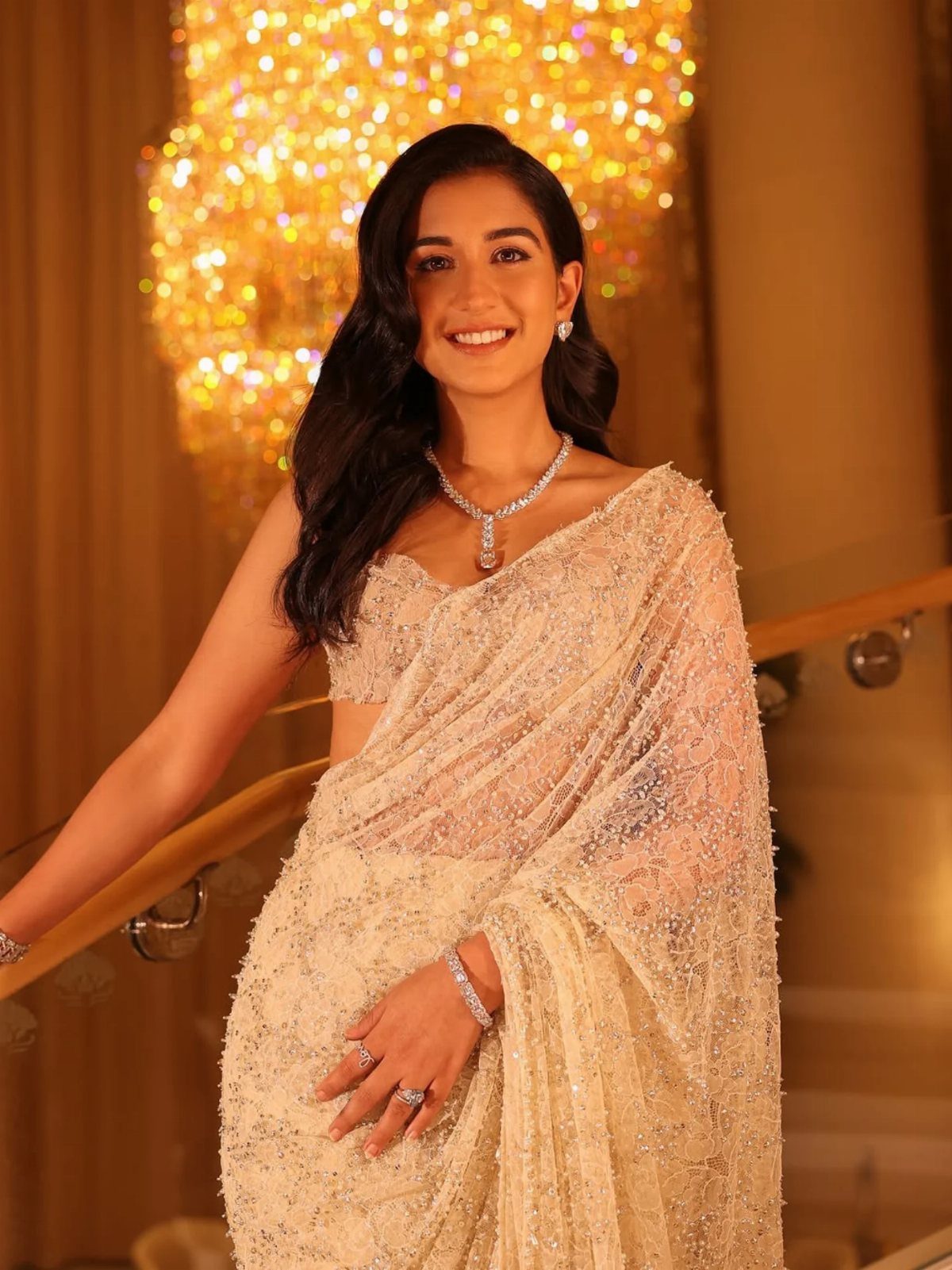
Cream silk catches light differently than white, giving saree drapes a warmer glow under evening reception lighting. Heavy embellishment across the fabric, whether sequins, beads, or threadwork, creates constant shimmer as you move.
Pairing the saree with layered diamond jewelry brings the whole outfit together without competing colors.
A statement diamond necklace anchors the neckline, and matching earrings frame your face in photos. The cream base lets diamonds stand out while still feeling soft and elegant rather than stark.
3. Gold Metallic Top with White Skirt
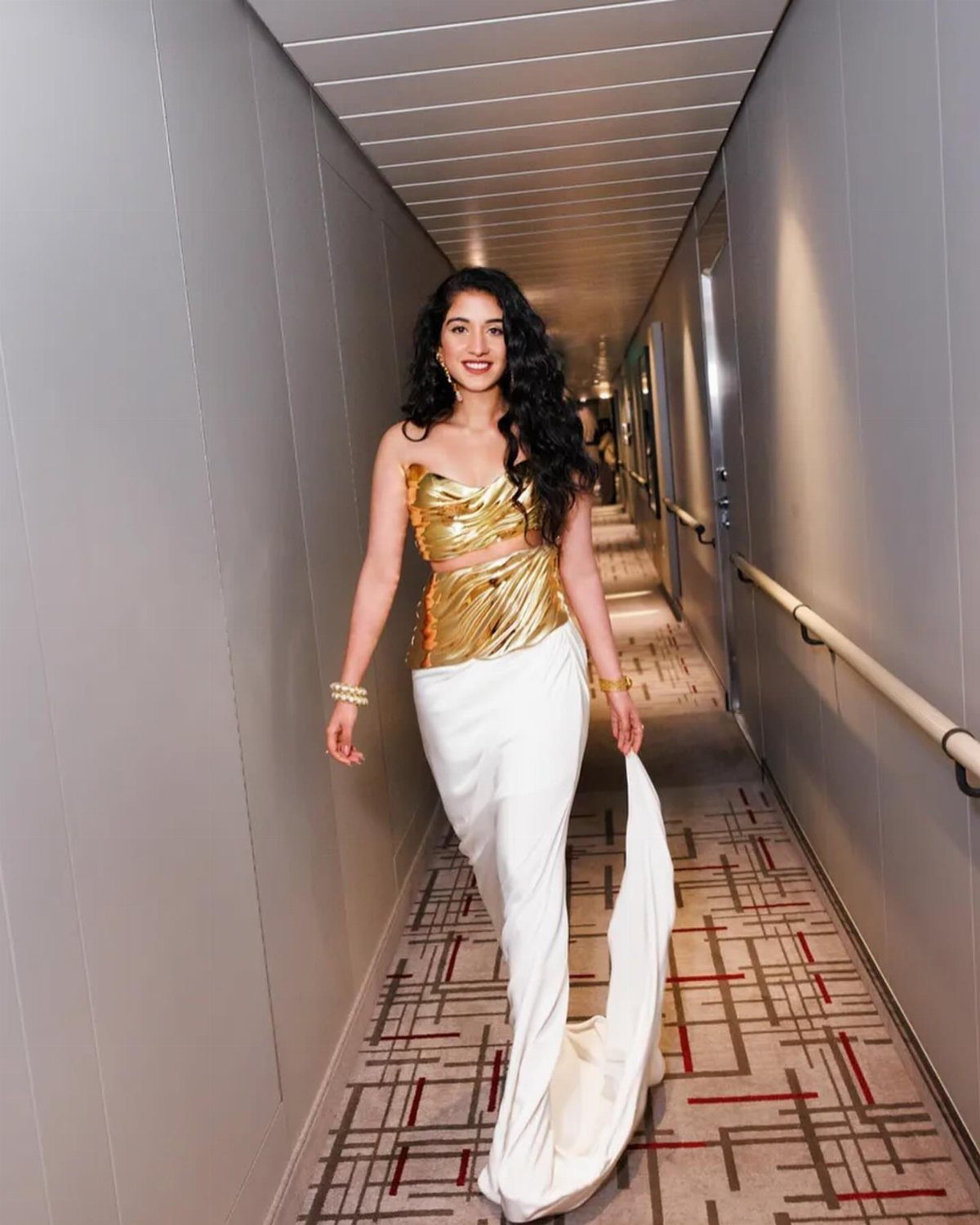
A structured metallic crop top paired with a flowing floor-length skirt splits the difference between traditional lehenga and contemporary separates.
Gold metallic fabric in a fitted silhouette gives formal polish, while the white skirt grounds the outfit and makes it easy to move in.
This combination works especially well for pre-wedding events like a mehendi after-party or sangeet, where you want something ceremonial but not full bridal. The crop length shows off waist detailing, and the skirt’s simplicity balances the metallic shine up top.
4. Peach Embellished Reception Lehenga
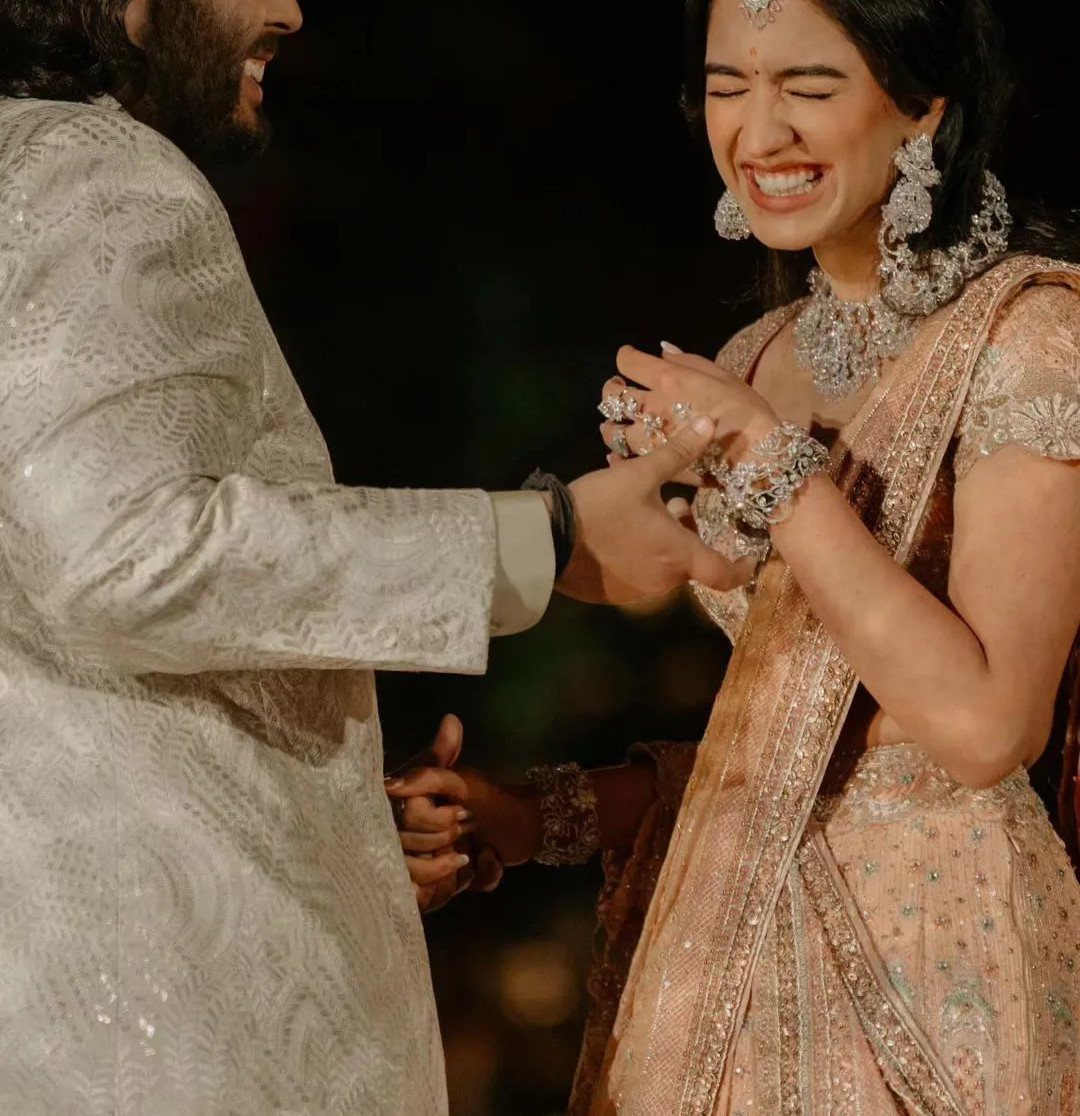
Peach catches light beautifully, and the soft warmth works whether you’re indoors under chandeliers or outside after dark. Embellishment across the lehenga gives the fabric dimension, and the color stays warm under both natural light and string lights.
A heavy diamond necklace against peach silk creates soft contrast without the starkness you get with white or ivory.
The color feels celebratory but not loud, and it photographs with more warmth than blush or champagne tones that can wash out in certain lighting.
5. Grah Shanti Pooja Outfit
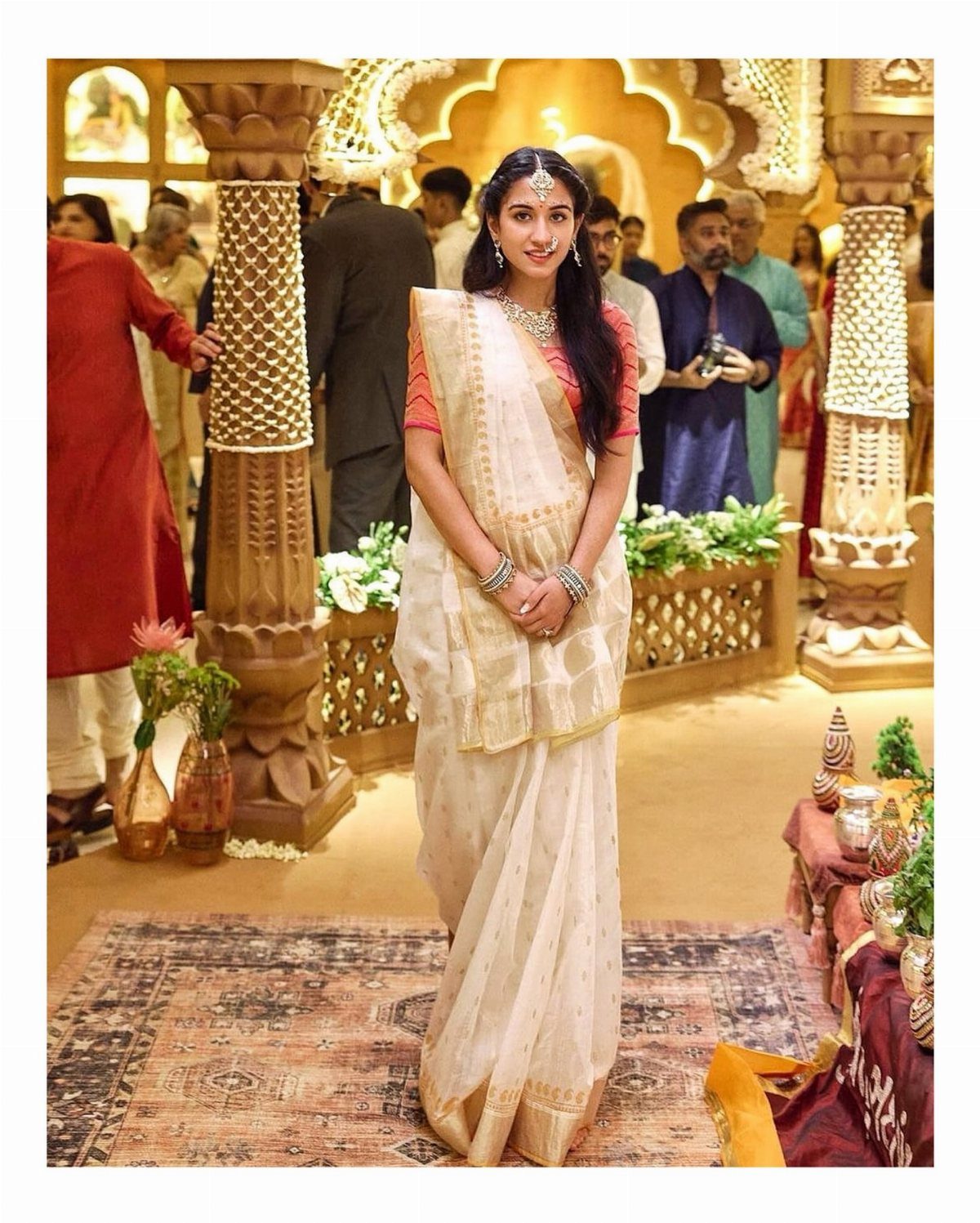
White cotton or silk sarees with a colored blouse suit the simplicity of a Grah Shanti pooja, a pre-wedding ceremony focused on blessings and purification rather than grandeur.
The white stays traditional, and a pink or red blouse adds just enough color to frame your face in photos without pulling focus.
This combination feels appropriate for a ceremony that happens at home or in a temple, where heavy embellishment or jewel tones would read too formal. The look is clean, respectful, and easy to move in during rituals.
6. Purple Lehenga Paired with Diamond Jewellery
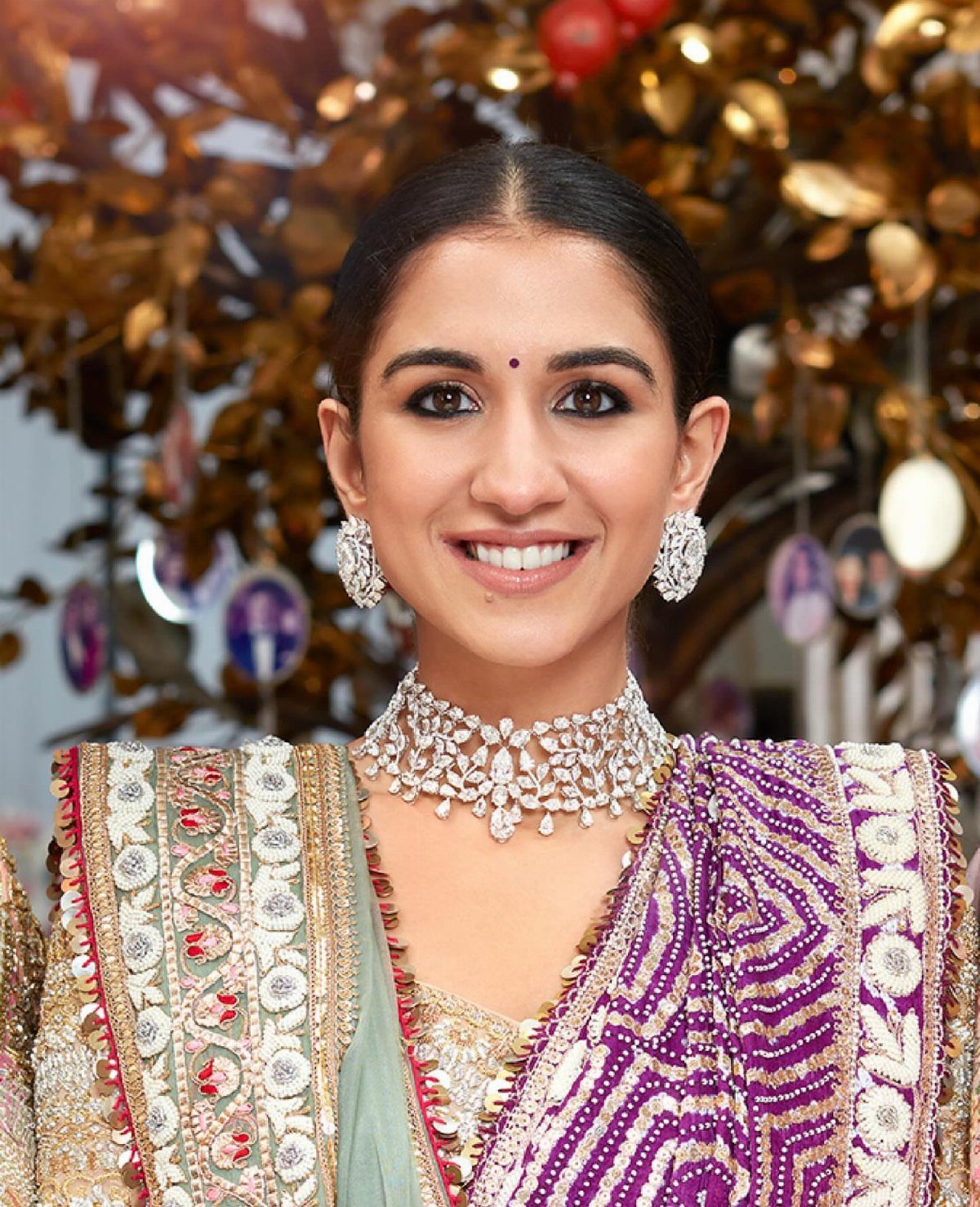
Purple silk with gold embroidery gives you richness without red, which matters if you are saving red for your ceremony look. The color feels regal, and it pairs naturally with gold threadwork that stays visible against the deep base.
A choker necklace sits high on the collarbone and balances the lehenga’s neckline, while matching earrings complete the set without layering too many pieces.
Purple holds up under indoor lighting better than pastels, so evening sangeet or reception photos stay saturated.
7. Haldi Ceremony Outfit
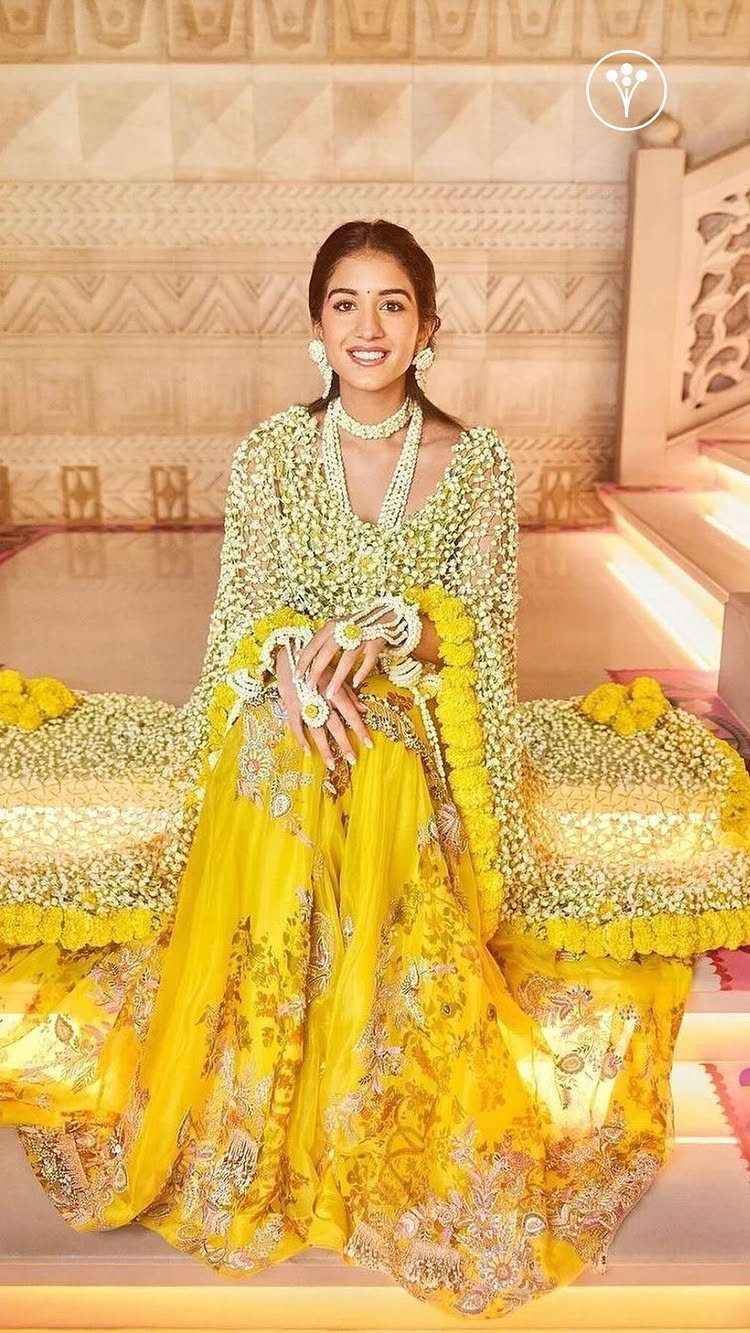
Yellow silk or cotton embroidered with gold thread gives a haldi outfit the brightness that shows up in turmeric-stained ceremony photos without looking washed out.
Floral jewelry, typically strung fresh the morning of, stays lightweight and matches the casual, joyful tone of a ceremony where guests will be smearing turmeric paste on you.
The embroidery adds formality to what is otherwise a relaxed pre-wedding ritual. A lehenga with a shorter blouse or choli keeps you cool outdoors and makes it easy to sit cross-legged through the rituals.
Then on July 11, they held their haldi—an auspicious tradition when a soon-to-be-married couple is covered in turmeric paste for prosperity. Radhika wore sherara pants from Anamika Khanna and a dupatta (or, a stole) made of flowers.
— Vogue
8. Sangeet After Party Outfit
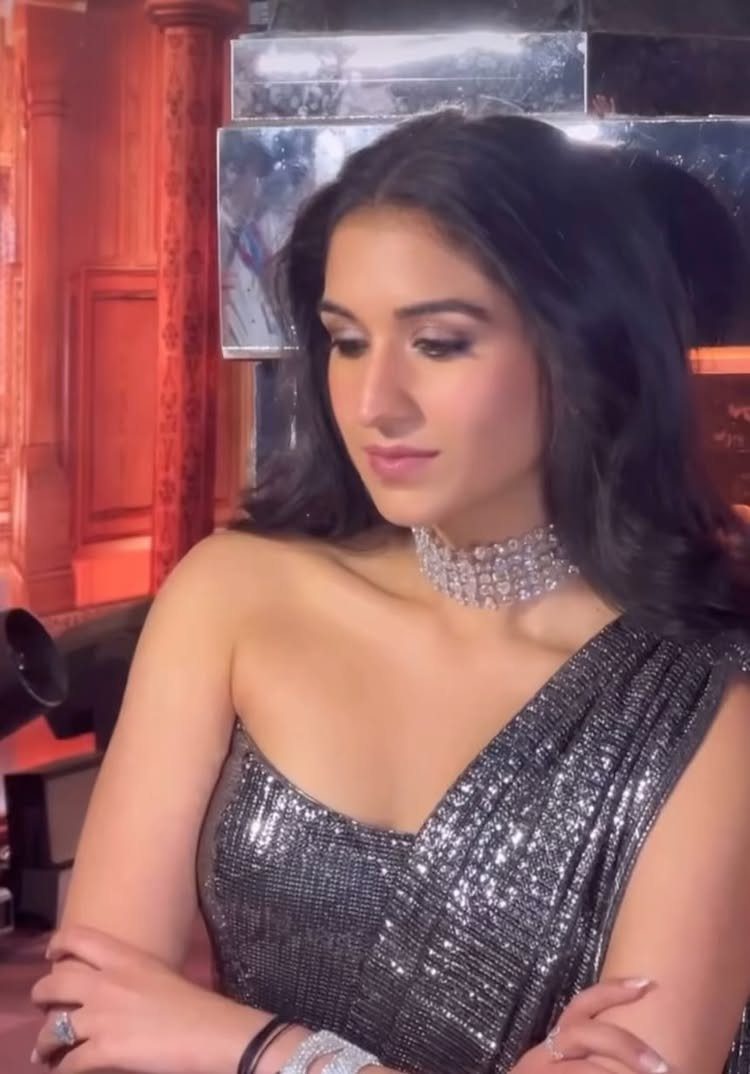
Silver mesh embellished with sequins or beading gives you full sparkle for a sangeet after-party without the weight of a traditional lehenga.
The sheer fabric moves easily for dancing, and black keeps the focus on the shimmer rather than competing with it.
A diamond choker balances the saree’s neckline and keeps jewelry minimal when the outfit already has plenty of shine.
This combination works best after you have changed out of your main sangeet look and want something lighter that still photographs well under evening lights.
9. Vidaai Outfit
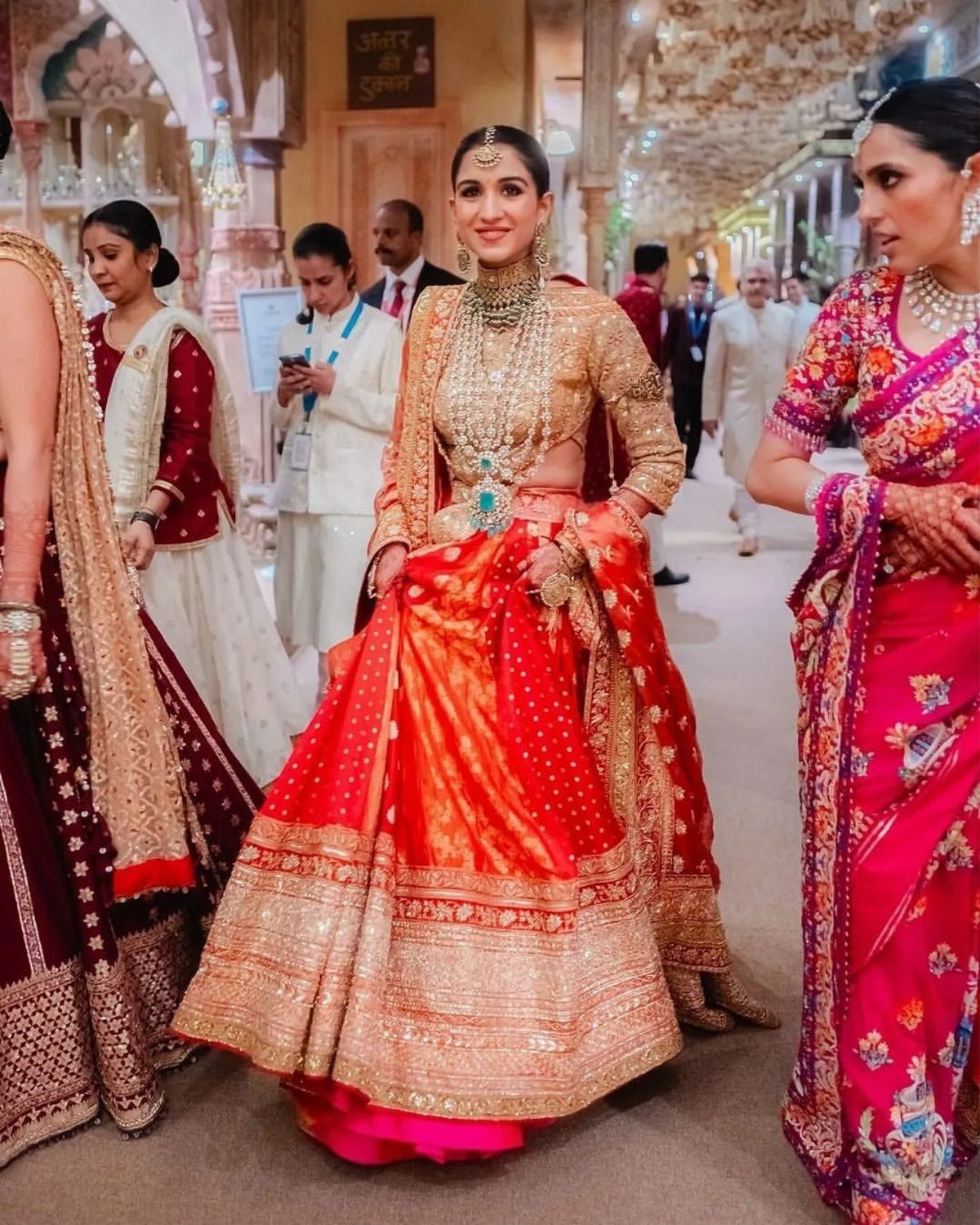
Banarasi brocade in sunset tones (deep orange fading into red or gold) gives a vidaai outfit the weight and richness tradition calls for without straight red, which many brides save for the ceremony.
The woven silk pattern catches light as you move, and the heavy fabric photographs with depth.
Red remains the most common vidaai color because it symbolizes a bride leaving her family home, but blended tones like these feel less formal while still honoring the sentiment. Gold jewelry completes the look without adding visual competition.